
Nguyen Linh Vinh Quoc
More than a craft, basket weaving preserves the knowledge, values, and identity of the Central Highlands.
For many people, the Central Highlands evokes the sound of gongs and the warm, potent jars of ruou can (tube wine). Beyond the region’s sacred gong traditions, there are many other expressions of beauty in the daily lives of Jrai and Bahnar communities. Among them, traditional basket weaving remains an enduring craft that preserves the skills, aesthetic values, and way of life of the highland people.
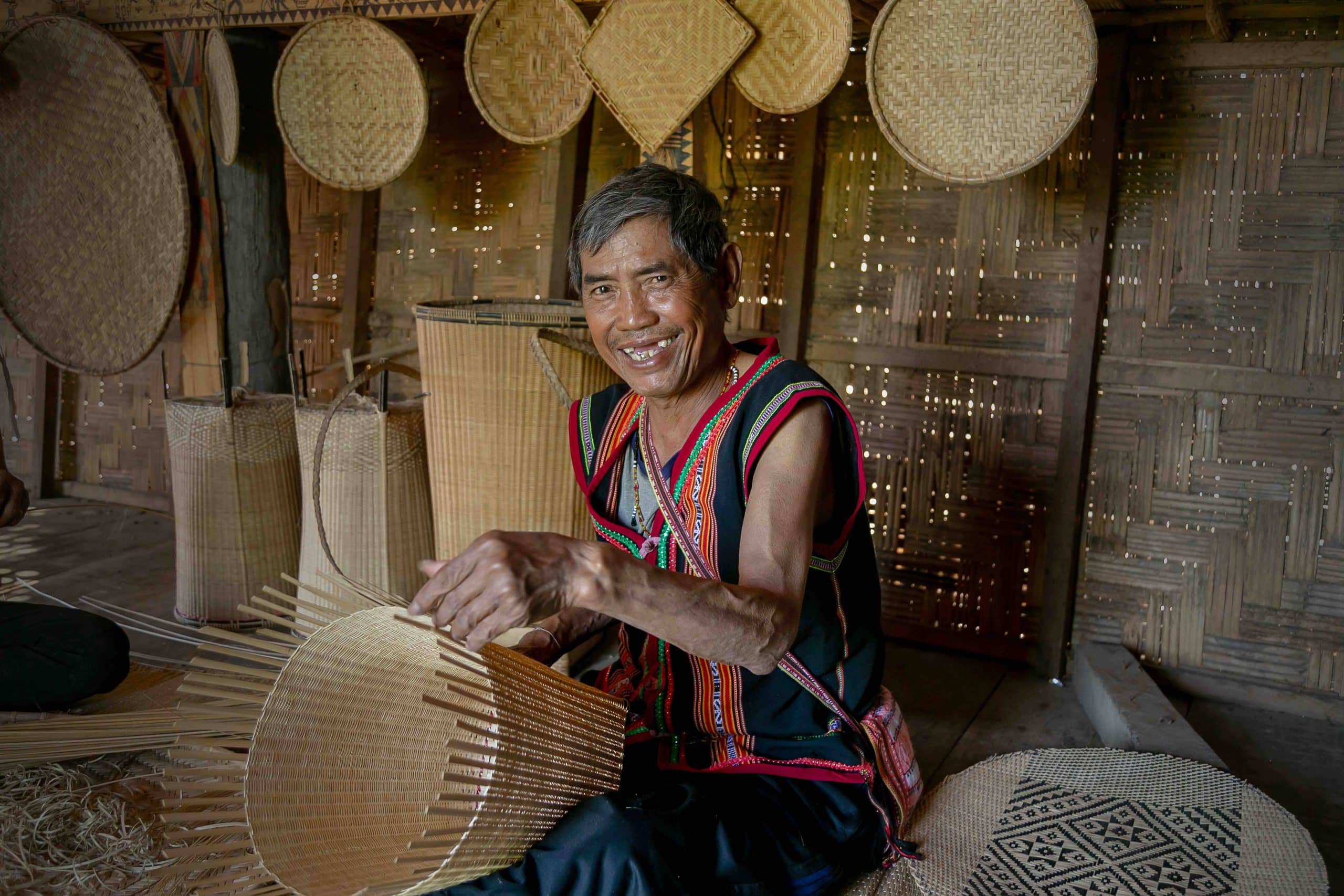
“Unlike brocade weaving, typically performed by women, men have traditionally woven baskets in the Central Highlands. Most men and boys in Jrai and Bahnar communities, and among Central Highlands ethnic groups more broadly, know how to split bamboo, shave strips, and weave,” explained Ro Cham Hreoh of Kep Village, Ia Ly Commune, Gia Lai. “We learn from our elders when we are young, and as we grow older, we learn from one another. In the early morning or late afternoon, people sit together splitting bamboo and weaving. Over time, it becomes second nature, and everyone knows how to make the household items their family needs. A young man who cannot weave a basket will find it hard to get married!”
Basket weaving does not begin when one sits down to weave. It starts with a walk in the forest. The main materials are rattan, bamboo, reeds, and balcooa bamboo. The artisan selects stalks that are neither too young, which would break easily or suffer termite damage, nor too old, which would lose flexibility. Depending on the intended object, the strips are split into different widths. Trimming requires patience and precision so each strip is smooth and even. Before weaving, the strips are soaked in water to reach the right level of suppleness.
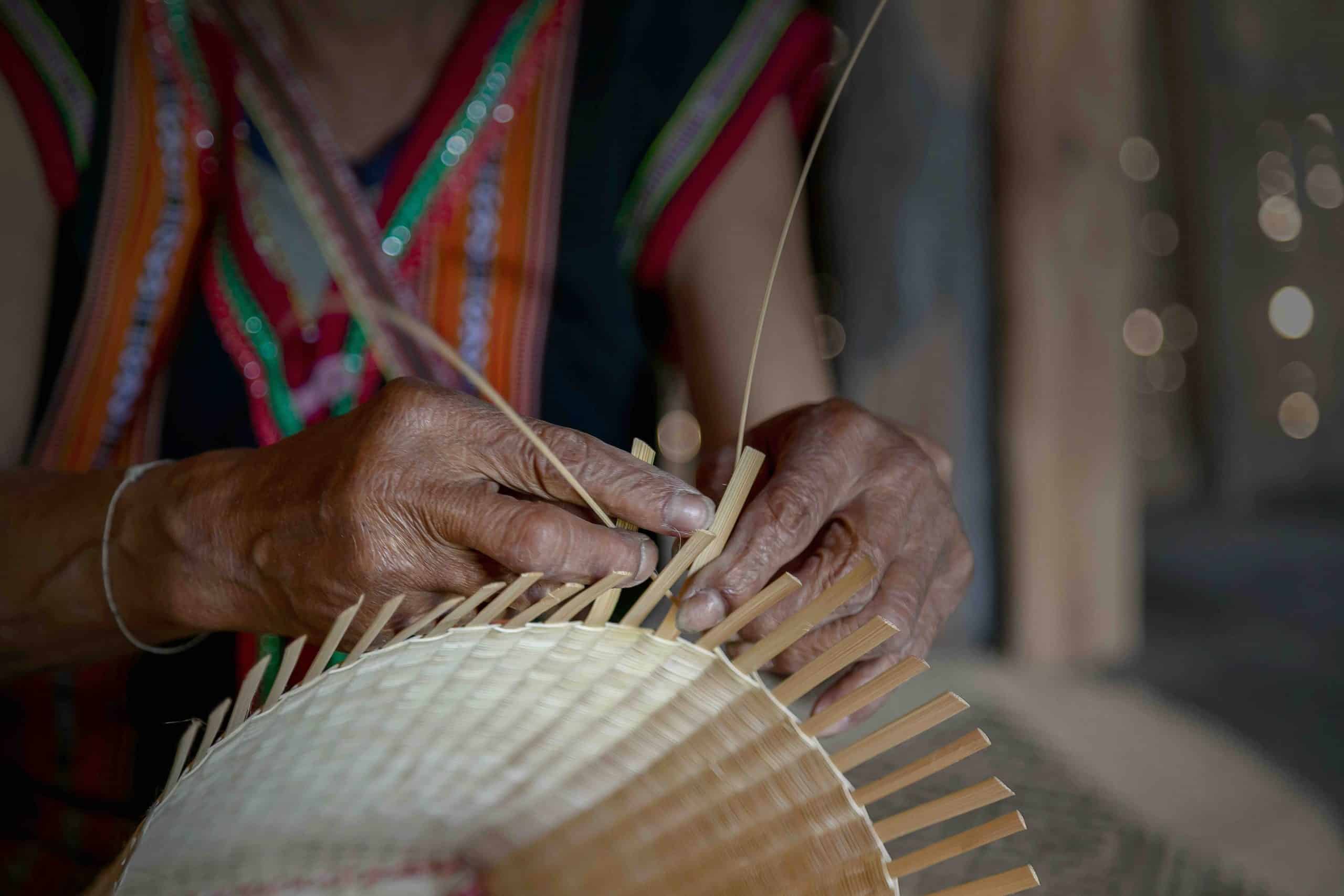
Once finished, after use, the products are often hung above the kitchen fire. The smoke protects them from insects and gives them a distinctive dark brown color. Each basket or tray, therefore, carries the scent of kitchen smoke and the warmth of home.
Each woven object is not only a tool for daily life and labor, but also part of a broader cultural world. The carrying basket is a constant companion from the house to the fields. Some are used to transport firewood or gathered bamboo shoots; some are woven more tightly to hold rice or corn; others, decorated with intricate patterns, are used in festivals or given as part of a bride’s dowry. Handmade trays, baskets, sieves, and fishing tools all serve both everyday life and ritual practices.
Handwoven products extend beyond household utensils. In the Central Highlands, people skillfully weave the panels and walls found in houses, grave houses, and rong communal longhouses. In some places, an entire village works together to weave the large panels that cover the roofs of the rong house, helping to protect and extend the life of the thatch above.
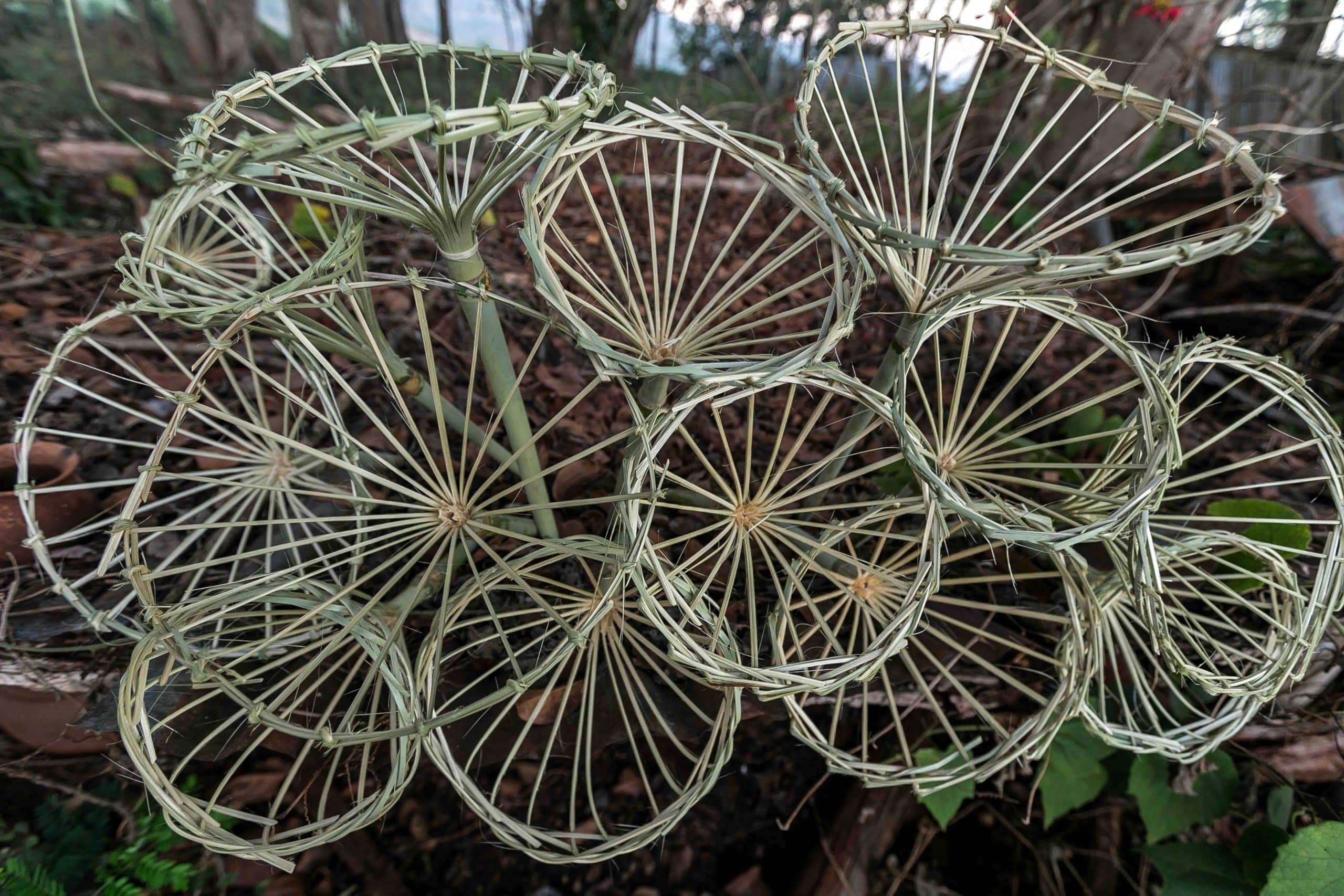
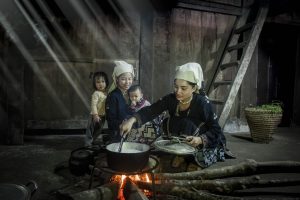
After a long day in the fields, when night falls and the fire flickers, fathers and grandfathers sit splitting bamboo strips and weaving baskets. As they weave, they tell their children and grandchildren epic tales and village legends. In this way, basket weaving passes naturally and steadily from one generation to the next.
Now 41 years old, Anh Rinh from Ngom Thung Village, Ia Bang Commune, Gia Lai, has practiced this craft for 30 years. He said, “At first, I learned basket weaving simply so I could get married! But over time, my hands got used to it, and before I knew it, I had come to love it. I started thinking about how to make a living from these traditional products, so I shifted into weaving handicrafts full-time. Each day, I can weave five small baskets to sell as decorations or souvenirs. When I have free time, I also go to schools to teach children how to shave bamboo strips and weave.”
Today, as plastic and metal products become more convenient and younger generations leave the village to study and work elsewhere, traditional crafts are at risk of fading. Village elder Dinh Van Hmunh of Mo Hra-Dap Village, To Tung Commune, Gia Lai, grew emotional: “Even though there are many newer things now, in the village, the basket and the bamboo tray still cannot be separated from the lives of the Jrai and Bahnar.”
In recent years, thanks to the development of tourism and the adaptability of younger artisans, traditional woven products are being sold more widely and have become distinctive souvenirs and decorative items. This is a positive direction, helping local people raise their incomes while preserving a precious cultural legacy handed down from their ancestors.
Amid a changing way of life, the sounds of bamboo strips being split and shaved can still be heard somewhere in the villages. This humble craft not only creates everyday objects but also helps preserve the soul of the Central Highlands.