Phuong Mien Tay
From the ceremonial spaces of old royal courts to community life today, despite the bustling pace of modern life, Khmer people in southern Vietnam continue to preserve traditional cultural values through Chhan dancing (Rom Yeak).
Origins of Chhan dancing
Chhan dancing is one element of Ro-bam (Rom Ro-bam), a performing art derived from the Reamker, the Khmer version of India’s Ramayana. Through cultural exchanges among Khmer communities across the Mekong basin, Ro-bam gradually spread to southern Vietnam. Flourishing in the 19th century, it became rooted in everyday life. This dance is an important spiritual and cultural tradition for Khmer people throughout the South, and particularly key for Khmer residents of Can Tho City.
Ro-bam unites and harmonizes multiple art forms, including theater, dance, music, visual design, gestures, and costumes, with the language of movement at its center. It includes 33 dance forms and movement patterns, while Chhan dancing alone comprises 12 distinct movements, each carrying its own meaning. Besides the Chhan (Yeak), Ro-bam performances also depict ancient stories of fairies, the Buddha, kings, queens, princes, princesses, monkeys (Hanuman), and the sacred bird (Krud).
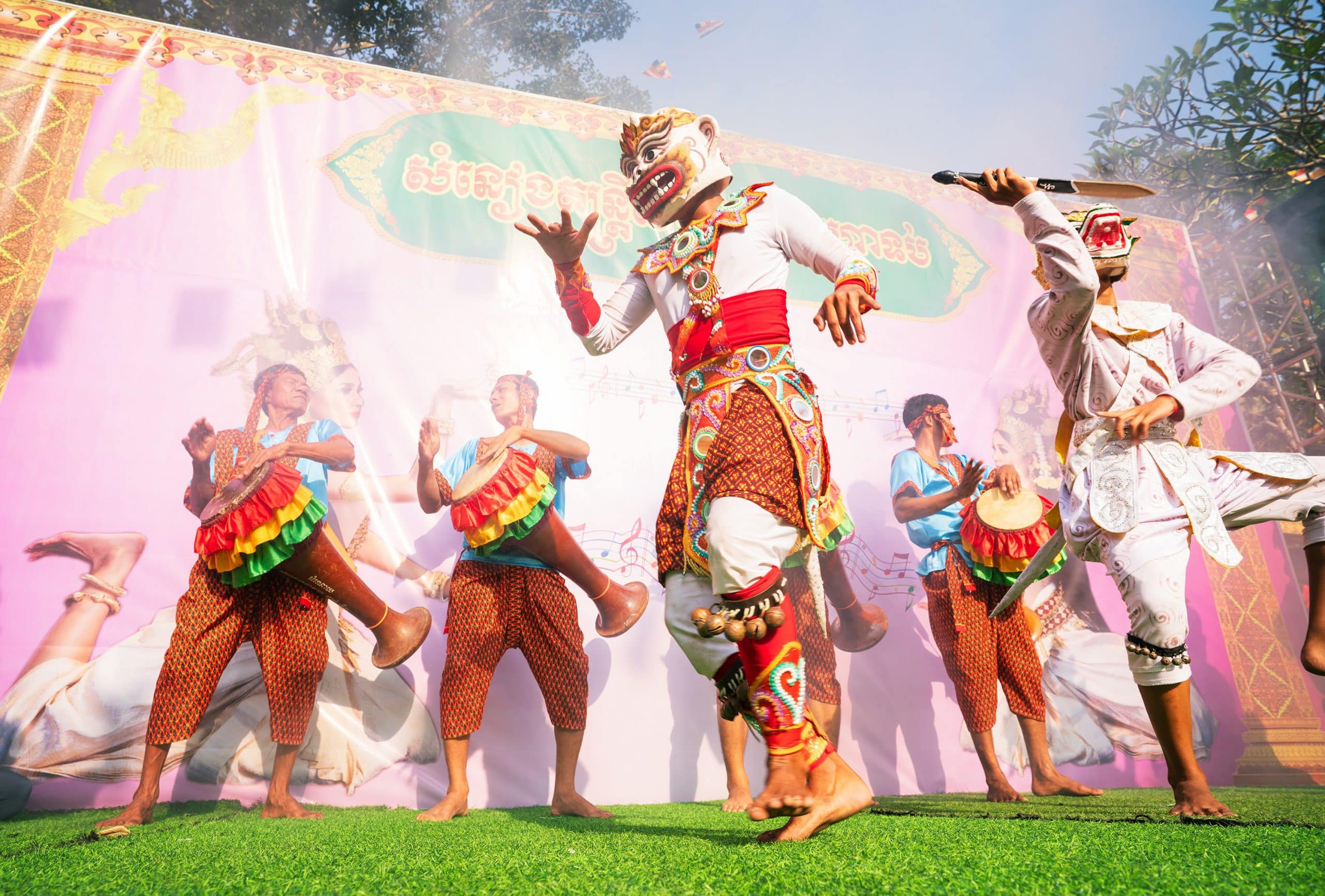
Today, Chhan dancing is commonly performed during Khmer festivals and ceremonies such as the Praying-for-peace Festival (Bun Komsan Sroc), ancestor worship (Sen Dolta), Robe-offering Ceremony (Kathina), Moon Worship Festival (Ok Om Bok), and the Lunar New Year (Chol Chnam Thmay), as well as during cultural exchanges and community events.
The “Speaking” Chhan mask
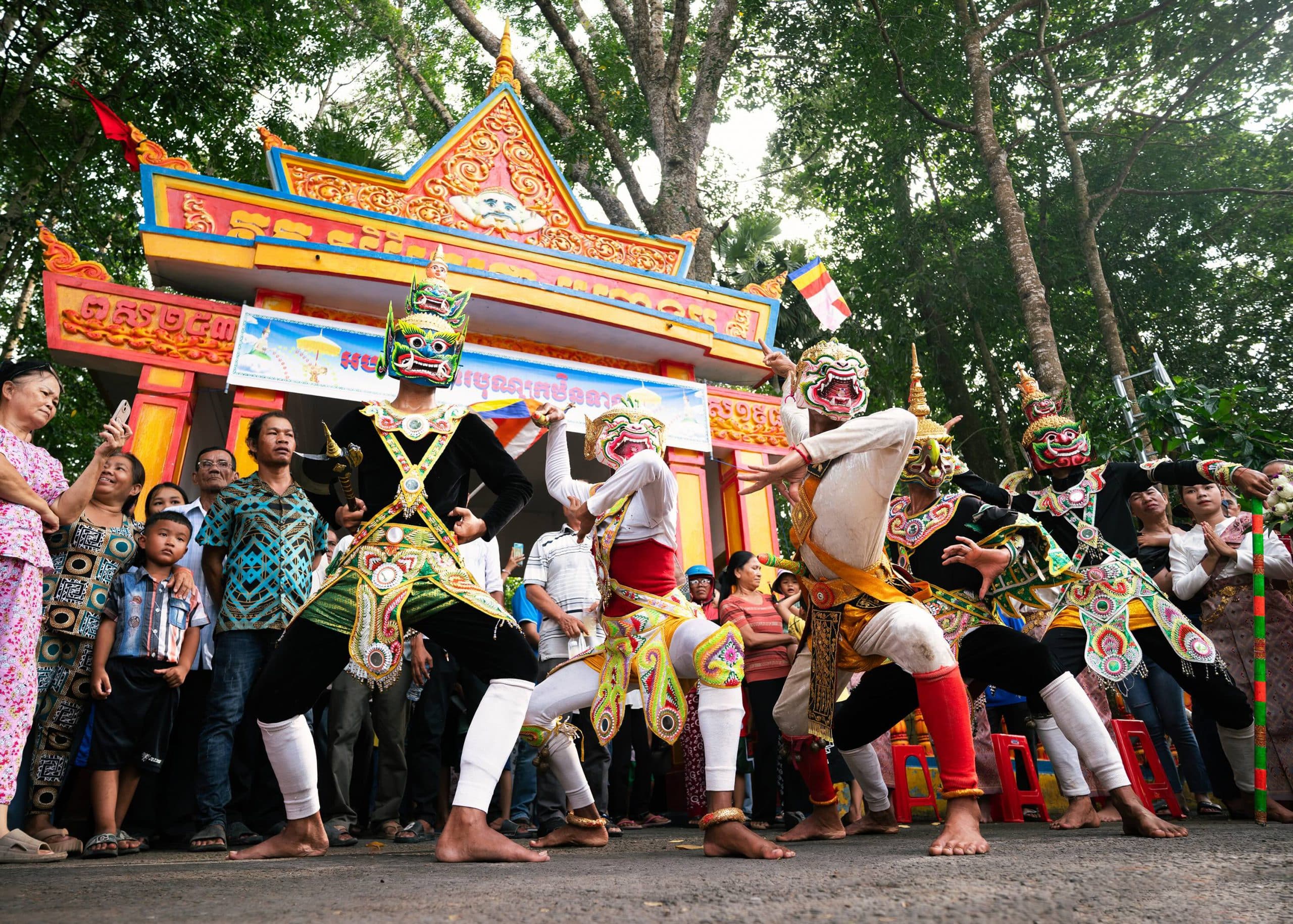
The Khmer call the headdress shaped like a character’s head a mao. The Chhan mao is pointed at the top, fits closely around the head, and has side panels covering the ears. It is distinguished by stylized flame motifs that rise in layers along its tips and edges.
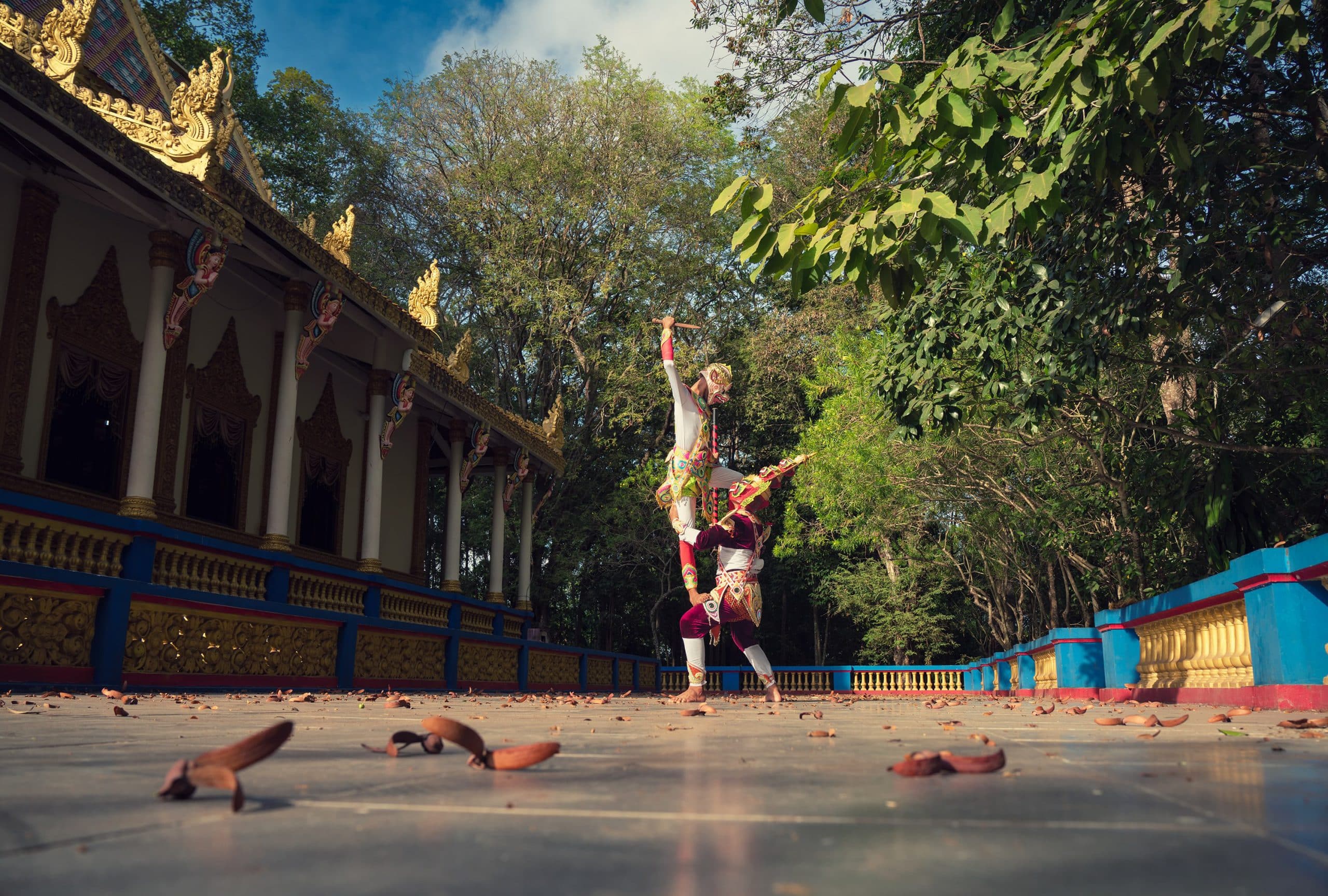
Doi Pagoda (Mahatup) in Phu Loi Ward, Can Tho City, is a well-known spiritual tourism site. A lush grove of hundreds of old sao and dau trees surrounds the pagoda. Beyond the sight of bats hanging from the branches, visitors often discover two figures below – the Chhan and the Monkey. As late afternoon light filters through the trees, the Chhan and the Monkey perform a dramatic contest, moving and expressing themselves through their “speaking” masks. Amid the pagoda’s centuries-old grounds, they appear as “living statues” and “moving paintings,” creating a striking visual experience for visitors.
In the Reamker, the Chhan is a negative character, representing evil, while the Monkey symbolizes virtue. The Chhan has a fierce appearance, carries a club, and moves with strong, decisive gestures that express arrogance and wild pride. The Monkey, by contrast, is agile and clever, and ultimately defeats the Chhan. Yet in Khmer sculpture, the Chhan is often placed at temple gates or around the main sanctuary to protect the pagoda. This suggests the Chhan’s presence in Khmer pagodas signifies a transformation and subjugation under the Buddha. It is a distinctive feature of Khmer Theravada Buddhism and the visual arts found in Khmer temples in southern Vietnam.
Young people keep Chhan dancing alive
During the most recent New Year Robe-Offering Festival at Doi Pagoda, the Chhan character was performed by Thach Hoang Nhan, born in 2008, while the Monkey was played by Mai Tan Luc, born in 2009. Both boys live near the pagoda. Nhan’s older brother studied Chhan dancing, which introduced him to this art from an early age. By fourth grade, he had developed a strong interest in this dance and continued learning from the monks at the pagoda, gradually mastering the movements. Today, he balances school with helping his family and, on weekends, joins Luc and other group members to practice and refine their skills.
Nhan explained that, when dancing the role of the Chhan, he feels artistic value in every movement and expression. He is always excited to perform for others and hopes to play a small part in preserving and sharing this distinctive traditional Khmer art form.
Venerable Lam Tu Linh, Deputy Abbot of Doi Pagoda, said: “Many visitors are curious. They are not afraid of the Chhan – in fact, they become fascinated after watching the dance. Learning about and experiencing Chhan dancing is a key for visitors to touch the soul of Khmer culture in the South. The children are practicing it with great enthusiasm, ensuring this heritage will live on through time.”
The Ministry of Culture, Sports and Tourism recognized Ro-bam art of the Khmer people in the former Soc Trang region, now part of Can Tho City, as a national intangible cultural heritage in 2019.