Story: Huong Quynh
Photos: Minh Tu
The best way to explore Hoi An is one bite at a time, following its flavors from the Old Town’s narrow alleys to the nearby coast.
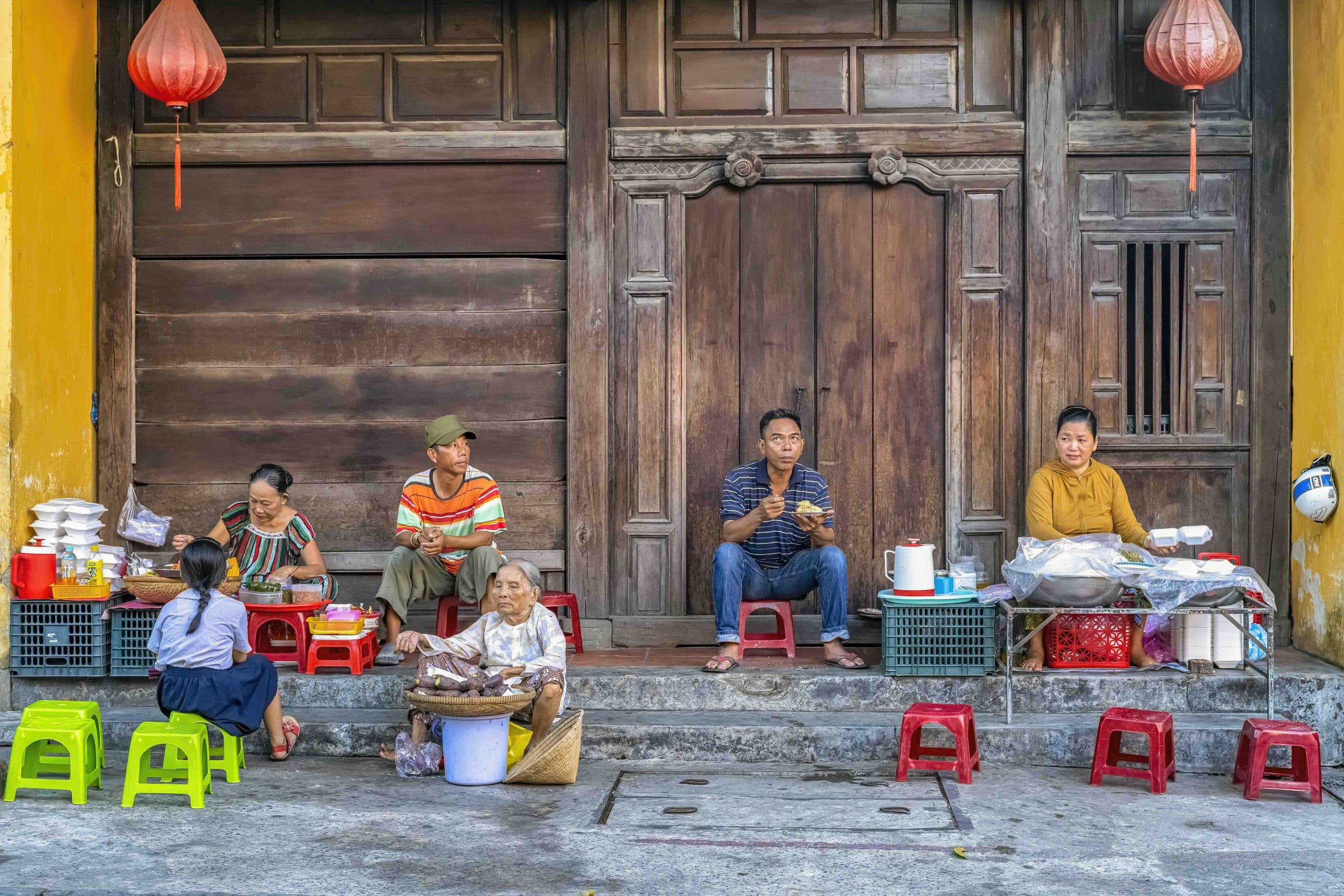
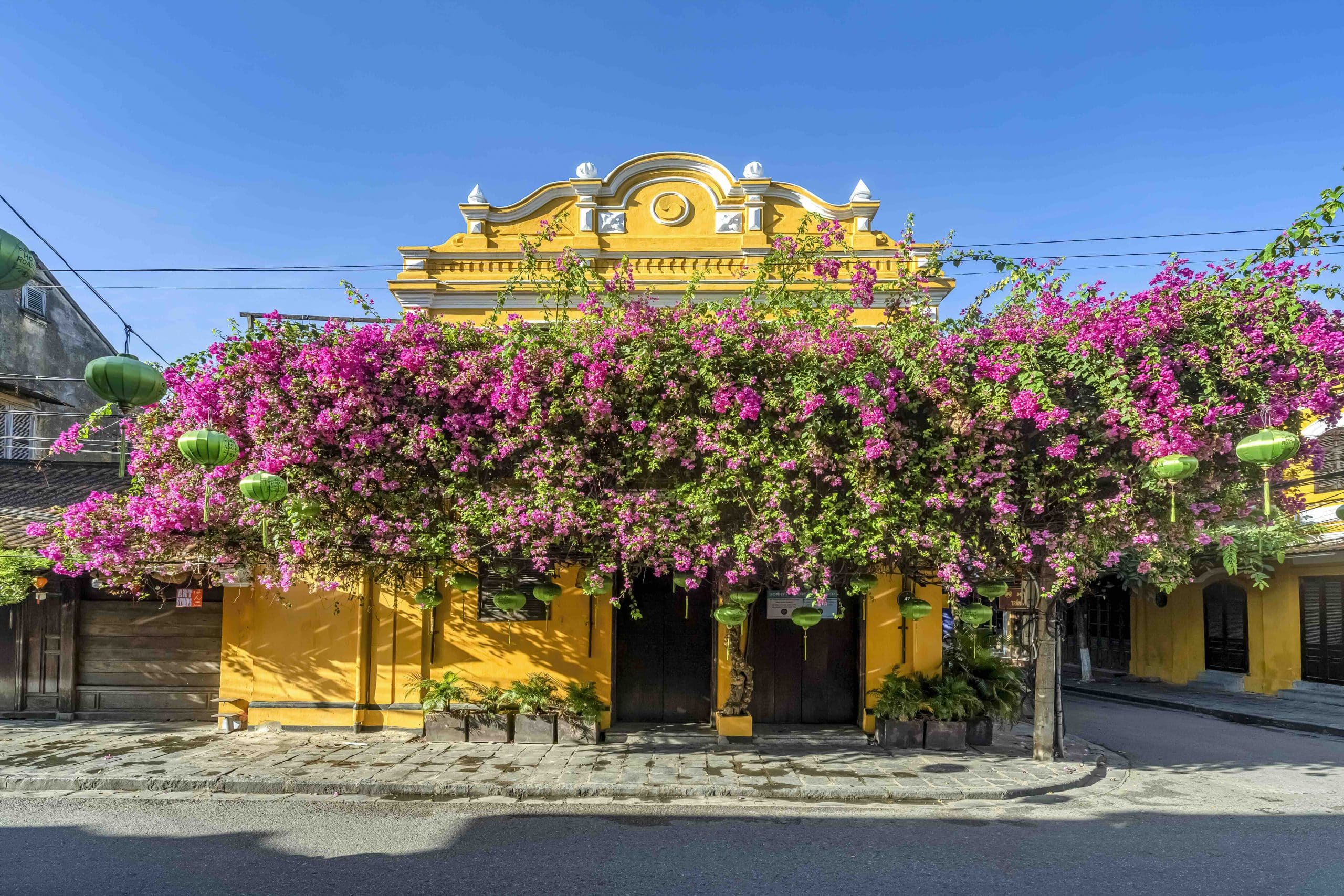
Like many people, I love Hoi An for its simple pleasures. A leisurely walk along streets scented with Rangoon creepers, a pause beside an old yellow-walled house beneath a moss-covered roof, a moment of nostalgia: these small experiences make me love the town even more. Sometimes, simply wandering through Hoi An and stepping away from the rush of everyday life is pleasure enough. And then there is the food. Exploring the local food scene, even if it means breaking all the usual rules, can become one of the most memorable parts of a visit.
Search for “must-try dishes in Hoi An,” and the list is so long that one trip may not be enough to taste them all. The local cuisine has a distinct identity, yet it also reflects centuries of cultural exchange in a former trading port where different communities once came together. As a result, the usual rule of three meals a day quickly becomes irrelevant. A day can easily include five or six food stops: noodles for breakfast, chicken rice for lunch, a banh mi in the afternoon, a bowl of banh canh for dinner, followed by sweet pudding or a glass of Mot iced herb tea.
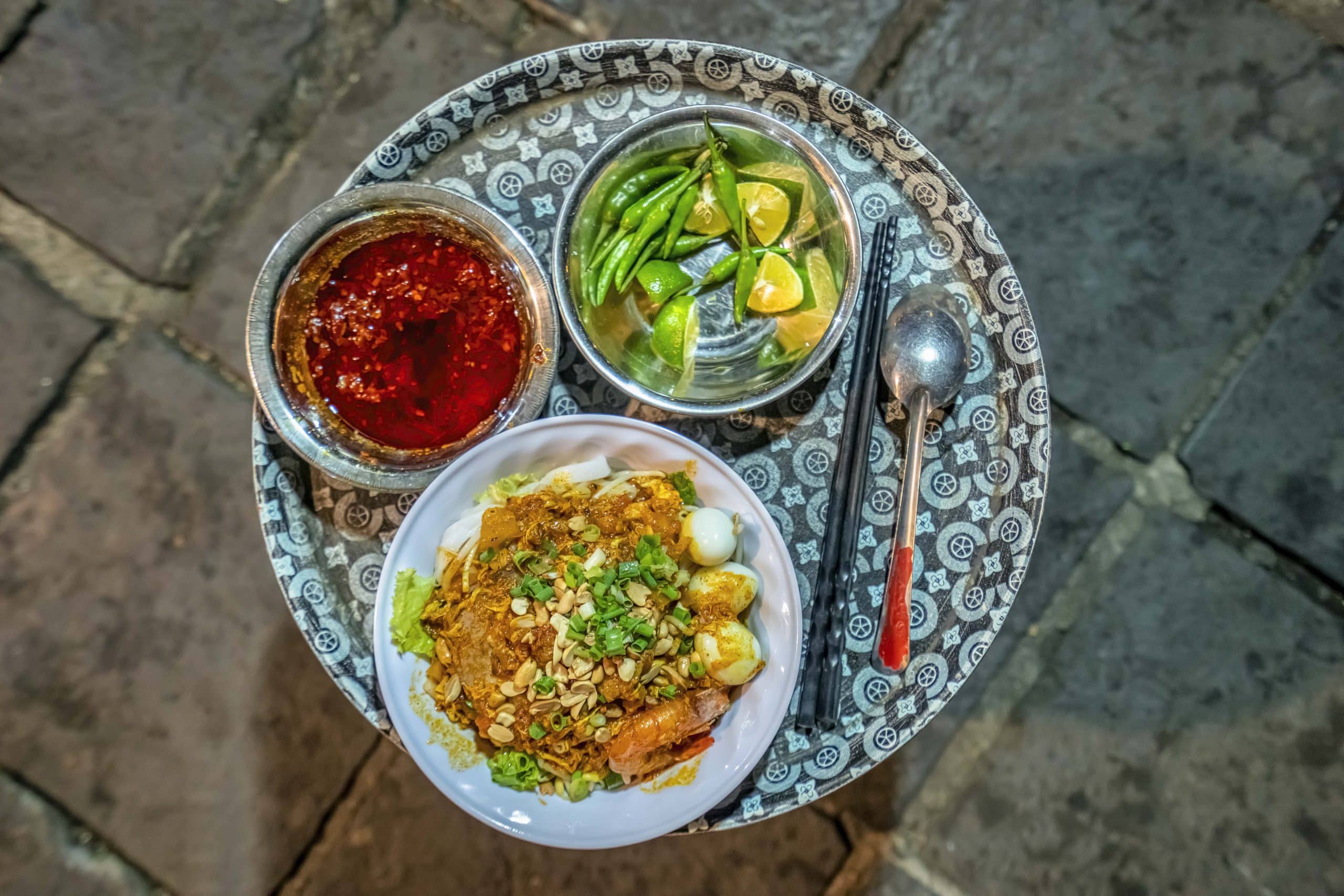
Cao lau, mi Quang, and wontons are three very different dishes, but together they tell much of the story of Hoi An’s culinary exchange and adaptation. Cao lau features thick, chewy noodles served with char siu pork, crispy pork fat, and fresh herbs. Mi Quang is more firmly rooted in the Quang region, with rice noodles, a small amount of broth, shrimp, pork or chicken, peanuts, and sesame rice crackers. Wontons, meanwhile, reflect the influence of the Hoa (ethnic Chinese) community. In Hoi An, wonton dishes have evolved into several versions, including wonton soup, wonton noodles, and fried wontons. Imported dishes were adapted to local tastes, while local dishes absorbed new techniques, creating combinations that now seem entirely natural.
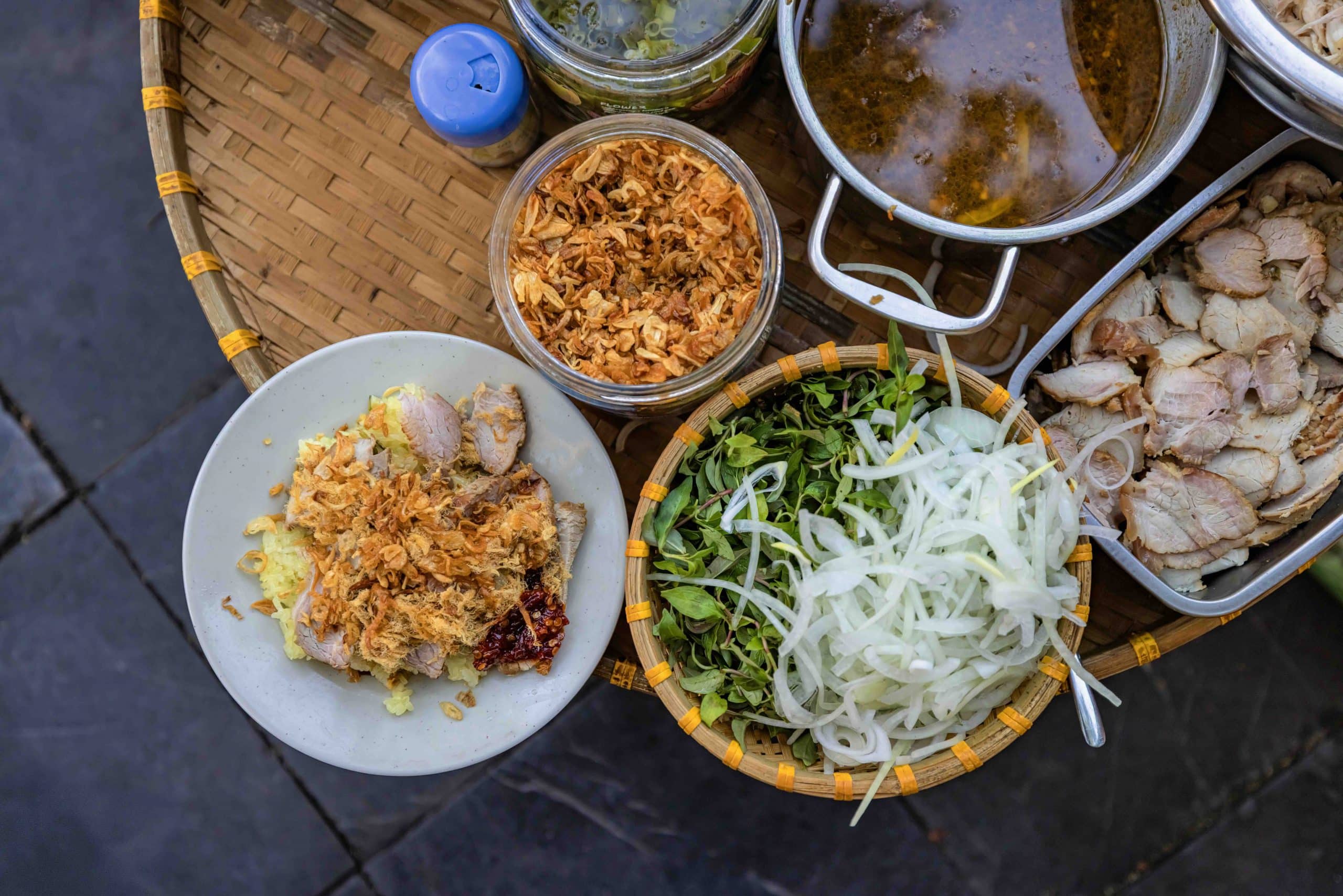
Chicken rice is more familiar, like a carefully prepared home-cooked meal. The rice is cooked in chicken broth with a touch of turmeric, giving each grain a golden hue and soft, fluffy texture. Shredded chicken is tossed with onions and Vietnamese coriander, then served with pickled papayas and fresh herbs. Simple yet satisfying, it makes an ideal main meal when you still have plenty of dishes to try.
Herbs grown in Tra Que – a village known for its “green fragrance” – add another layer of flavor. Herbs from this long-established vegetable-growing village are a familiar presence on Hoi An tables. Even a simple pate banh mi becomes more aromatic with a handful of herbs from Tra Que.
Banh mi deserves its own story. Culinary records from Hoi An indicate that by around 1945, local people were already eating small loaves of bread with meat dishes. By the 1950s, bread had become increasingly common in urban life. Originating from the French baguette, banh mi was gradually adapted to local tastes, becoming smaller, with a thinner, crispier crust. Typical fillings include pate, char siu, Vietnamese pork sausage, egg, cucumber, herbs, and chili, along with a house sauce unique to each vendor.
What makes these bread rolls especially interesting is that almost every shop has its own “signature” version. Some are well known among international visitors, while others have been around for decades. Yet many tiny banh mi stalls remain tucked away in narrow alleys, where the queues are mostly made up of local regulars.
As you travel from the Old Town toward the coast, the flavors shift. A steaming bowl of seafood banh canh, filled with fresh shrimp, fish, and squid, makes a comforting breakfast. Clam porridge is lighter, seasoned with spring onions, pepper, and herbs, with a gentle taste of the sea. These dishes may not always appear on lists of “must-tries,” but it is precisely this kind of everyday food that makes Hoi An’s culinary picture feel complete.
Then there is an entire world of snacks. Banh dap combines crisp grilled rice paper with soft steamed rice sheets, broken into pieces and dipped in fermented fish sauce. Add a plate of stir-fried baby clams, and it becomes a perfect afternoon meal. Banh beo is served in small bowls, topped with shrimp and pork, fried shallots, or crispy pork fat. One bowl seems harmless enough, but by the time you notice the growing stack of empty dishes, the plan to “just have a taste” has long since been abandoned.
After savory food, there is always room for something sweet. Hoi An offers mung bean sweet pudding, lotus seed sweet soup, black sesame sweet soup, and tofu pudding, often sold from modest stalls and small street vendors. Particularly distinctive is chi ma phu, a thick black sesame dessert with Chinese culinary influences. Rich and fragrant, it is served warm and is especially comforting in cooler weather.
No culinary journey through Hoi An is complete without a glass of iced herb tea known as “Mot”, created by a small shop on Tran Phu Street, where young visitors regularly form long queues. Fragrant with lemongrass, lime, and herbs, the drink is decorated with lotus petals, making it refreshing, photogenic, and instantly recognizable. Social media may be partly responsible for its popularity, but that hardly matters. Street food is about more than taste. The atmosphere, the story, and the simple pleasure of holding a pretty drink while walking along a lively street all matter.
One final charm is how surprisingly affordable eating in Hoi An can be. A banh mi from a small alley stall may cost only around VND 20,000, while a bowl of lotus seed sweet soup or chi ma phu usually costs around VND 15,000 to 20,000. Sometimes, just a few tens of thousands of dong are enough to buy a very Hoi An kind of happiness.
So if you find yourself in the Old Town, don’t be too strict with your usual eating schedule. The three-meals-a-day rule can wait. Walk a little farther, try one more dish, and get to know Hoi An a bit better.