Long Ho
Look closely at Can Tho’s old streets to discover its hidden history, where French-style architecture met Vietnamese traditions.
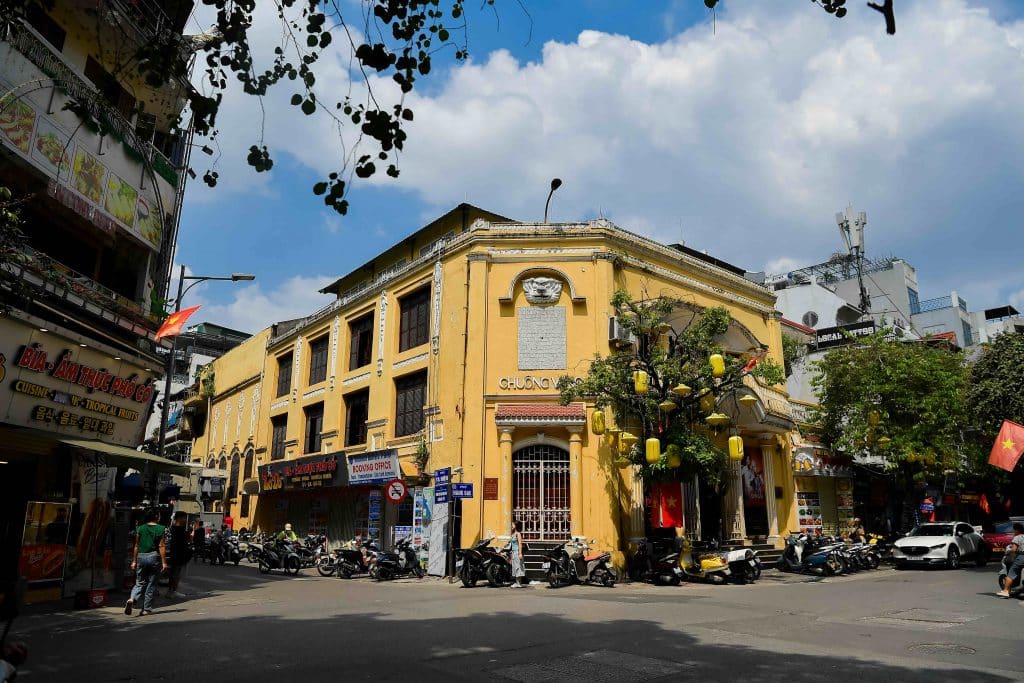
There’s a way to understand Can Tho without opening a history book: wander through its old streets and look above the modern shop signs, where traces of the past remain. Gothic arches rise behind tamarind canopies, Corinthian columns blend into rows of shophouses, and gently curved yin-yang tiled roofs sit above louvered windows. Together, these elements recall a city the French planned as an administrative and economic center of the Mekong Delta. European techniques and aesthetics were adapted to suit the local climate, materials, and sensibilities.
The eight sites that follow offer glimpses into Can Tho’s past, from centers of power and belief to places of knowledge and everyday life, revealing a riverside city shaped by the meeting of cultures.
Colonial power
Today’s Phan Dinh Phung Street was once known as Delanoue Boulevard, one of the busiest thoroughfares in colonial-era Can Tho. This street was home to the Résidence, courthouse, An Ha Printing House, Trung Chau Inn, and Casino Cinema.
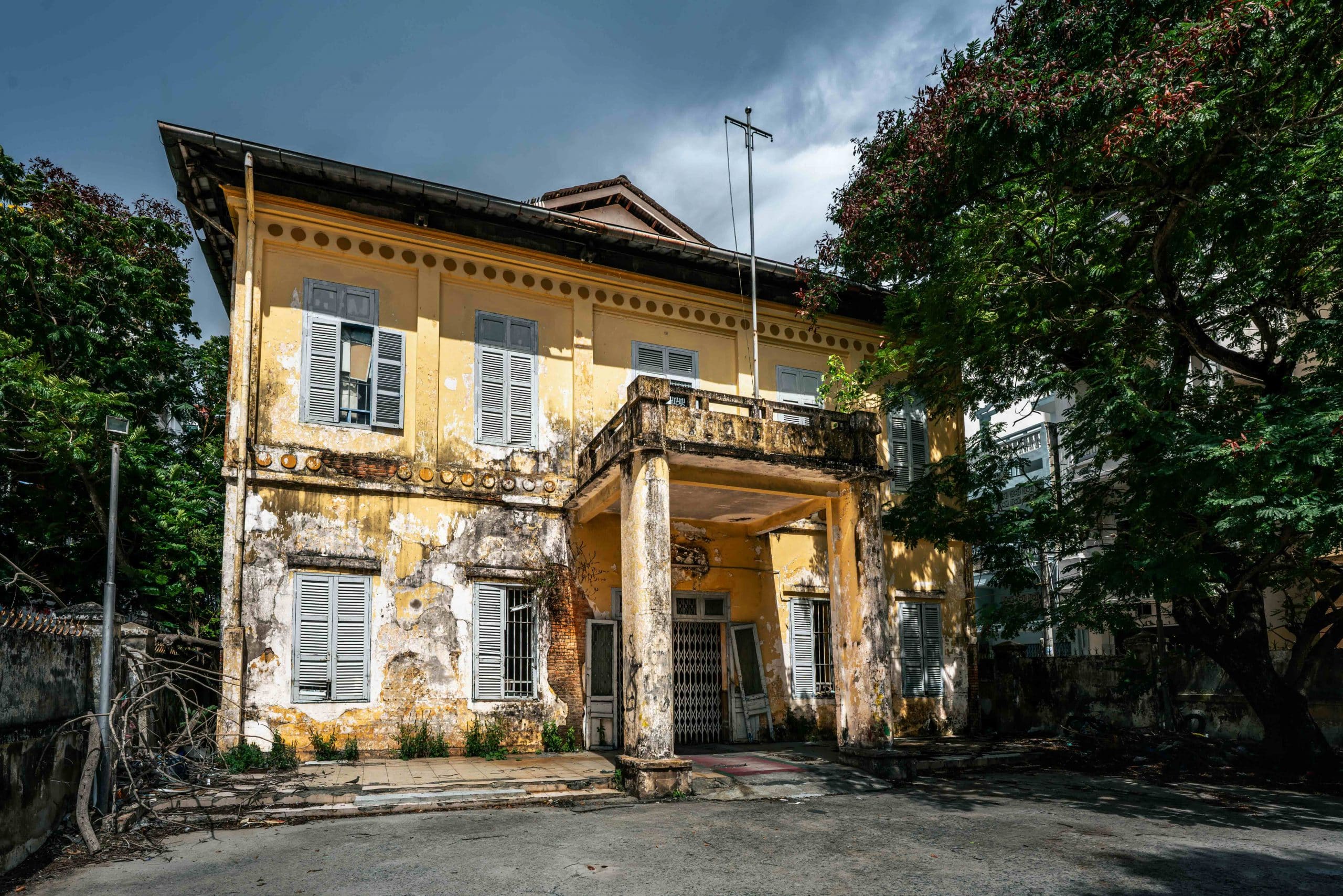
A four-fronted building has stood midway down the street for more than a century: Tan An Village Hall, opposite the Old Market Hall. Once known as Dinh Xa Tay or Nha Hoi Xa, it housed local administrations under successive governments. On August 26, 1945, demonstrators gathered here. They compelled the former authorities to hand power over to the Can Tho Provincial National Liberation Committee, turning the administrative building into a witness to a decisive historic moment.
Not far away lies a very different space: Can Tho Grand Prison, one of the largest prisons in the Mekong Delta under French rule. If Tan An Village Hall represented the colonial administration’s grandeur, the prison’s high walls, iron fences, and watchtowers reflected its flipside: surveillance and repression. Once used to detain many Vietnamese patriots, it is now a historical site preserving memories of the city’s past.
A meeting of faiths
If colonial power was expressed by imposing architectural forms, religion offers a subtler story of cultural exchange. Construction of Can Tho Cathedral, formerly known as Cau Xeo Church, began in 1899, and the site was inaugurated in 1916. The building bears the hallmarks of Western ecclesiastical architecture, with arched openings and stained-glass windows. On November 24, 1960, it officially became the cathedral of the Diocese of Can Tho.
Across the city, beside the Binh Thuy River, Nam Nha Pagoda tells a different story of cultural fusion. Rather than the familiar upturned eaves of traditional Vietnamese temples, its main hall features a harmonious East-West façade. Inside, the Three Teachings – Buddhism, Confucianism, and Taoism – are worshipped together. In the early 20th century, this pagoda served as a base for the anti-colonial Dong Du movement, showing how Western architectural forms were absorbed into a distinctly Vietnamese cultural and spiritual setting.
Knowledge and urban life
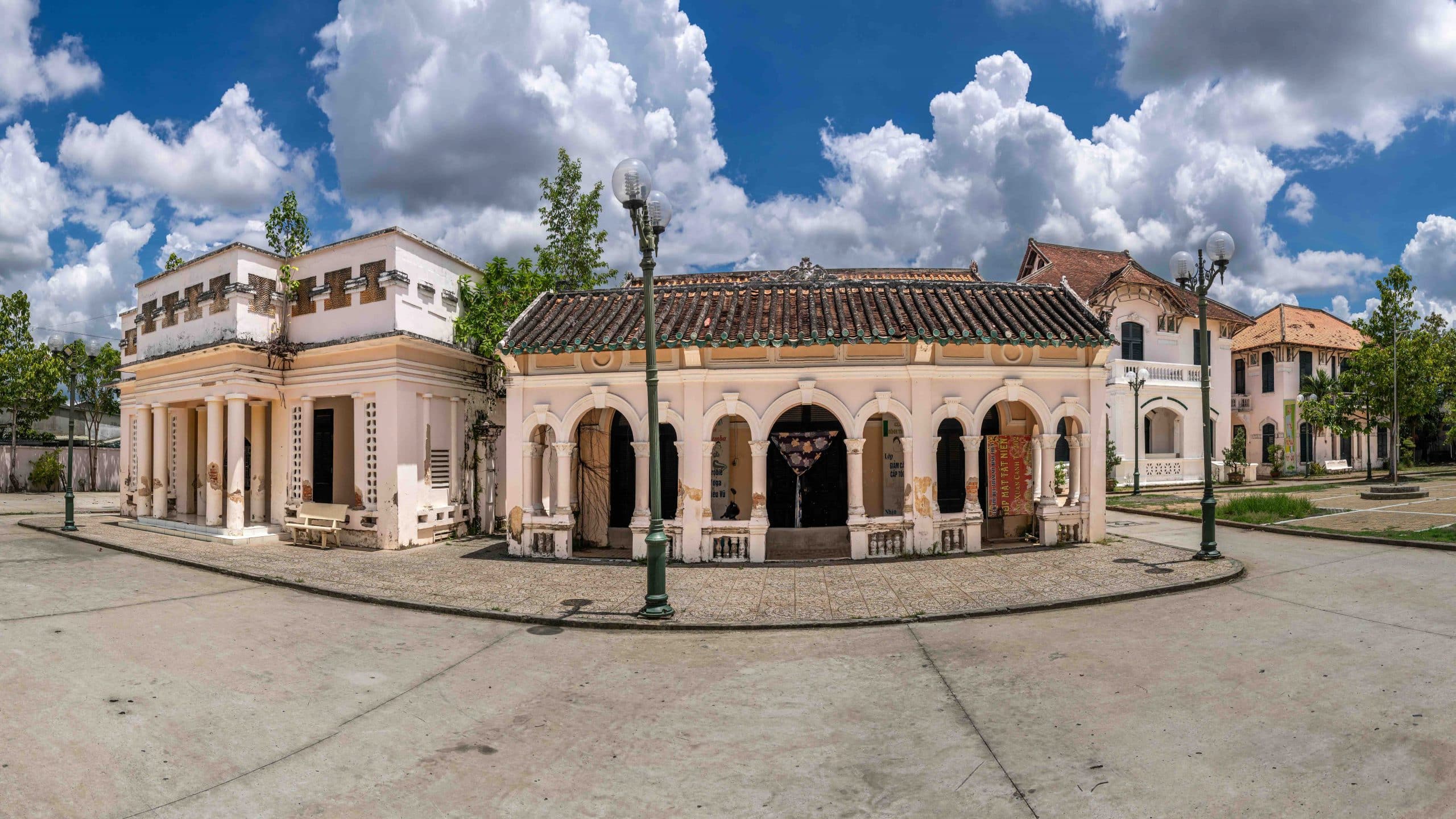
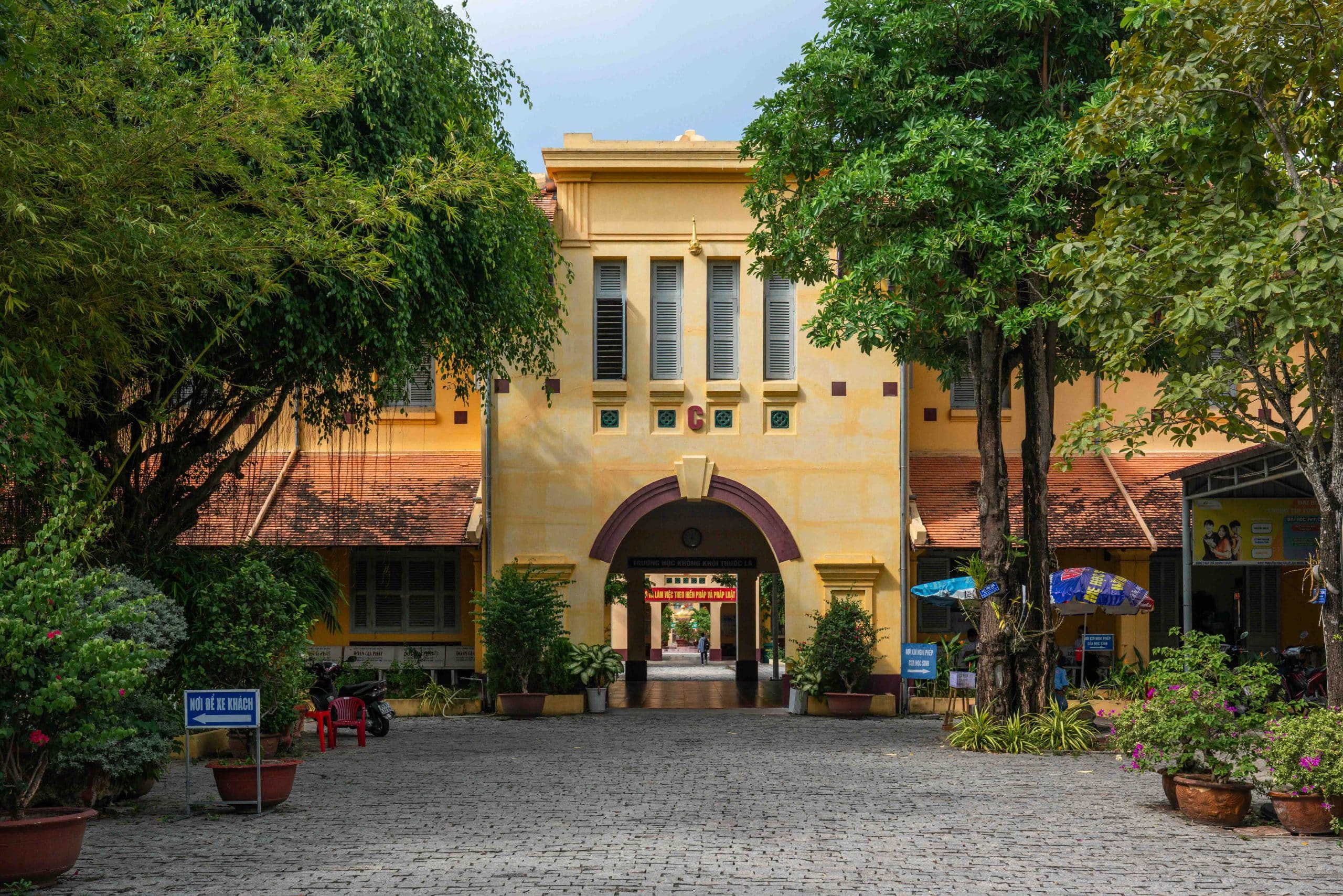
A colonial city was not only shaped by power and religion, but also by knowledge and everyday urban life. The historic buildings of Chau Van Liem High School, formerly Collège de Can Tho, were constructed in the early 20th century with load-bearing walls, tiled roofs, and louvered windows suited to the tropical climate. This school is remarkable not only for its architecture but also for its former students: Chau Van Liem, Luu Huu Phuoc, Luong Dinh Cua, and Son Nam, prominent figures in the history and culture of southern Vietnam.
Not far from the school, a building in Long Tuyen still bears an old sign reading “Tram Bai Lao,” a reminder of Can Tho’s medical history. Although the building now serves as a youth activity center, the old sign remains as a reminder of its original purpose.
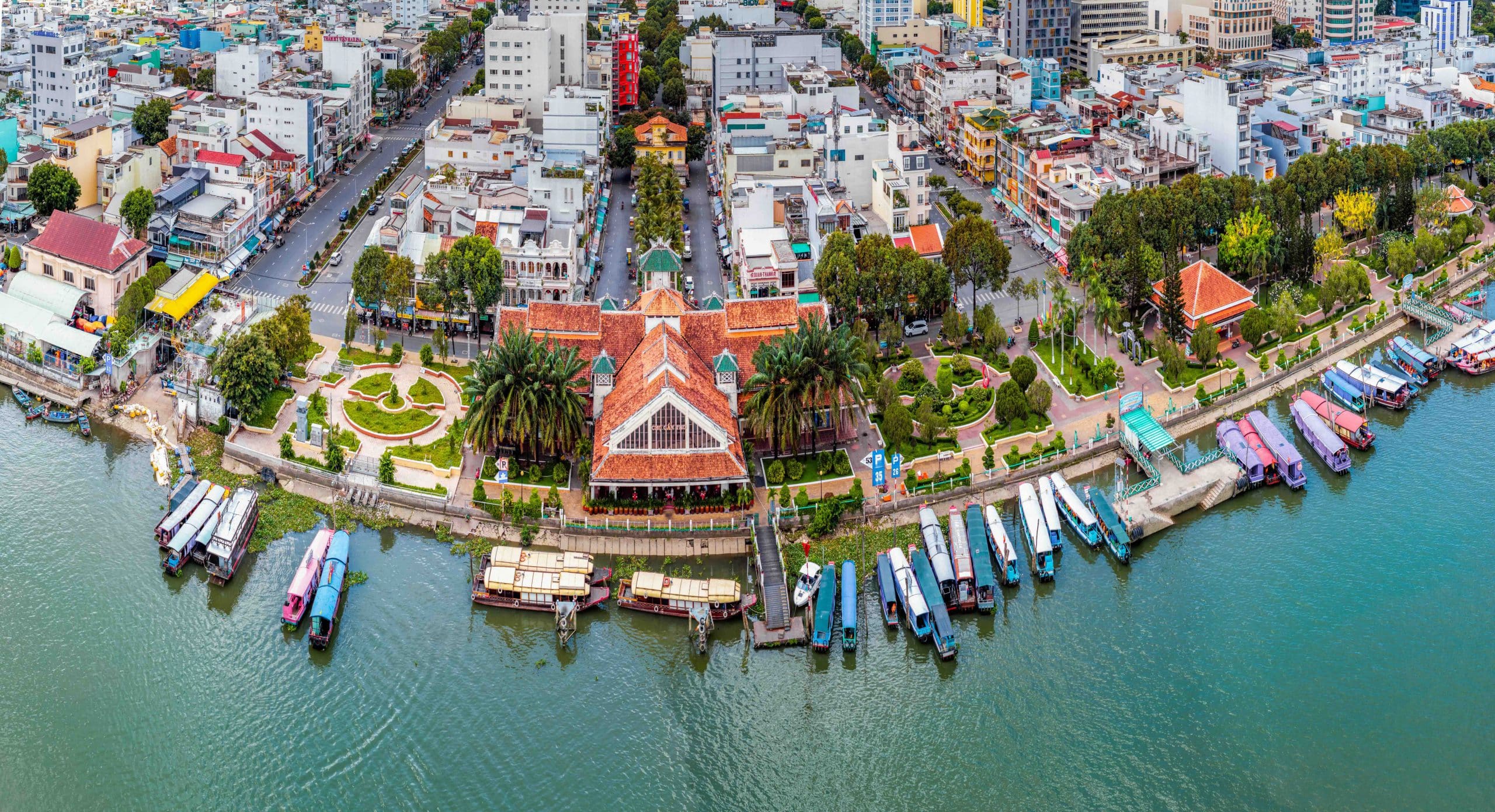
In the heart of the city, Can Tho Old Market, formerly known as Luc Tinh Market and popularly called Hang Duong Market, captures the rhythm of urban life. Built around 1915, the market hall is distinguished by its curved fishbone roof structure, yin-yang tiles, and open layout facing the Hau River. Since its restoration, it has become a popular spot for sightseeing and evening strolls near Ninh Kieu Wharf.
A grand southern Vietnamese residence
The tour ends at Binh Thuy Ancient House, the ancestral abode of the Duong family, once home to a wealthy southern Vietnamese household.
From the outside, this five-bay mansion resembles a French villa, with curved staircases, encaustic floor tiles imported from France, and Western-style columns and arches. Inside, the distinctly southern Vietnamese interior features intricately carved wooden frames inlaid with mother-of-pearl and an ancestral altar prominently placed at the center of the house.
The house’s Southern Vietnamese residents did not simply replicate French architecture; they chose elements that suited them while preserving a way of life deeply rooted in local identity. Perhaps for this reason, French director Jean-Jacques Annaud chose to film portions of the movie L’Amant (The Lover) – adapted from the famous novel set in colonial Cochinchina – in this house.
These eight sites reveal how Tay Do – the Western Capital, as Can Tho was once known – absorbed and adapted Western influences, blending them with local traditions to create its own urban identity. More than a century later, traces of the past remain part of everyday life in Can Tho, visible in tiled roofs, archways, and old streets. These details await those who are willing to slow down and look.