
Pham Minh Quan
In the hands of four teenage artists, one of Vietnam’s oldest and most demanding art forms is finding a new voice.
For a generation raised on touchscreens and digital technology, it is somewhat surprising that four teenage girls born in 2009 and 2010 have chosen natural lacquer as their artistic language for the exhibition The Lacquer of Dawn. Natural lacquer is among the most time-consuming and exacting media in Vietnamese painting. Artists cannot immediately see the result of each layer of color. Every coat must be left to cure and then carefully polished before the image gradually emerges from the depths of the work’s surface.
Rooted in Vietnam’s traditional lacquer craft, the medium entered modern painting through experiments by teachers and students at the Indochina College of Fine Arts in the early 20th century. The combination of traditional craftsmanship and new visual thinking gave Vietnamese art a distinctive identity.
The appeal of lacquer lies not only in its intricate techniques. The process itself is demanding, involving the inlay of eggshell, the application of silver and gold leaf, repeated layering, curing, and polishing. More importantly, the medium requires artists to engage in a dialogue with time. Lacquer does not reveal its final result at once. Each layer of color is applied only to disappear beneath the next before gradually resurfacing through polishing. The creative process therefore involves patience, intuition, and an element of surprise. In this sense, lacquer is both an artistic medium and a way of cultivating aesthetic perception.
Seen from this perspective, the lacquer exhibition The Lacquer of Dawn is an encouraging sign. It presents works by Ngo Thuc An, Dang Vy Le, Nguyen Ngoc Chau Anh, and Vo Nguyen Tuong Minh, four teenage artists who have spent nearly three years studying with painter Tran Hien. All four attend international schools, giving them opportunities to encounter different cultures and perspectives from around the world. Their decision to embrace lacquer and draw inspiration from Vietnamese culture is therefore all the more meaningful. Around 300 hours of practice may only be enough to become familiar with the medium’s basic demands, but that time has also nurtured a genuine affection for this traditional art form.
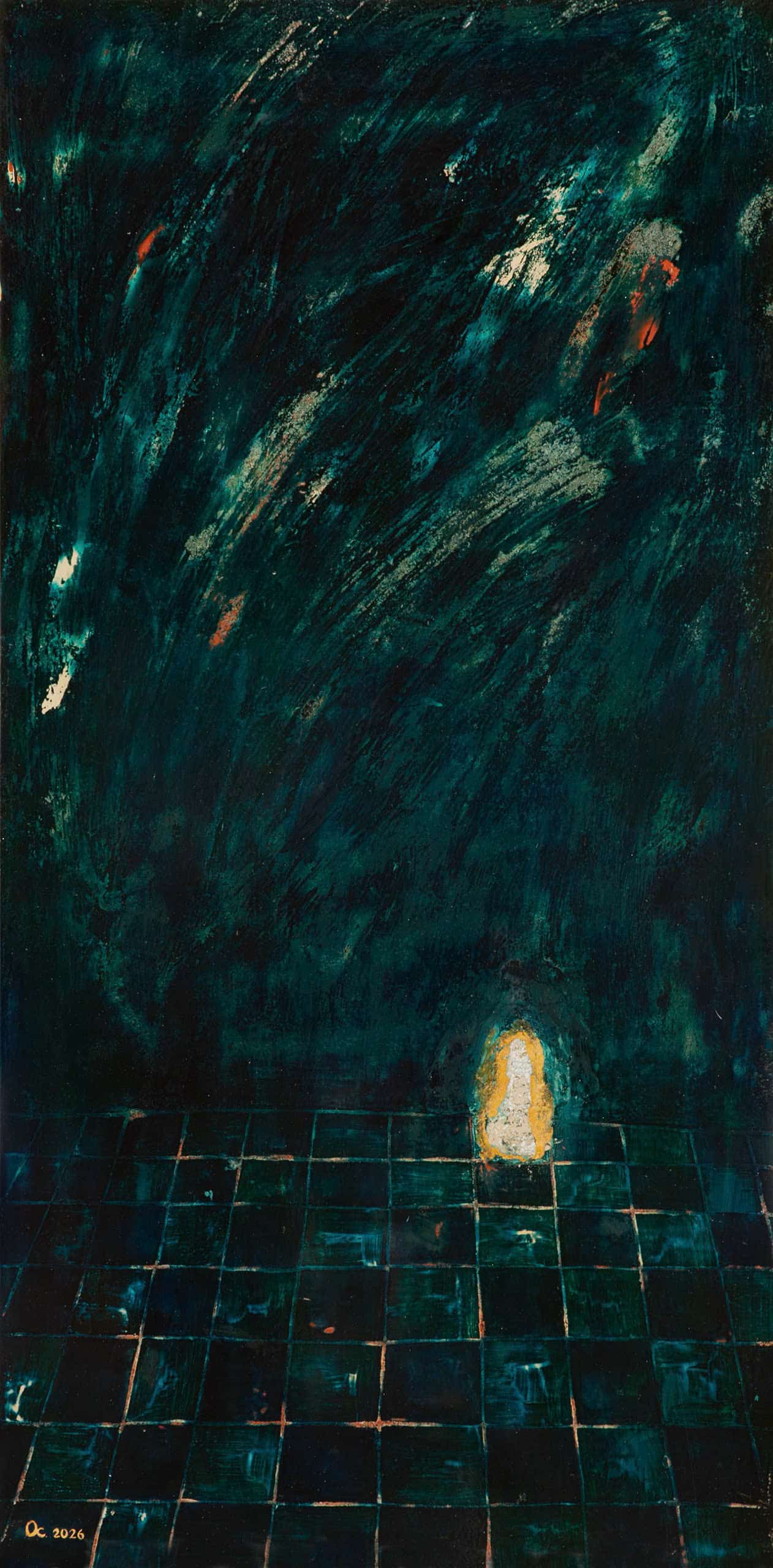
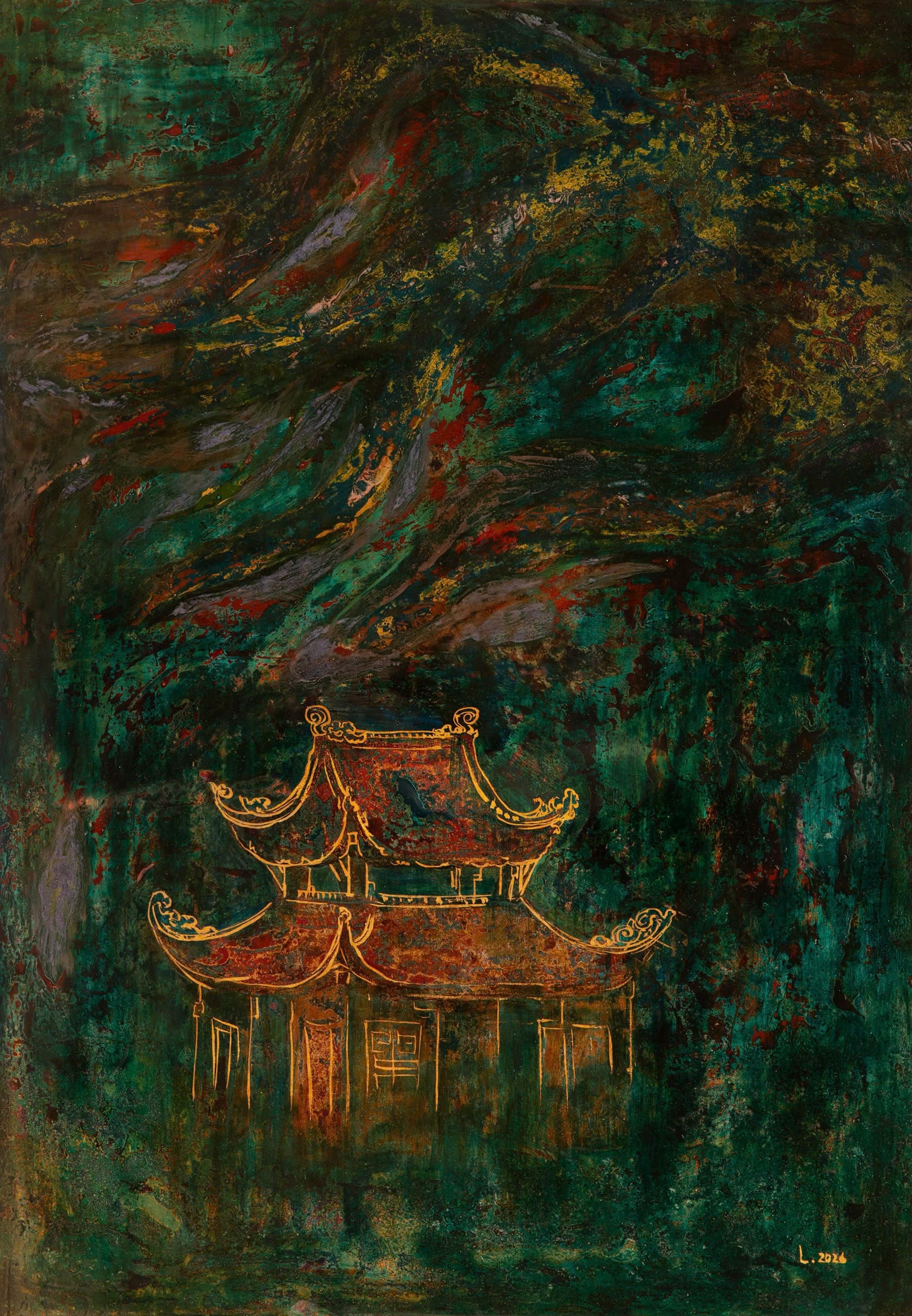
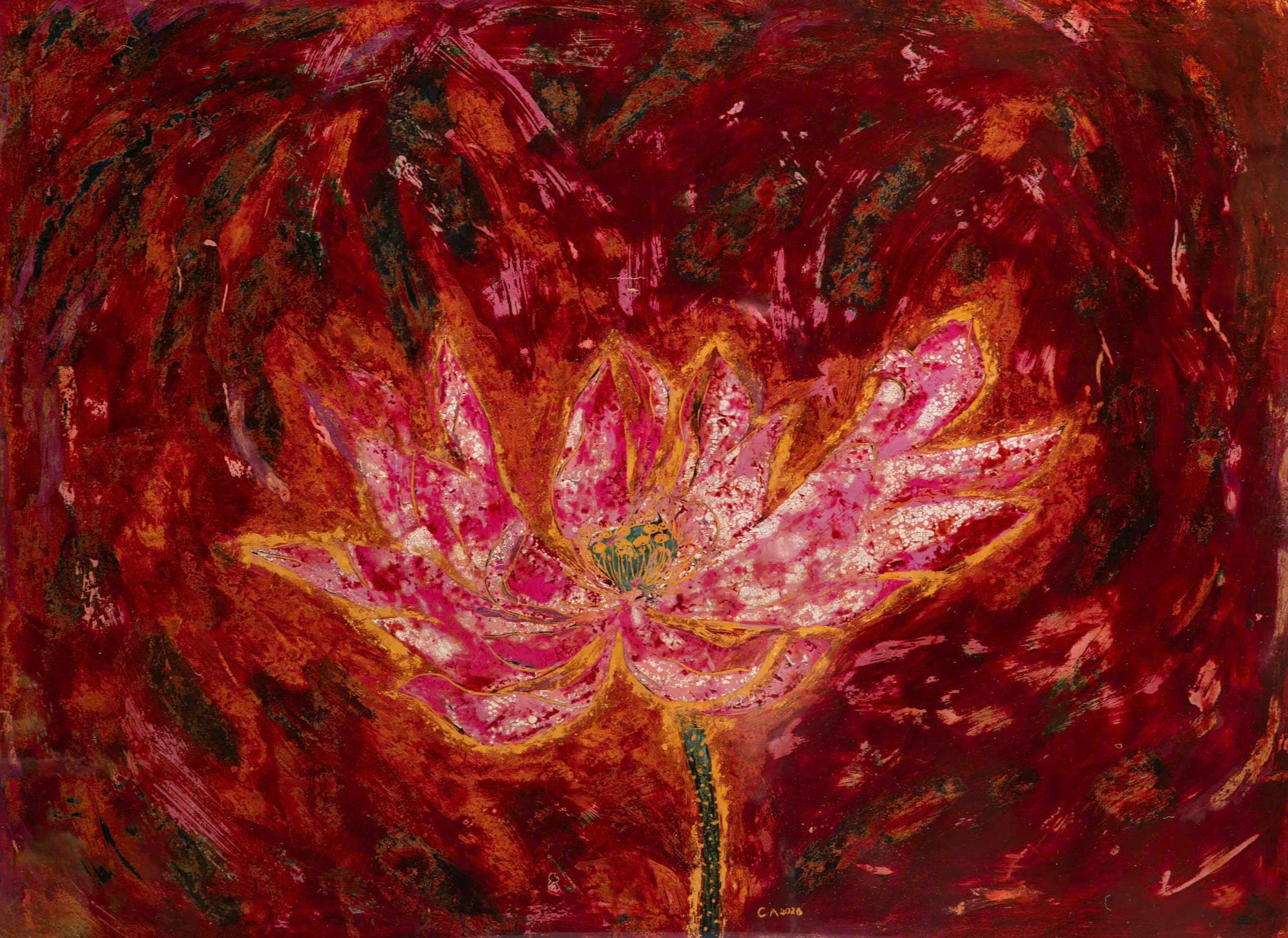
What is particularly engaging is that the young artists do not merely repeat familiar motifs but bring their own perspectives and emotions to them. Thuc An finds inspiration in the ocean, butterflies, and the smallest details of nature. Vy Le turns her gaze to the Vietnamese countryside, portraying village gates, communal houses, banyan trees, and rivers – images of cultural memory that remain present in contemporary life. Chau Anh returns to the lotus, not simply to reproduce a familiar symbol but to preserve a sense of tranquility within its layers of petals. Tuong Minh, meanwhile, explores the contemporary city through buildings and chess pieces stacked against a background of eggshell, inviting reflection on the countless lives unfolding alongside one another in an urban landscape.
Perhaps exposure to different cultures has also helped these artists recognize more clearly the value of their own roots. In an increasingly interconnected world, cultural identity remains the foundation from which each artist can develop a distinctive voice.
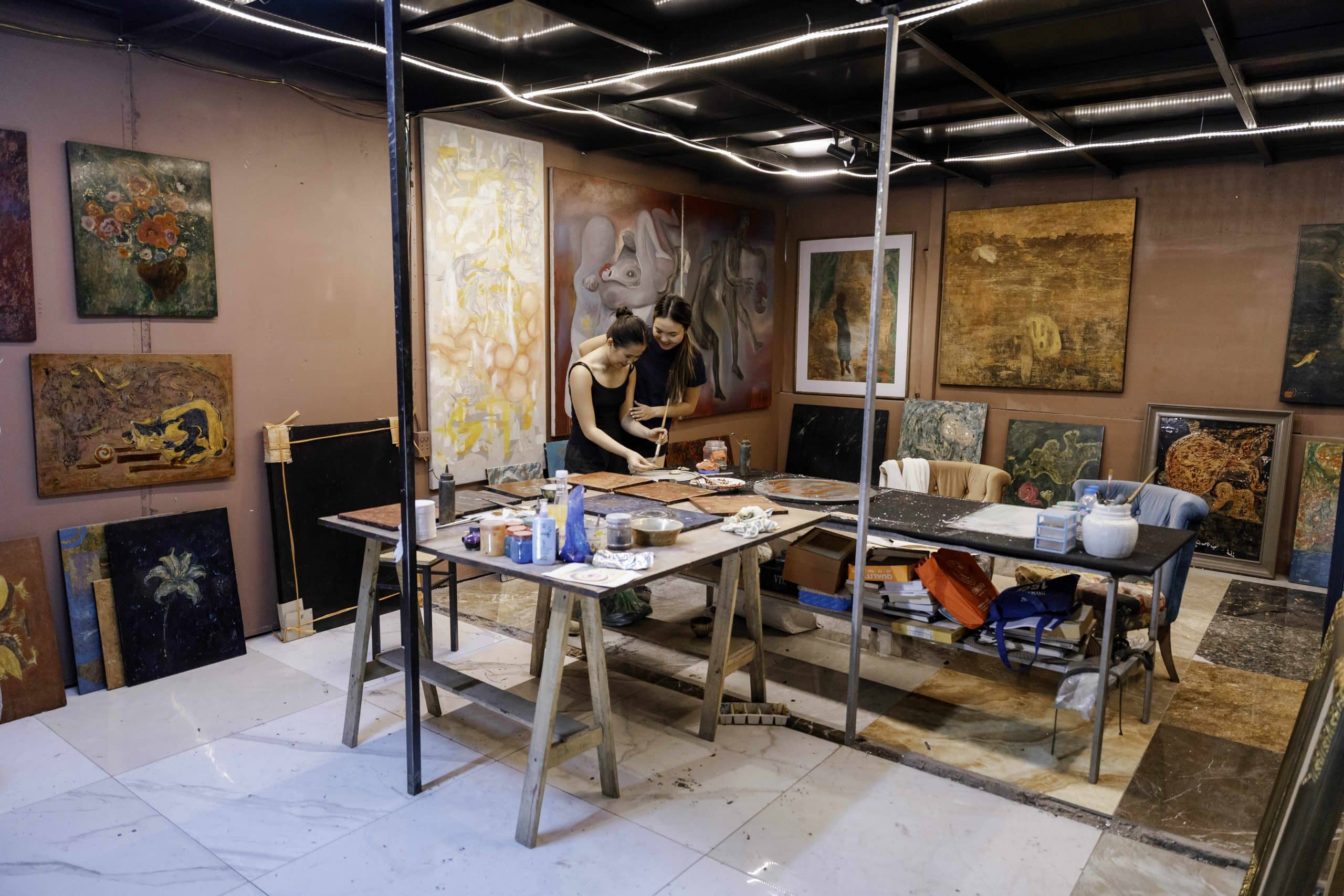
The title of the exhibition, The Lacquer of Dawn, also invites several layers of interpretation. The sap of the lacquer tree is the essential material of painting with natural lacquer, while the Vietnamese word nhua can also evoke lifeblood – the vital force that sustains continuity and renewal. Dawn marks the beginning of a new day, just as the exhibition represents an early step in the creative journeys of these four young artists.
A tradition remains truly alive only when people continue to practice, reinterpret, and pass it on. The significance of The Lacquer of Dawn therefore lies not only in presenting works from the early stages of these teenage artists’ creative development but also in demonstrating that Vietnamese lacquer is finding renewed vitality through a younger generation.