Long Ho
In Phu My, the seasonal rhythms of the wetlands shape both the landscape and the traditional craft of Khmer communities along the border.
Amid the lowlands of the Long Xuyen Quadrangle, where acid-sulfate soils shape the landscape, the Phu My sedge grasslands are one of the Mekong Delta’s few remaining expanses of relatively untouched greenery. Here, sedge and low melaleuca groves have adapted to the seasonal waters, sustaining a traditional craft deeply woven into the life of Khmer communities along the border.
Habitats on acid-sulfate soils
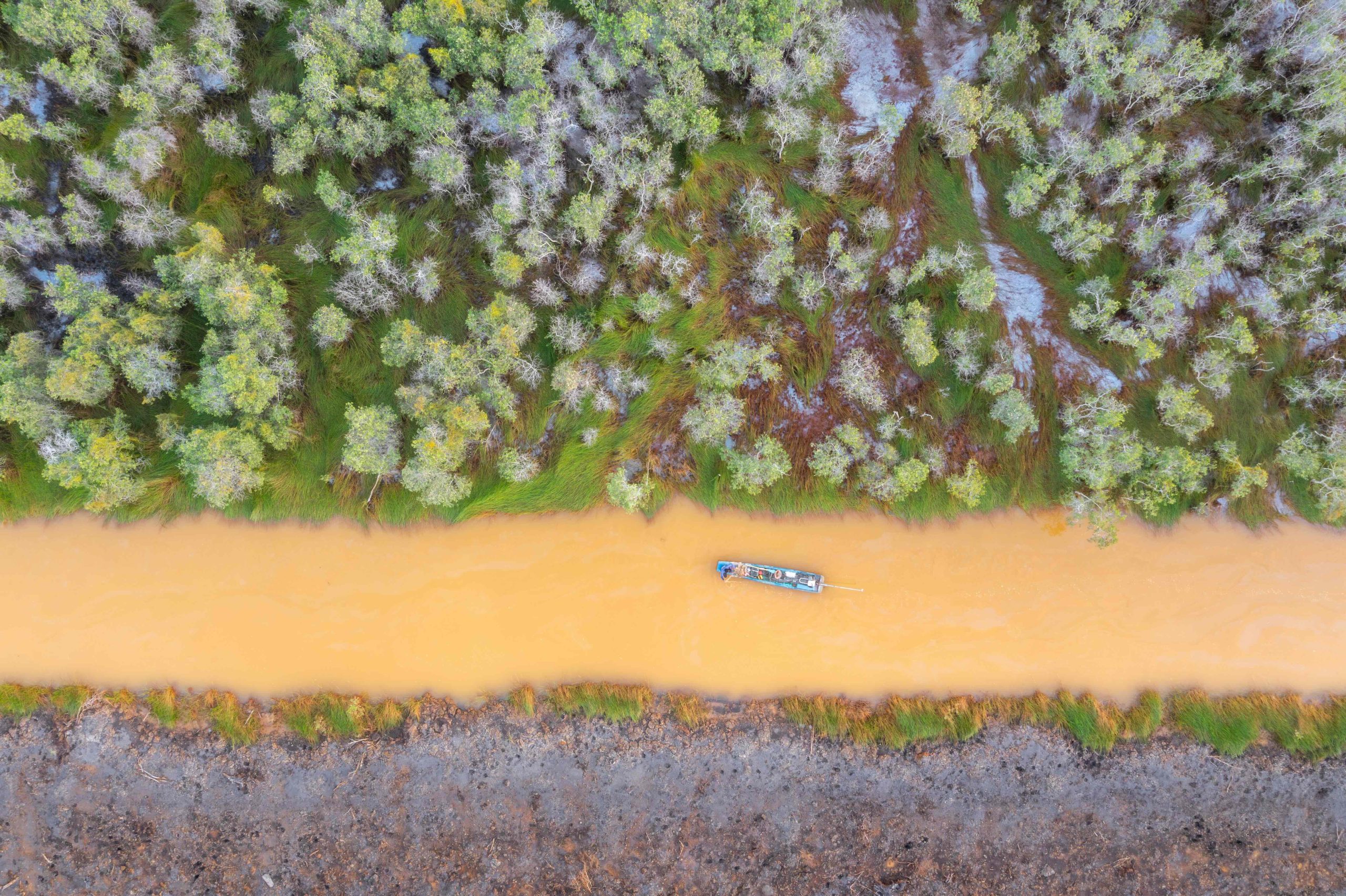
In the morning mist, the Phu My Species and Habitat Conservation Area in Giang Thanh Commune, An Giang Province, appears as a quiet green enclave amid the intensively farmed landscape of the surrounding Long Xuyen Quadrangle. Along the canals in the buffer zone, the water takes on the reddish-brown hue of highly acidic soils. Established in 2016 and covering around 2,700 hectares, including a core zone of more than 1,066 hectares, the reserve protects what is considered the Mekong Delta’s last remaining natural wetland habitat dominated by sedge (Lepironia articulata).
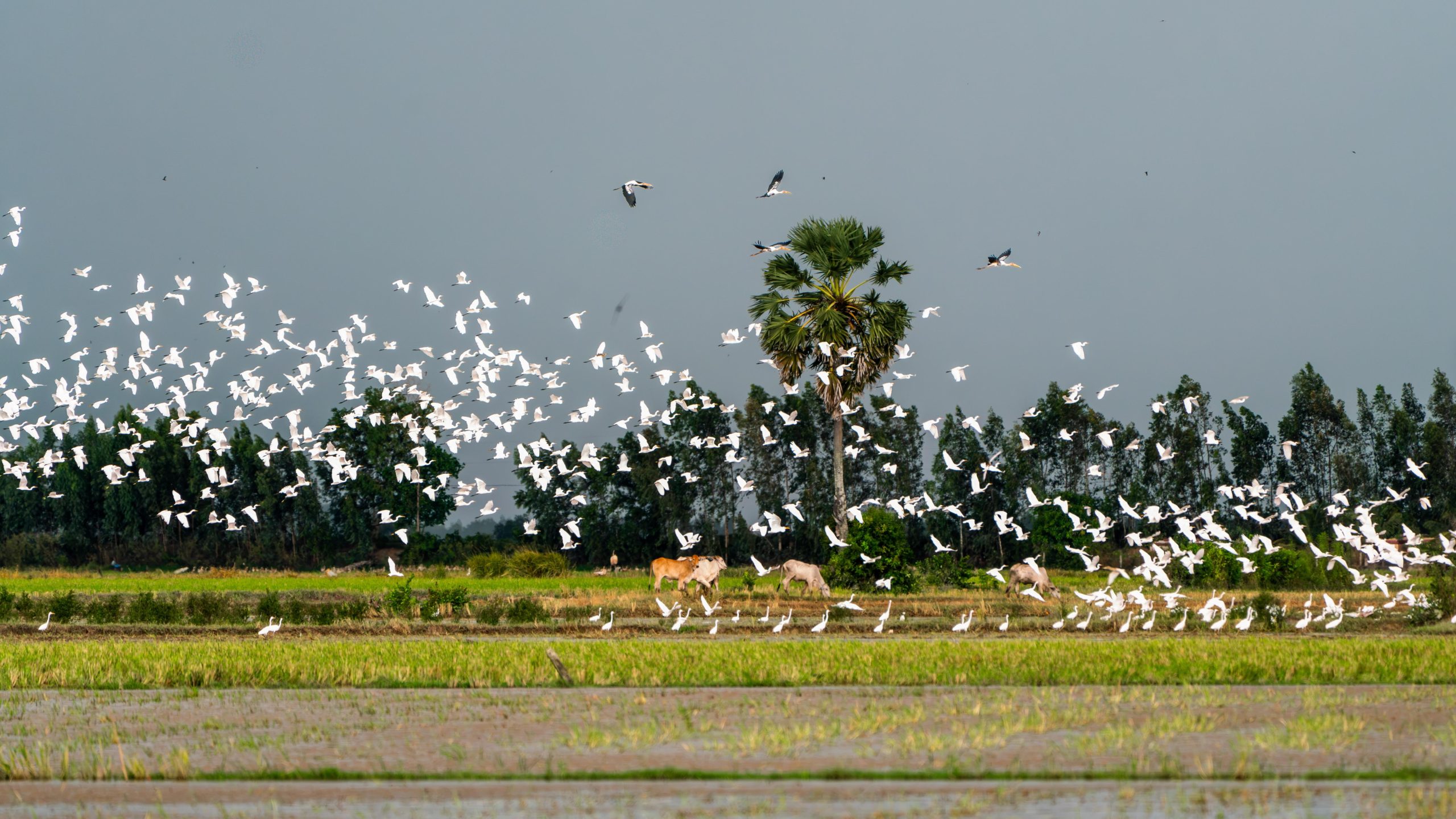
Seen from above, Phu My reveals the mosaic landscape typical of Vietnam’s southern wetlands: vast sedge grasslands interspersed with low, twisted stands of melaleuca (Melaleuca cajuputi) and natural patches of Eleocharis. The wetlands follow two distinct seasonal rhythms. From January to April, as water levels recede and the sedge flats emerge, eastern sarus cranes (Grus antigone sharpii), the flagship species associated with the conservation area’s establishment, historically returned each year to forage when nearby feeding grounds dried out. From August to November, annual floodwaters spread across the wetlands, beginning a new growth cycle for native aquatic species.
Work rhythms during the flood season
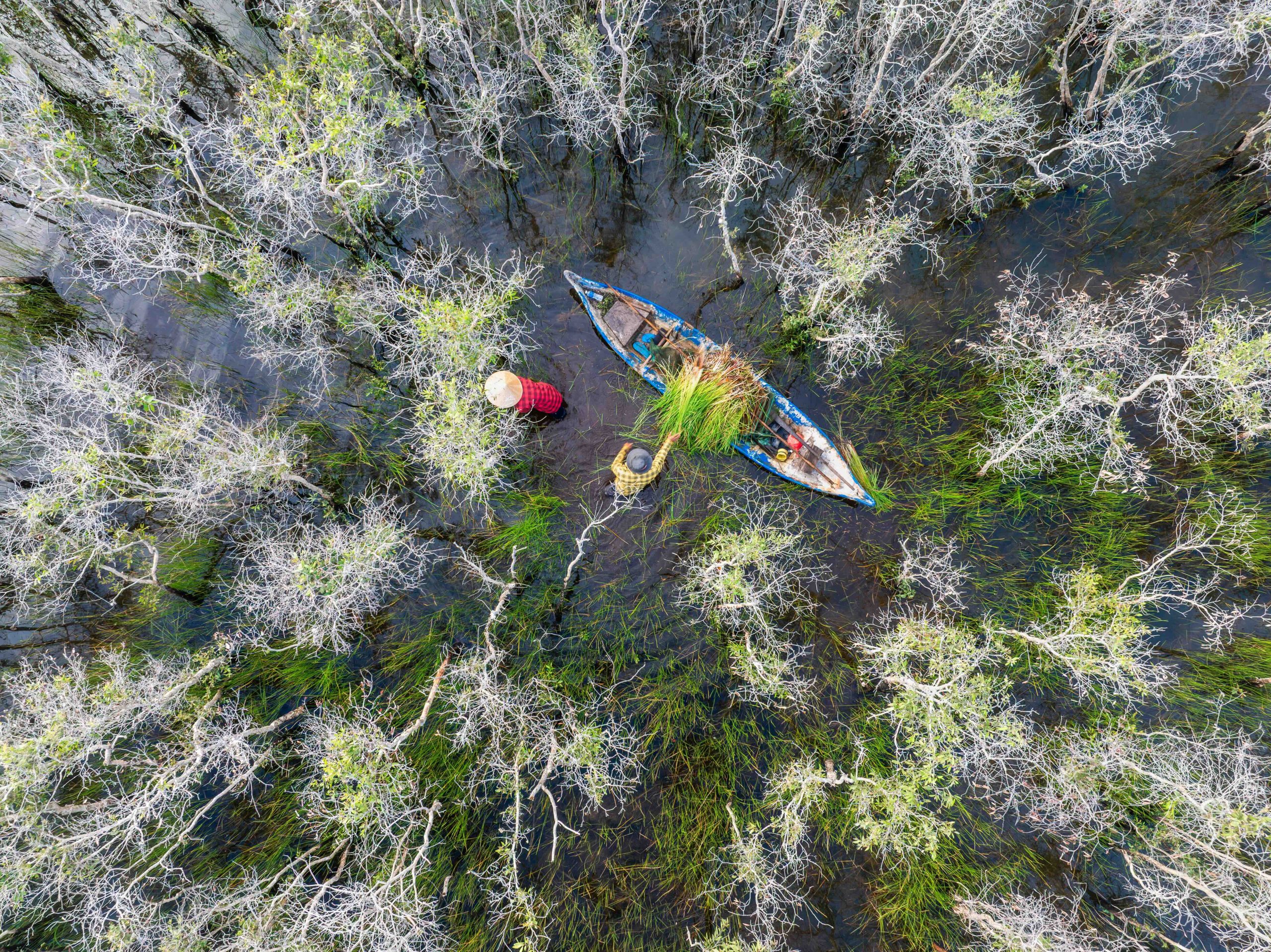
The flood season is also the busiest time of year for harvesting sedge in the ecological buffer zones. Amid deeply ư grasslands, Khmer farmers begin their working day wading through soft, waist-deep mud.
Pulling sedge requires strength and endurance. Workers grip the grass near its base and pull upward to keep the hollow stems intact. They select mature stalks through practiced judgment: firm stems, resilient fibers, and a spongy core with the right elasticity signal that the grass is ready for processing.
Once harvested, they rinse the sedge free of acidic mud and tie it into small bundles known locally as neo. The bundles may be joined into long floating rafts that drift with the current or stacked neatly in small wooden boats. Navigating natural channels between silvery stands of low melaleuca, farmers paddle steadily toward shore with each new load.
Harvesting follows the grasslands’ natural cycle of regeneration. They remove only mature clumps, leaving younger shoots to grow through future flood seasons.
From sedge fibers to a community’s memories
In Khmer villages in Tra Phot, Kinh Moi, and Tran The hamlets, the landscape seems to change color under the southern sun. Fresh bundles of sedge are draped across bamboo poles and fences or spread in fan-like shapes along roadsides to drain away the acidic water. Under the sun, the stems gradually turn from deep green to a gleaming straw yellow.
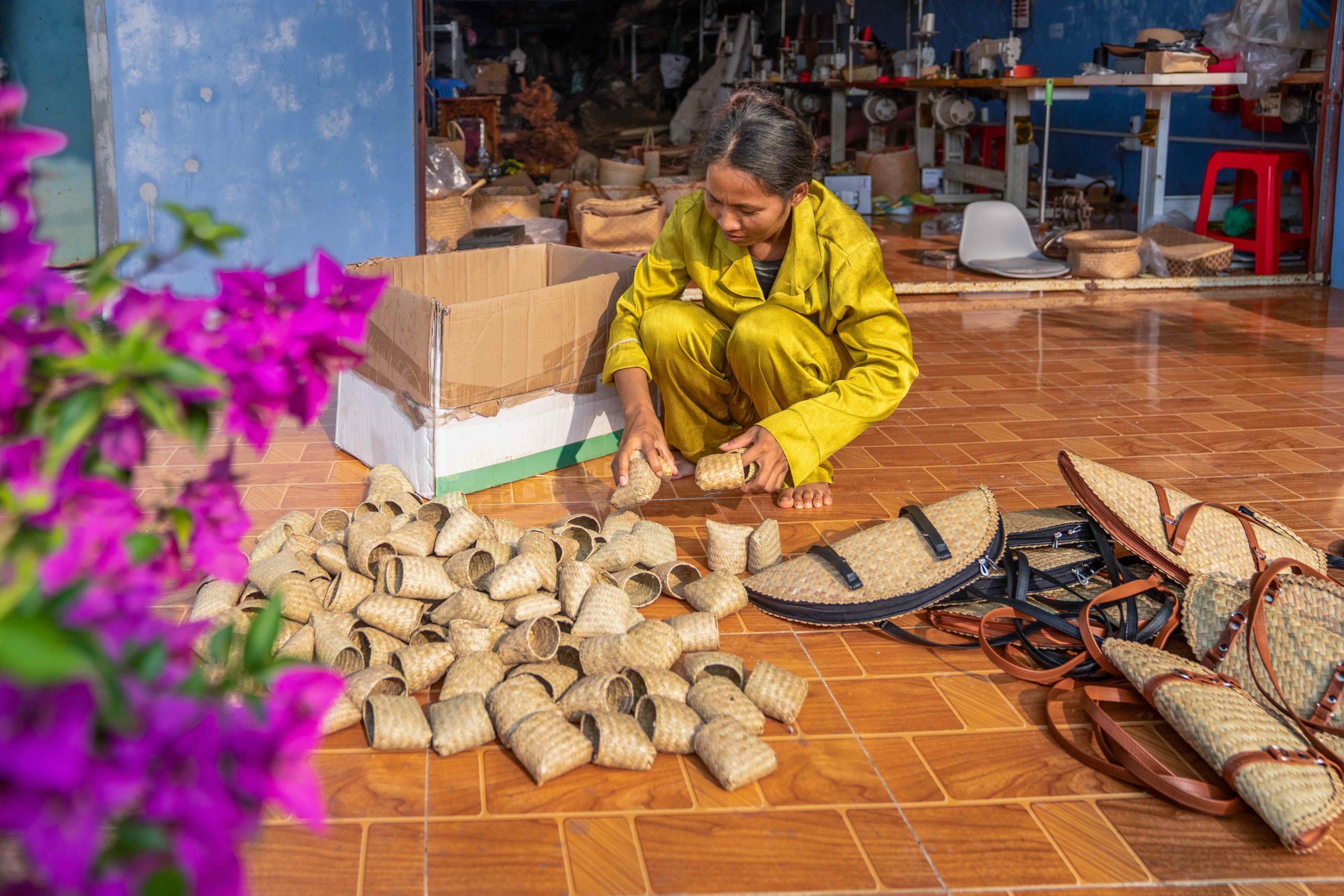
The steady pounding of sedge was once a familiar sound in the craft villages. Workers placed dried bundles on wooden boards and beat them rhythmically by hand until the hollow stems flattened and softened. Today, rolling presses have reduced the physical labor involved in flattening the dried fibers. Still, machines cannot replace the craftsperson’s eye for selecting fibers, judging tension, or weaving each strand tightly into place.
In skilled hands, sedge from the acid wetlands becomes cool sleeping mats, hats that offer shelter from sun and rain, and delicate woven bags.
In 2017, the Phu My Sedge Women’s Cooperative was established, bringing together skilled artisans to develop the traditional craft. Building on a craft already recognized at the provincial level, the cooperative’s handicraft collection was honored in 2025 by the Ministry of Industry and Trade as a nationally outstanding rural industrial product, opening new opportunities for sustainable livelihoods in the border region.
Protecting the land, preserving the craft
As sunset casts a copper-red glow across the melaleuca canopy and wetland surface, the day’s rhythm of drying sedge and weaving in the villages gradually quiets, returning stillness to the distant grasslands.
Behind the craft’s continuation lies a growing concern about the people who carry it on. Older artisans are gradually retiring from the familiar sedge-pressing tables, while fewer young people are taking their place. The risk of losing the craft also coincides with ecological pressures. Dyke construction and intensive rice cultivation are advancing toward the boundary of the conservation area, threatening to reduce the natural acid-wetland habitat.
If these habitats become fragmented, we will lose more than expansive wild grasslands. We will also lose livelihoods and cultural memories shaped over generations.
As the dry season draws to a close, young sedge shoots emerge once again from underground rhizomes beneath the acid soil, beginning a new cycle of growth. By late afternoon, the water between the melaleuca groves and grasslands grows calm again.
Protecting the Phu My sedge grasslands is about more than conserving a distinctive wetland ecosystem in the Mekong Delta. It is also about preserving the deep connection between people and the land they have depended on for generations.