Story: Pham Minh Quan
Photos: Ba Ngoc
Beyond Ninh Binh’s tranquil waters and towering peaks lies a cinematic landscape where history and imagination come alive.
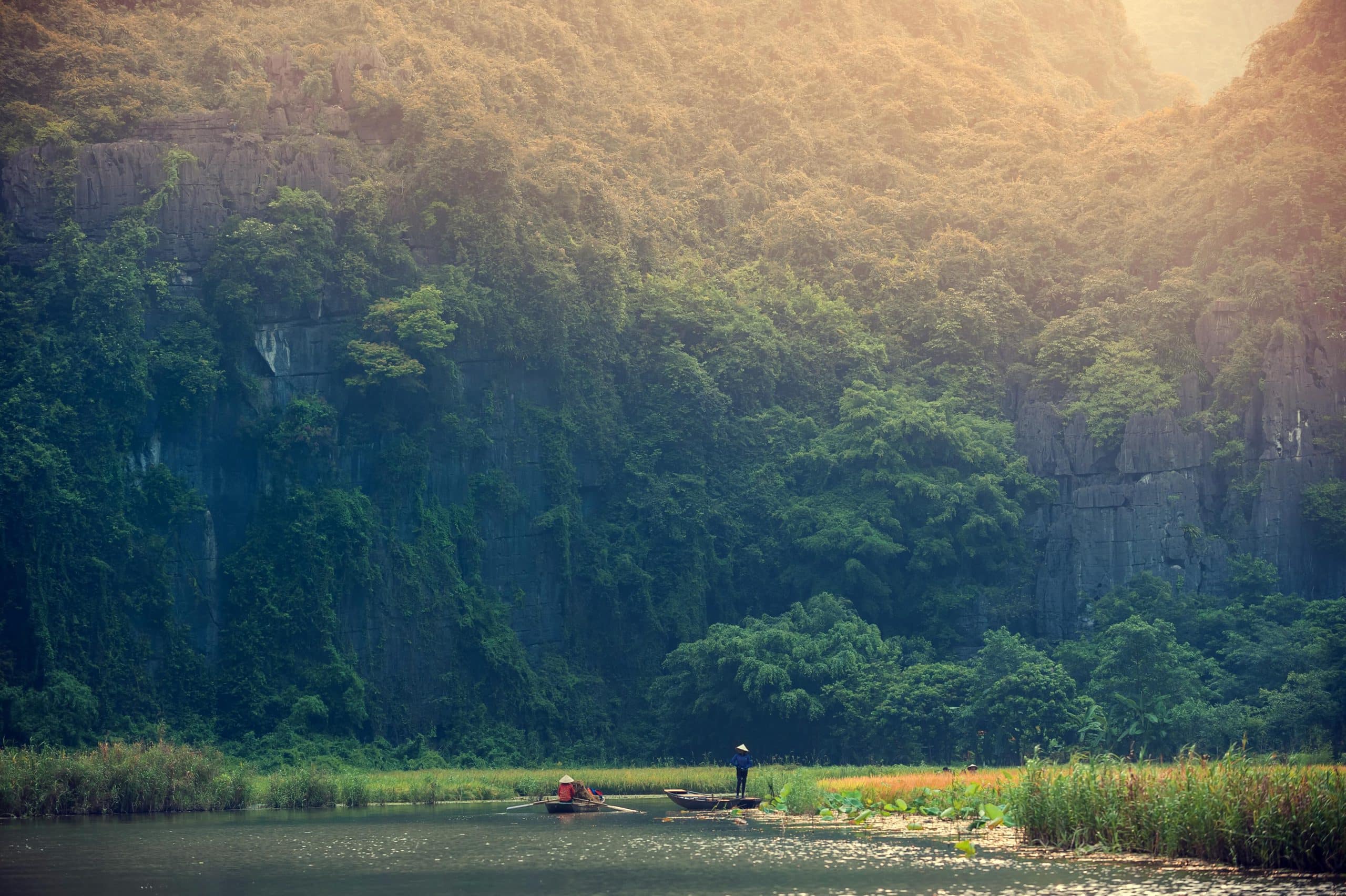
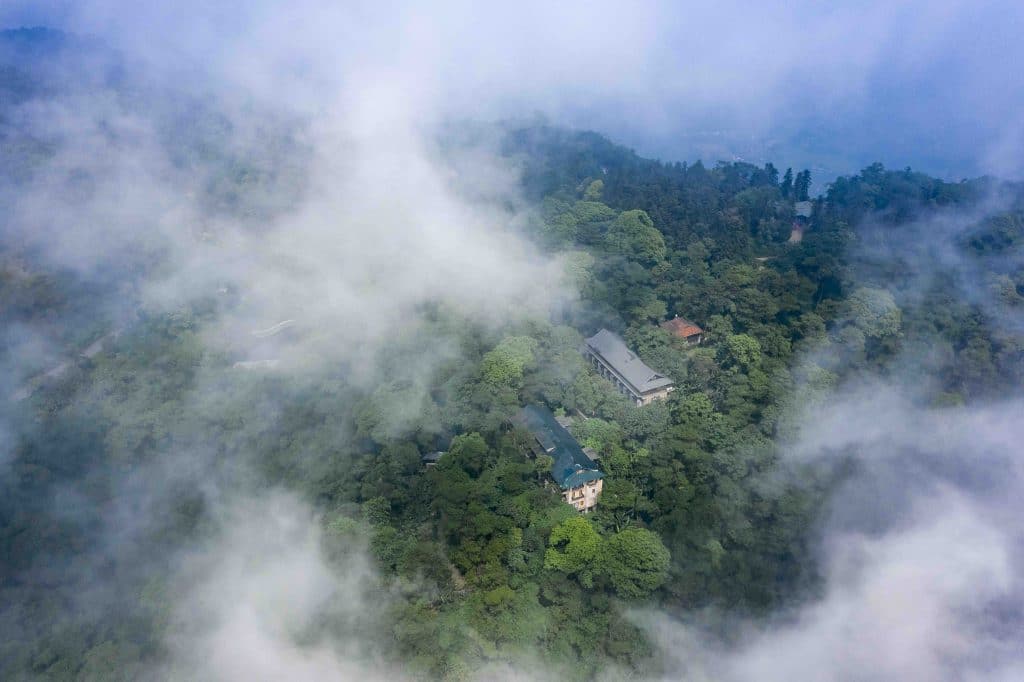
Amid towering limestone mountains and still waters that quietly reflect the sky, a small boat glides through a cave, revealing unexpected vistas beyond the mountains. The landscape unfolds like a movie scene. Light shifts beneath each cavern arch, layers of mountains appear one after another, and the river leads visitors deeper into a world both expansive and mysterious. Shaped over millions of years and enriched by centuries of cultural memory, Trang An and the wider Ninh Binh region have long inspired visual storytellers.
The diversity and adaptability of Ninh Binh’s iconic landscapes draw many filmmakers. Different camera angles can transform a mountain range, a flooded valley, or a passage through a cave into an island in a fantasy world, a realm of martial-arts heroes, or the setting of an ancient legend. Ninh Binh is often described as a “natural film studio.” The close ties between landscape and history make it particularly compelling. In Hoa Lu and Trang An, the very contours of mountains and rivers form part of the region’s collective memory. The limestone ranges that once protected the capital of Dai Co Viet remain woven into today’s valleys, waterways, and caves.
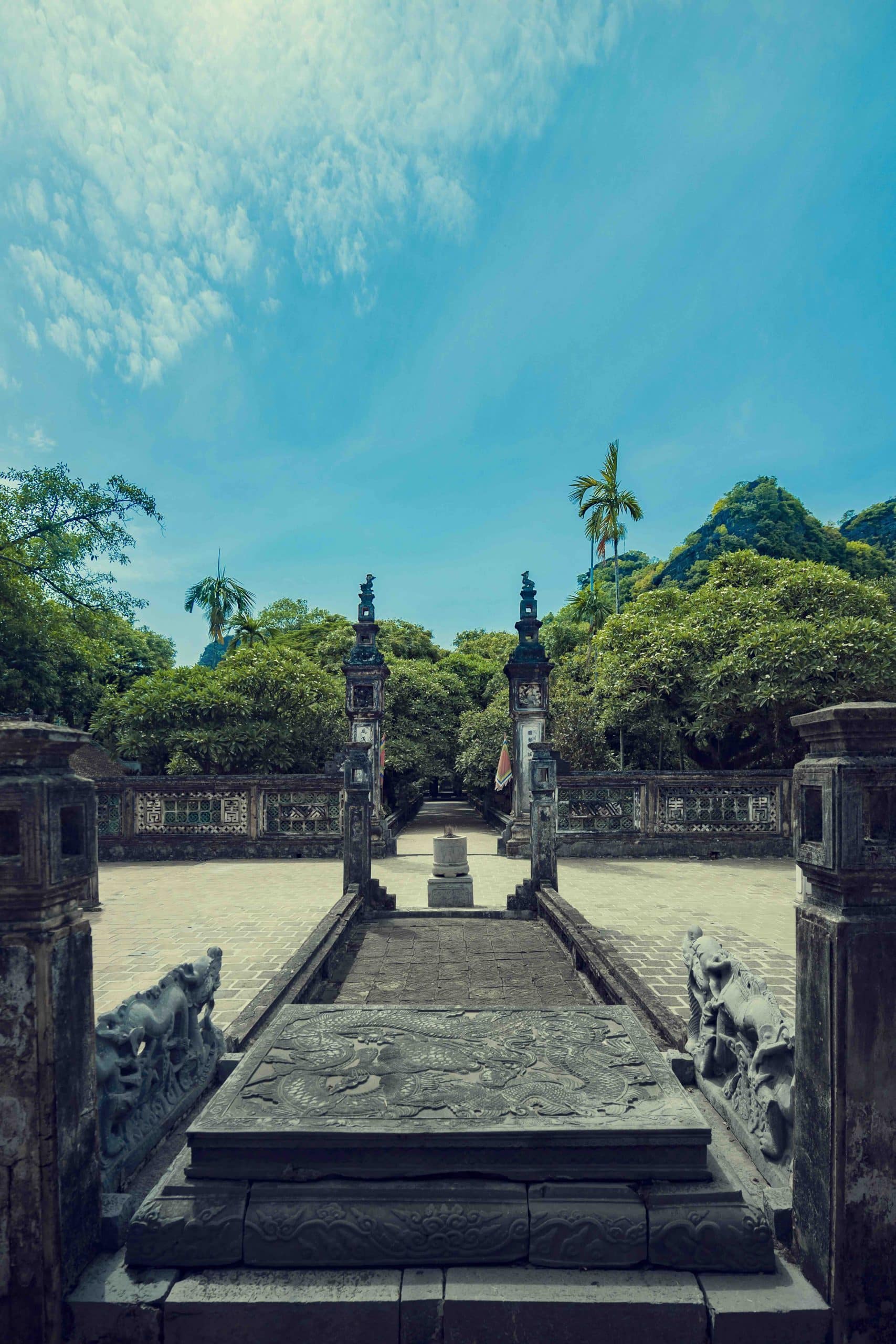
For cinema, this is a remarkable advantage. A cinematographer arriving in Trang An does not need to search for a space to fill with scenery. The landscape already contains layers of time, stories of human lives, and traces of the earth’s transformation. Nature can help shape the mood, rhythm, and destiny of the characters.
International audiences discovered this visual power through Kong: Skull Island. Ninh Binh’s limestone mountains, wetlands, and valleys became a spectacular, unfamiliar primordial world. Under a new guise, Vietnam’s landscapes appeared on the global cinematic map.
Vietnamese filmmakers have also found many possibilities in Ninh Binh. Sword of the Assassin drew on the grandeur of Trang An, Tam Coc, and Hoa Lu to create the lyrical yet heroic atmosphere of a historical martial-arts tale. Tam Cam: The Untold Story found an enchanting realm of fantasy and fairy tales in Hoa Lu, Bai Dinh, and Tam Coc – Bich Dong. Many music productions have also turned to Ninh Binh, showing that the region’s visual appeal reaches far beyond cinema.
A particularly compelling encounter is now unfolding as cinema returns to the cultural memories of Hoa Lu itself. Spirit Guardians: The Last Secret of the First Emperor draws inspiration from legends and historical lore surrounding the emperor who established the state of Dai Co Viet. Returning to Hoa Lu to tell the story of Emperor Dinh, the film finds a natural resonance between narrative and landscape. The mountains that once sheltered the ancient capital, together with its deep valleys and hidden passages, seem inherently suited to a mysterious journey.
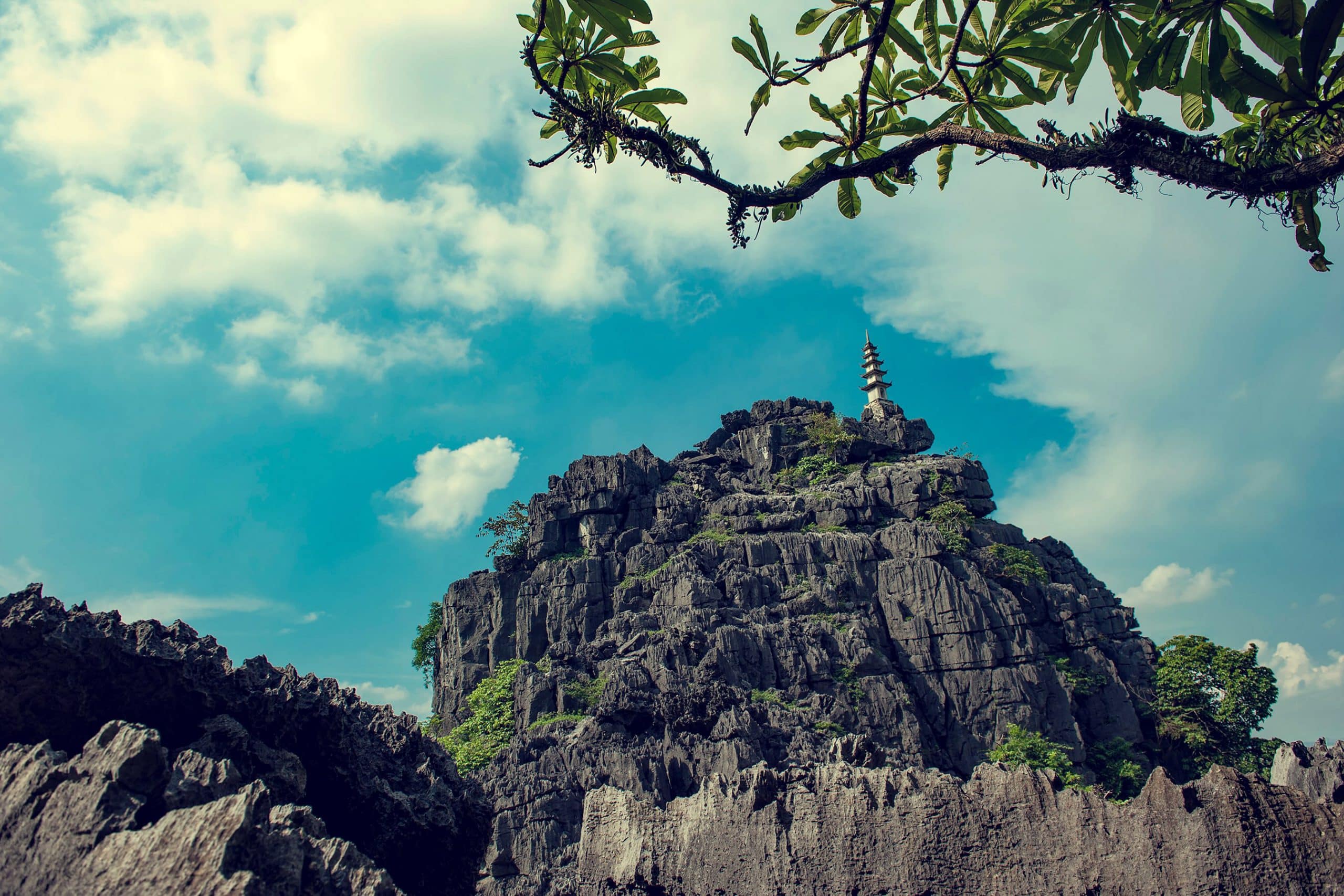
According to legend, the Spirit Guardians were entrusted with protecting the founding emperor’s tomb from those who sought to desecrate it. Set against the landscapes of Hoa Lu and Trang An, the story turns mountains and rivers into an integral part of a legendary world, where loyalty, power, loss, and faith converge with memories of the early Vietnamese state’s formation. The film’s grand-scale sequences, shot where the ancient capital stood, create a compelling way to engage with heritage, allowing history to be experienced through the images, sounds, and emotions of contemporary cinema.
Perhaps Trang An’s enduring appeal lies precisely in its capacity to evoke strong and disparate emotions. Through every camera angle, the mountains and waterways seem to tell a different story. Sometimes they form a world inhabited by giant creatures, sometimes a realm of heroic martial-arts fighters, sometimes a fairy-tale landscape, and now the legendary court of the founding emperor. Trang An remains a land of untold stories. Its mountains, waters, and memories quietly preserve worlds that awaken before the camera. Inspired by this landscape and its history, filmmakers’ imaginations continue to flourish.