
Story: Ngo Quang Minh
Photos: Nguyen Thi Minh Hai
In northwestern China, autumn brings a new richness to the landscapes and historic sites that once formed a vital stretch of the Silk Road.
Along the Silk Road linking Asia and Europe, travelers often share stories of Gansu in autumn, when the landscape takes on a brilliant golden glow. During this season, golden foliage transforms northwestern China into a rich ribbon of color stretching across the vast wilderness and thousands of years of history. Camel caravans once left their tracks here as they crossed snow-capped mountains, deserts, and steppes, returning to the ancient capital of Chang’an or continuing into Central Asia in search of distant lands.
A journey to discover Gansu often begins in Dunhuang, a radiant gem of the Silk Road. For more than 2,000 years, the city served as a vital gateway for trade between East and West. Merchant caravans from far and wide brought not only goods but also culture, art, and beliefs that converged here. Dunhuang became a thriving commercial hub and a crossroads of diverse civilizations.
Heading east from Dunhuang, travelers arrive at “the first and greatest pass under heaven,” Jiayuguan, located at the western end of the Ming Dynasty Great Wall. Together with its network of walls, moats, fortresses, and beacon towers, it formed a vital line of defense along the Hexi Corridor. To the ancient Chinese, Jiayuguan held deep symbolic meaning; passing through this gate meant entering the vast and mysterious Western Regions. Standing atop the time-worn ramparts on an autumn afternoon and gazing across the endless desert toward the distant Qilian Mountains, one can easily imagine the cavalry, travelers, and monks who passed through here for more than 600 years.
The desert winds of Dunhuang lead travelers onward to the famous Mingsha Mountain and Crescent Lake – twin symbols of Gansu. Mingsha Mountain is renowned for its sands, which feature red, yellow, green, white, and black hues, while Crescent Lake, true to its name, forms a graceful crescent nestled in the vast desert. This lake is remarkable in that its water has remained clear blue for centuries, amid the surrounding dunes.
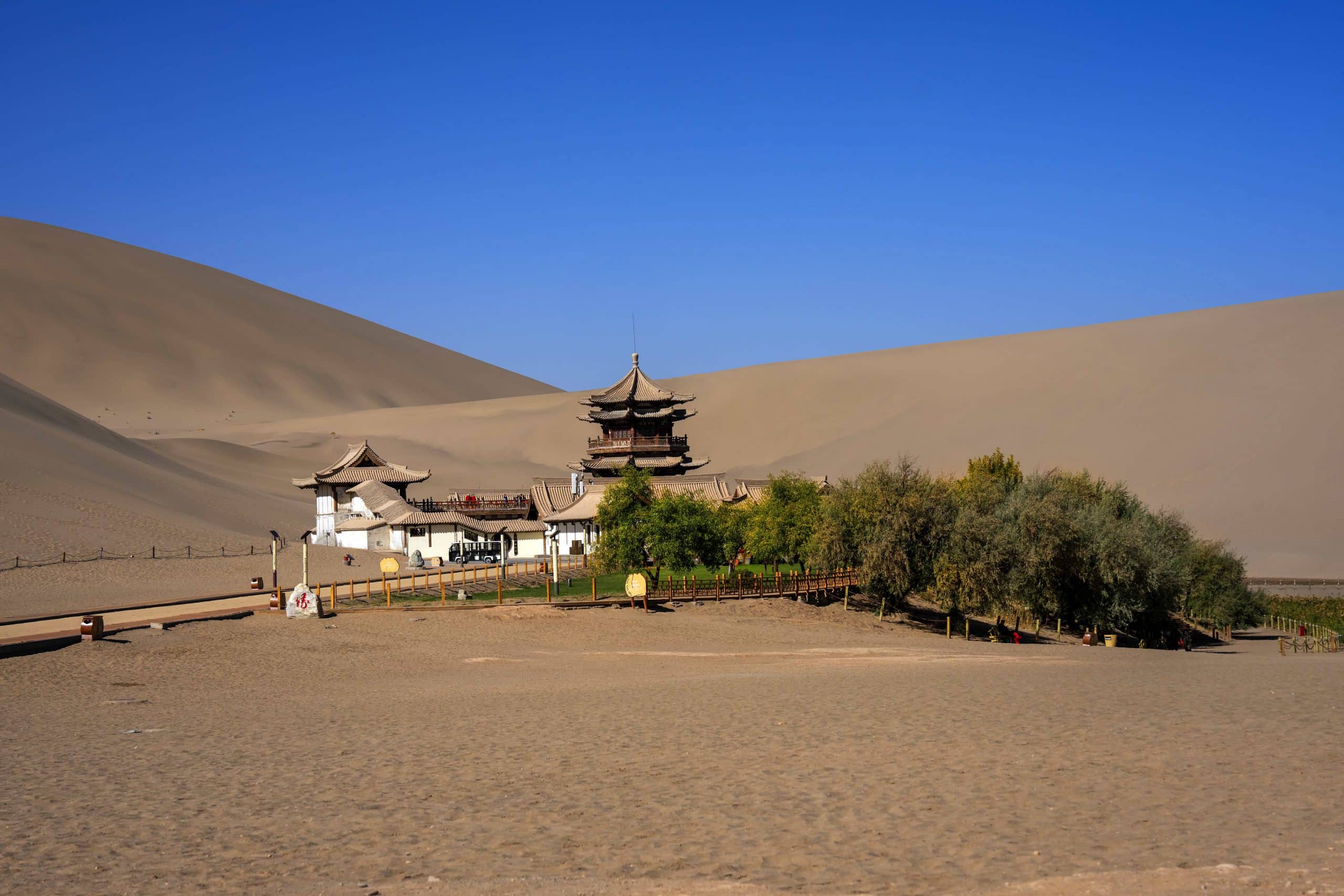
Crescent Lake is the subject of various legends. One tale compares the body of water to a clear blue tear that fell into the desert, a gift to travelers struggling against the harsh heat of the Gobi. By day, Crescent Lake is a refreshing oasis that attracts visitors eager to take photographs. By night, its mirror-like surface reflects the bright moon, creating a tranquil and magical scene.
Surrounding Crescent Lake are the “singing dunes” of Mingsha Mountain. The name comes from a unique natural phenomenon: when the wind blows, or visitors slide down the slopes, moving sand grains collide and produce an echoing sound. At sunset, the entire desert turns reddish orange, while the long shadows of camels stretch across the dunes, creating a striking end to the day.
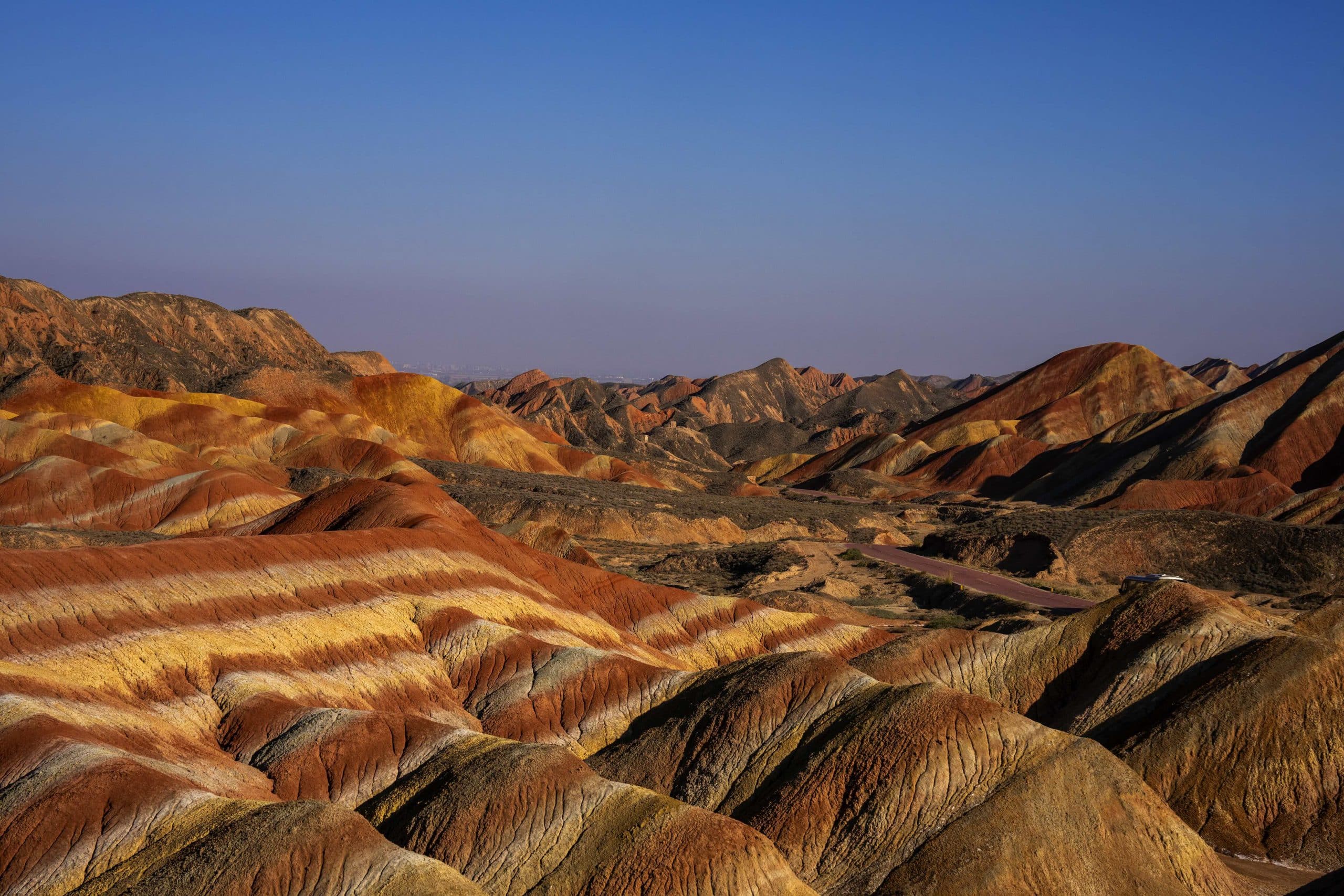
While Dunhuang possesses the soft beauty of sand and water, the Zhangye Danxia landforms leave visitors spellbound with the vibrant colors of their rock formations. The sedimentary layers here formed during the Cretaceous period and have undergone more than 100 million years of tectonic movement, weathering, and erosion. As a representative landscape of arid northwestern China, the area is celebrated for its combination of Danxia landforms and colorful hills. Strata of red, yellow, white, brown, orange, and purple rock are layered one atop another like a giant rainbow.
Sunrise and sunset are the ideal times to view these “rainbow mountains.” As sunlight strikes the hillsides at an angle, the colors of each rock layer become even more vibrant. Beyond its geological value, Zhangye was once an important stop along the Silk Road, leaving a rich cultural legacy shaped by Han, Hui, Tibetan, and other ethnic communities. Local markets still offer regional specialties such as dried fruits, walnuts, almonds, and local spices.
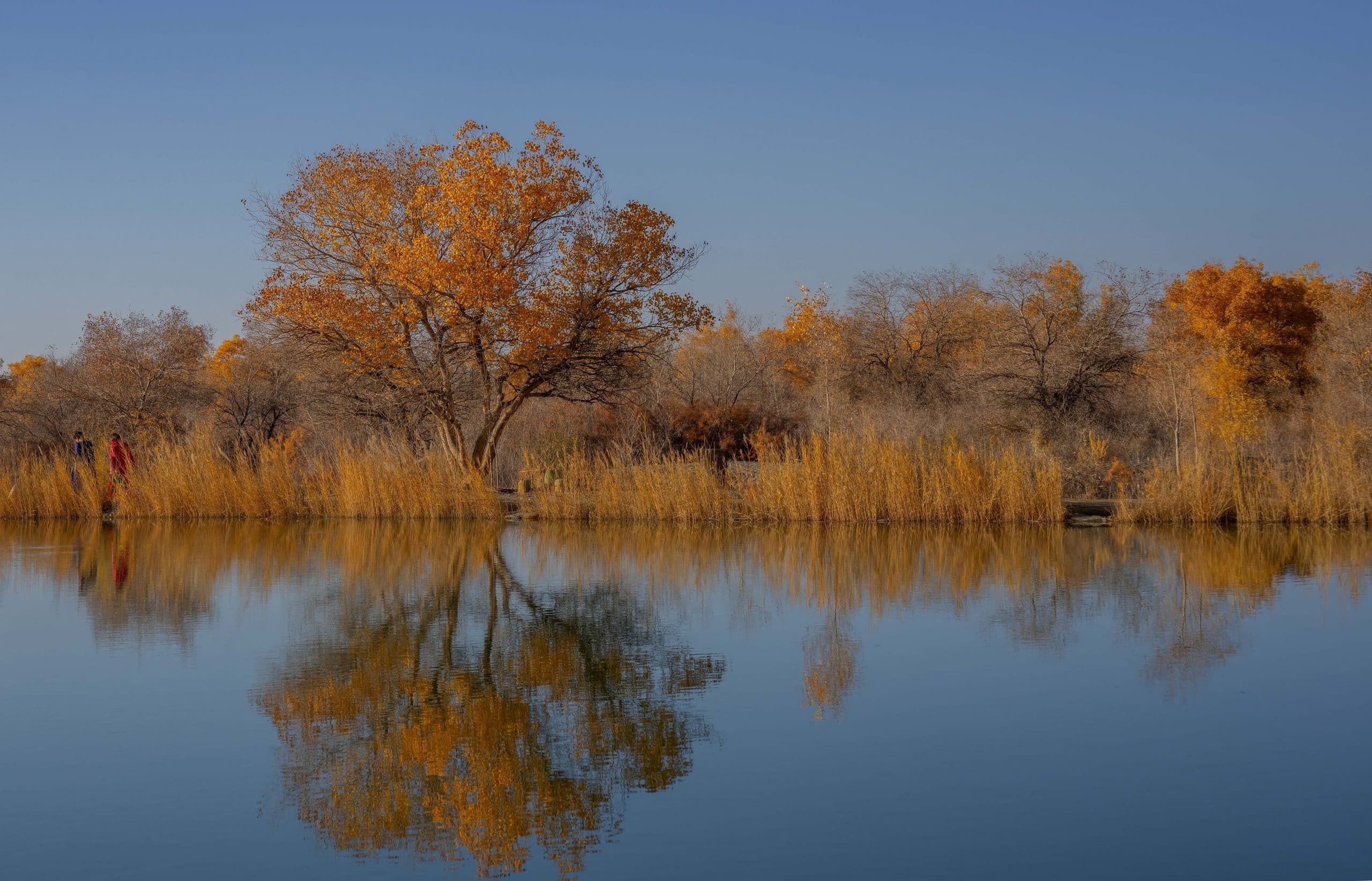
Gansu’s autumnal charm also captivates visitors in the Euphrates poplar forest in Jinta County, Jiuquan City. Dubbed “warriors of the desert,” these trees are drought-tolerant, salt-tolerant, and remarkably well adapted to the harsh climate. Their resilience is reflected in a popular Chinese saying: “A poplar lives for 1,000 years, stands dead for 1,000 years, and remains unrotted after falling for another 1,000 years.”
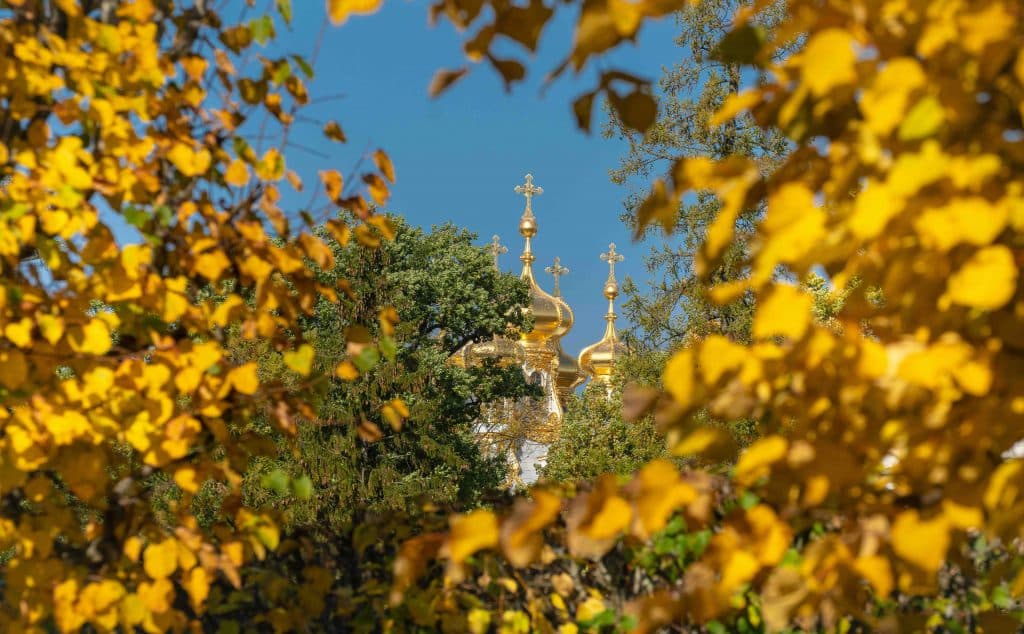
Spanning over 600 hectares, the Jinta Poplar Forest features a mix of poplars, red willows, and various drought-resistant desert plants. From late September to mid-October, the entire forest transforms into a sea of gold. Clear pools nestled among ancient trunks reflect the vast sky above. Today, Jinta Forest has been developed into a signature eco-tourism destination along the Silk Road corridor.
Autumn in Gansu delights travelers not only with its famed landscapes but also with its cultural depth and centuries of accumulated history. Spectacular views and timeless tales tell the ongoing story of the legendary Silk Road.