Story: Dinh Cuong Manh
Photos: Nguyen Ba Ngoc
In the highlands of Tuyen Quang, Dao Tien clothes carry symbolic messages and protect their wearer.
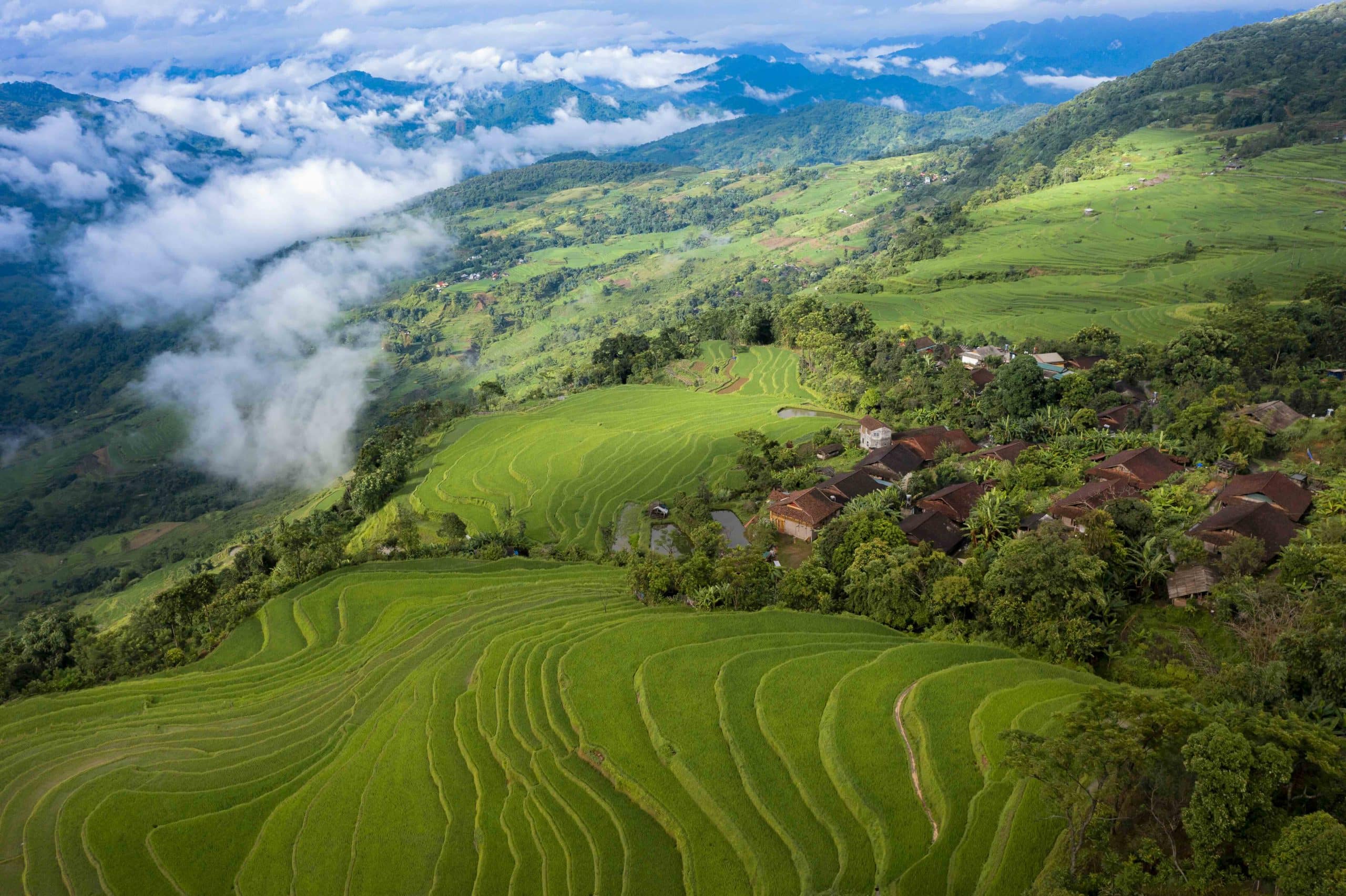
Situated at an average altitude of 1,000 to 1,200 meters above sea level, the highland commune of Hong Thai in Tuyen Quang Province enjoys a cool climate year-round. Across a landscape of drifting clouds and ancient yin-yang tiled roofs, Dao Tien women stand out in traditional indigo attire decorated with shimmering silver patterns.
Making up nearly 40% of the local population, the Dao Tien community has shaped a distinct cultural identity in Hong Thai. Throughout a history marked by migration, their traditionally nomadic lifestyle left few permanent architectural monuments. Instead, the Dao Tien people expressed their worldview, aesthetic values, and aspirations through their clothing. Their attire does more than protect them from the mountain cold; it serves as a living record of their history and reflects a close relationship between people and nature.
The name “Dao Tien” (Money Dao) comes from the custom of sewing ancient coins onto clothing, particularly on the back of the neck and across the chest. Instead of buttoning their long tunics down the front, Dao Tien women cross the flaps and secure them with a woven belt more than two meters long wrapped around the waist.
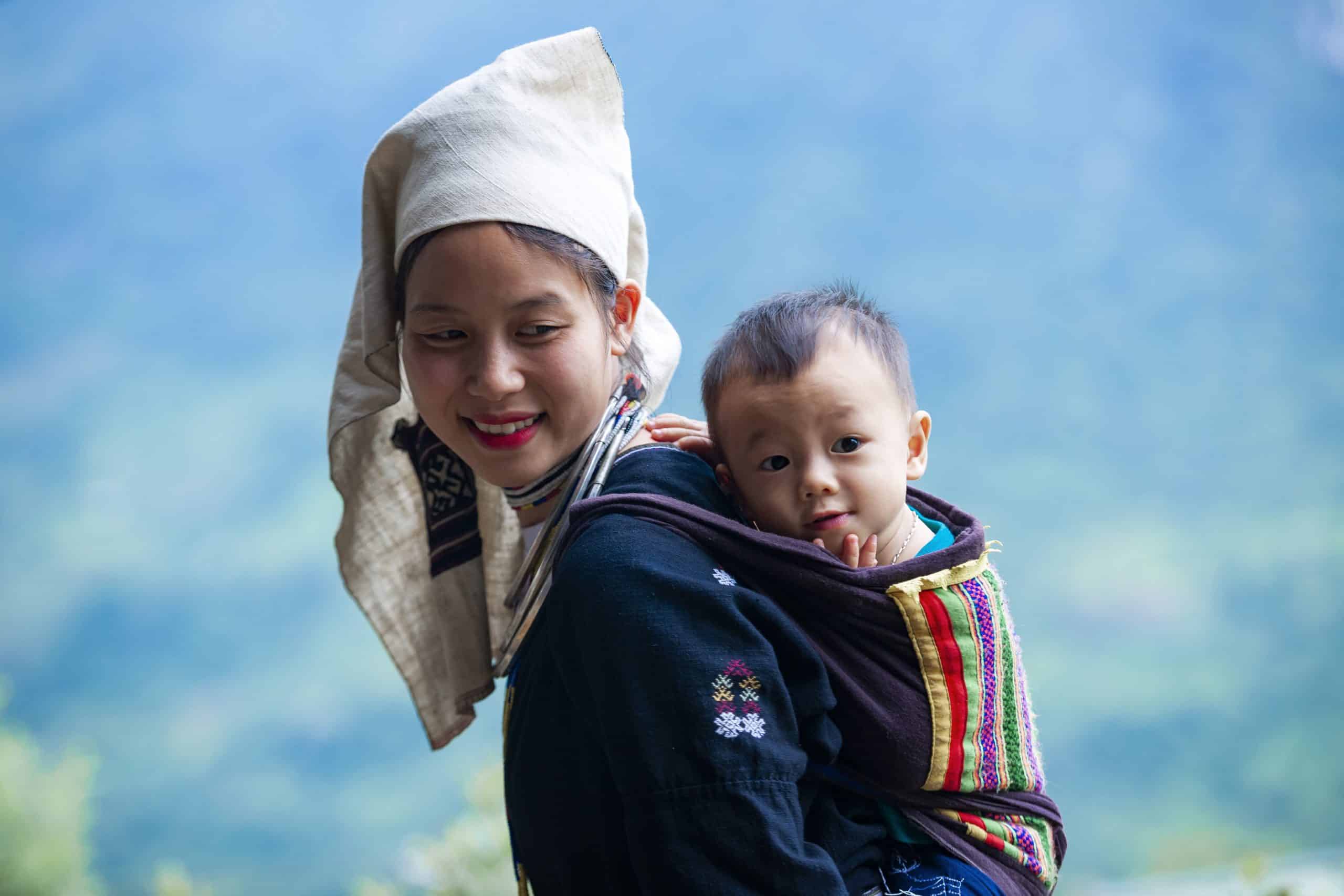
A distinctive feature of their attire is a set of silver buttons on the chest, six to seven centimeters in diameter and shaped like an eight-pointed star. The Dao Tien view this motif as a feng shui compass representing the four sides and eight directions, helping protect the wearer’s life energy. Connected to the star are silver coins that symbolize the lineage of the original clans, said to have been gifted by their founding ancestor Ban Vuong during the migration era. Paired with silver chains worn at the hip, they produce a clear jingling sound with each step, which is believed to ward off evil spirits in the forested mountains.
The Dao Tien aesthetic favors colors that are neither flashy nor bright, and that do not contrast strongly. Instead, indigo and white dominate, creating a rustic but balanced harmony that reflects the mountain landscape. These outfits are crafted by skillful Dao Tien women. Each piece of clothing – from the headscarf, side-slit long tunic, and breast-covering bodice to the pleated skirt – is made from natural cotton fibers and dyed deep indigo.
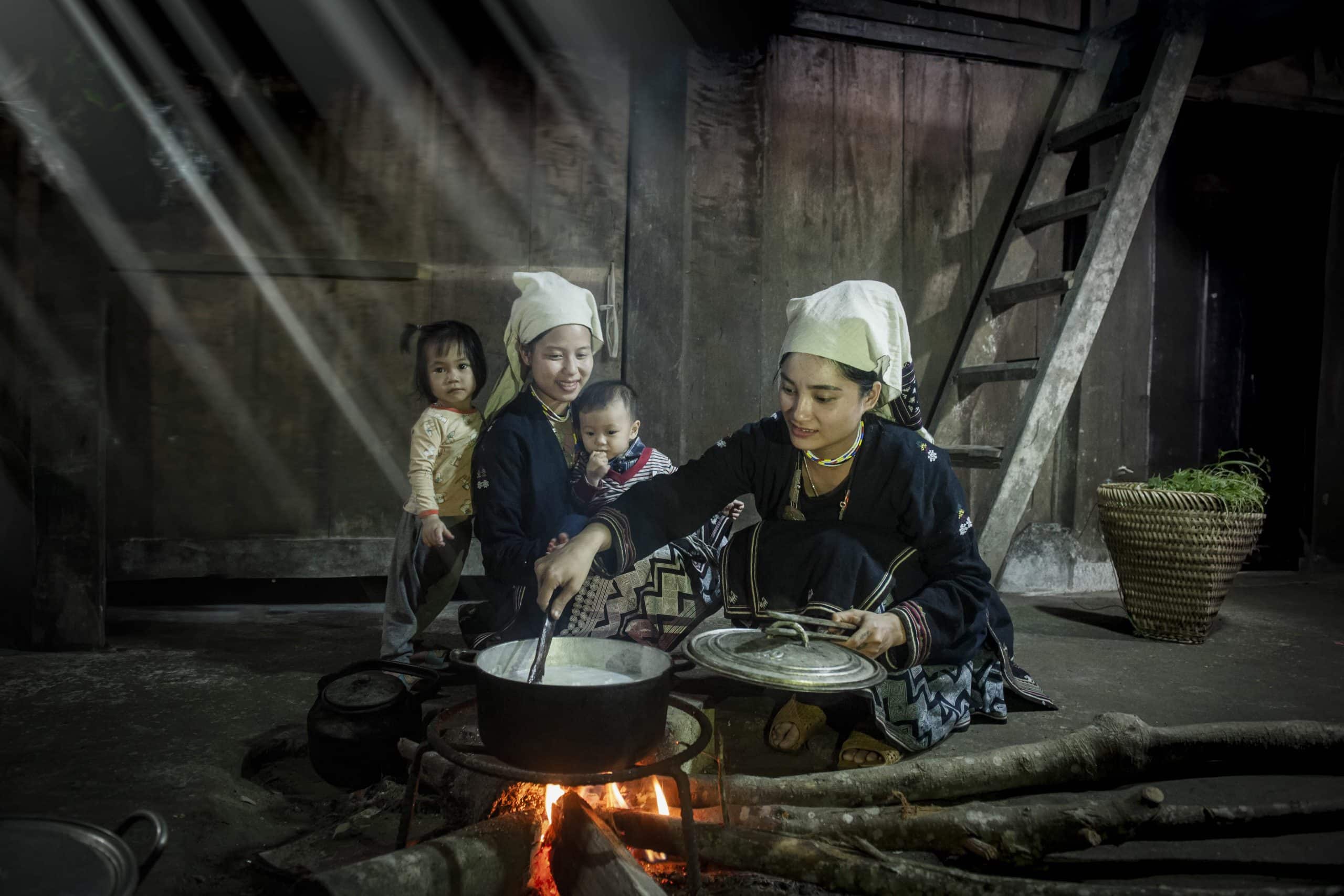
Against this indigo base, decorative details stand out. The embroidery features segmented blocks of color rather than large solid areas. Instead of broad bands of warm colors, Dao Tien women break red, yellow, and green into small, intricate patterns on the belts, leggings, and lapels.
The women’s ankle-length skirts showcase the refined technique of beeswax resist-dyeing. In contrast to the more spontaneous style of the Mong people, Dao Tien wax-printing follows strict rules and precise geometric symmetry. The process requires months of careful work. Women use melted wild beeswax to draw patterns on the fabric before dyeing it with indigo and then boiling it to create blue-and-white designs.
From a semiotic perspective, the patterns on Dao Tien women’s clothing form a system of spiritual symbols that encode migration history, totemic beliefs, and their worldview. Along the edges of the wax-printed skirts are continuous wavy lines interspersed with circular wheel-like motifs. These designs are believed to represent ocean waves, recalling the heroic and tragic migratory journey their ancestors made across the sea.
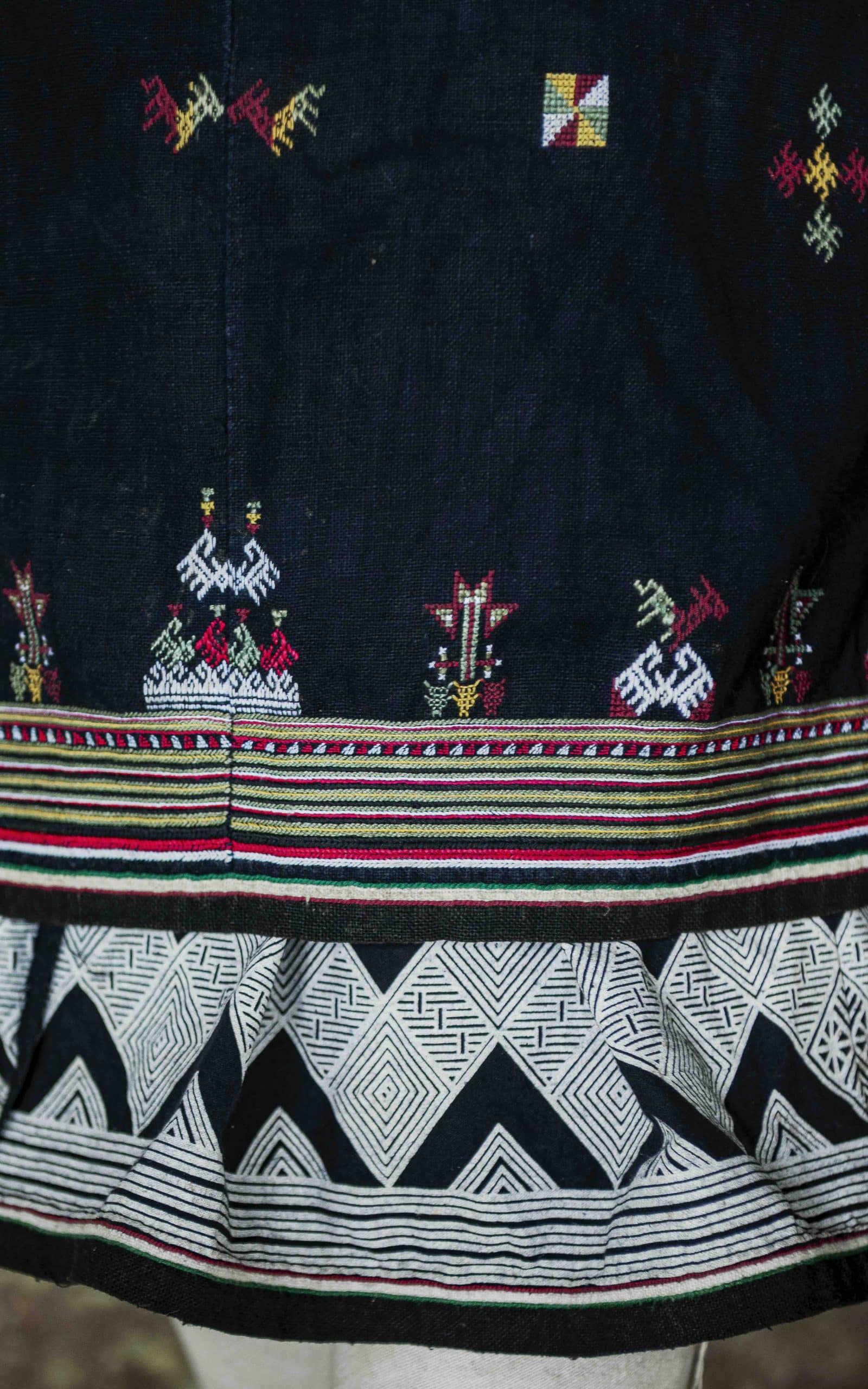
On the indigo chest panel, vivid hand-embroidered motifs in the shape of dogs or dog footprints represent Ban Ho, the mythical dragon-dog ancestor of the Dao people. This totem serves as a sacred amulet, believed to protect and shelter the wearer under the ancestors’ guidance.
The pine tree pattern, rising straight toward the sky, represents longevity and resilient vitality that endures harsh frost and snow. The swastika symbol signifies the wheel of reincarnation and cosmic wisdom, reflecting an intersection of Buddhist and Taoist beliefs. Other vivid embroidered motifs include eight-pointed stars, leaves, birds, and human figures.
In Hong Thai, Dao Tien people uphold their traditional weaving and embroidery crafts by teaching these skills to younger generations from an early age. The preservation of heritage, together with the development of eco-tourism, has created a more sustainable path forward, improving livelihoods and strengthening pride in their ethnic identity.