
Story: Hoang Thu Uyen
Photos: Thu Phan
Explore the salt fields of Sa Huynh, a sunny region rich in archeological sites.
Traveling along Vietnam’s coastal artery, National Highway 1A, through Sa Huynh Ward in southern Quang Ngai Province during the summer, you will catch sight of brilliant white salt flats shimmering under the blazing sun. The white salt, vibrant green coconut trees, and vast ocean create striking views. Be sure to stop and take in this scenery, for you are standing beside an indigenous body of knowledge passed down through generations. Each day, the salt farmers of Sa Huynh painstakingly harvest “pearls” from the ocean, bringing the savory flavor of the sea to people’s tables.
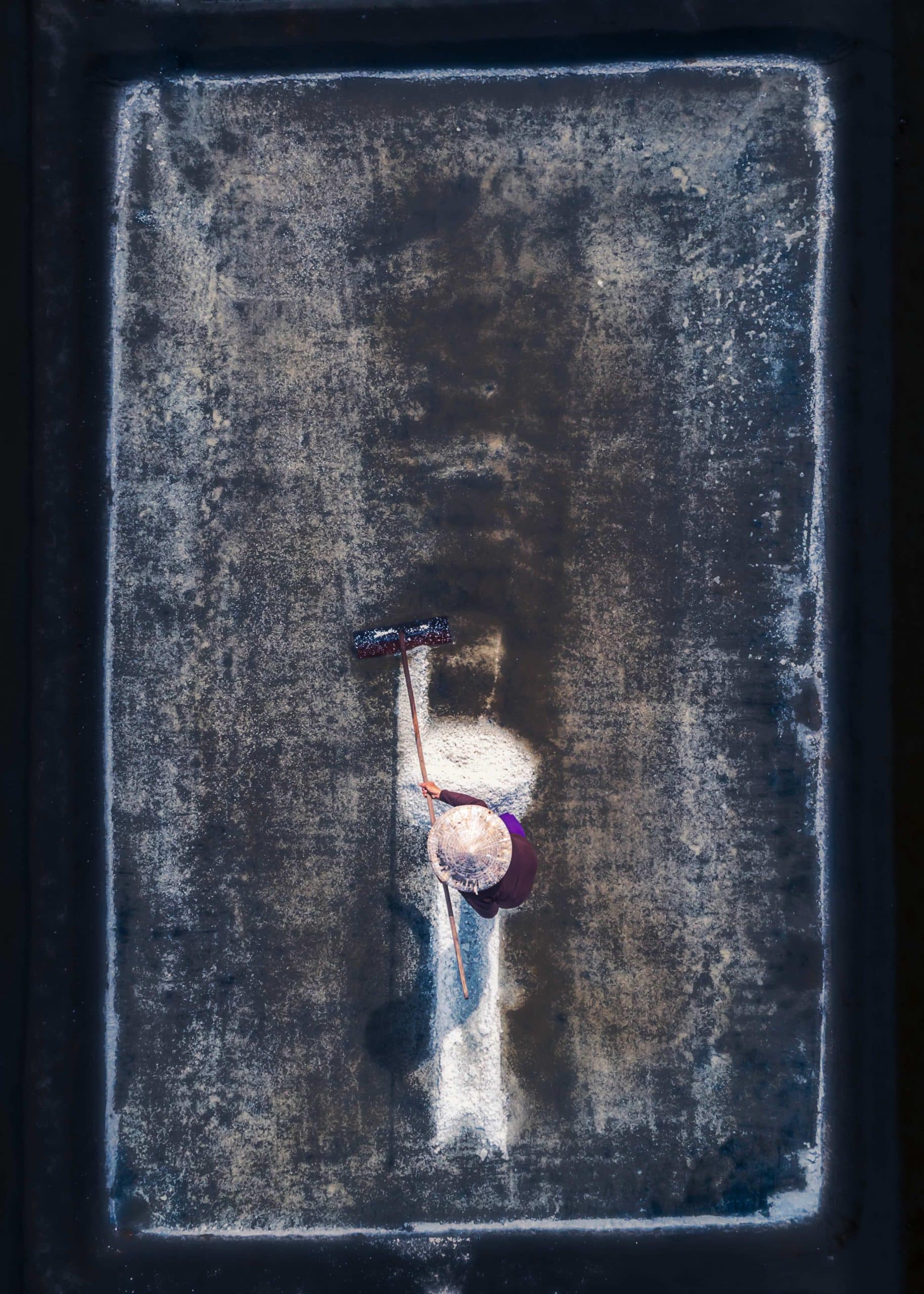
Fields of white
Living in the cradle of the ancient Sa Huynh culture, generations of Vietnamese people in Tan Diem Village have preserved and developed several salt-making techniques. These include crystallizing salt on rocks, boiling seawater in clay pots, and evaporating seawater across expansive flat coastal fields locally known as ruong nai.
An old folk song from the Sa Huynh salt fields captures the farmers’ witty humor regarding their hardships:
Oh, friends, salt farming is a bittersweet trade,
We rest when it is cool, and dry salt when the sun is ablaze.
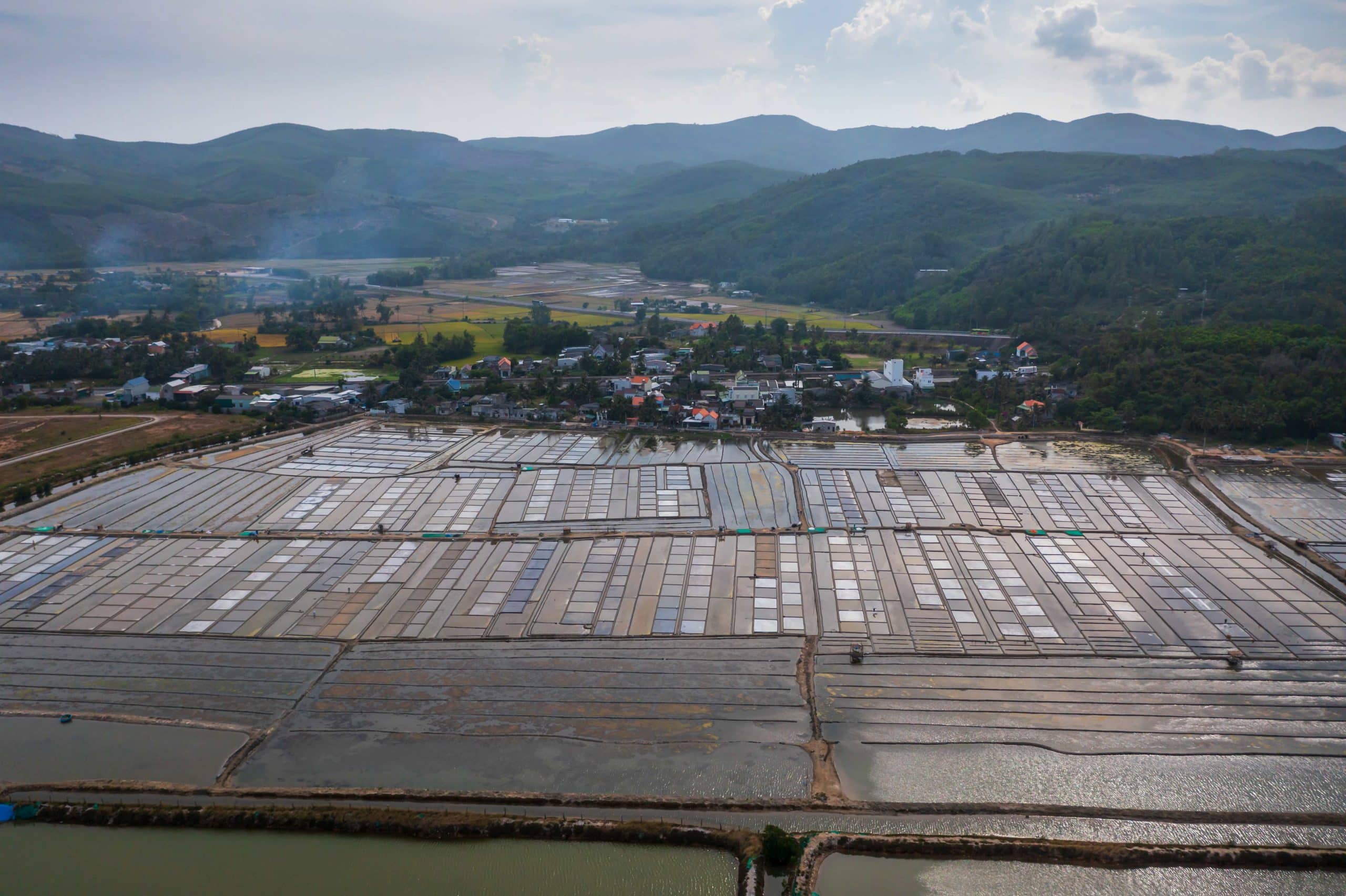
Every year, from the first to the seventh month of the lunar calendar, salt farmers build dikes to channel seawater into the ruong nai. The land is carefully compacted with layers of clay and topped with clean marine sand, which is then soaked in seawater to support crystallization and concentration. After five to seven days of evaporation under the sun, the concentrated brine is moved to drying beds to form salt crystals. Seen from above, the salt fields resemble giant mirrors, quietly reflecting the sky, clouds, and the patient silhouettes of the farmers.
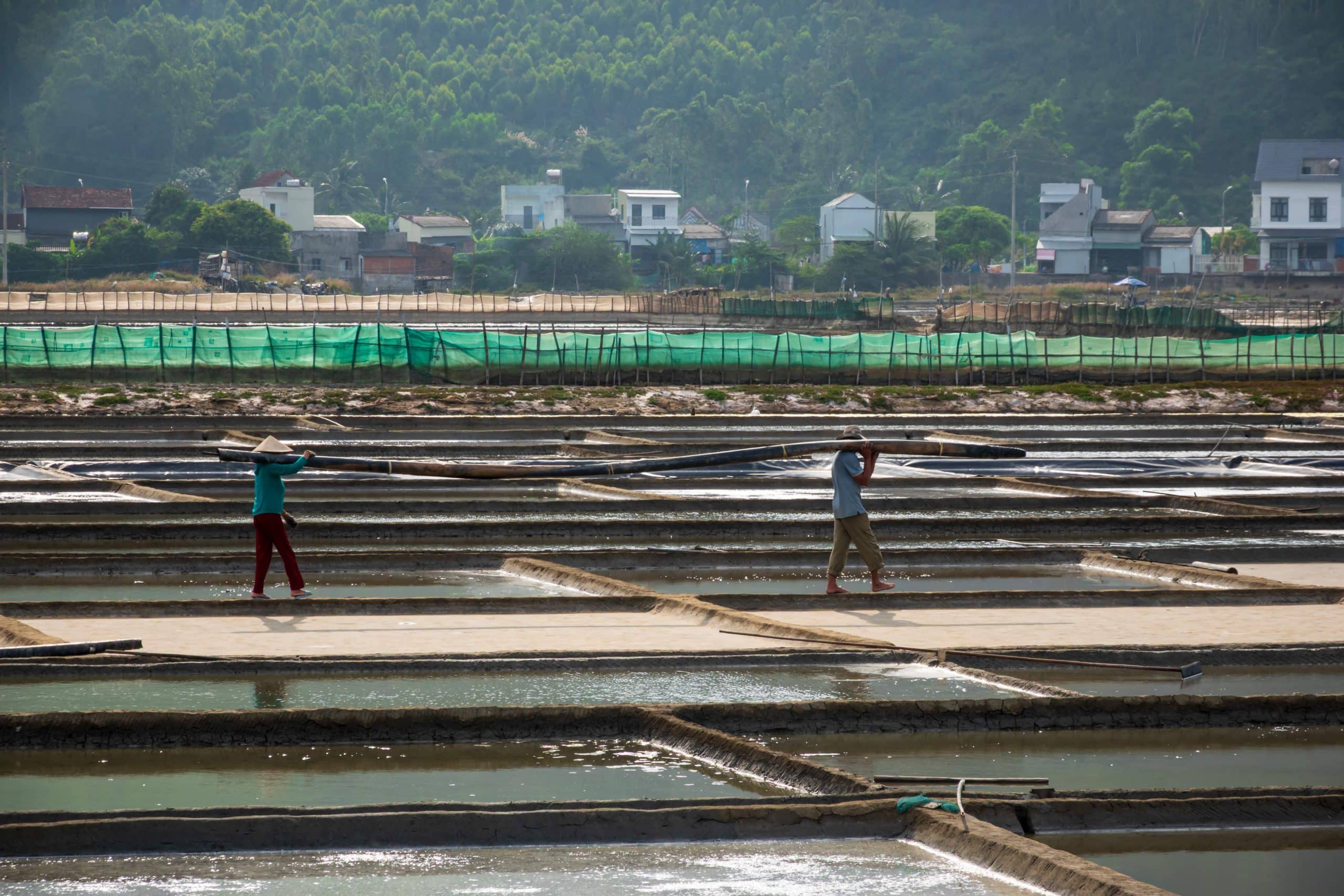
Under the scorching sun of Central Vietnam, tiny salt crystals begin to form, which locals call butterfly-egg salt. As the layer thickens and becomes fluffier, it is known as flower salt, a premium type with a milder taste and a slightly sweet aftertaste. Finally, the salt solidifies into larger white grains that resemble gems drawn from the sea. At this stage, farmers use rakes to gather the salt into mounds and carry it back to warehouses using traditional shoulder poles.
While salt farming may look simple at first glance, it depends on deep folk knowledge of the sun, wind, weather, and ocean currents, passed down through generations. Even when the fields are covered in brilliant white crystals, a sudden rainstorm can wash all the farmers’ hard work back into the sea.
Where the Sa Huynh sea breeze blows
In the past, when salt was scarce, Sa Huynh often received groups of ethnic minority people from the Central Highlands. They traveled by elephant, horse, or on foot, crossing mountains and forests. On their return journeys, these caravans carried heavy baskets of salt, full of anticipation as they headed back to their villages.
From this precious stock of salt, they set aside a small portion of sacred salt in a special basket for times of illness. They also used salt in daily meals, to lure wild buffaloes from the deep forest, for offerings to the gods, and to dab on a newborn baby’s lips during the traditional ear-blowing ritual.
Visit Sa Huynh in the middle of the seventh lunar month to experience a festive atmosphere as local farmers honor the patron saint of salt farming. The most important event of the year, this ritual is marked by traditional offerings that express gratitude to the trade’s founders. After the ceremonies, the community comes together to enjoy folk performances such as tuong (traditional opera) and ba trao (singing and rowing rituals.
Alongside the natural process of seawater turning into salt, farmers also perform rituals such as blessing the salt fields and marking the start of the season. They pray for favorable sunny weather to ensure a bountiful harvest, reflecting how closely this trade depends on nature, weather, and local spiritual beliefs.
On your journey to explore the salt trade, stop by Go Co, a community-based tourism village offering unique coastal experiences. The village’s rustic charm and locals’ warm hospitality make this a great spot to enjoy some local cuisine. Be sure to take a walk along the village’s ancient stone path and learn how villagers make salt on basalt rocks, as ancient residents once did. You can even harvest some flower salt yourself as a souvenir. This is a rare opportunity to experience a distinctive Southeast Asian salt-making technique.
In this historically rich region, be sure to visit the ancient vestiges of the Sa Huynh and Champa cultures around An Khe Lagoon. You can see ancient wells, Cham inscriptions, and archaeological sites, including Phu Khuong, Long Thanh, and Thanh Duc. The Sa Huynh Culture Showroom also displays a wide collection of artifacts, including burial jars, vases, pots, lamp stands, traditional stoves, agate beads, and earrings. These sites and objects can all be found in Sa Huynh, a beautiful region known for its bright sun and wind.