Story: Hoang Thu Uyen
Photos: Heritage Photo Tour – Hue 2026
At Emperor Khai Dinh’s Mausoleum, fragments of porcelain and glass were transformed into one of Hue’s most remarkable artistic legacies.
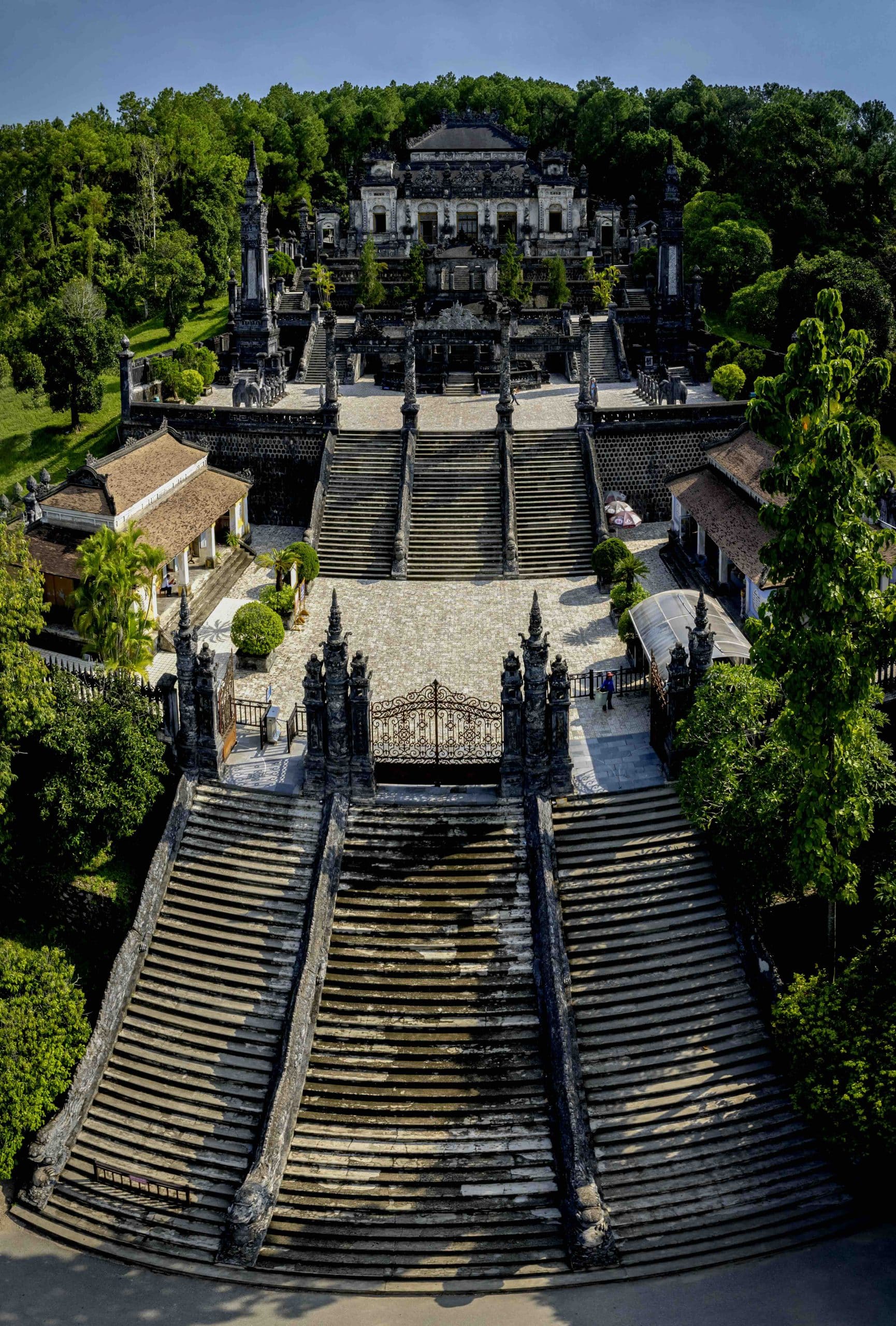
Among the Nguyen dynasty imperial tombs in Hue, Ung Mausoleum, the tomb of Emperor Khai Dinh, stands out for its unique synthesis of architecture, decorative art, and traditional craftsmanship. Construction began in September 1920 and took 11 years to complete, finishing in 1931 and leaving a distinctive mark on the complex of royal tombs in the former imperial capital.
Fragments in a carefully curated composition
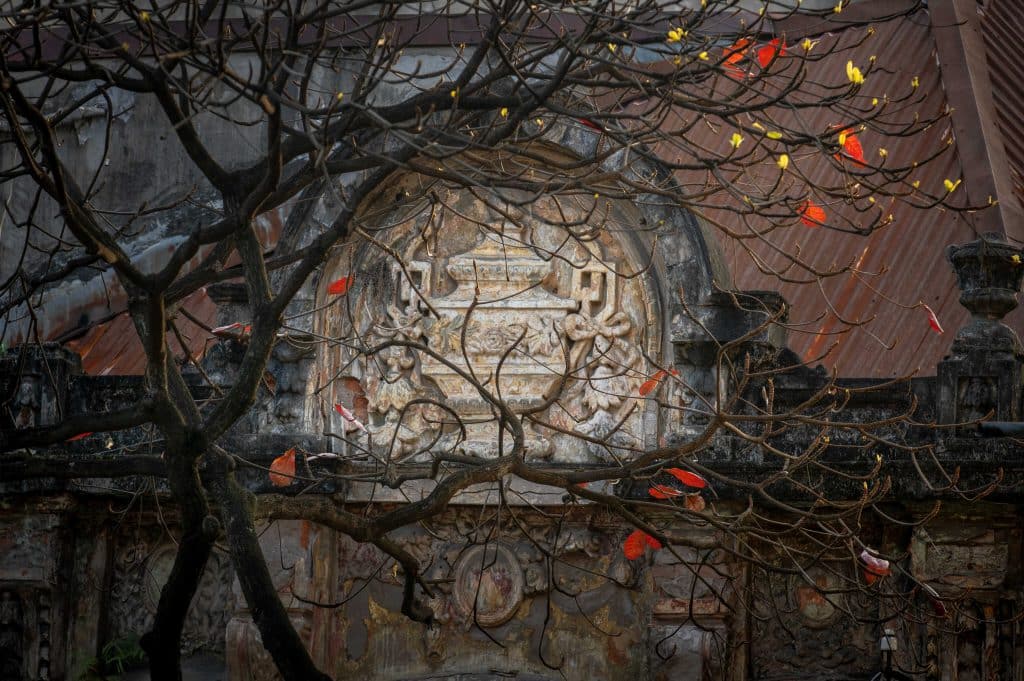
Thousands of fragments of ceramics, porcelain, and colored glass were inlaid and arranged into decorative compositions that cover the interiors, giving the Ung Mausoleum its distinctive artistic character. The mosaic work displays an extraordinary level of mastery, shaped by the skilled hands of artisans who once served in the Ne Ngoa tuong cuc, the imperial bureau responsible for masonry and decorative craftsmanship under the Nguyen dynasty.
As early as the 18th century, Le Quy Don described the use of lime mixed with molasses and porcelain shards to create reliefs of dragons, phoenixes, ky lan (Asian unicorns), tigers, flowers, and foliage on architectural works in Dang Trong (the Inner Land. Yet it was not until the reign of Emperor Khai Dinh, particularly during the decoration of Ung Mausoleum, his final resting place, that the craft reached its pinnacle and developed into a fully formed fine art.
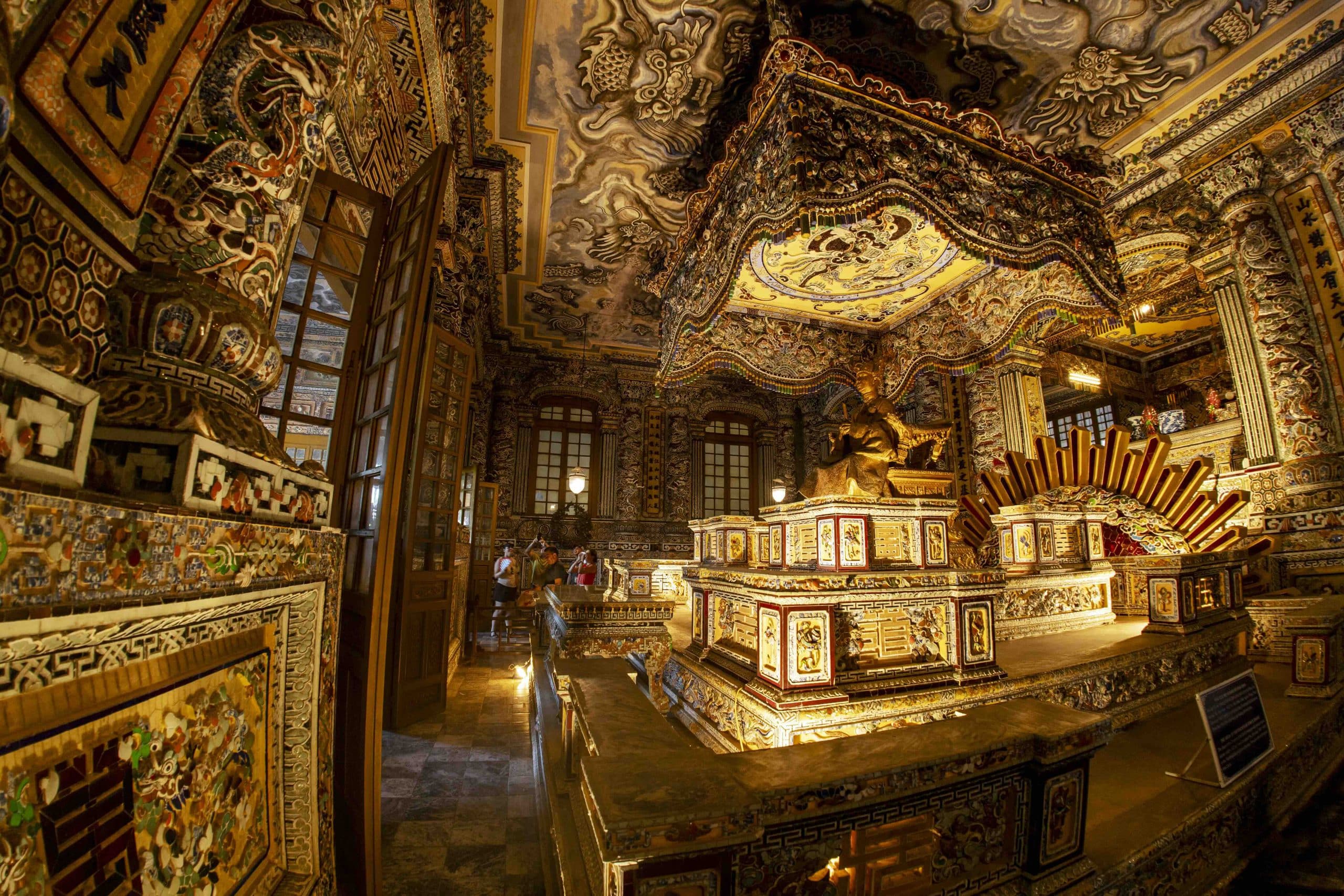
Within structures built from iron, steel, cement, marble, and slate imported from Europe are highly traditional decorative motifs, including the Four Sacred Creatures (dragon, Asian unicorn, turtle, and phoenix), the Eight Precious Objects, the Five Blessings, and the Four Seasons, along with references to Chinese classics. These intricate designs were inlaid with fragments of porcelain, colored glass, and other imported materials.
At Ung Mausoleum, renowned artisans of the period, including Phan Van Tanh, Ky Duyet, and Cuu Sung, painstakingly selected fragments of porcelain and colored glass from household objects, then trimmed, ground, and assembled them into intricate patterns. The pieces were embedded in traditional lime-based mortar mixed with various additives to ensure lasting adhesion.
Far from a random arrangement of broken fragments, this decorative technique relied on carefully composed lines, shapes, and forms. Refined color combinations gave the reliefs a vivid yet approachable quality.
The flowing curves of dragons, phoenixes, vines, and flowering branches; the disciplined angular lines of large calligraphic characters, geometric motifs, and fretwork; and the freer forms of Western objects such as clocks, tea trays, and tennis rackets all reflect an interplay of royal culture, folk aesthetics, and modern cultural exchange, brought to life by skilled mosaic artisans. They also reveal the distinctive aesthetic vision of Emperor Khai Dinh, a ruler known for his fascination with the new and unusual and his experimentation with East-West cultural fusion.
A kaleidoscope of colors
On Chau Chu Mountain, also known as Mount Ung Thuan, a name given by Emperor Khai Dinh, Ung Mausoleum rises in a majestic setting about 10 kilometers from Hue’s city center. Depending on the season and time of day, visitors may experience different visual impressions while standing inside Thien Dinh Palace, before the emperor’s altar, beneath the canopy above his bronze statue, or beside the decorative panels in Khai Thanh Palace. Each moment reveals subtle variations in tone, shaped by the light, viewing position and angle, and even the slightest movement in the surrounding space.
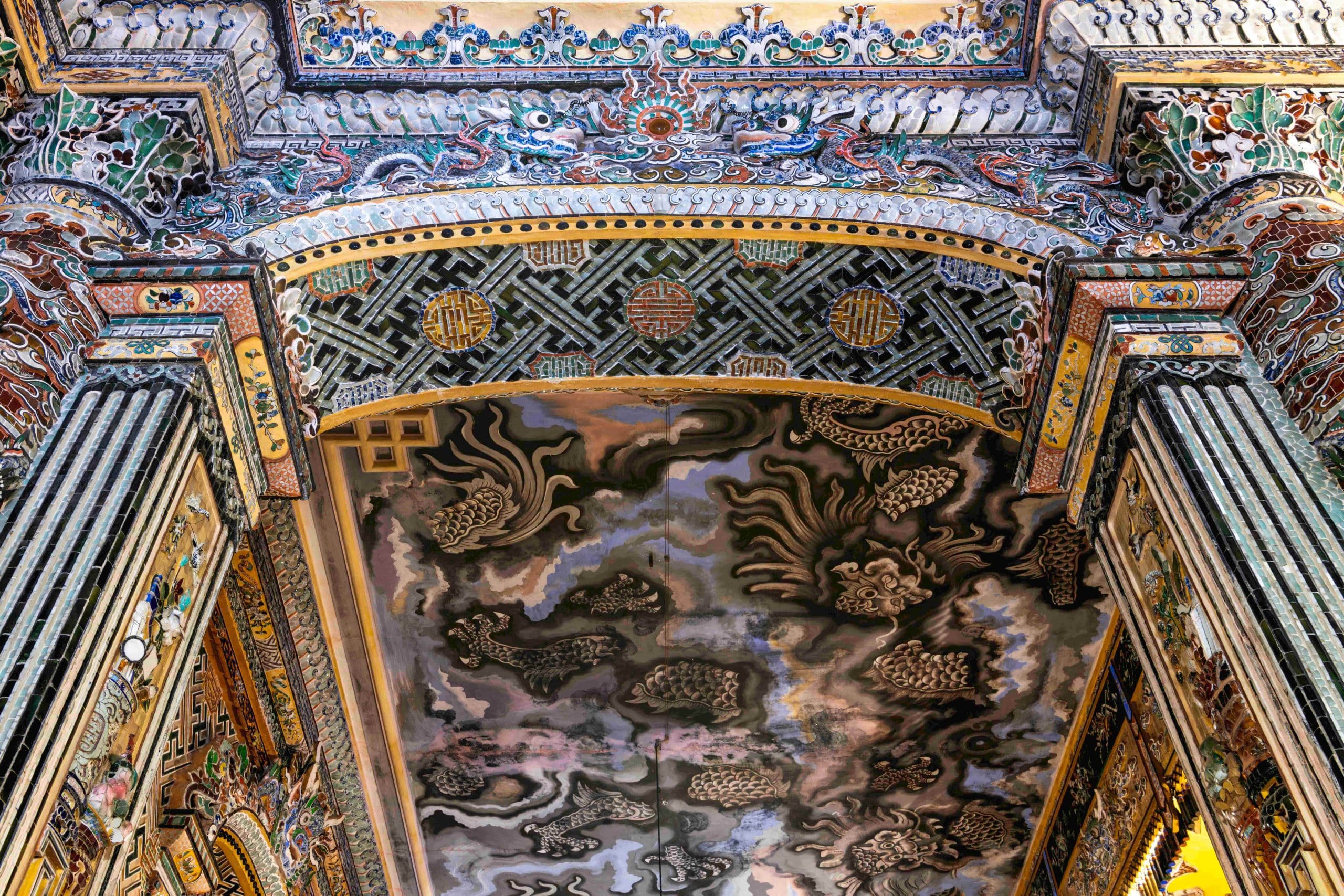
More precisely, this visual impact stems from the artisans’ extraordinary mastery of mosaic techniques, which give the decorative compositions their shimmering, almost magical quality. The skillful combination of white, blue, orange, yellow, and purplish-red tones, arranged according to East Asian aesthetic principles, creates a captivating interplay of color and light. On the canopy above the emperor’s bronze statue, within the Long phu dragon motif, the dragon’s glass-inlaid eyes can appear solemn one moment and gentle the next, depending on the viewing angle and lighting. Similar effects can be seen in the motifs framing the arched doorways and in the recessed wall panels.
A symbolic world formed from broken fragments comes together in a symphony of color. Through these vibrant ceramic mosaics, Emperor Khai Dinh seems to have transformed his tomb into a world both radiant and contemplative, where beauty transcends the somber associations of a royal mausoleum to become one of Hue’s most distinctive artistic legacies.