
Nguyen Ngoc Thien
From soaring mountains to ancient glaciers, Patagonia reveals nature on a breathtaking scale.
At the southern tip of South America, Patagonia stretches across Argentina and Chile as a land of wind, grasslands, snow-capped peaks, and glaciers. Here, nature retains a raw, untamed, and deeply mesmerizing beauty. On our journey through Los Glaciares National Park, on the Argentine side of Patagonia, we traveled from the town of El Chaltén, beneath Fitz Roy, to the Perito Moreno Glacier, following routes where ice and wind have carved a magnificent landscape.
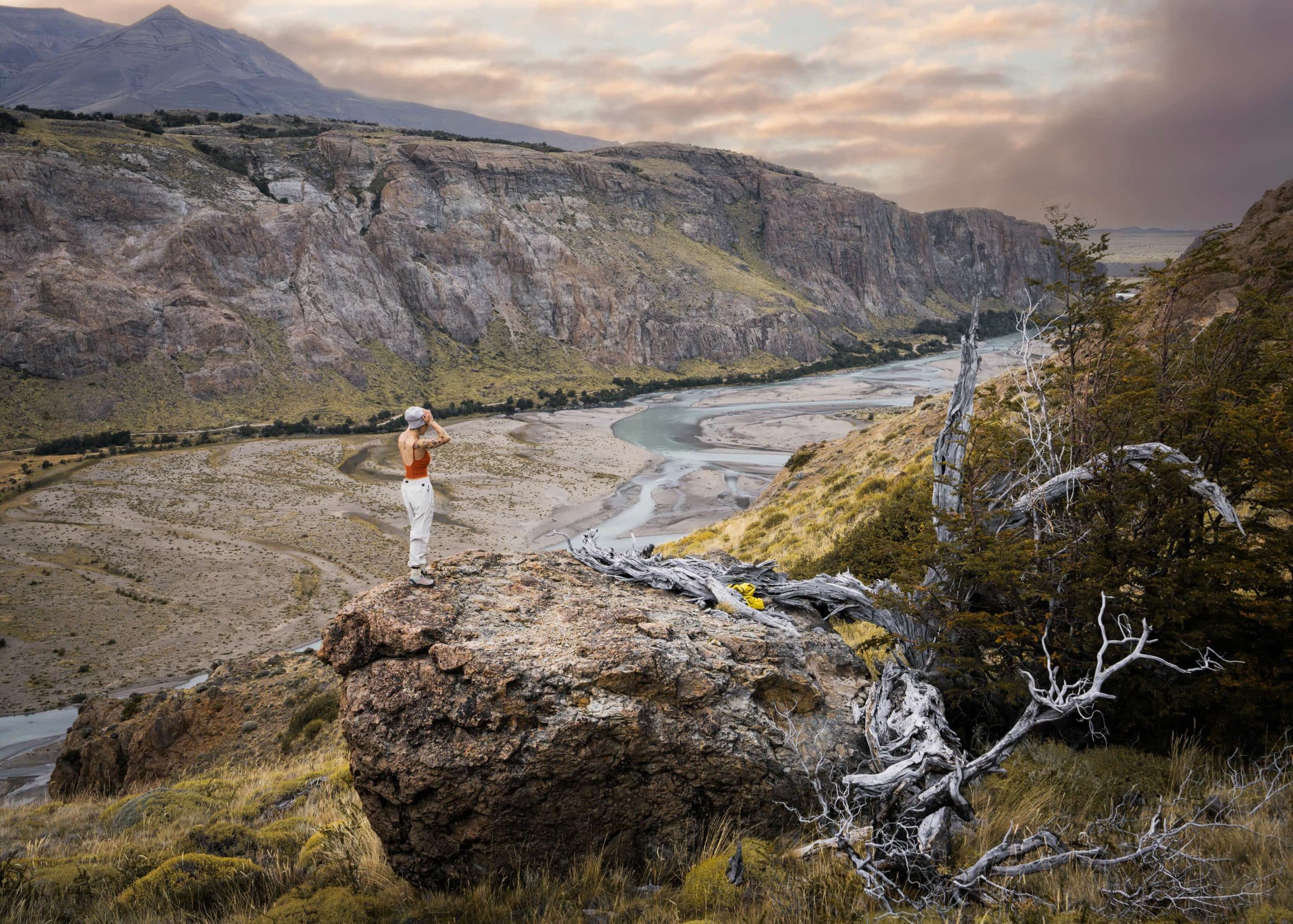
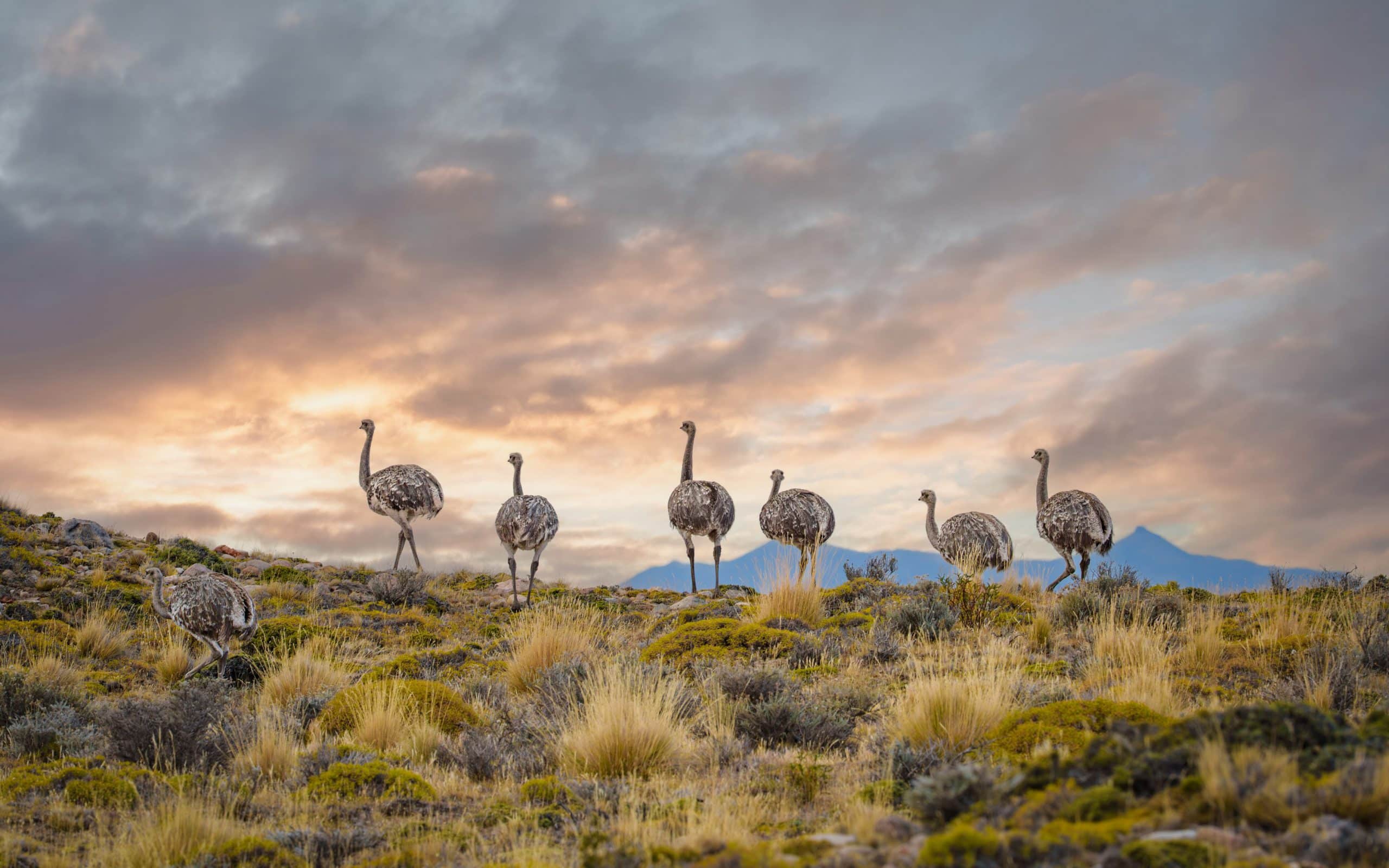
Leaving behind the long roads that cut through Patagonia’s deserts and barren steppe, we continued toward the foot of the majestic Andes. Our vehicle moved quietly across an immense land where herds of guanacos, the emblematic animals of Patagonia’s grasslands, grazed on the open plains, condors glided above distant slopes, and snow-capped peaks shimmered faintly at the horizon.
After hours of traveling through this realm of wind and steppe, the town of El Chaltén gradually appeared beneath the towering granite walls of the legendary Fitz Roy massif. Tucked into the northern reaches of Los Glaciares National Park, El Chaltén may be small, but it has long been a meeting point for nature lovers and adventure seekers.
In the language of the indigenous Tehuelche people, El Chaltén means “smoking mountain,” a name inspired by the clouds that so often wrap around Fitz Roy’s summit. In this far southern land, the town is regarded as Argentina’s trekking capital and the starting point for one of Patagonia’s most beautiful hikes.
On the Fitz Roy Trail
From El Chaltén, the trail gradually leads hikers along gently rising hillsides. On one side stands an ancient lenga forest; on the other lies a valley where the Las Vueltas River winds like a silver ribbon across Patagonia’s sunlit, wind-swept landscape.
The deeper one goes, the more the scenery changes. Dense lenga woods unfold like a natural maze; icy streams and small waterfalls descending from the Piedras Blancas Glacier weave down the slopes; and grasslands and hardy vegetation typical of the Patagonian plateau spread beneath an immense sky.
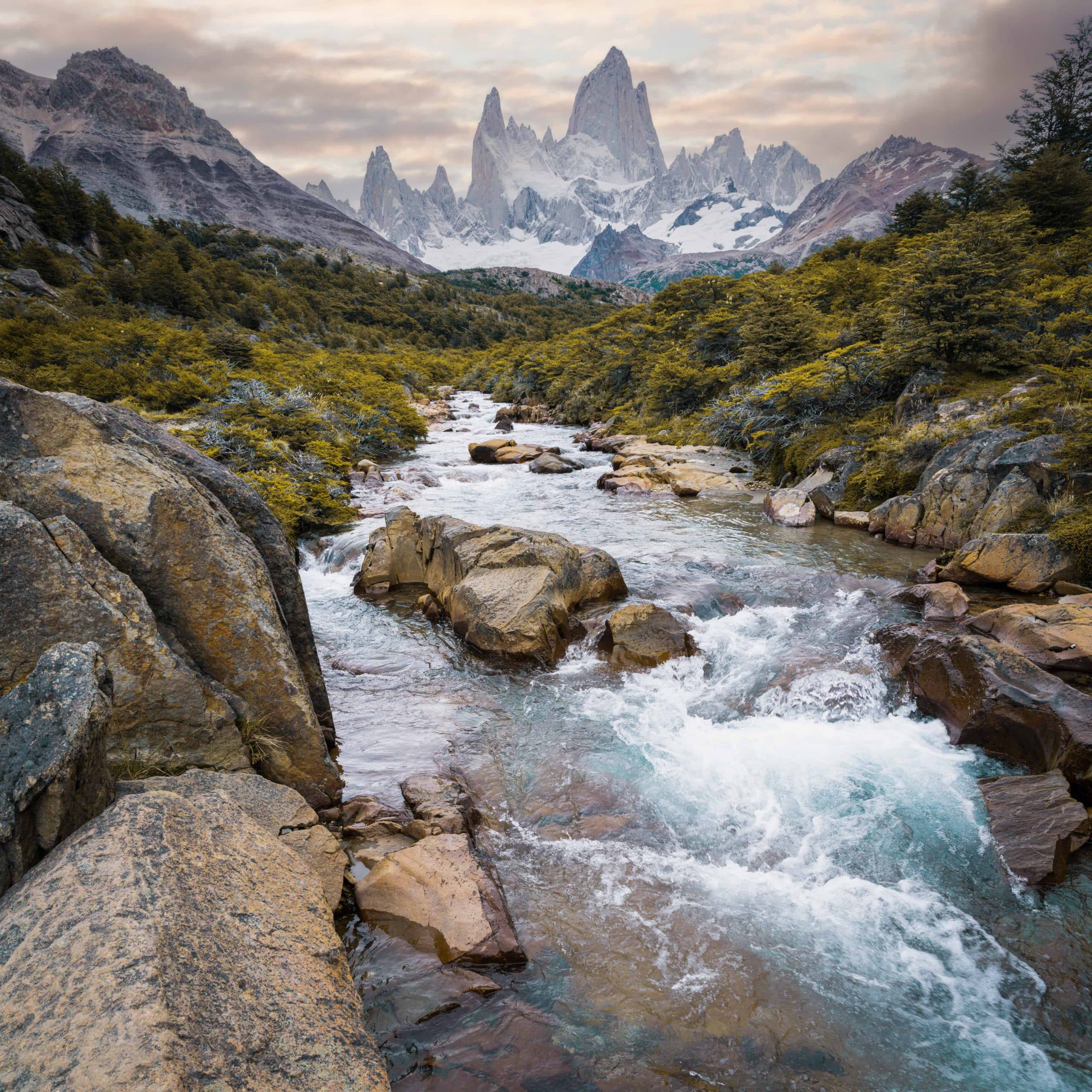
Step by step, the trail carries the traveler higher, over gravel-covered slopes and increasingly demanding inclines. After the final ascent, the spectacular sight of Laguna de los Tres suddenly opens up ahead, a reward worthy of every effort along the way.
Above the lake’s still turquoise waters, the vast granite wall of Fitz Roy rises, standing in commanding silence against the Patagonian sky. Around it, snow-covered peaks shine year-round, and glaciers glitter in the sunlight.
In that moment, all the fatigue of the long journey seems to dissolve. What remains is only a sense of awe before the pristine and magnificent beauty of nature.
The realm of wind
Yet Fitz Roy has never been easy to behold. The weather here is famously unpredictable. Clouds can sweep in at any moment, obscuring the mountain for days at a time.
Even on clear days, Patagonia remains a land of relentless winds. Cold currents from the vast icefields of Los Glaciares funnel through mountain gaps, sweep across glaciers, and descend into the valleys with astonishing force.
For that reason, a journey to Fitz Roy is never simply a trek but demands readiness for sudden, frequent shifts in the weather. Perhaps it is precisely this harshness that gives Patagonia its singular appeal, since its nature remains wild, mysterious, and profoundly challenging to those who walk through it.
Descending to Perito Moreno
Leaving El Chaltén and the trekking routes beneath Fitz Roy behind, we continued southward through Los Glaciares National Park to one of Patagonia’s most celebrated natural wonders: the Perito Moreno Glacier.
Set amid the grand Andean landscape stretching along the Argentina-Chile border, Perito Moreno is one of the largest and most spectacular glaciers on Earth. Covering approximately 250 square kilometers and extending for more than 30 kilometers, this immense body of ice forms part of the Southern Patagonian Ice Field, one of the world’s largest ice masses outside the polar regions. It feeds hundreds of glaciers and freshwater lakes across Patagonia.
A blue wall of ice
Standing before Perito Moreno is like facing a living force. The towering wall of ice stretches along Lake Argentino, its surface marked by countless cracks, ridges, and colors that change with the light.
At times the glacier glows in a crystalline blue; at others, it turns silvery white, cold and deep. Cracking sounds emerge from within the ice, and then, without warning, a massive block breaks away and crashes into the lake, sending a deep, resonant boom across the vast region.
At Perito Moreno, beauty lies not only in the glacier’s overwhelming scale, but also in the sensation of witnessing nature in motion. With its cold winds, blue lake, and ancient wall of ice, Los Glaciares remains one of the few places where the Earth still retains its primordial force.