Nguyen Ngoc Thien
On South Georgia, the world’s wildest landscape offers a lesson in joy.
The South Atlantic Ocean always has a way of making people feel small. Relentless winds sweep across the freezing beach, carrying the salty sea spray and a cold that numbs the fingertips. Offshore, vivid blue icebergs drift beneath a silver-gray sky. Behind them, snow-capped mountains rise majestically year-round. Yet amidst this harsh landscape, life still surges forward with an unexpectedly powerful rhythm.
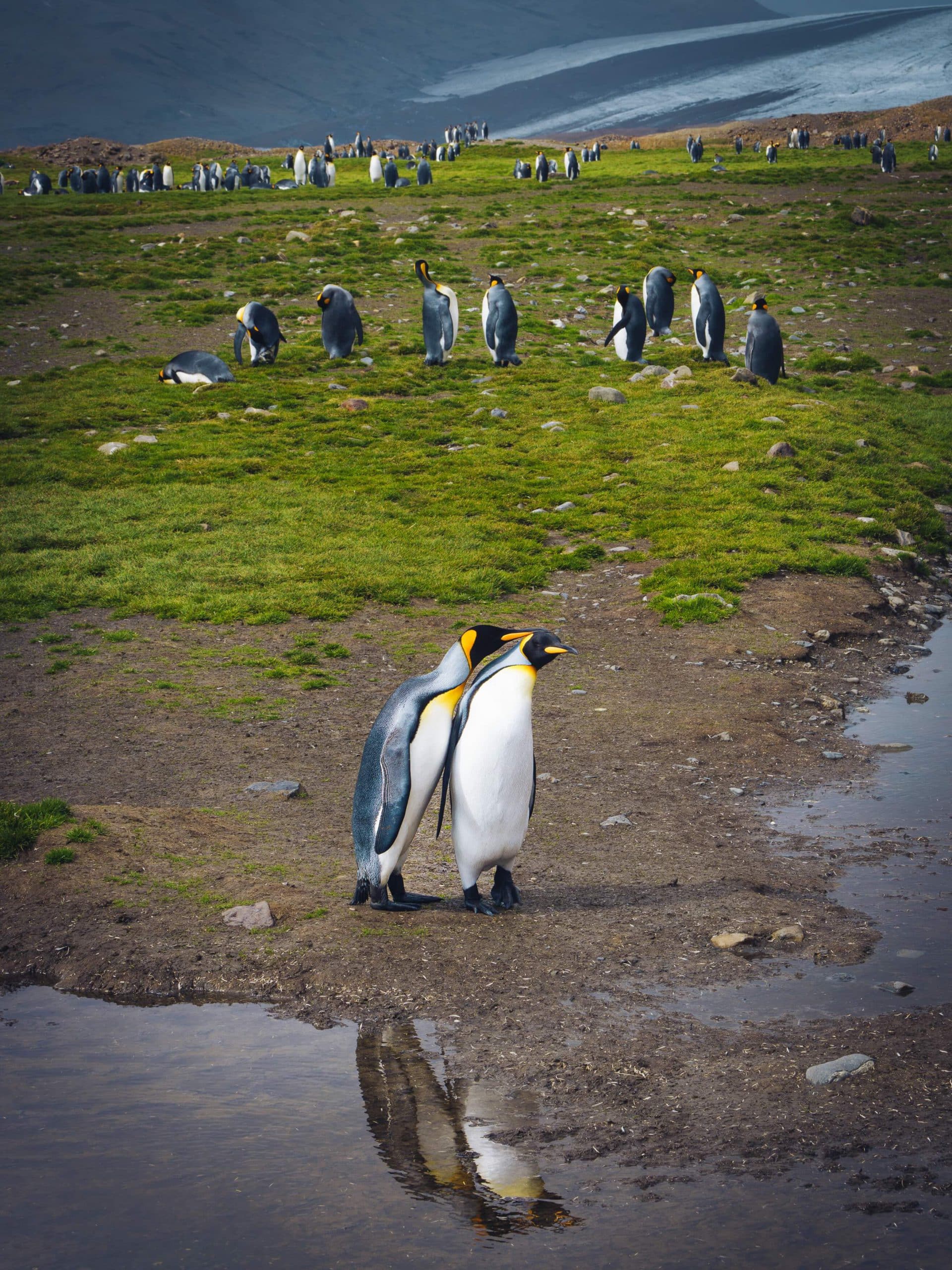
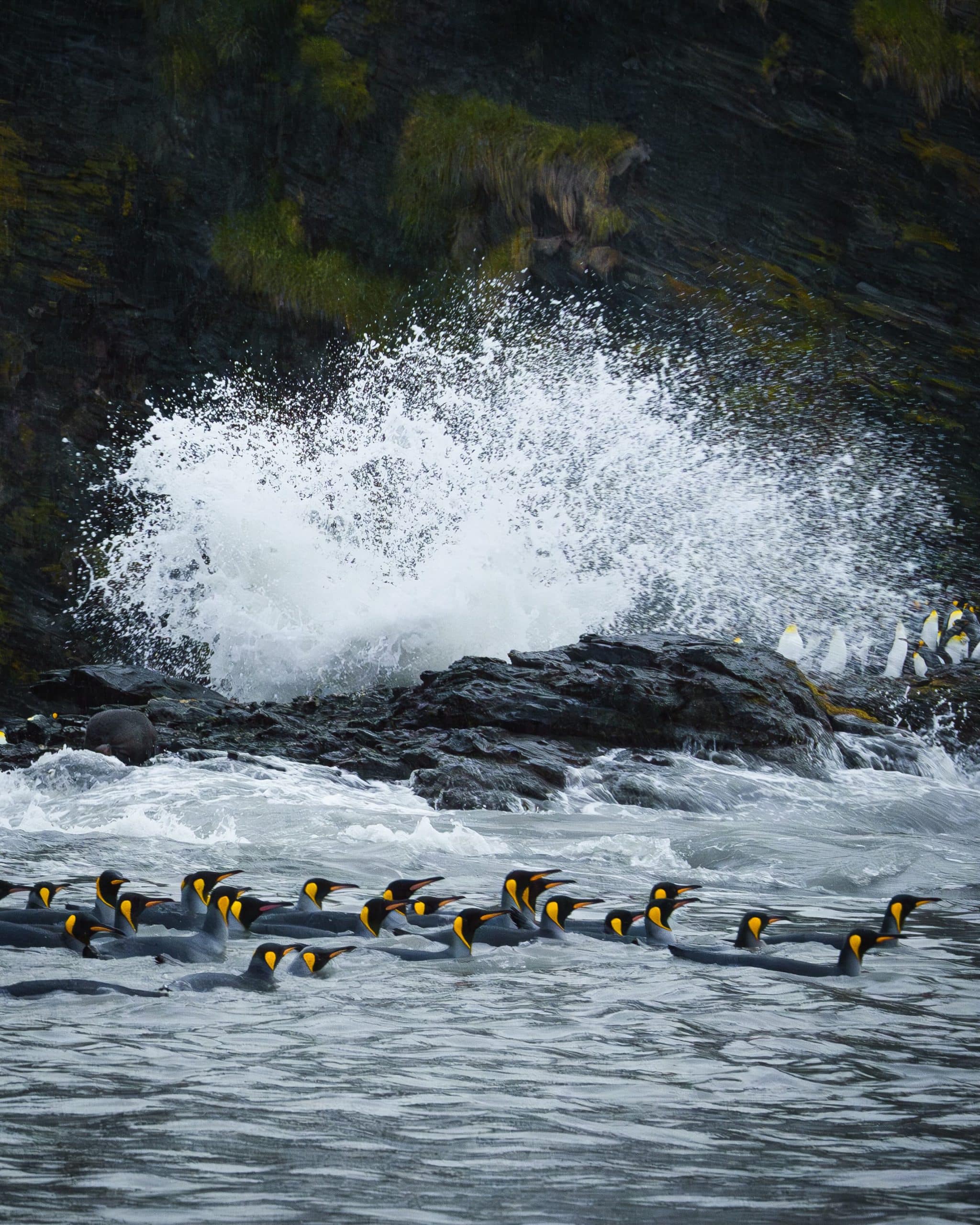
In Fortuna Bay and Saint Andrews Bay on South Georgia Island, king penguin colonies stretch all the way to the horizon. Their calls blend with the sounds of crashing waves and the blowing wind, creating a chaotic yet vibrant symphony of life. After long foraging trips across the freezing ocean, they return to the breeding colony. Within this crowded “city,” where every individual looks nearly identical, they still recognize their mate through their distinct call.
My gaze suddenly rested on a single pair. There was no spectacular display, just a gentle tilt of the head, a brief touch of two beaks, and necks resting against one another. It was a courtship ritual, a silent dance repeated through generations before they embark on the shared journey of raising their chick.
Amid the overwhelmingly vast colony, that moment felt strangely peaceful. Nature does not express emotion the way humans imagine, with no grand gestures or spoken promises. There were simply two creatures who, after long journeys across open seas, arrived at the right place at the right time to find each other on a harsh island. Standing before this scene, I was left with a simple question: What does happiness look like? Perhaps everyone holds their own answer. Yet on this remote island in the middle of the Southern Ocean, happiness seems to begin with the concept of return. They return to the beach where they spent a past season, alongside a companion who endured the storms by their side, to continue life’s ancient cycle.
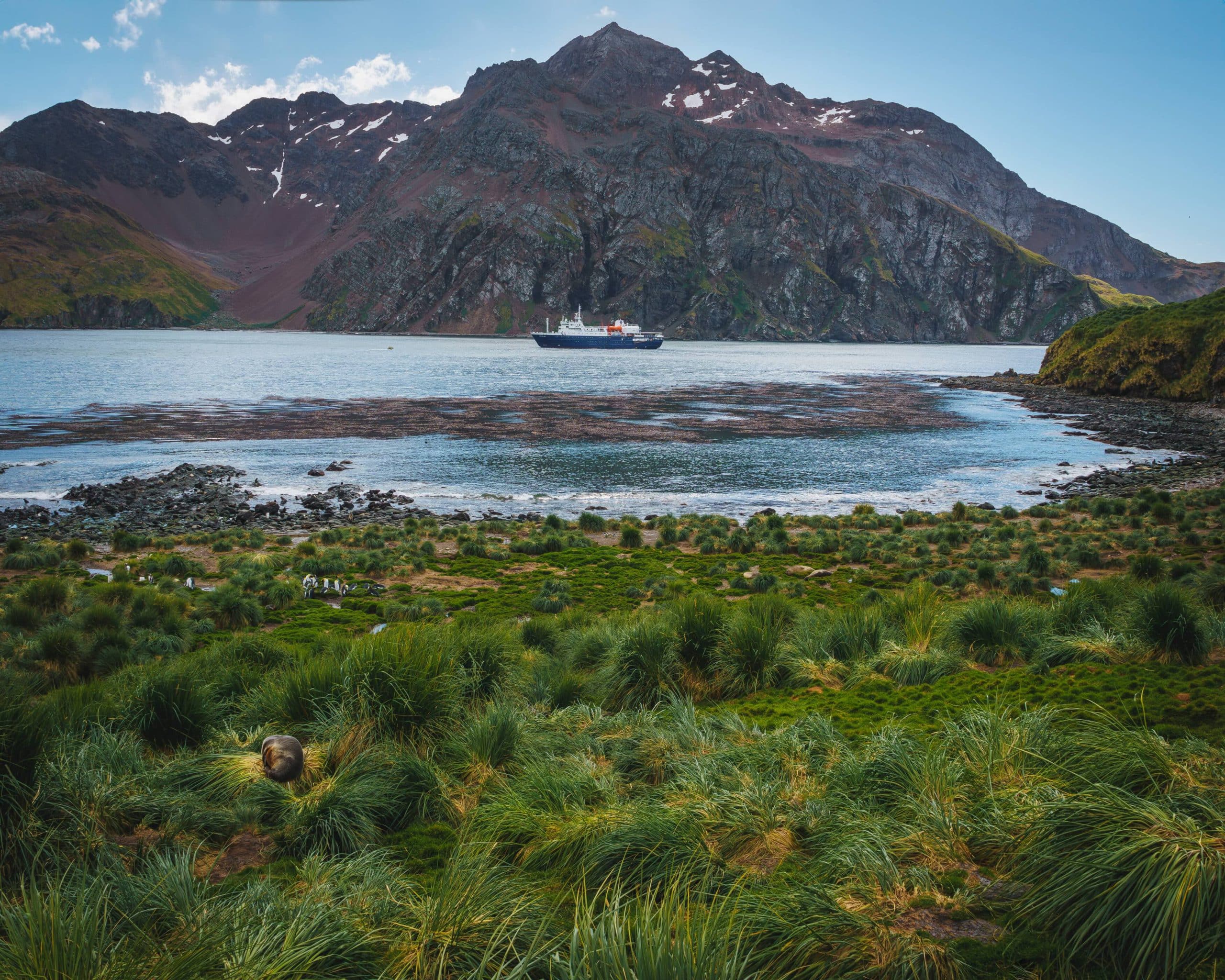
That moment also marked the start of my journey through South Georgia, an island known as the “Serengeti of the South Atlantic Ocean” due to its massive wildlife populations. Situated in the sub-Antarctic zone within the Scotia Sea, South Georgia lies at the intersection of the far southern Atlantic Ocean and remains fully within the ecological domain of the Southern Ocean. Stretching about 170 kilometers long, the island lies approximately 1,950 kilometers southeast of Cape Horn, the southernmost headland of the South American continent. On a map, South Georgia appears as merely a tiny strip of snow-covered mountains. Yet every southern spring, when nutrient-rich currents bring back swarms of krill and fish, the island awakens from its long winter sleep. Millions of creatures from across the Southern Ocean return together, creating one of the richest marine ecosystems in the world.
Leaving the beach, a path along the hillside led us to cliffs overlooking the open ocean. Pairs of black-browed albatrosses were beginning their nesting season. The sounds of the wind and the beating of wings echoed all around. Nestled among tussock grass, the nests covered the slope like a small neighborhood hanging on the cliffside. Occasionally, one bird would return from a long foraging flight. The other would immediately raise its head, and both would touch beaks and sway their necks in a familiar rhythm. This courtship dance helps maintain their bond as they prepare to care for their single chick of the breeding season. Happiness, sometimes, is choosing the same companion after every long journey.
At the foot of the green grassy slopes, rockhopper penguins bring an entirely different rhythm of life. Small and endlessly busy, they feature yellow crest feathers that stick up like playful brushstrokes on their faces. Their nimble steps over rocky outcrops bring the entire hillside to life. Pairs take turns leaving the nest to hunt, returning to the same spot so their mate can head out to sea.
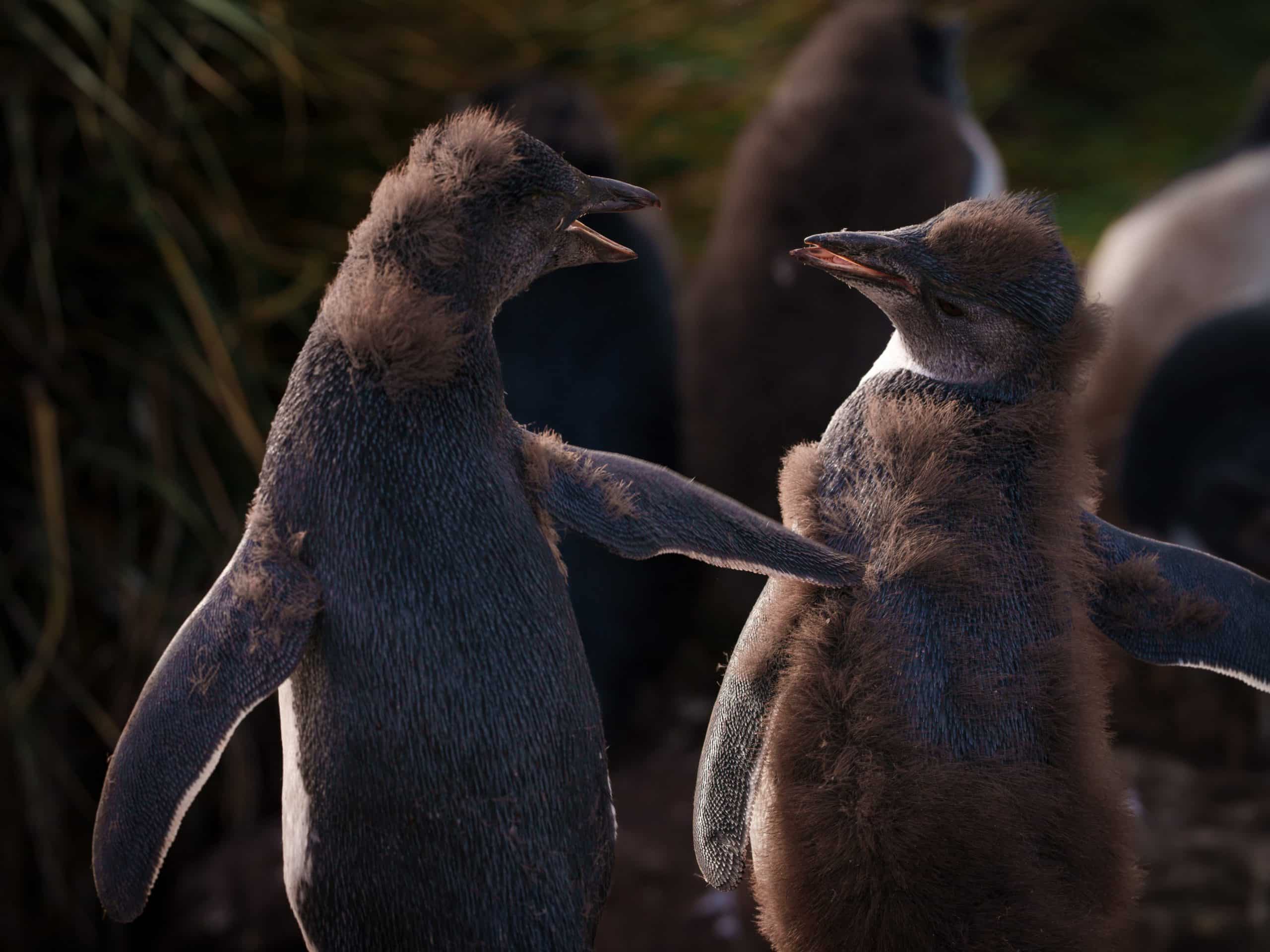
In a quieter corner, an adult gentoo penguin lowered its head to feed its chick, which was still covered in soft gray down. The tiny chick raised its head and opened its beak wide in expectation. The scene lasted only a few seconds, but it was enough to make everyone forget the click of camera shutters echoing around them. Survival instincts can sometimes take on such a tender form.
On another rocky beach, two young chinstrap penguins huddled closely together against the cold wind. Not yet large enough to withstand the harsh chill alone, they sought warmth from each other. I suddenly realized that happiness, at times, is simply having someone by your side when the wind picks up.
The moment that brought the longest smile to my face came from a different character altogether. Amid the swaying tussock grass, a young Antarctic fur seal with a rare cream-white coat waddled toward its mother. It gently pressed its tiny nose against hers in a clumsy kiss before scampering away. The beauty of that moment was so captivating I refrained from taking a photo, choosing instead to simply stand and watch.
More than a century ago, on this very island, explorer Sir Ernest Shackleton and his comrades brought to a close one of the most magnificent survival stories in the history of Antarctic exploration. They endured a perilous sea journey across the Southern Ocean and crossed uncharted snow-capped mountains to seek rescue for the Endurance expedition. Today, his grave at Grytviken, located on South Georgia Island, quietly faces the South Atlantic Ocean, serving as a reminder that nature here is always harsh, yet endlessly generous to those who treat it with respect.
Leaving South Georgia, I understood why so many people are willing to travel tens of thousands of kilometers to reach the edge of the world. Beyond seeing the massive wildlife populations, they find something intimate amid the cold winds and vast ocean: happiness is sometimes as simple as knowing there is always a place to return to.