
Story: Truong Quy
Photos: Ngoc Vu
Hanoi’s autumn has inspired generations of musicians, turning familiar streets and landmarks into a soundtrack for the city.
Few places have inspired such a wealth of musical works about autumn as Hanoi. Rooted in the classical literary tradition of poetry celebrating the beauty of autumn, the autumn poems of Nguyen Khuyen and the hat noi songs of ca tru helped inspire many modern compositions. Real places and landscapes have found their way into song lyrics, making listeners fall even more deeply in love with a Hanoi “deep within the crimson chambers of the heart.” Songs about autumn become guides, leading listeners on a dreamy journey through every corner of the city.
“LIKE A FIVE-PETALED FLOWER OF CITY GATES”
The first Hanoi landmark to appear in many songs is Hoan Kiem Lake. Long at the heart of the city’s urban formation, the lake traces its origins to an old branch of the Red River and was once known as Luc Thuy and Ta Vong. Its later names, Sword Lake and Hoan Kiem, stem from the legend of King Le Loi returning his sword to the Golden Turtle God beneath the lake’s waters.
In 1949, amidst a city cloaked in wartime melancholy, autumn by Ho Guom evoked nostalgia for glorious days gone by: “I walked around Hoan Kiem Lake on a fading autumn afternoon. I remember the days spent living in the capital back then. The beautiful lake, a watery mirror of drooping willows, a peaceful life before the war” (Ha Noi 49 by Tran Van Nhon).
After 1954, two songs, both titled Chieu Ho Guom (Sword Lake Afternoon) by Tran Thu and Dang An Nguyen and written three decades apart, conjured a romantic autumn scene: “Today, Sword Lake turned into an autumn afternoon, the calm green water floating lazily, reflecting the Turtle Tower submerged in golden sunlight, with weeping willows gently leaning” (Chieu Ho Guom – Tran Thu). They also evoked the timeless heart of the capital through decades of historical change: “The green autumn waters of Sword Lake, like a five-petal flower of the five city gates, like the loving heart of the capital…” (Chieu Ho Guom by Dang An Nguyen).
Transitioning from the 20th to the 21st century, the song Truyen thuyet Ho Guom (Legend of Sword Lake) by Hoang Phuc Thang once again affirmed the lake’s historical significance, while continuing the grand tradition of celebrating Hanoi in rousing songs: “Sword Lake! Sparkling like a tear preserved over a thousand years, in the middle of a happy city.” Sword Lake remains an irreplaceable icon in songs dedicated to the capital.
During years when hardship left deep lines on the face of the city, music repeatedly allowed autumn to soften those features. Beautiful melodies with optimistic lyrics were frequently heard on radio and television: “Autumn travels through long years, glorious and graceful, giving us radiant faces” (Ha Noi mua thu by Vu Thanh), or “Autumn sweeps through every small street. Oh, Sword Lake is like a poem” (Ha Noi trai tim hong by Nguyen Duc Toan).
The revolutionary symbolism of autumn also left a distinct mark on many songwriters, from those who witnessed history and wrote: “We have not forgotten a Hanoi autumn rising up, the Red River rolling with waves… Hanoi today rises under the Ba Dinh sun” (Troi Ha Noi xanh by Van Ky), to those who later evoked that same spirit: “My autumn, yellow-starred flags fly. The autumn sky of yesteryear stirs every heart. The whispering words of autumn still echo over Ba Dinh. An autumn of aspirations, an autumn of earnest faith” (Mua thu tinh yeu by Quang Minh).
Generations of students from past decades, now middle-aged, surely recall the lively sounds of the streets on the first day of school: “Birds call from the embankment edge, autumn is here again. Drums echo in bursts, as if urging us forward. Clatter on the other side of the lake, the tram car rolls along, reminding us, pushing us toward our joyful class” (Mua thu Ha Noi by Tran Hoan). By the 1990s, autumn remained tied to gentle memories for students: “On an autumn afternoon, the wind sweeps down the streets. School uniforms green like tamarind leaves. Oh, Hanoi, we remember fondly. Oh, Hanoi, in our hearts…” (Ha Noi dem tro gio by Trong Dai, lyrics by Chu Lai).
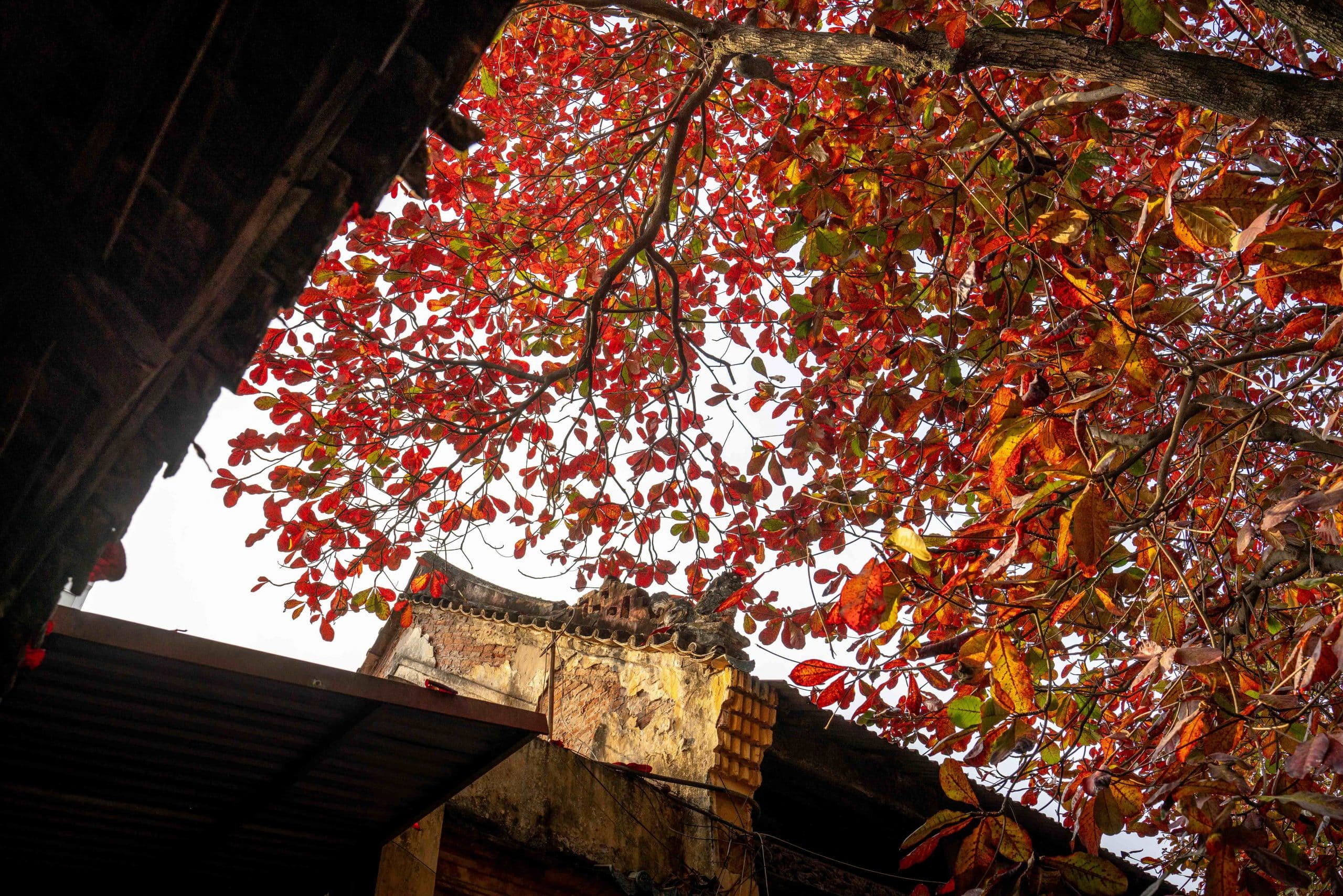
Ancient streets, old alleys, and avenues brushed by autumn’s cool, dry breezes instantly bring Hanoi to mind. Phu Quang’s old streets evoke a “late autumn night, a cold moon shrouded in mist” (Im lang dem Ha Noi), while Tran Tien paints “sad brown streets, sad brown tiled roofs, bitter coffee dropping sad brown drips, an old station with a distant, fading whistle” (Pho ngheo). There are also the “ancient streets, old houses, dark brown tiled roofs” of Trinh Cong Son, a passing traveler who captured the cheerful colors of green rice flakes on the sidewalk, the “yellow com nguoi trees, red-leafed bang trees,” and the shimmering golden surface of West Lake on an autumn afternoon (Nho mua thu Ha Noi).
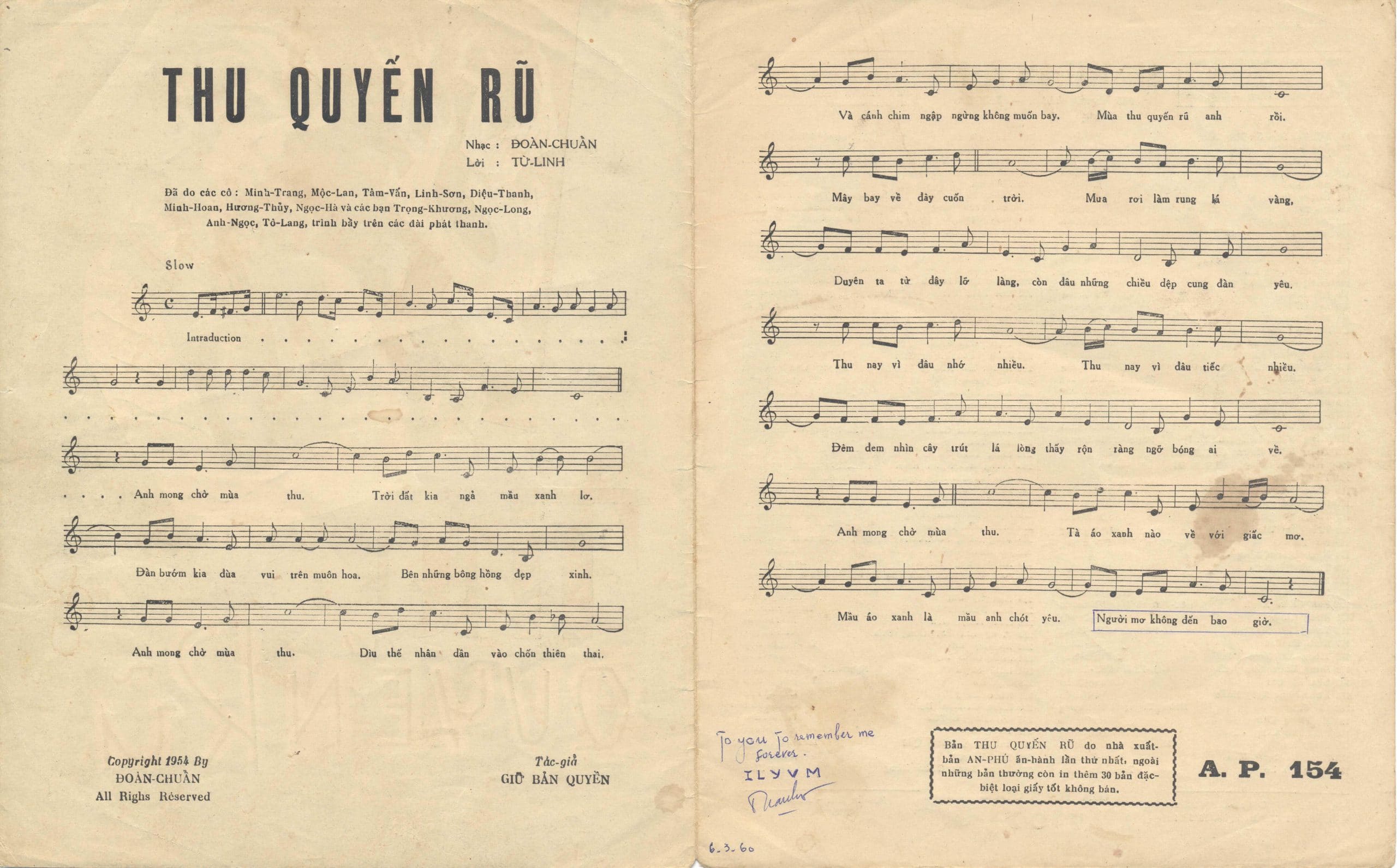
Despite many transformations, those deeply attached to the capital feel great love for this city. Tender melodies and lyrics continue to celebrate autumn’s timeless beauty: “I await autumn, when the sky turns pale blue, butterflies play among a thousand blossoms beside beautiful roses” (Thu quyen ru by Doan Chuan and Tu Linh), alongside the graceful silhouettes of young women: “Gently fluttering dress tails, smiling lips bright as peach blossoms” (Thu ca by Pham Manh Cuong).
No one can predict when autumn will arrive in Hanoi’s streets. A touch of golden sunlight or a gentle breeze is all it takes for Hanoi’s residents to feel its arrival. Melodies celebrating autumn instantly enter their minds, and they softly sing aloud to praise an old, faithful friend who has stayed true through the years.