
Story: Ha Quyen
Photos: Minh Tu
If you’re in Hanoi this summer, be sure to try some traditional sweet puddings – or che.
When cicadas sing in green canopies, and the summer sun stretches across every street, people turn to refreshing flavors to soothe the sweltering heat. Amid a myriad of modern treats like ice cream, yogurt, and milk tea, che still holds its own place in Vietnam’s culinary treasury.
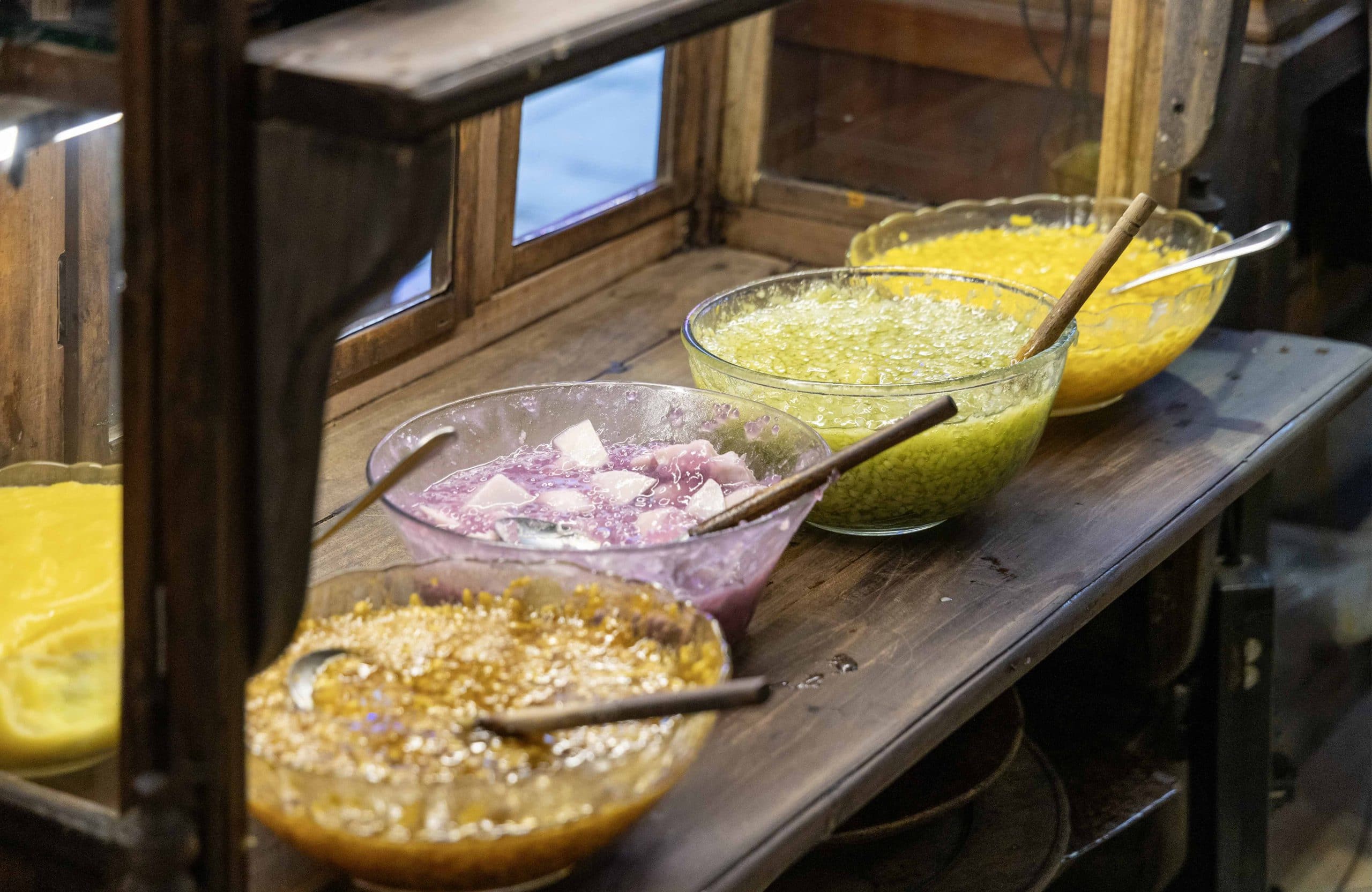
In Hanoi, enjoying a bowl or glass of street-side che in the summer is a way to savor the season’s slow-paced rhythm. A delicious serving of che, though simple, must blend sweetness, coolness, fragrance, and a light, refreshing aftertaste in perfect harmony. The sweet’s true subtlety lies in the fact that it is not intended to fill the stomach, but to leave a gentle, memorable flavor.
Varieties of che typically served in the summer are in harmony with nature. This is the season when various beans, lotus seeds, and seasonal fruits are harvested, resulting in a wider variety of che being available. Within layers of cooling ice, these sweets are both visually appealing and thirst-quenching. From humble roadside stalls to longstanding culinary establishments, che remains a familiar part of Hanoi’s summer.
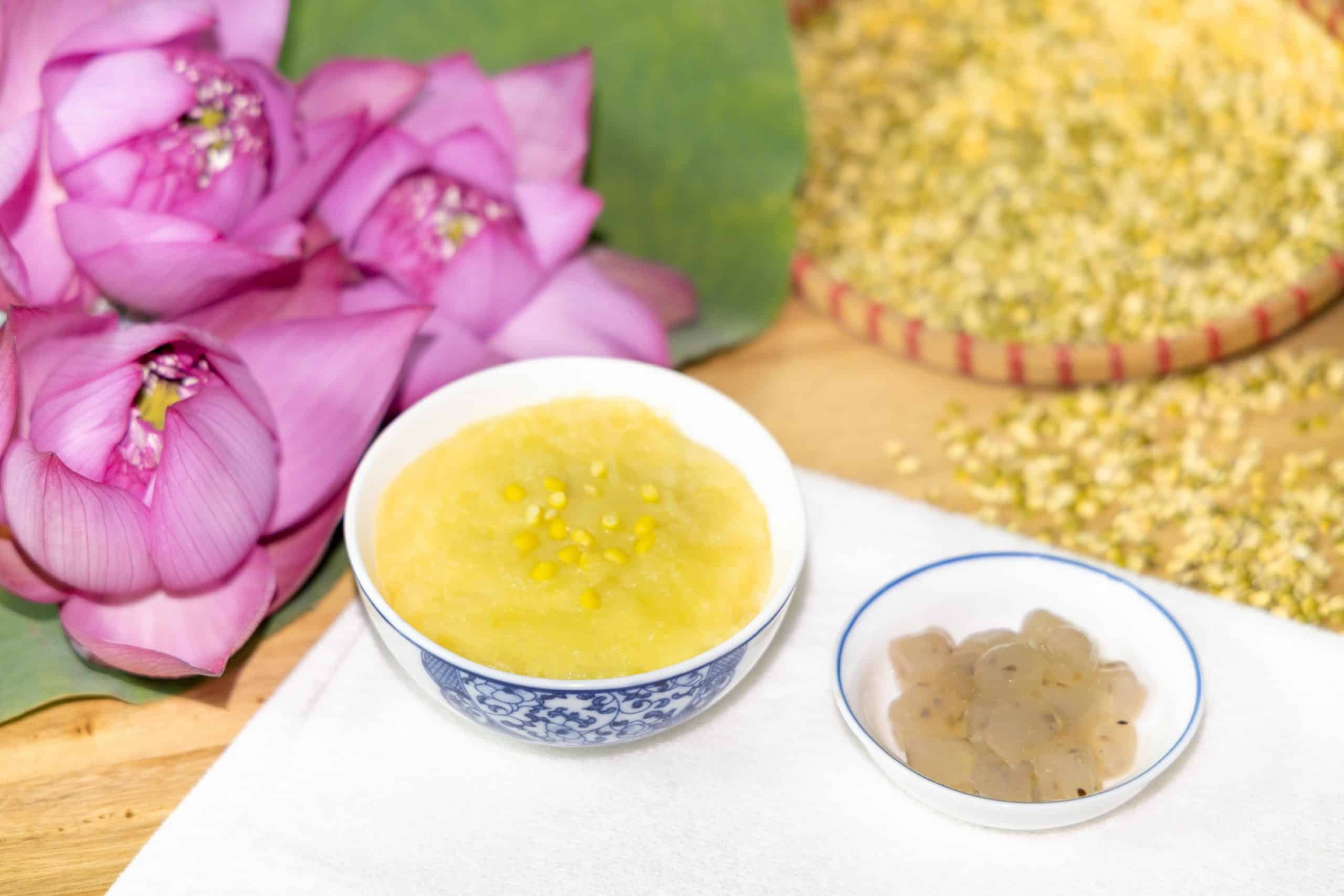
Che dau xanh danh – smooth, nutty richness
Behind a simple bowl of che lies the cook’s skill and experience. Plump green beans are thoroughly soaked, steamed until tender, then whisked into a silky purée and gently simmered with sugar. This seemingly rustic dish demands patience. If the heat is too high or too little sugar is added, the beans’ delicate nutty flavor will be lost.
Many people still prefer to enjoy che dau xanh danh in its original form, with just a touch of shaved ice to highlight the beans’ natural richness. Sometimes, the dish is drizzled with light, creamy coconut milk, garnished with a few chewy tapioca pearls, or topped with cool black jelly and grass jelly. Whatever the variation, the dish’s perfection lies in its smoothness, lightness, and balanced flavors.
Che dau den – rustic simplicity and refreshment
Many Vietnamese people have nostalgic memories of eating che dau den as youngsters in their hometown. Freshly harvested black beans are simmered until tender yet whole, then stir-fried with sugar so the sweetness permeates each bean. This step makes all the difference: the beans must be soft but not mushy, and sweet without being cloying. They should have a light, sugary aroma, mingled with the beans’ original, fresh fragrance.
Today, many vendors favor rustic brown sugars over refined white sugar, lending the che a more natural flavor. A delicious serving of che dau den often features a clear and light-tasting broth, nutty beans, and a touch of black jelly, tapioca pearls, or shredded coconut. This countryside treat requires no elaborate decoration as its simplicity stirs fond memories. Here, one finds another principle of elegant cuisine, as the flavors of humble ingredients are cherished.
Che sen nhan – subtle elegance
When clusters of longans ripen to full sweetness, lotus seeds also reach their fragrant and nutty peak, creating a harmonious pairing of two signature summer delicacies. Though the ingredients are simple, preparing che sen nhan requires care at every step: selecting fresh lotus seeds that are powdery but not tough, choosing longans that are sweet, fragrant, and thick-fleshed; simmering the seeds just right, and then boiling them with rock sugar to retain a light, delicate sweetness.
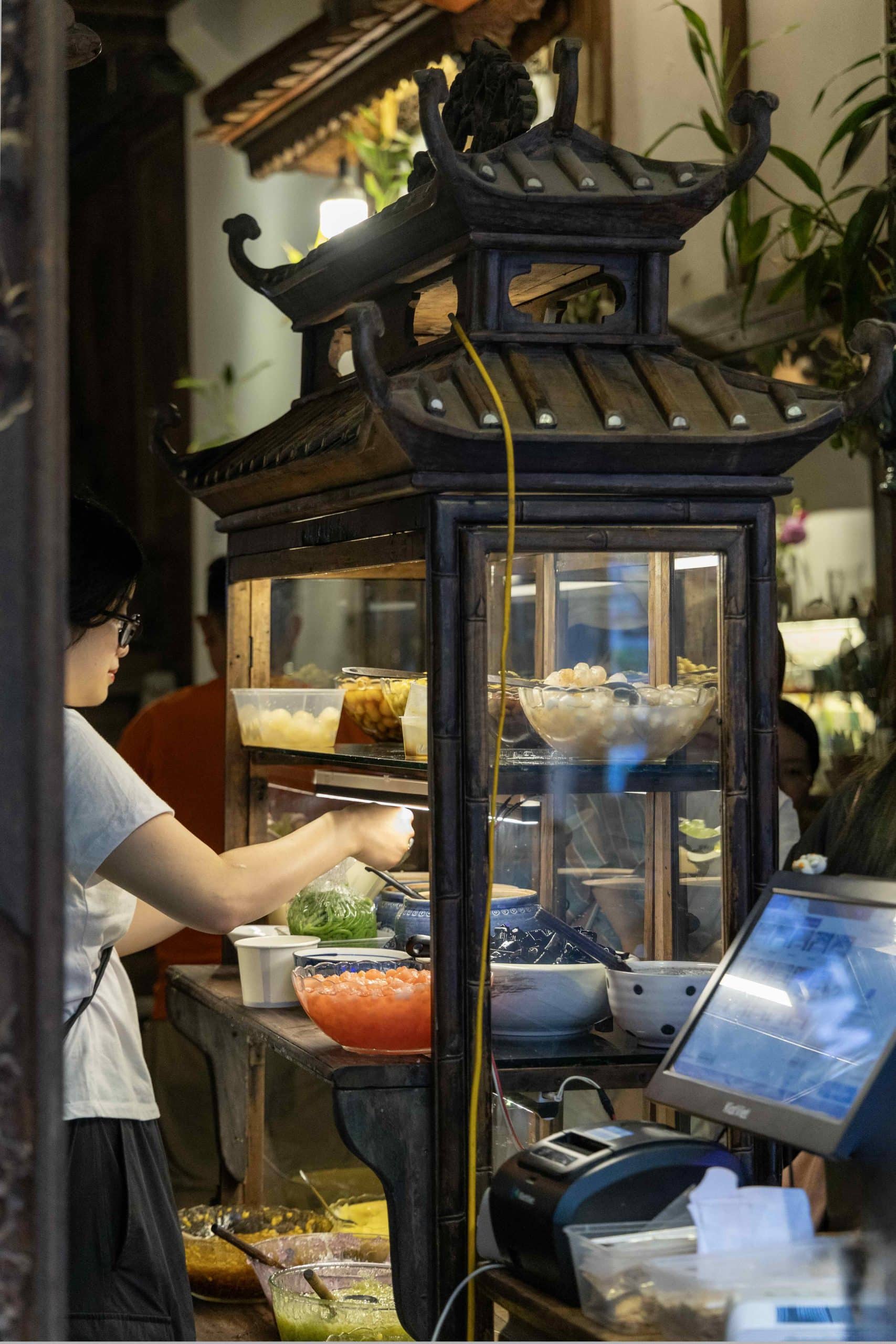
Each lotus seed is neatly tucked inside a pitted longan, making the fruit round and visually appealing. This small detail alone showcases the cook’s dexterity. A fine bowl of che sen nhan lies not only in its flavor but also in its elegant appearance, with clear broth, plump longans, and lotus seeds hidden away to add an unexpected flavor.
To enjoy che sen nhan is to savor the quiet elegance of summer. This delicacy’s sweetness is not too rich, the lotus fragrance is subtle, and the longans are fresh and fragrant. Together, the elements create a cool and delicate sensation. For romantic souls, a bowl may awaken memories of softly scented lotus ponds, rows of fruit-laden longan trees, and childhood summers.
As the pace of life changes, cuisine continues to evolve and more varieties of che are being offered, like a series of musical variations. Yet traditional che recipes are cherished for evoking memories. For this reason, strolling past well-known che stalls in the Old Quarter, on Bat Dan and Hang Can to a bit further down Tran Xuan Soan Street, one still sees throngs of diners.
Rustic bowls and cups of che do more than cool the summer heat. They preserve life’s flavors. Within each bite lies the cook’s skill, a sweetness held in gentle restraint, an elegant pleasure, and memories of these streets. Amid Hanoi’s summer, a cool bowl of che is not merely a refreshment, but a thread binding the past and present, and today’s pace of life with the refinement of old-style cuisine.