
Story: Nam Thi
Photos: Internet
Culture is no longer just something from the past to look at, but something people experience through contemporary art and entertainment.
The sound of festival drums blending with electronic beats, traditional chants woven into modern pop songs, or iconic Vietnamese cultural symbols appearing in major global cities all create a distinctive impression on today’s audiences. Listeners, especially Gen Z, approach music as an immersive emotional experience in which images, sounds, and visual identity function as a single entity. Consequently, music videos have become one of the most dynamic realms of contemporary culture, where layers of national memory are reinterpreted through the lens of a new era.
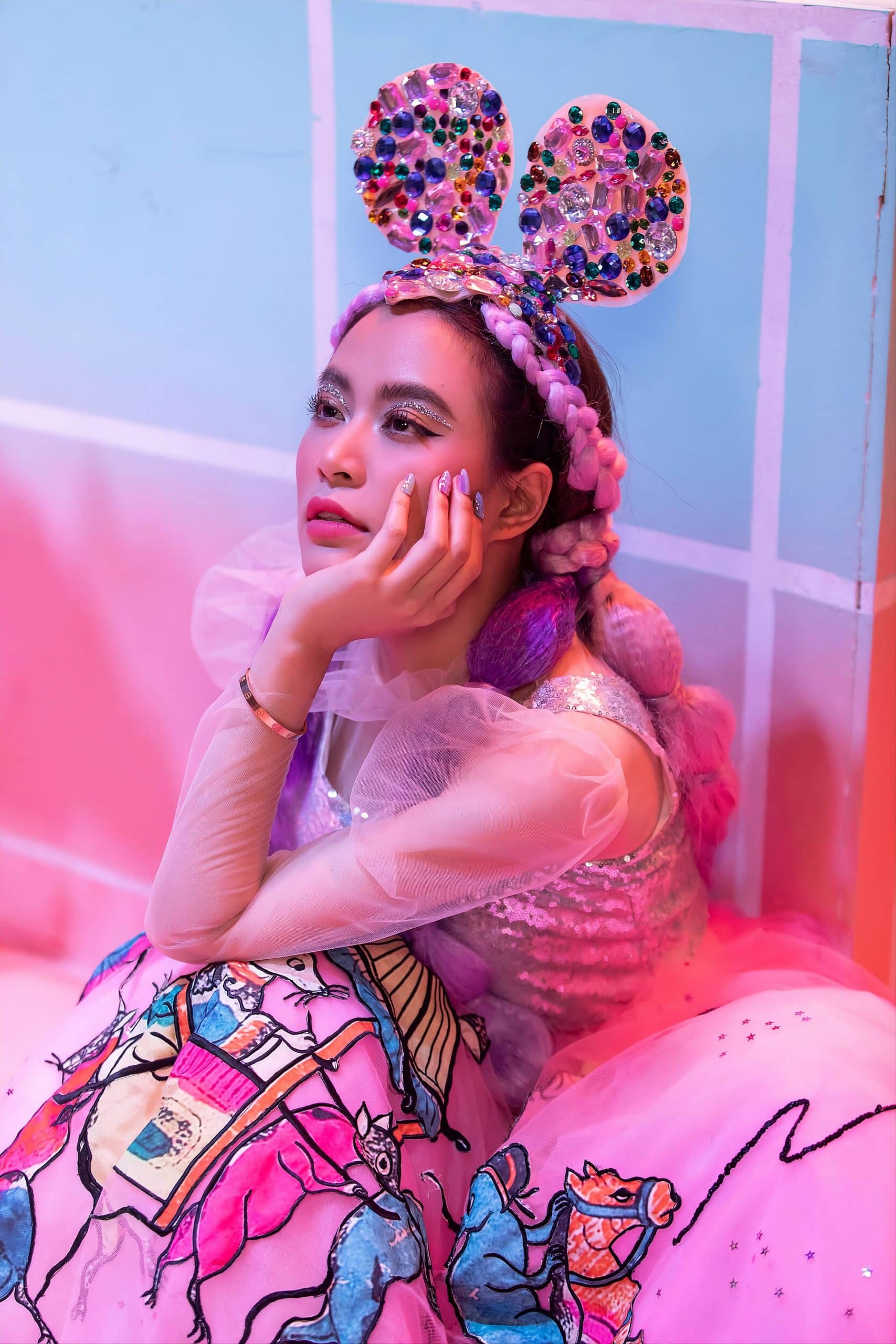
Early experiments such as Ke cap gap ba gia by Hoang Thuy Linh, Doi khi by Suboi, and Doi mi em dang u sau by Dong Nhi – a project in which I served as a cultural consultant – clearly revealed a growing desire to present Vietnamese culture in a more youthful and relatable way. However, the real turning point came when traditional culture was no longer viewed merely as material for historical reconstruction, but as a medium for contemporary dialogue. While the core values remain intact, forms of expression have been refreshed to align with today’s aesthetic sensibilities.
A prime example is Ke cap gap ba gia, in which folk paintings serve as the music video’s central cultural concept. Iconic artworks such as Tu phu (The Four Palaces), Dam cuoi chuot (The Rat’s Wedding), and the legendary characters Kim and Kieu are interwoven to tell a contemporary love story. The distinctive color palette of Hang Trong folk art was enhanced with neon tones, creating a fresh visual impact while preserving its traditional spirit.
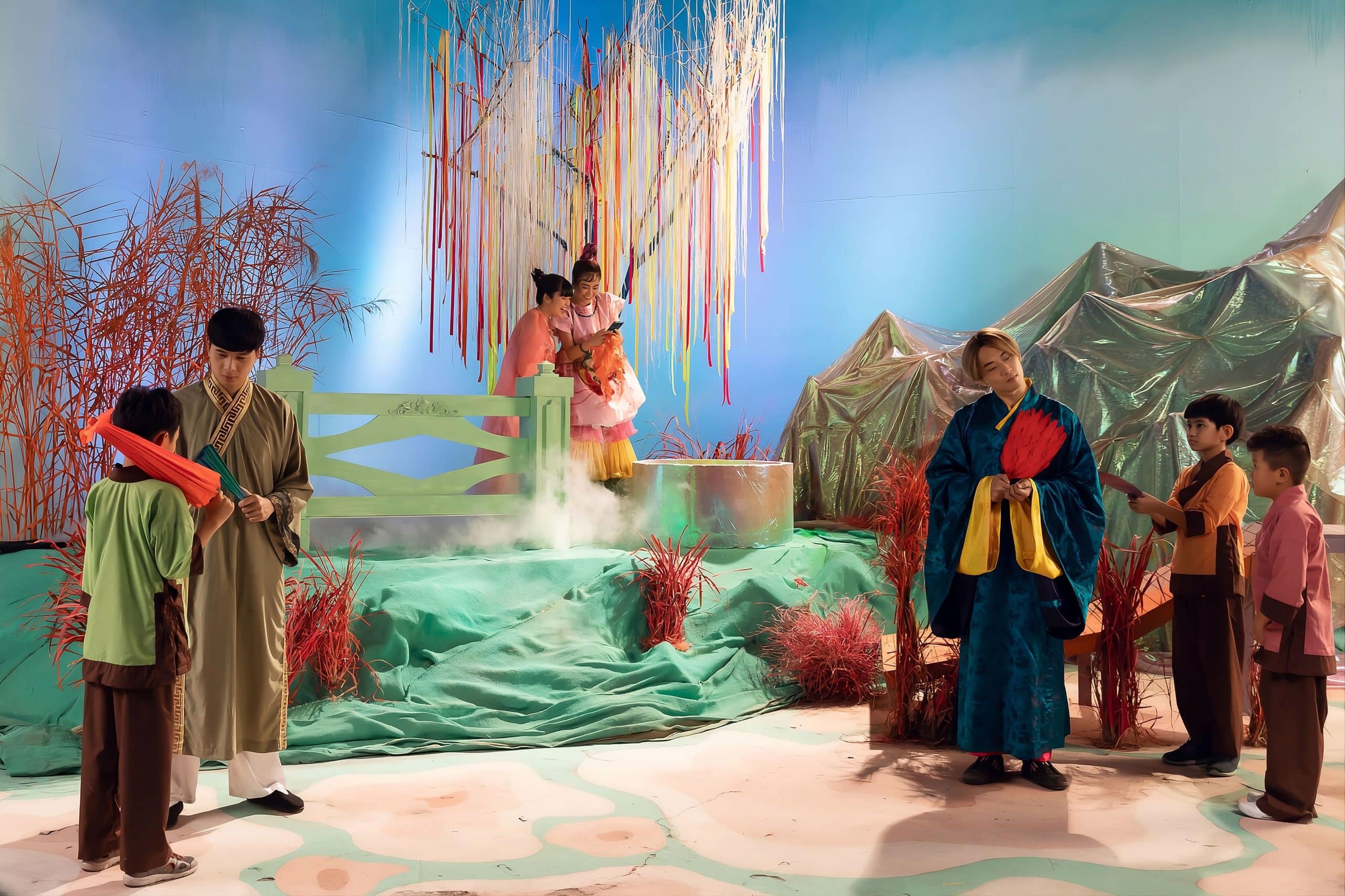
Following a similar expressive approach, the latest video from Son Tung M-TP, titled Come my way, introduces a symbolic system spanning from the Dong Son period to modern times along a chronological axis, combined with cultural hallmarks of Vietnam’s North, Central, and South regions along a spatial axis. All these elements are modernized with a distinctly international flair to help define Vietnamese culture on the global stage. This transformation elevates culture beyond mere inspiration, turning it into a visual experience that encourages young audiences to rediscover traditional arts.
At this stage, culture within music videos is also perceived as an immersive, holistic experience. In Bac bling by Hoa Minzy, cultural elements go beyond images of the North’s countryside or modernized traditional attire. They manifest in collective daily activities, the movement of crowds, and a fast-paced editing style that infuses the traditional Kinh Bac region with the energy of a contemporary music festival. The camera remains in constant motion, filling the frame with rich colors and dense detail, drawing viewers directly into that atmosphere.
Meanwhile, DTAP’s creations showcase a more audio-focused approach. National musical elements blend seamlessly into electronic, pop, and modern rhythms to create a vibe that feels both ancient and contemporary in songs like Made in Vietnam, Ho vuon minh, and Nam quoc son ha. Audiences might not be able to identify the specific traditional instruments they hear, but they can vividly feel Vietnam’s essence throughout the listening experience. Here, culture functions not merely as an identifying marker but as the emotional atmosphere of the entire piece.
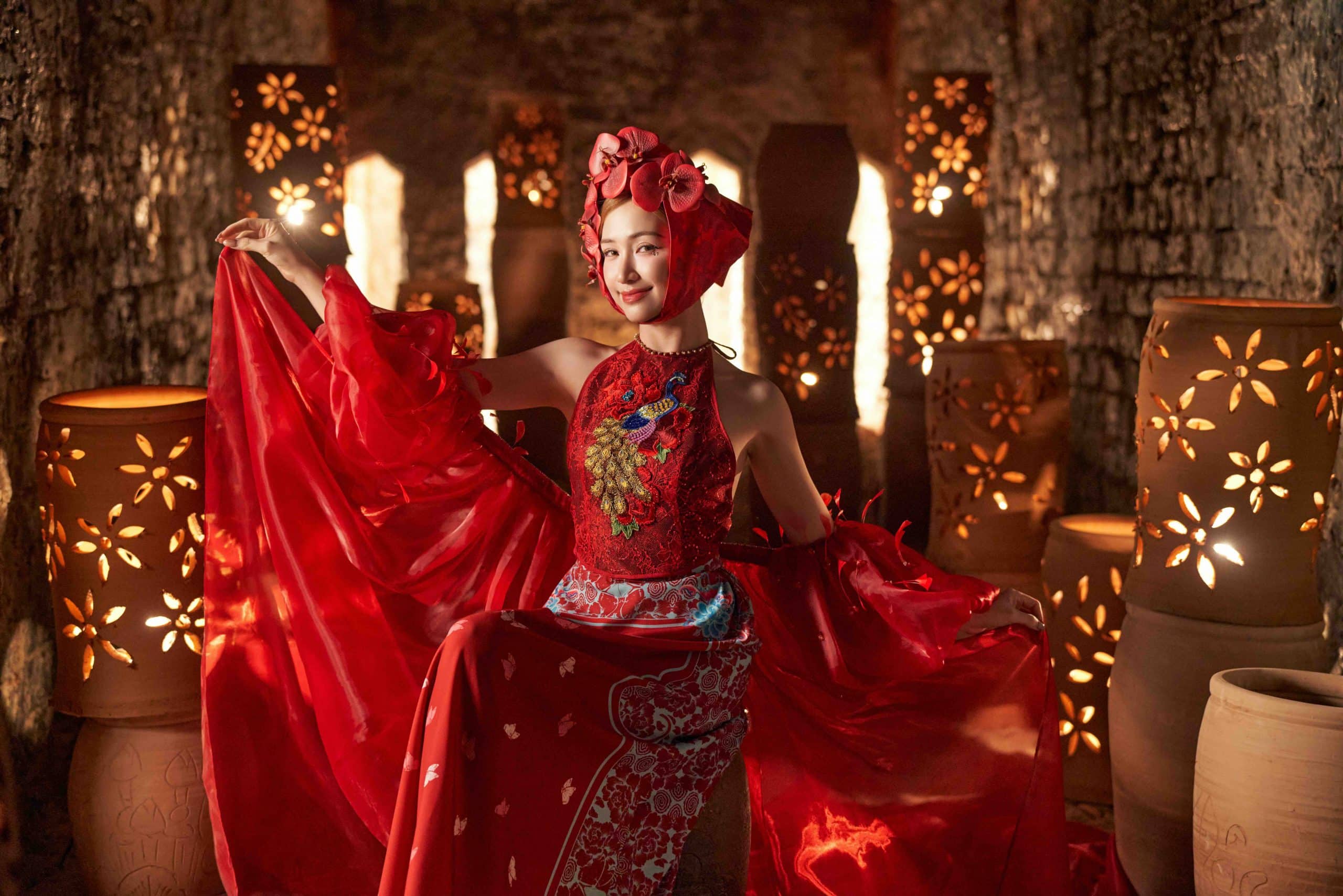
Today’s audiences are highly perceptive and can easily spot elements added solely for decoration. They rewatch, discuss, compare, and trace origins almost simultaneously while enjoying the music. Therefore, the application of culture today is no longer simply about inserting traditional materials into a product, but about making those materials live organically within the artwork’s overall audio-visual framework.
If the biggest question in the past was how to apply culture accurately, today, accuracy is merely the starting point. What audiences truly look forward to are the messages, emotions, and experiences that culture can unlock within a work of art. A music video’s value does not depend on the number of cultural elements it includes, but on its ability to transform them into an artistic language with its own distinct personality and vitality.
Perhaps the most fascinating aspect of this movement is that it shows national culture is never fixed in static concepts. It continues to move through the sounds, images, and perceptions of each generation. On this journey, each music video reveals yet another facet of Vietnamese culture today.