Story: Nguyen Phuoc Bao Dan
Photos: Phan Huy
In the western reaches of Nghe An, the silk woven by Thai women embodies their skill, memories, and cultural identity.
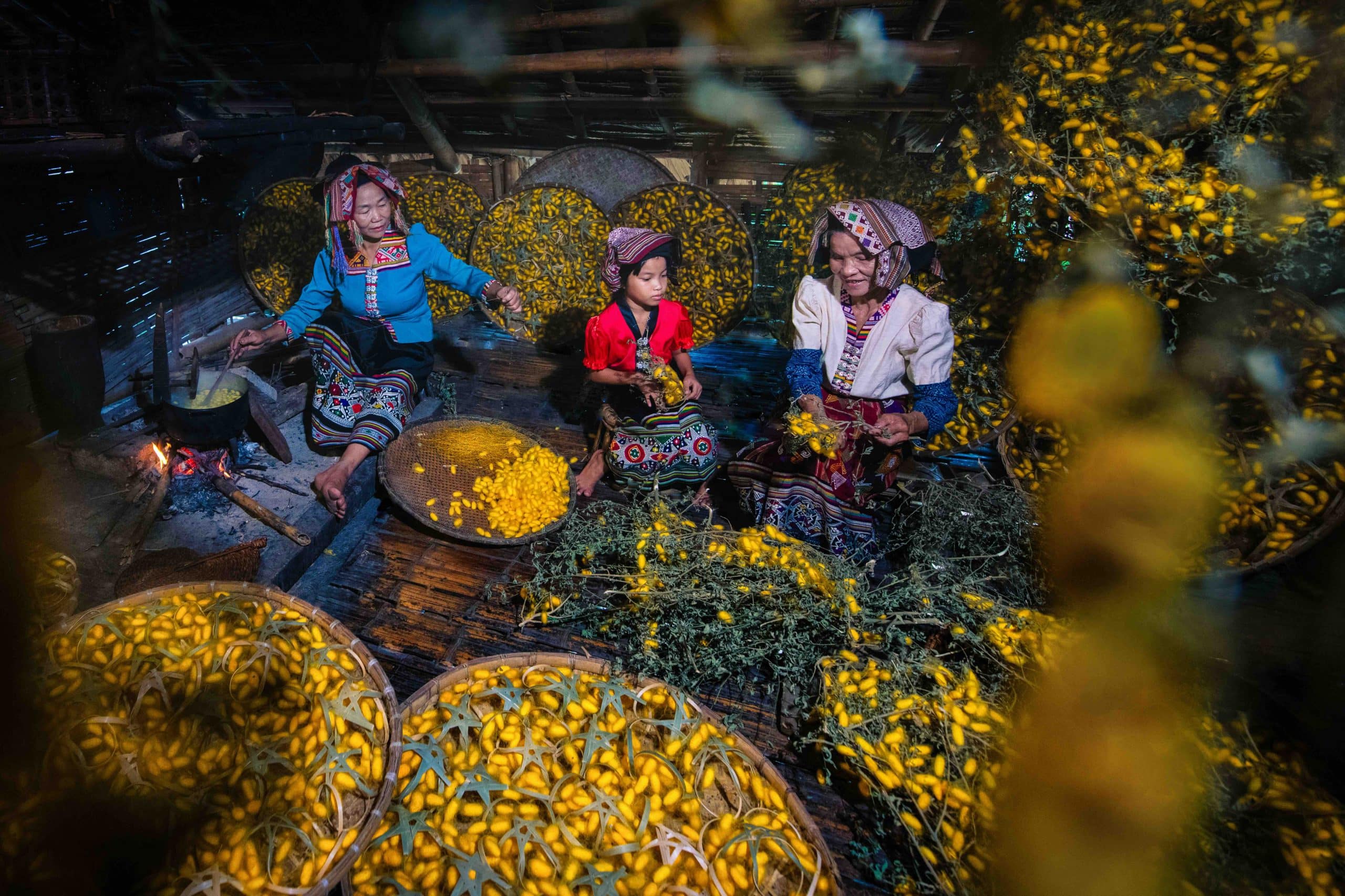
If you ever travel to an ethnic Thai village in the western reaches of Nghe An, you are likely to be captivated by the swift hands, graceful skill, and artistry of Thai women at their looms. The shimmering, multicolored lengths of silk, decorated with distinctive patterns, the mulberry fields along the riverbanks, and the trays of silkworms spinning their cocoons all seem to carry hidden messages waiting to be discovered.
In western Nghe An
In the Western reaches of Nghe An, the legends of Chin Gian Temple in Que Phong Commune tell of Nang Xi Da, the daughter of the King of Heaven (Then Pha), who was sent down to the earthly realm to rule over the nine muong of the old Quy Chau region. Nang Xi Da is said to have taught village girls to grow cotton, raise silkworms, spin thread, weave cloth, and embroider, and is revered as the ancestral patron of weaving among the Thai people.
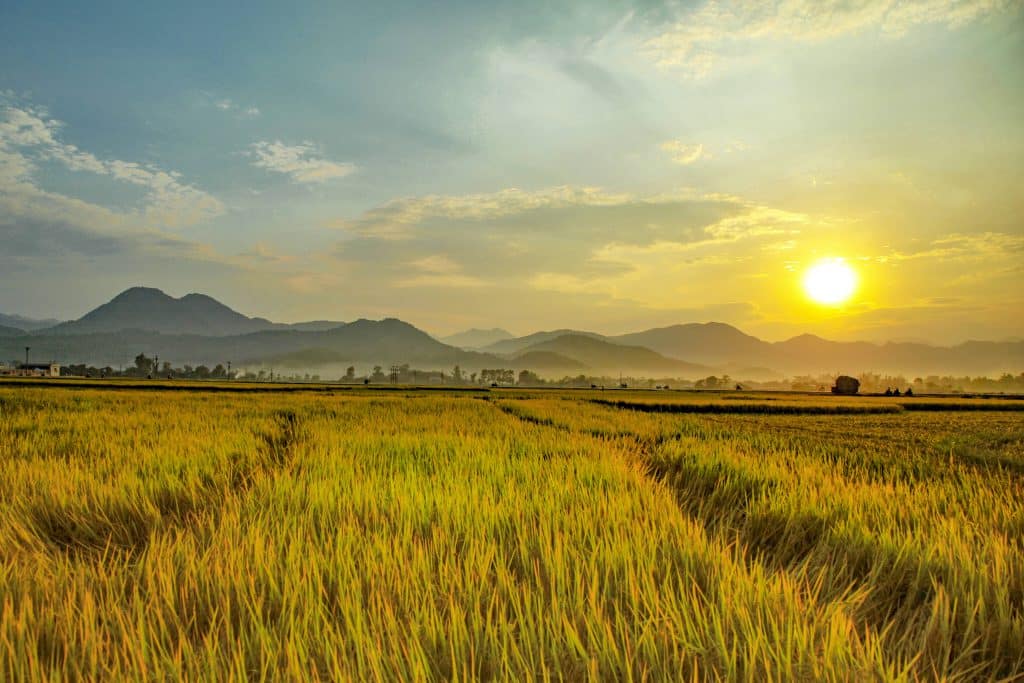
The alluvial banks along the Nam Cuom, Nam Chai, and Nam Can rivers have long provided fertile ground for Thai communities to settle and thrive. In their migrations to western Nghe An, the Thai brought not only wet-rice cultivation and traditional muong-phai irrigation systems, but also mulberry cultivation, silkworm rearing, and silk weaving. The natural environment also opened up new possibilities, so that today, in addition to silkworms fed on mulberry leaves, some places also raise silkworms on cassava leaves. Visitors to this region love to capture images of lush mulberry fields along the fertile riverbanks, with water wheels turning over cool streams.
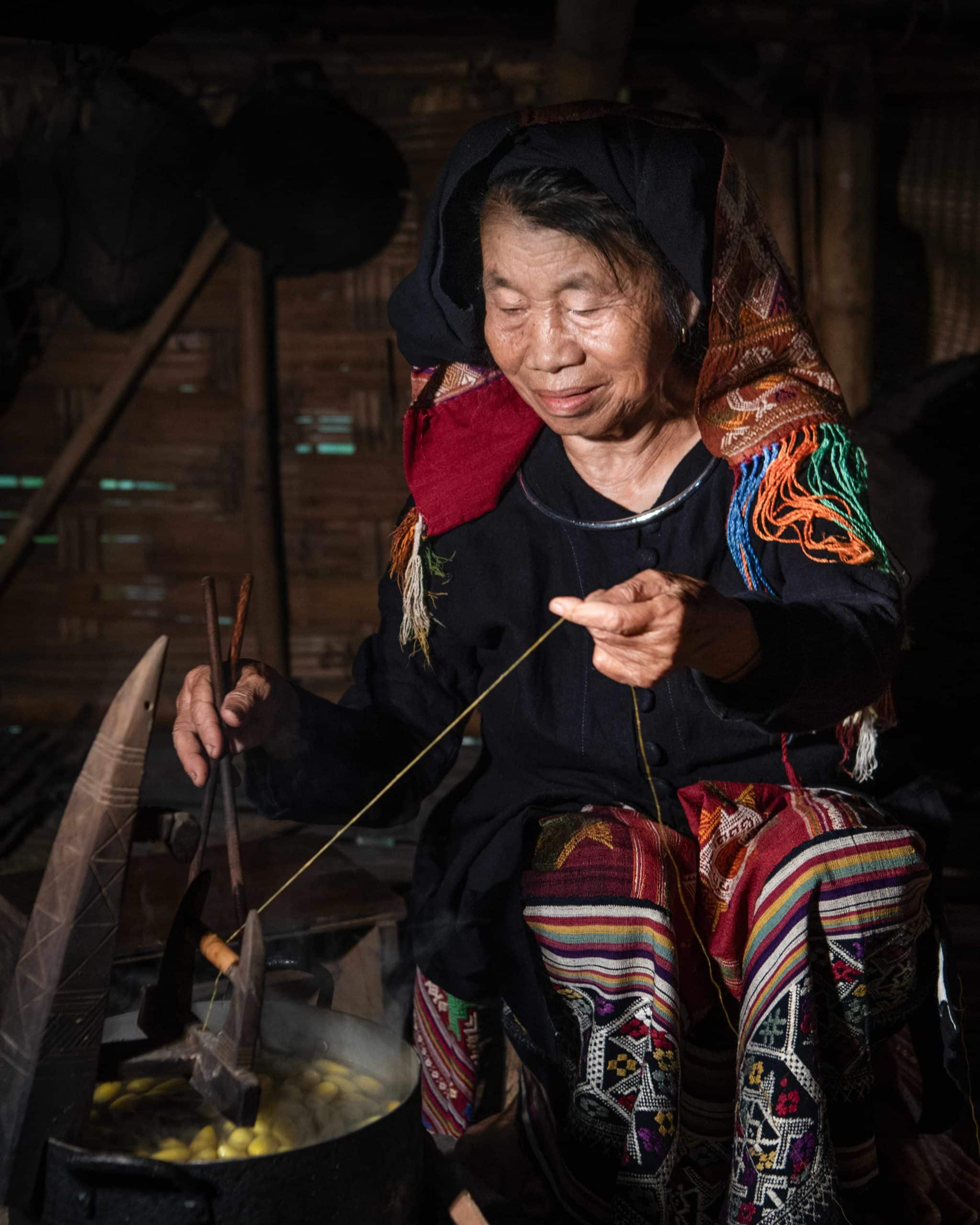
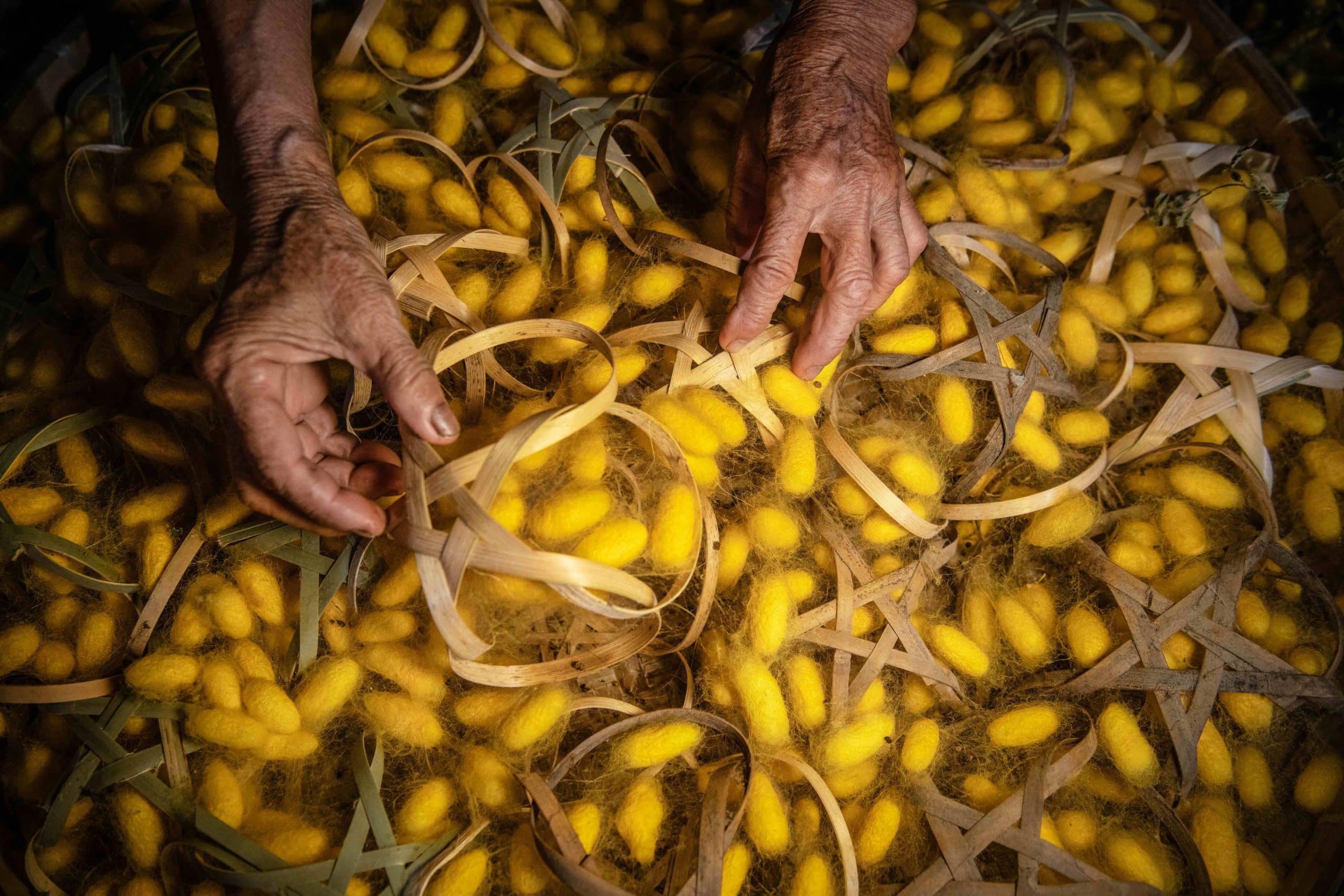
Following their roughly 20-day cycle from hatching to maturity, silkworms are placed onto frames to spin their cocoons. After four or five days, they turn into pupae, and the cocoons are collected for reeling. The cocoons are immersed in boiling water. With a reeling frame fitted over the pot, the silk threads are wound into small skeins. To brighten the silk, Thai women often soak the threads in water infused with unripe papaya slices, then dry them in the sun.
For the Thai people of western Nghe An, these skeins of silk are the very threads from which life is woven. In the skillful hands of Thai women, silk threads become garments rich in community identity. Skirts, blouses, and pieu scarves add beauty to Thai festivals and serve as objects of exchange, linking the lives of their makers with those of neighboring communities such as the Kho Mu and Tho.
Where Thai women weave silk
“Turn the palm downward, and it becomes a flower motif; turn it upward, and it becomes flowers and leaves. Smooth as the tip of a scallion leaf, soft as a drifting cloud” – such lines are common in Thai folk literature, where the hands that weave silk and create patterns are celebrated in poetic images.
At looms made by the men in their families, Thai girls learn alongside their mothers and grandmothers to reel silk, spin thread, and dye yarn, creating plain-woven cloth with basic weave patterns. Through patient practice on more intricate double- and triple-weave designs, they gradually gain skill.
The motifs in Thai textiles often reflect the community’s worldview and vision of human life. They include simple designs such as variations of eight-pointed stars, the sun, diamonds, lozenges, X-shapes, and V-shapes, as well as more elaborate figurative patterns such as pa chau (spiritual beings), khan tai pha chau (spiritual beings in temple shrines), to quang (deer), to ma (horses), and to noc (birds).
At each stage of life, the women seated at their looms skillfully combine colors to create silk suited to that phase. Young Thai women at the age for new love and courtship favor flowing, romantic patterns set against brighter backgrounds. As women grow older, they turn to deeper, more subdued tones, with motifs defined by firmer lines and more contemplative depth.
The Thai saying in western Nghe An – Nhinh hu det phai, Chai hu san he, nhinh na (“Girls know how to weave cloth, boys know how to weave fishing nets and shoot crossbows”) reflects the importance of weaving, a craft requiring patience and precision that is traditionally entrusted to women. When daughters sit at the loom to learn, their mothers quietly pass on lessons about life and how to treat others. More than a manual skill, weaving forms part of the inner life of Thai women. Skilled weavers are highly regarded in the community and considered desirable partners by talented young men.
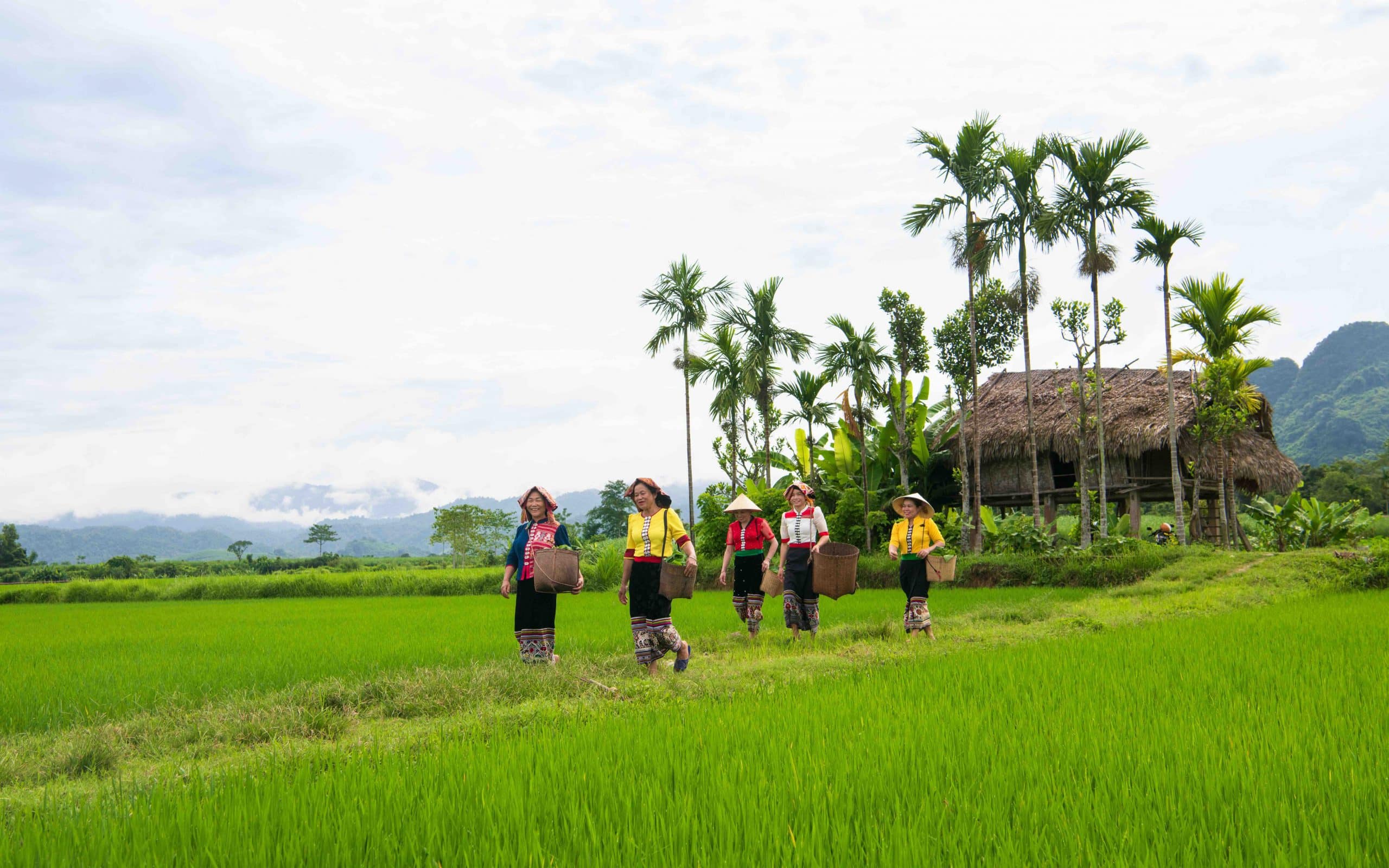
From the mulberry fields and silkworm trays to the looms inside stilt houses, weaving flows through Thai life like an enduring current. In every length of silk and every woven motif, one sees not only the skill of human hands, but also the memories, way of life, and inner beauty of the Thai community.