
Story: Truong Quy
Photos: Amachau
From mountains to lowlands, the stilt house stands as a common architectural language among Vietnam’s ethnic communities, holding traces of history, belief, and daily life.
For generations, the silhouette of stilt houses has evoked warm memories. Perched on steep mountainsides or nestled in valleys veiled by evening smoke, these buildings welcome travelers back to a familiar world. This is no coincidence: this architectural style has shaped the lives of the Vietnamese people for millennia.
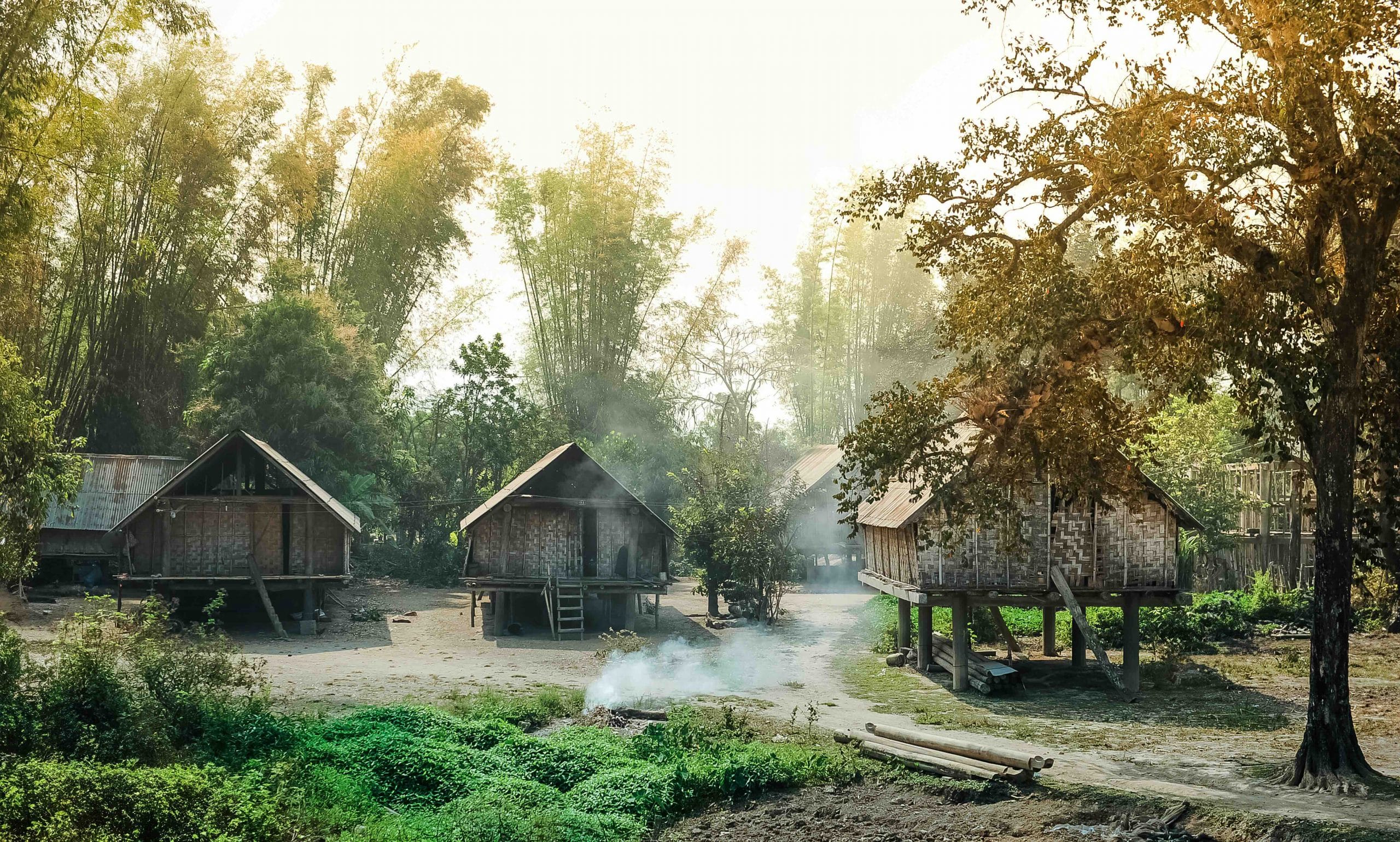
On the surface and mantle of Dong Son bronze drums, the stilt house appears as a prominent symbol alongside engraved images of birds, boats, people pounding rice, and scenes of community life. While the daily customs depicted on these drums have changed over thousands of years, stilt houses have endured. From the stilt dwellings of highland ethnic groups to the communal houses of the lowlands, this architectural tradition remains a profound bond connecting communities across generations.
A symbol of a civilization
Stilt houses are a widespread architectural style found across many regions and communities, from Southern China to the Southeast Asian archipelagos, with Vietnam among the most prominent centers. These buildings reflect the long history of human settlement on Vietnam’s S-shaped land, from the mountains to the coast. Adapted to local natural conditions and customs, they have become a cultural icon in many regions.
The Dong Son culture was named after the Dong Son archaeological site, discovered in 1924 near the Ma River. Through years of research, the term Dong Son has come to define a brilliant Bronze Age civilization in northern and north-central Vietnam, dating from around the 8th–7th centuries BCE to the early centuries CE. The symbolic motifs on Dong Son bronze drums have become enduring symbols of this ancient Vietnamese civilization, featuring Lac birds circling a radiating sun and vivid depictions of people beside stilt houses. The deep historical roots of the stilt house is proven by its appearance on these ancient sacred musical instruments.
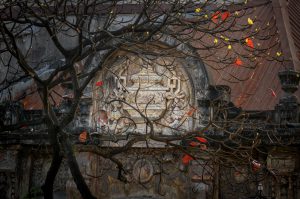
The oldest surviving communal houses, known as dinh, built by the Kinh people in the lowlands, still retain this stilt structure. They stand among the finest masterpieces of ancient Vietnamese architecture, including the Chu Quyen and Tay Dang communal houses in Hanoi, and the Dinh Bang communal house in Bac Ninh. In these structures, the raised wooden floor serves as the hub of community life, hosting everything from the worship of village guardian deities to local festivals. Beneath their giant curved roofs, vivid carvings of daily life continue the artistic tradition of the bronze drums, creating an unbroken visual history.
The simple stilt house where mothers give birth
The stylized houses depicted on the bronze drums remain a living reality today. From the northern highlands to the forested regions of Thanh Hoa and Nghe An, stilt houses are typically built in valleys, at the foot of mountains, or along rivers and streams to protect inhabitants from moisture and wild animals.
Legends of the Thai and Muong ethnic groups tell of a divine turtle that taught humans how to build houses in its likeness, with the four legs forming the pillars, the shell being the roof, and the scales becoming tiles or thatch. A distinctive feature of Thai stilt houses is the khau cut ornament at both ends of the roof ridge. This decoration consists of two beautifully carved, crossed wooden beams resembling buffalo horns or flower stalks. Its meaning is interpreted in various ways. The Thai believe it protects the house from wind, while its name is also thought to refer to rau don, a wild fern common in mountainous areas.
The turtle-shell roof, combined with spiral patterns resembling wild ferns, echoes the mystical engravings on Dong Son bronze drums. Together, these motifs reflect a time when the inhabitants of this ancient culture spanned a vast territory, forging natural bonds among different ethnic groups.
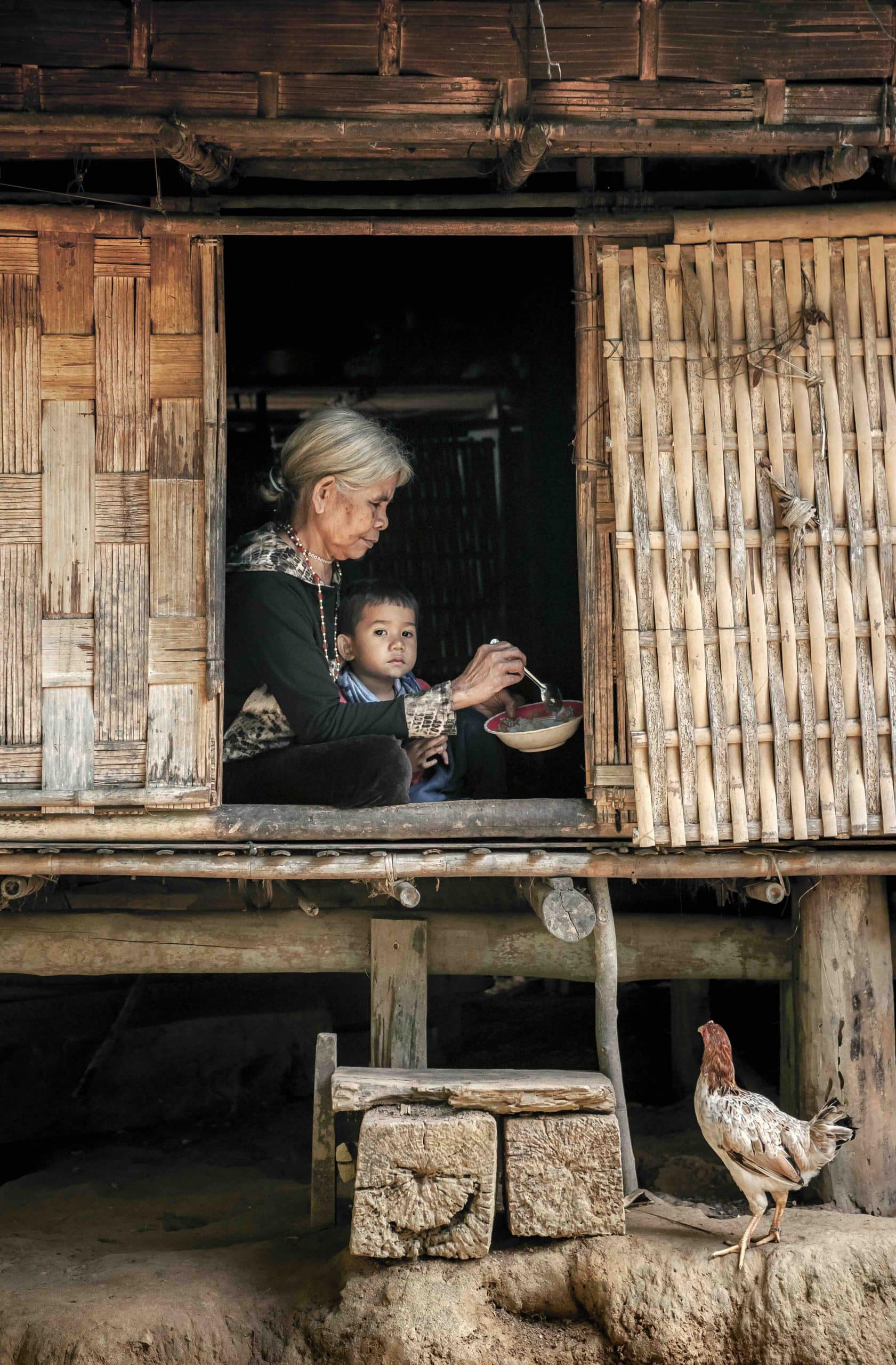
The subtle features of the stilt house are deeply woven into daily life. For instance, a Thai stilt house has two staircases: the tang quan for men with seven steps, and the tang chan for women with nine steps. This detail inspired the song Nine Steps of Love by An Thuyen, which traces a lifetime journey from childhood to courtship on those nine steps, culminating in the line, “Nine months in the womb, a mother gives birth in a simple stilt house.” An entire cultural universe is mapped within these modest architectural details.
As long as the sound of a gong
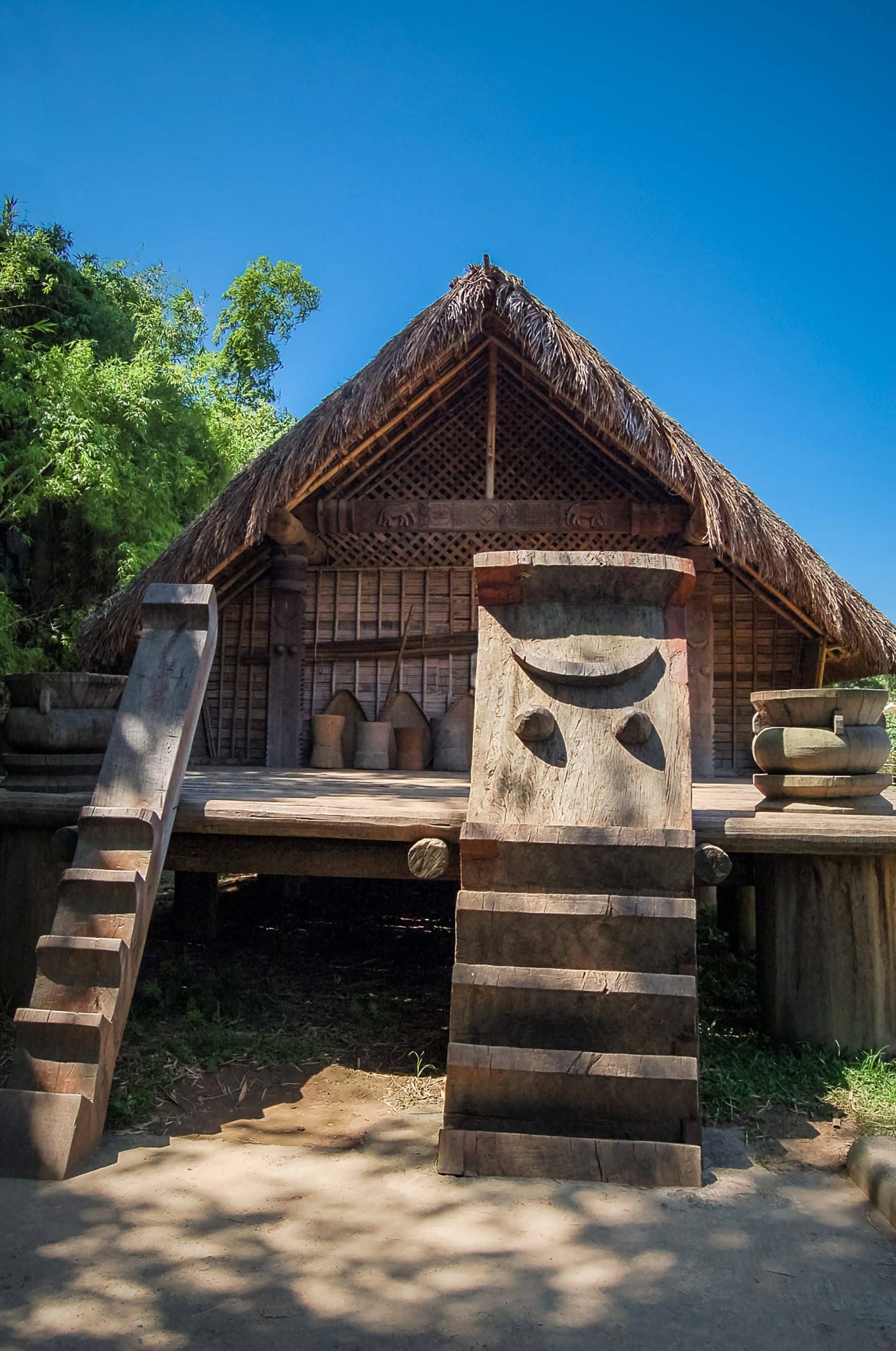
The stilt houses of the Gia Rai, E De, and Ba Na ethnic groups in the Central Highlands, along with the dwellings of the Cham community in eastern Dak Lak, help shape the epic atmosphere of the great forests. Here, stilt houses can be extremely long, accommodating multiple families of the same lineage. Another prominent feature of the Central Highlands landscape is the nha rong, a communal house with a soaring roof at the heart of the village, serving as a sacred pillar that holds the community’s soul.
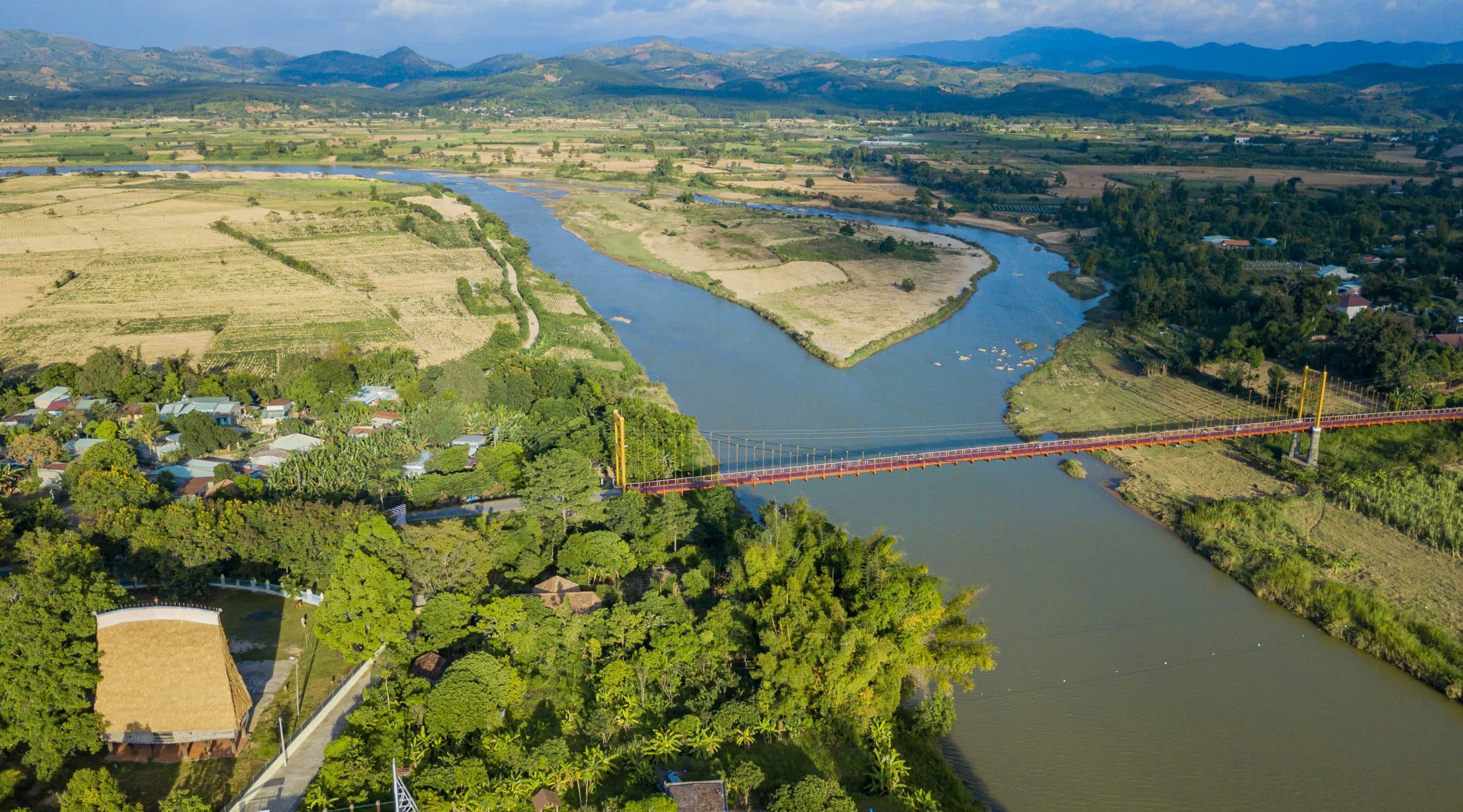
The grand oral epic Dam San, which chronicles how the E De people conquered nature, states: “The house is as long as the sound of a gong. Its porch stretches as far as a bird can fly.” The stilt house is where younger generations find their spiritual roots and the material heritage that shapes their ancestral customs. These communal houses are tied to festivals, harvest rituals, and the cultural space of the gongs. The longhouses and nha rong come alive only when communities preserve traditional ways of life – gathering around flickering fires to hear village elders recount the epic journey of a hero seeking the Goddess of the Sun.
The silhouette of the stilt house spans the history of many ethnic groups across Vietnam, forming a shared cultural asset among communities with closely related customs and traditions. What began as an architectural response to nature has evolved into a national cultural symbol. The stilt house is a simple yet deeply felt part of Vietnamese identity.