
Story: Long Ho
Photos: Heritage Photo Tour – Thai Nguyen
Discover a place where the lake, woods, and mountains set the pace of life.
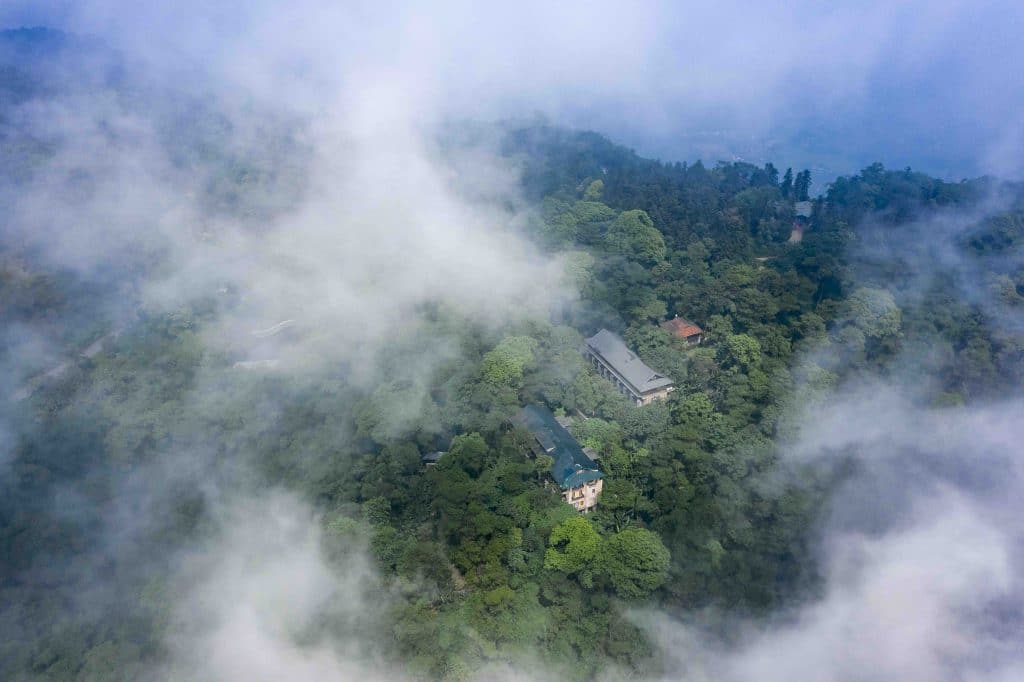
At 5 a.m., roosters echoed through the valley, waking everyone before the first light slipped between the mountains. Stepping onto the balcony of the stilt house, I stood before a dense white sea of mist covering Ba Be Lake. Only the yin-yang tiled roofs rose above it, floating as if suspended in midair. It felt like a fairyland.
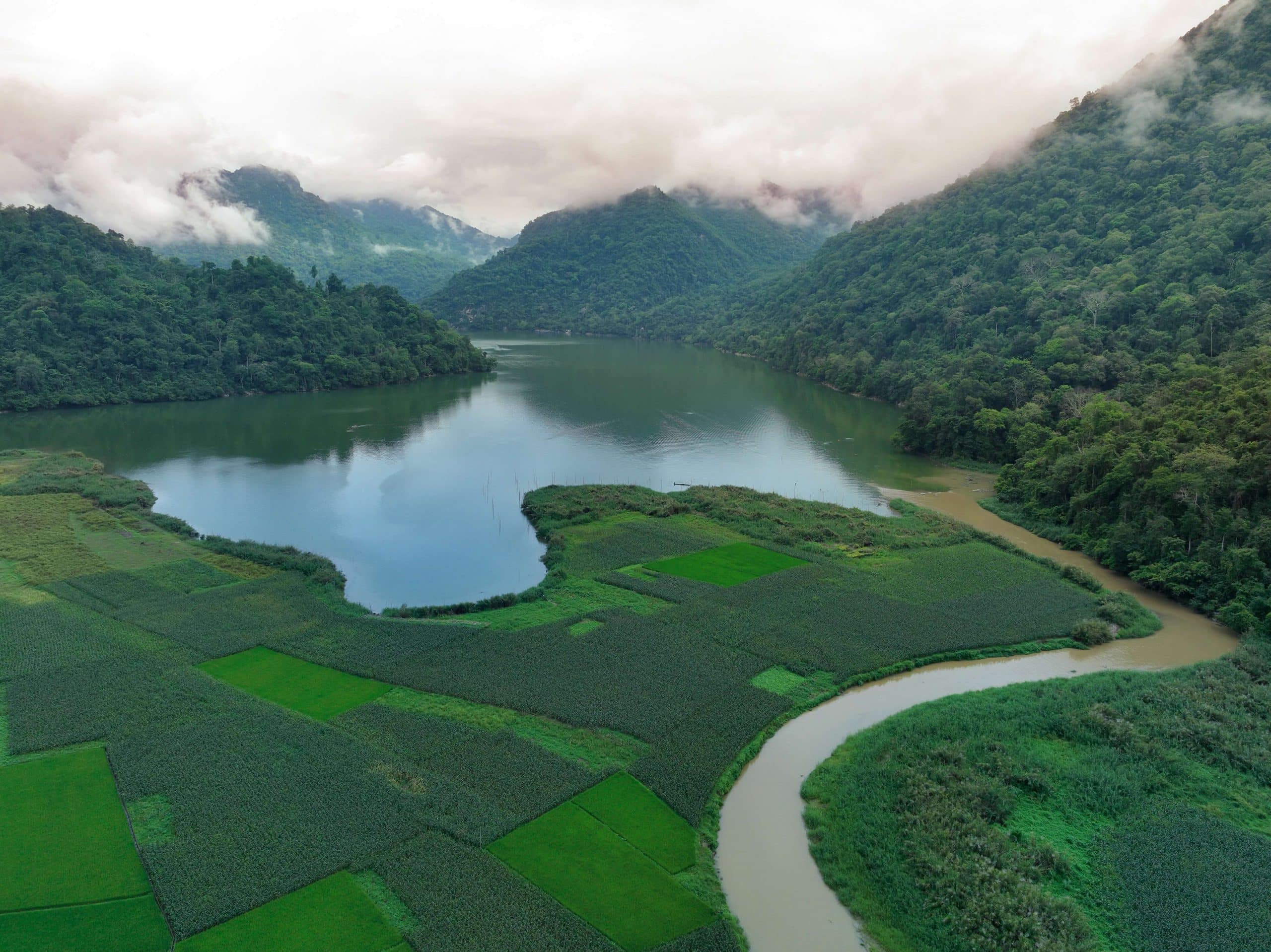
In the city, people live by clocks and car horns. Here, amid mist blanketing the lake, I felt as though I had stepped into another time zone altogether – governed by water.
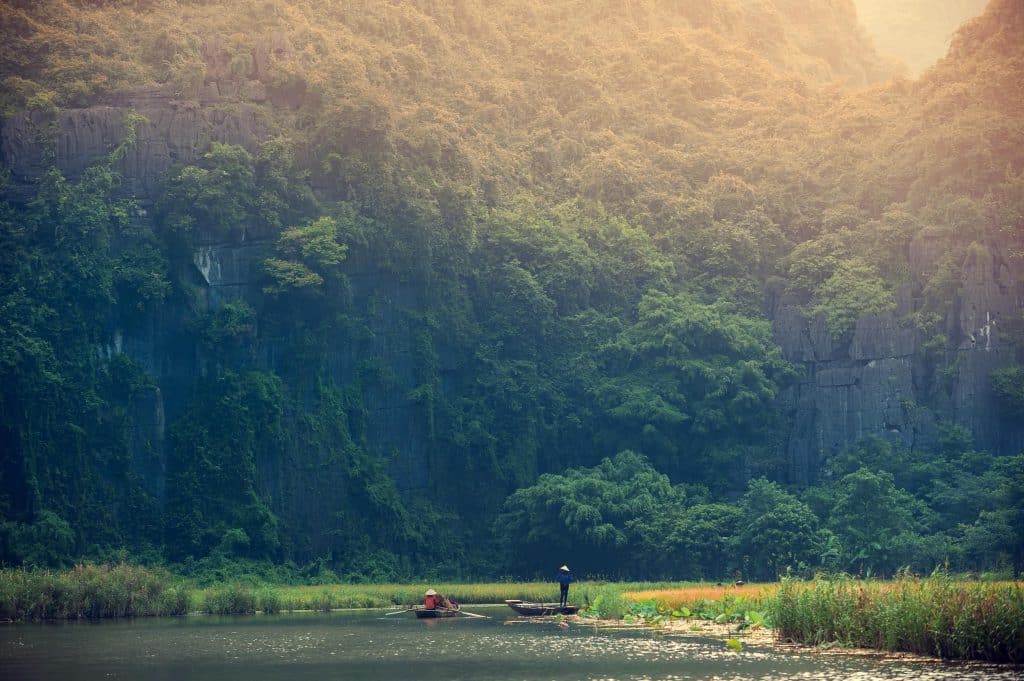
The afternoon before, after more than four hours of driving from Hanoi to Ba Be National Park in Thai Nguyen Province, I boarded a boat bound for Pac Ngoi Village. The lake opened in jade-green stillness between towering limestone mountains. We passed Widow Islet, a small rocky outcrop in the middle of the water, where the roots of old trees clung to stone crevices and cast their shadows onto the lake like gentle brushstrokes.
By dusk, we reached the pier. The ethnic Tay village lay quietly along the shoreline, its wooden stilt houses darkened by time. At the foot of the stairs, Mrs. Luong Thi Tam greeted me with a gentle smile. My heart lifted at the sound of children playing nearby.
On the veranda, older women taught their daughters and granddaughters to spin thread and weave cloth. Beside the kitchen, others wrapped leaf cakes, while evening smoke drifted through the air, carrying the soft fragrance of upland sticky rice.
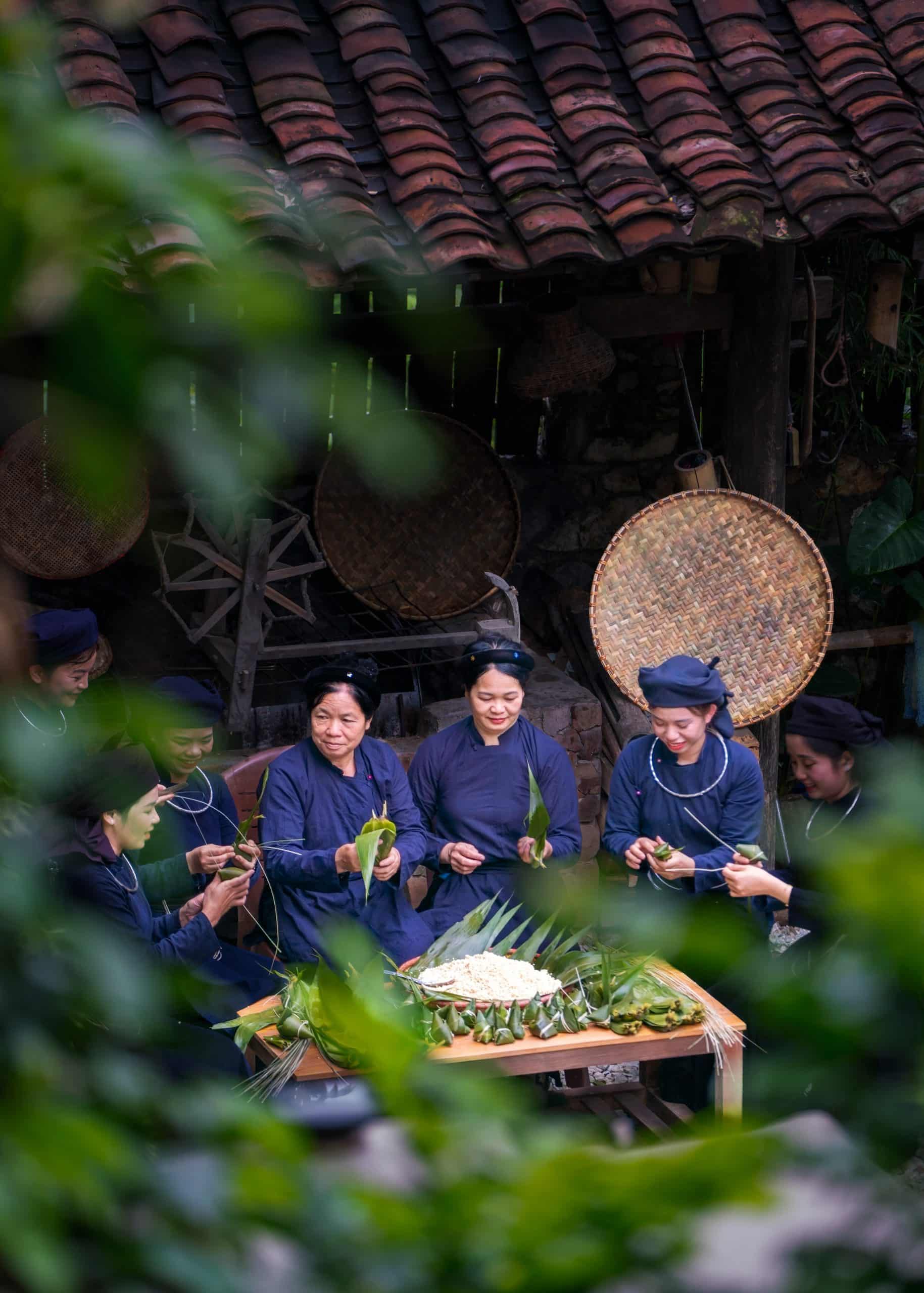
Good food by the glowing hearth
Dinner was served around a glowing charcoal fire – the place the Tay regard as the soul of their home. The ingredients were drawn from what the woods and lake provided. First came grilled ca muong, tiny fish no bigger than a finger, clipped between split bamboo sticks and roasted over charcoal. Their flesh was firm, fragrant with wood smoke, naturally sweet and nutty – so flavorful that no dipping sauce was needed. Fermented freshwater shrimp were mixed with sticky rice and eaten with smoked pork belly, the richness, tang, and heat balanced in a way only those who live by the lake could have imagined. Next came stir-fried bo khai greens with garlic, crisp and lightly bitter at first, with a sweet aftertaste.
Before dinner, I followed Mrs. Tam down to the lake to watch the villagers make fermented shrimp. Freshly caught, the tiny shrimp were mixed with sticky rice, garlic, and chili, then placed in earthen jars to ferment naturally. Over cups of corn wine brewed with forest yeast, the conversation between host and guest stretched on, warmed by the fire.
Looking up at the sturdy wooden beams, I admired the house – and Mrs. Tam smiled gently. “This house has only five compartments now,” she said. “In the past, a traditional Tay stilt house typically had seven. A house is like a boat – however the forest grows, that is how we build it. Too large, and the cold air slips in; just right, and the warmth of people fills it. If you live in harmony with the forest and the lake, life endures.”
Night fell. The village sank into the sounds of insects from the deep forest and cool winds slipping in through the cracks from the lake. A restful sleep was something I had long yearned for.
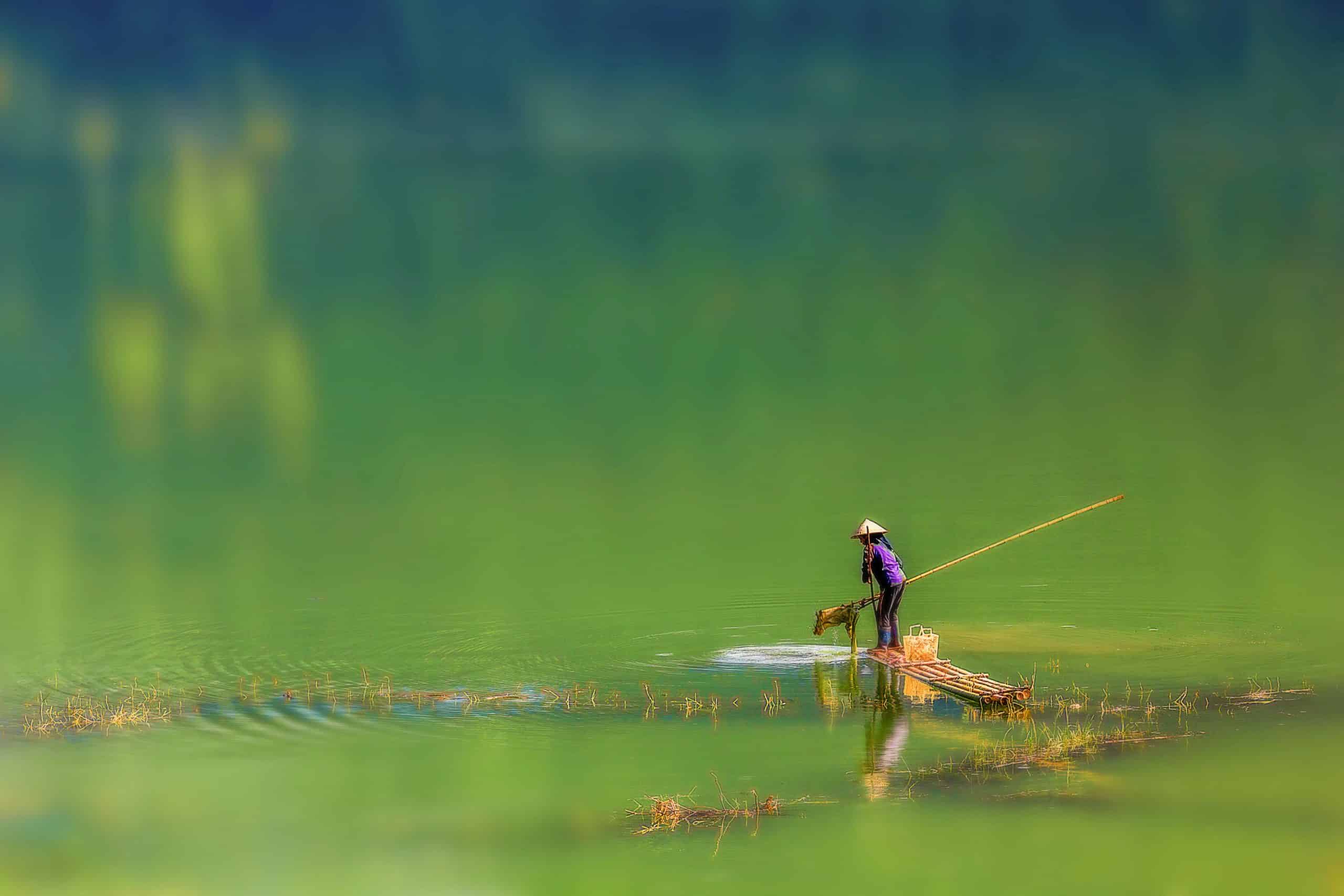
The many bends of the Nang River
The next morning, when the sea of mist had lifted, I went down to the pier with Mr. Tho – Mrs. Tam’s husband, a boatman long familiar with the water. Our boat left the lake and entered the Nang River on its way to Puong Cave. The primeval forest along the banks cast its shadows on the water, carrying the scent of damp earth and ancient moss-covered stone.
A vast cave mouth appeared in the limestone mountain. Without a word, Mr. Tho turned off the engine. Only the gentle splash of oars and the echo of water against deep rock walls remained.
I asked why he had cut the motor. He answered softly, “When entering a cave, you must return the silence to it. We Tay people never speak loudly when passing through the mountains. If you respect the stone, the stone will keep you safe.”
Leaving Puong Cave behind, our boat continued upstream to Dau Dang Waterfall. The roar of the water rose as the Nang River plunged over tiers of stone covered in green moss, churning white foam. Watching the current rush past, Mr. Tho said, “In flood season, even from the stilt house back in the village, you can still hear the water striking the rocks.”
On the return journey, Pac Ngoi appeared in the distance, its stillness preserved for generations by mountains and water. As I left Ba Be, I glanced at the clock on my phone and knew I was about to return to the time zone of appointments and roads, forever going somewhere. Only the lake behind me remained, calm and unchanged, in the time zone of water.