Story: Kieu Quoc Thai
Photos: Jamie Nguyễn Bảo
An unusual postcard collection traces the changing way of life along the Tien River.
Some rivers exist not only on maps. They live on in meals rich with the taste of alluvial soil, in ferry rides that cost only a few thousand dong, in the sound of water parting under the morning sun, in a market that has moved ashore, and in the stories locals still tell about a time when boats crowded the waterways.
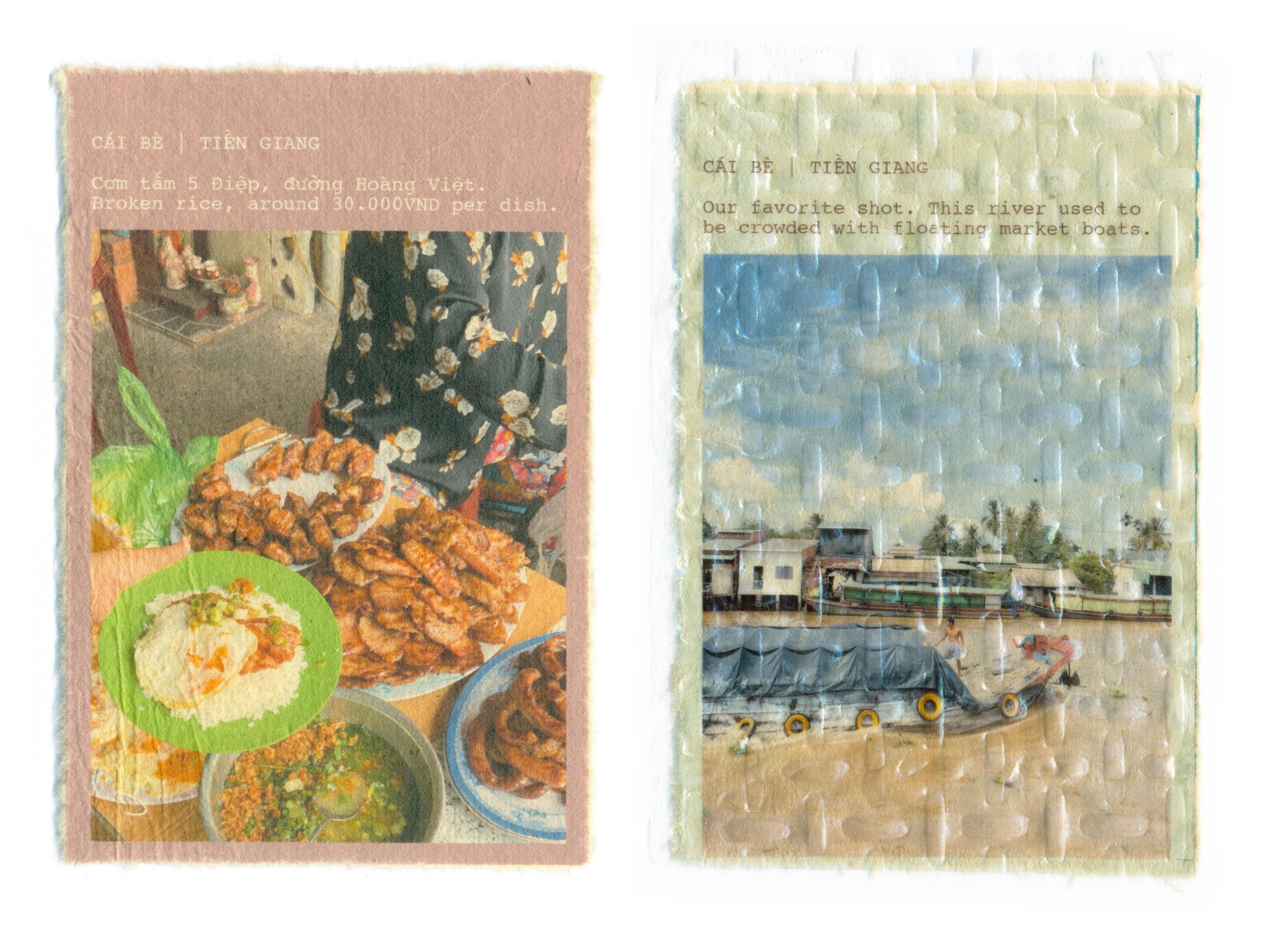
Strangevisuals preserves the memories of places through postcard collections printed on giay do paper and rice paper. Each collection is a conversation with a different region. In its Tien Giang series, the Mekong does not appear as a grand landscape to be admired from afar. Instead, it is present in the rhythms of riverside life, seeping into every detail.
Strangevisuals is Jamie’s personal art project, born from small observations in everyday life. Rather than seek grand images or familiar icons, Jamie lingers over easily overlooked details: a roof, an animal, a meal, a patch of sky by the river, or a surface texture that stirs memories. Once placed on postcards, such fragments become a gentle form of preservation, as though each card were a memory carefully set aside.
Strangevisuals is distinctive thanks to its materials. The images are printed on giay do paper and rice paper, two surfaces that are not part of conventional printing processes. Giay do is soft yet durable and highly absorbent, softening the colors as though veiling them with time. Rice paper, by contrast, is thin, catches the light, and evokes memories of southern Vietnam’s food culture. To create a postcard, Jamie does not begin in a print shop but by living in a place and recording observations on her phone as visual notes. The images are then printed through a process that combines machinery and handiwork. Each sheet of giay do and each type of rice paper has its own characteristics, meaning that no two postcards are ever exactly alike.
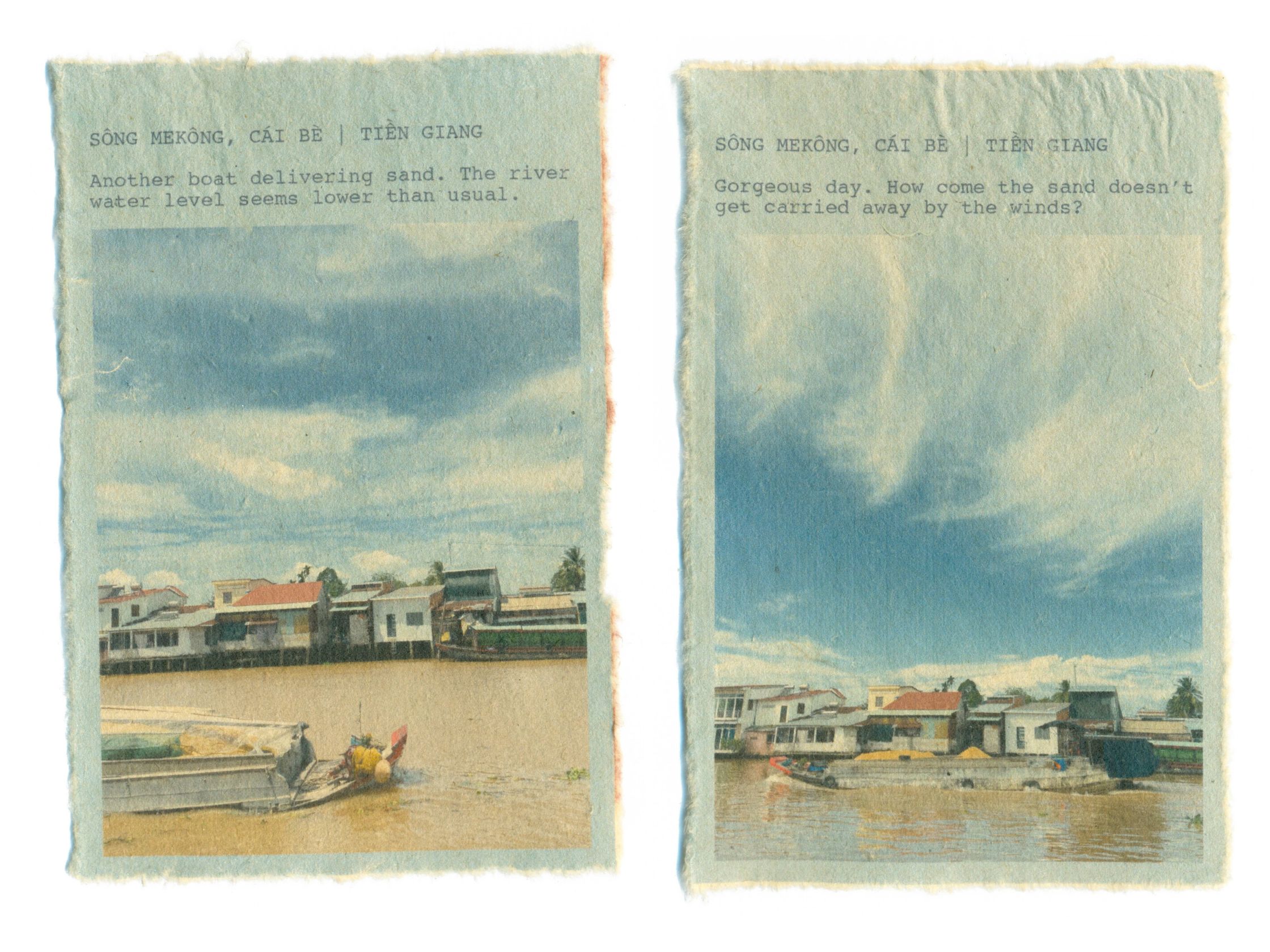
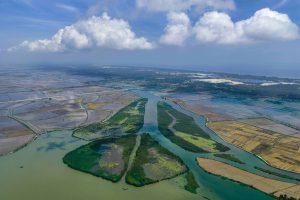
In the Tien Giang collection, the meeting of river imagery and rice paper creates a particularly natural association. When scenes from Cai Be, My Tho, Tan Long Islet, or the Bao Dinh Canal are printed on such a delicate surface, the rivers seem covered with a layer of memory as light as silt. The raised fibers and uneven gradations of light and shade mean that the images no longer lie flat but ripple like water itself.
Jamie’s path to what was once Tien Giang and is now part of Dong Thap Province began with a packet of Ba Cay Tre rice papers from My Tho. Curious about the place that made this familiar staple, she began to explore the river country along the Tien River.
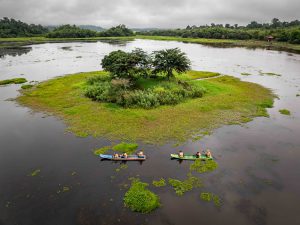
On Tan Long Islet, now part of My Tho Ward, each morning begins with the sounds of boats, children, and pets as the sun rises over the water and water hyacinths – a tempo of life that seems to move with the current.
Over time, the river delta, too, has changed. In Cai Be, the once bustling floating market has been reduced to a scattering of boats. More bridges and roads have appeared, markets have gradually moved onto land, and ways of life once bound to the water are slowly fading into memory. Floating markets, trading boats, and the knowledge of living with the river may now exist mainly in the stories told by older generations.
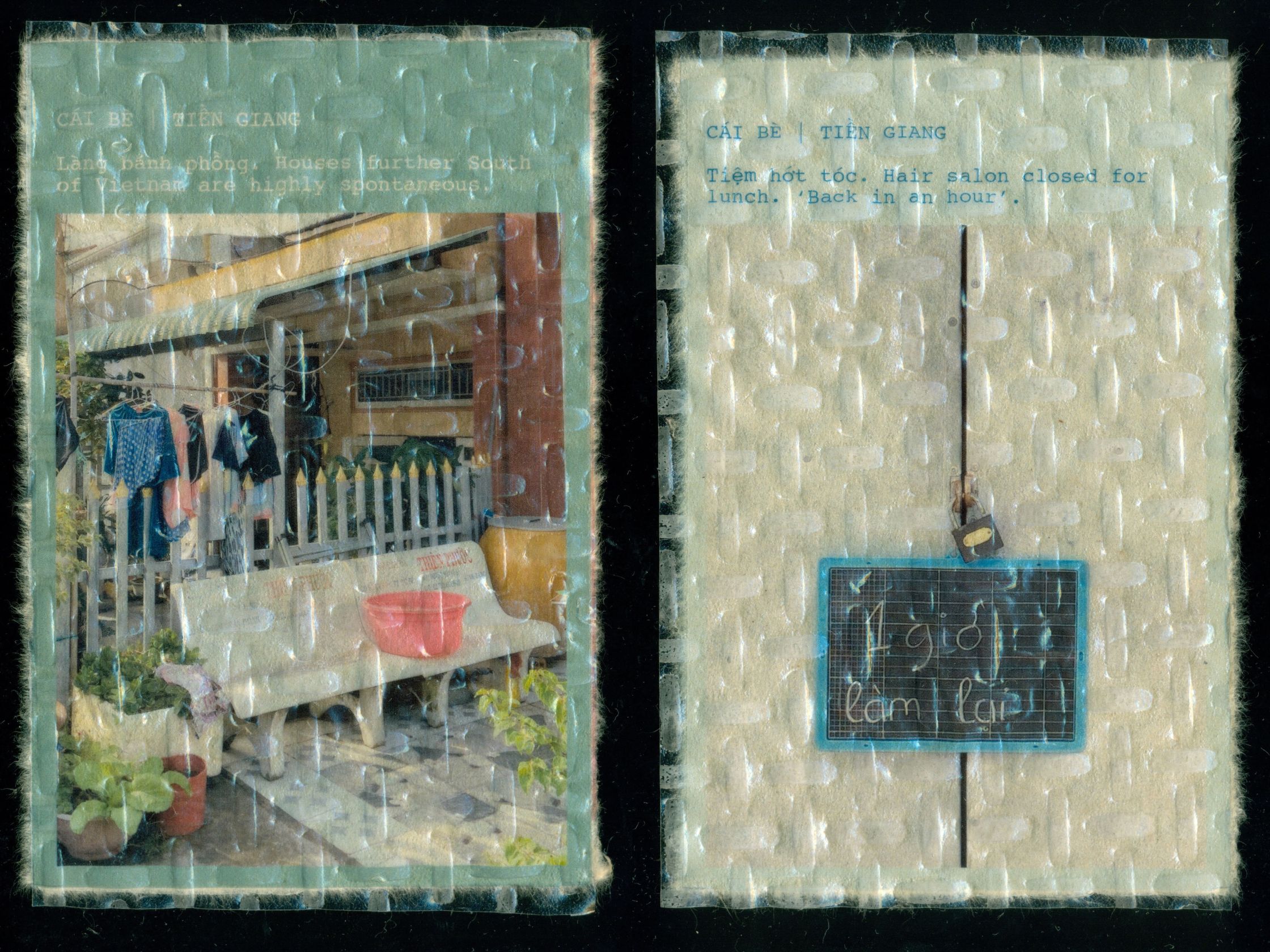
Strangevisuals does not record that change in a mournful tone, nor does it romanticize the Mekong Delta as a fixed landscape of nostalgia. Instead, the project views this region through the life that continues along its waterways: a plate of broken rice, a boat moored in front of a house, water hyacinths by a ferry landing, and low houses lining a riverbank.
Perhaps this is why the postcards in the Tien Giang collection evoke more than what is visible. They carry the humidity of the river basin, the faded tones of sunlight filtered through moisture, and the delicate translucence of rice paper held to the light. Though small, these preserved fragments are large enough to open an entire sky of memories about a place that is changing, yet still flows onward in its own rhythm.