
Story: Nam Hoa
Photos: An Tran
For over a century, the Mekong Delta village of My Hoa has been turning soybeans into silky sheets of tofu skin.
Each day at Cai Von Wharf in Cai Von Ward, Vinh Long, artisans transform soybeans into sheets of “silk” through age-old techniques and glowing heat. Created through a demanding process, the thin sheets are almost translucent. In the traditional tau hu ky (tofu skin) craft village of My Hoa, the air hangs thick with steam and the scent of cooked soybeans. Here, the fires still burn, preserving a living heritage of rhythmic labor.
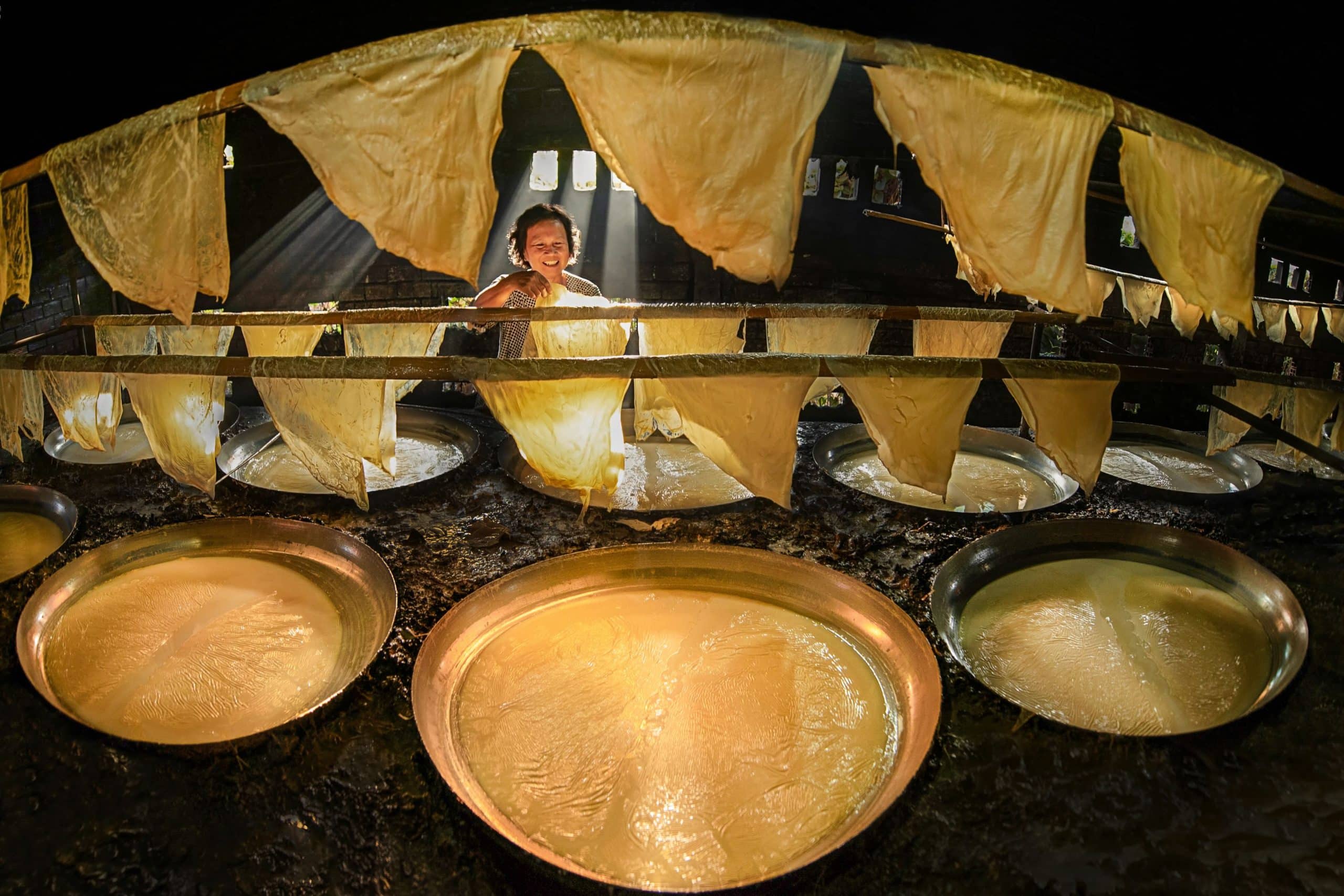
Scooping golden silk from the pan
I arrived at the tau hu ky village of My Hoa while darkness still lay heavy over the Cai Von River, yet heat was already radiating from the villagers’ stoves. It was a damp, intense heat, rich with the smell of fully cooked soybeans, rising from dozens of cast-iron pans shrouded in steam. Today, more than 30 households in the village practice this craft, producing around three tons of tofu skin each day.
Here, time is measured by the slow formation of a protein film on the surface of each pan. Making smooth, glossy sheets of tofu skin requires a demanding process that begins with grinding and pressing soybeans to extract the purest soy milk. The real secret lies in the low, steady fire beneath the pans. Workers in My Hoa do not use high heat to cook the soy milk quickly. Instead, they rely on gentle heat to coax the richest and most fragrant oils to the surface.
I kept my eyes on a pan, watching the artisans’ patience as they observed every subtle movement of the soybean film. With instincts honed over decades, they knew exactly when the sheet was ready to be lifted.
That moment passes in an instant. The worker glides a thin bamboo stick lightly around the rim of the pan, and with one deft motion, frees the film. In dim light, blurred by mist and steam, a sheet of tofu skin appears delicate, lustrous, and supple, like a strip of silk lifted off a loom.
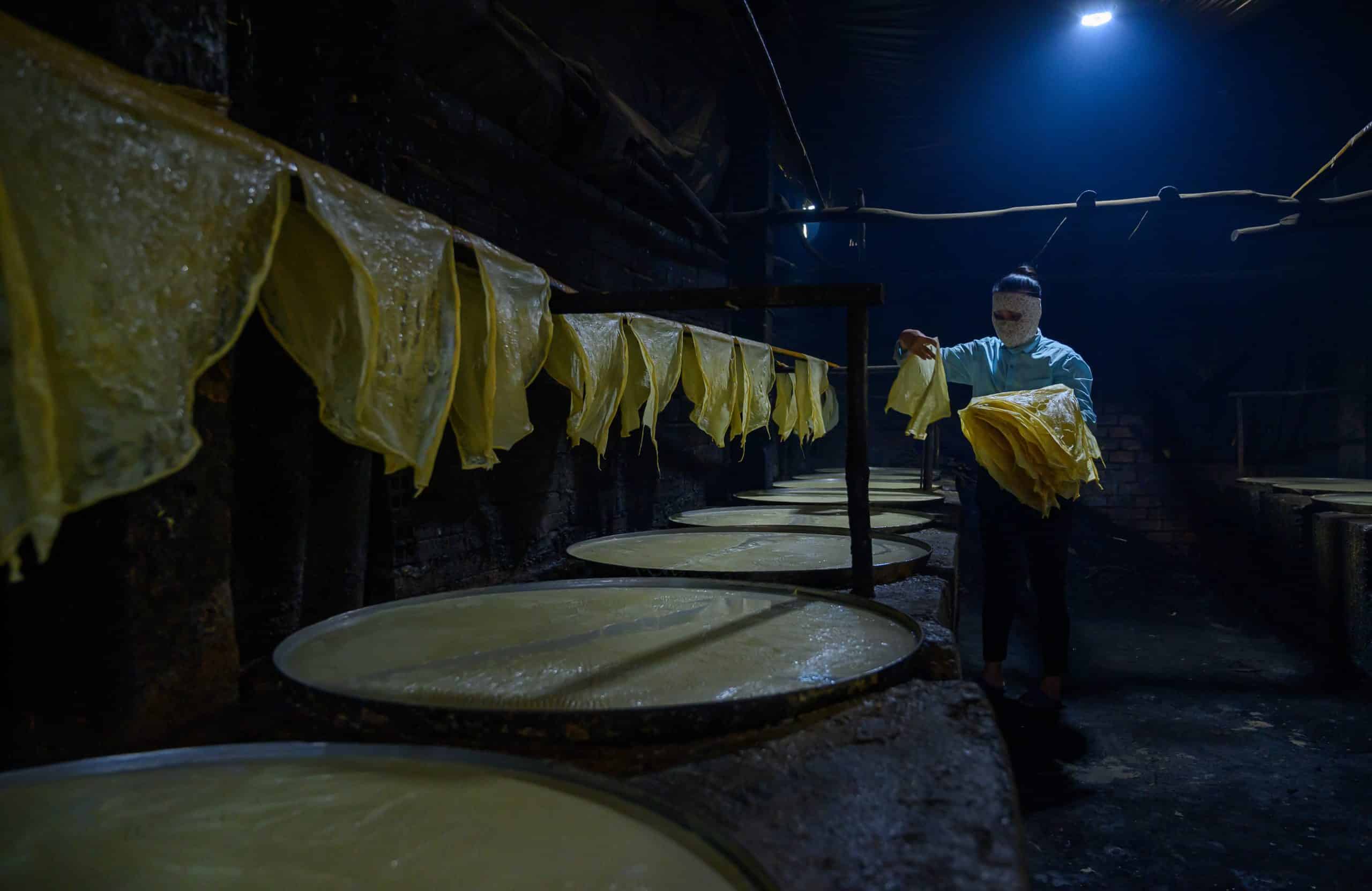
I raised my camera, trying to capture the sweat rolling down the workers’ faces as they labored beside furnace-like stoves, with waves of heat pulsing around them. Each golden “sheet of silk” is hung on bamboo poles just above the pans. The sheets continue to dry in the heat, forming a “forest of silk” that glows yellow in the dreamlike haze. This is not a trade that allows haste. Every sheet is the result of patience and passion, shaped by hands long accustomed to intense heat. Watching the workers handle each delicate sheet with such care, I understood that for them, this is more than a way to make a living. Their work is a quiet act of devotion and a way to preserve a craft village that has endured for more than a century.
New recognition for those who “eat standing up”
For the people of My Hoa, the National Intangible Cultural Heritage designation awarded in April 2023 was a major milestone, recognizing the hard work of everyone who has helped preserve this craft for over a century. For as long as anyone can remember, local workers have jokingly referred to their trade with a phrase that sounds both unusual and deeply moving: “the job where you eat standing up.” From the moment the stoves are lit until the last sheet of tofu skin is lifted from the pan, there is almost no time to sit down and rest. A single moment of distraction can ruin the tofu skin. For this reason, meals are eaten right beside the steaming pans, bowl in hand, eyes still fixed on the thin layer of soybean film slowly forming on the liquid’s surface.
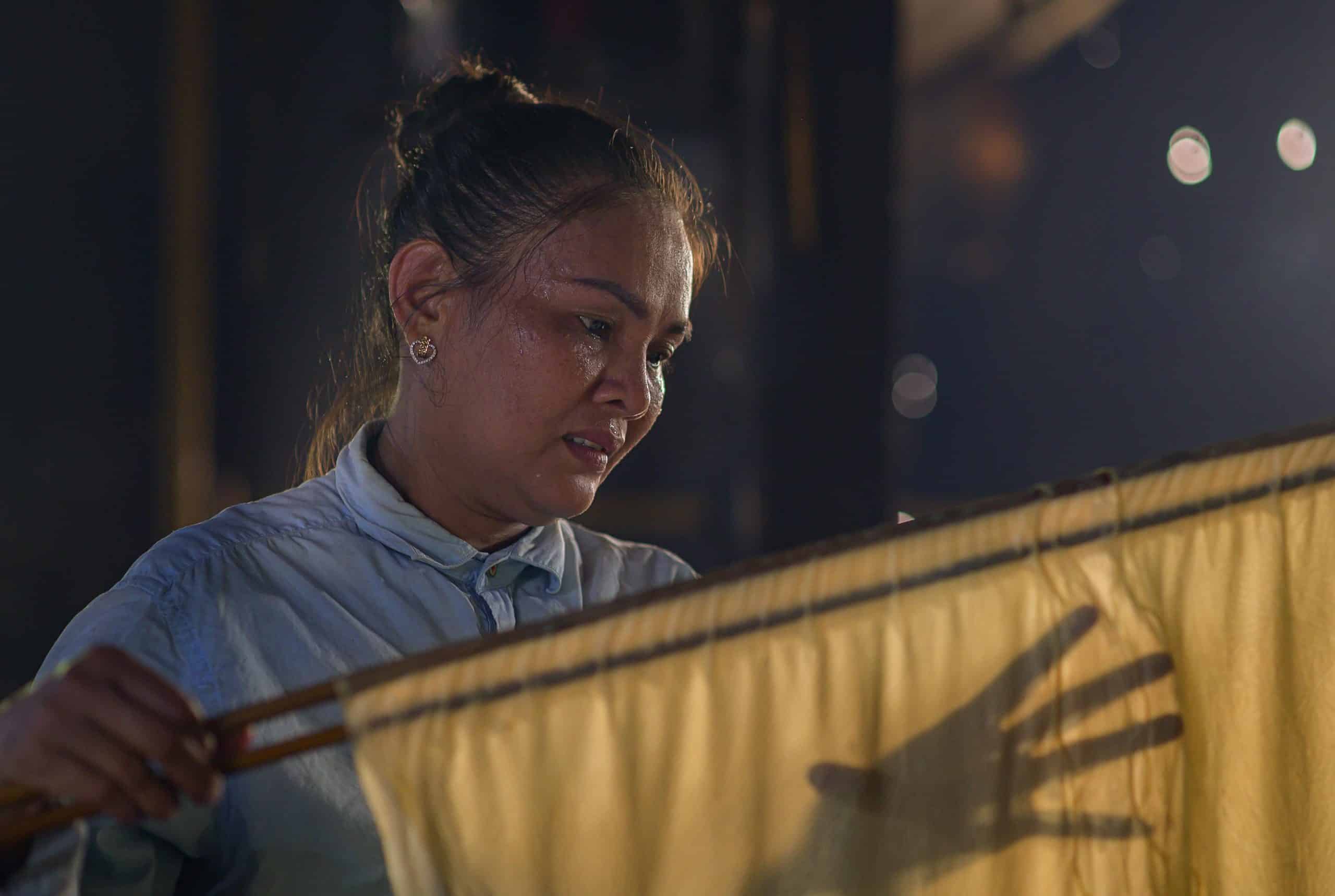
Despite the difficulty of this work, those “who eat standing up” have never allowed the fires along the Cai Von River to go out. Standing before these blazing workstations today, I saw silver-haired artisans alongside very young faces, their hands still youthful but their movements already assured. This is living heritage, passed from one generation to the next. Some families have stayed near their cast-iron pans for three or four generations, so used to the smell of cooked soybeans and the heat of the stoves that both have become part of their flesh and blood. This persistence has turned humble sheets of tofu skin into a distinctive cultural symbol of Vinh Long.
Beyond the cramped and sweltering cooking sheds, My Hoa’s “golden silk” has gained renown. It appears on high-end menus across the country, bringing with it the story of hardworking people in the Mekong Delta. National recognition is an important milestone, but for the people of My Hoa, the greatest joy is simpler. Each morning, they wake to see bamboo poles heavy with golden “silk” beside the Cai Von River, where their stoves still burn day and night.
I left the village when the sun was already high. Looking back at that “forest of silk” shimmering in the sunlight, I felt deep admiration for the people who have chosen to spend a lifetime on their feet, weaving beauty into the heritage of their homeland.