Story: Nam Hoa
Photos: Tuan Nguyen, Hoang Thai
With sacred sites and green spaces, Tay Ninh offers rivers, mountains, and flavorful traditions.
Located in the Southeast region, Tay Ninh is distinguished by the grandeur of Ba Den Mountain and its network of key border gates, which serve as gateways for trade with dynamic international markets. Meanwhile, the former Long An area in the Mekong Delta has the gentle character of a riverine landscape and plays an important role in linking the Mekong Delta with Ho Chi Minh City, the country’s largest economic hub. Following the merger, these two geographical and cultural nuances harmonized to create a new, prosperous, and vibrant Tay Ninh province, which has become an attractive tourist destination thanks to the natural synergy between the river and the mountain.
Ba Den Mountain rises high amidst the verdant plains. A cable car system carries tourists over steep mountain slopes to the “roof of the South,” home to vibrant flower gardens amidst the clouds and majestic Buddhist structures. Nearby, the Tay Ninh Holy See – the heart of the Cao Dai religion – is an architectural marvel blending Asian and European styles. The uniqueness of this edifice stems from its manual construction, utilizing local materials such as bamboo, solid bamboo (tam vong), and broken ceramic pieces, entirely without a design blueprint. Connected to the spiritual space on Ba Den Mountain, this place has become a vital pilgrimage site, serving as a pillar of local orientation for cultural tourism development.
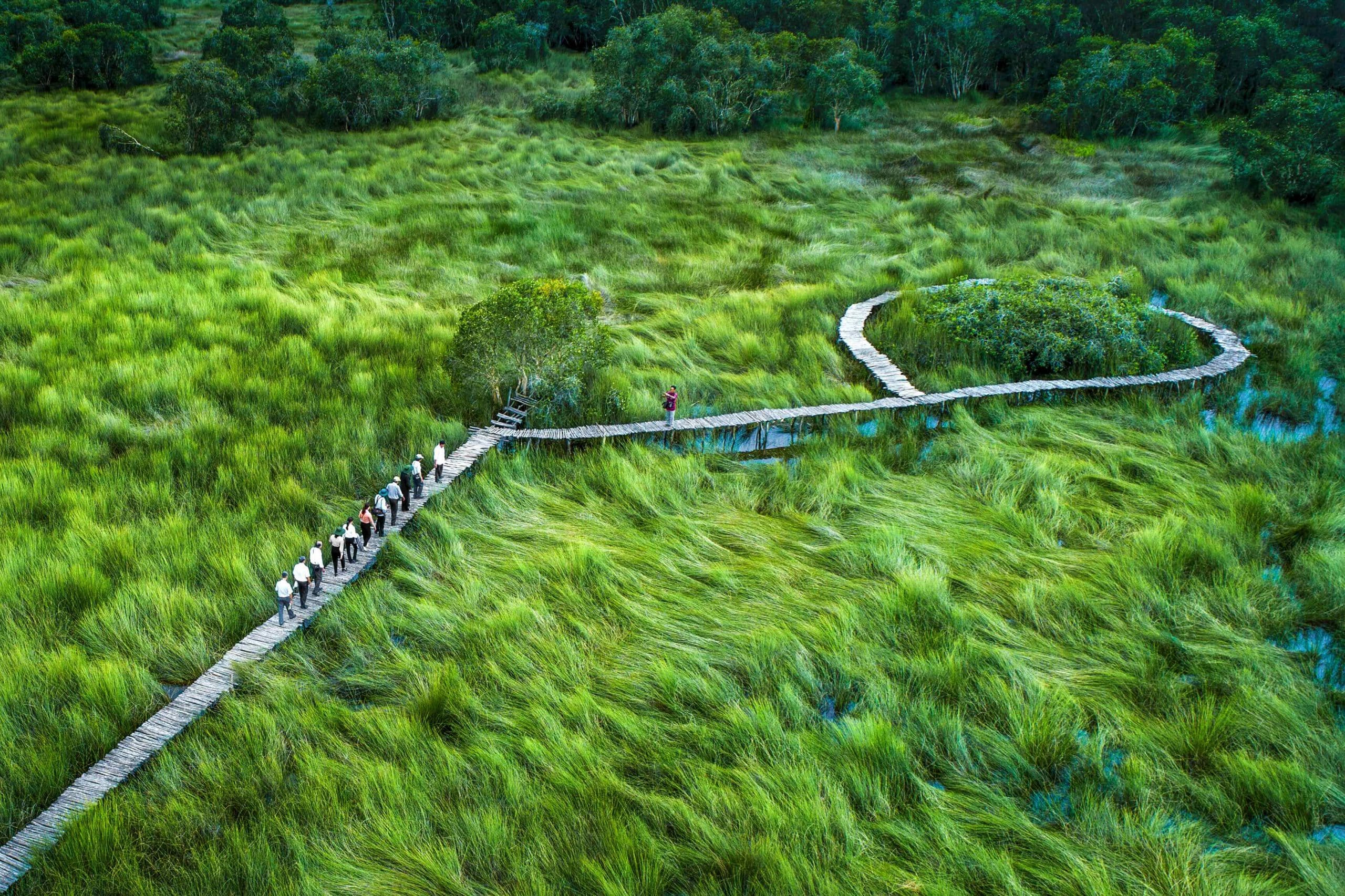
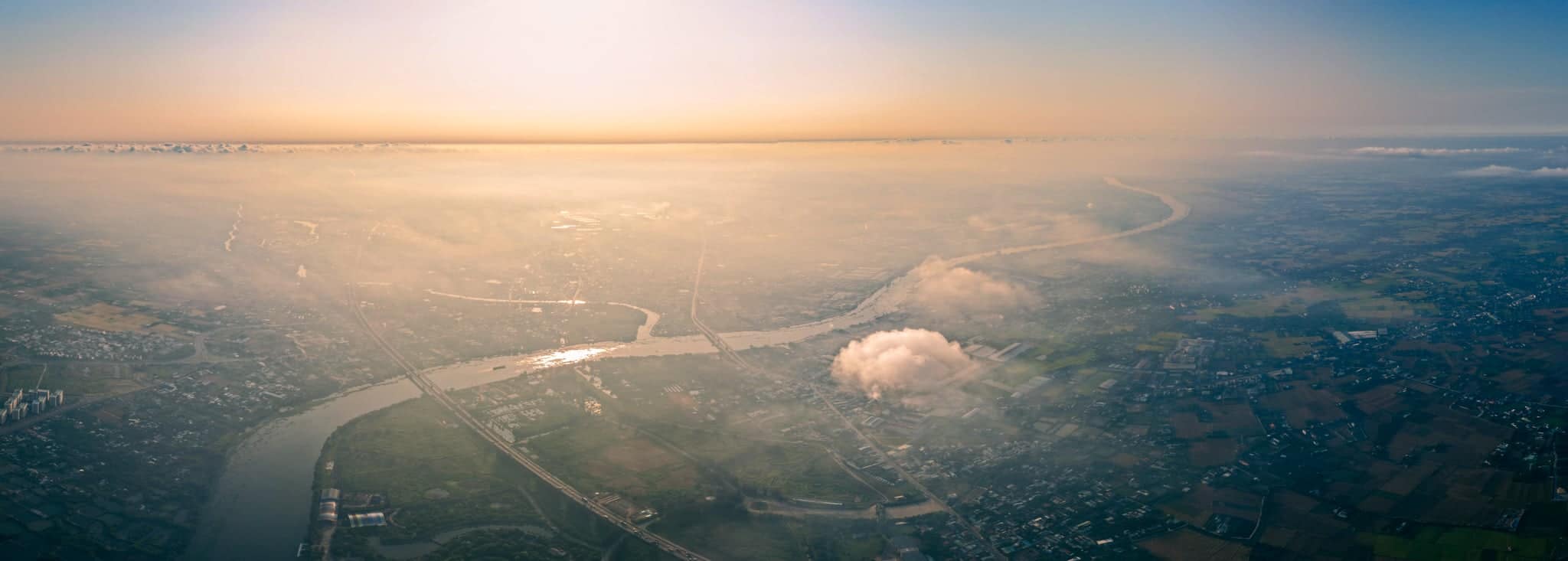
The Vam Co Dong River, like a green silk ribbon, blurs the boundary between the East and the West and serves as a natural connective thread uniting two regions rich in potential. It has become a connecting artery, opening up an inter-regional development corridor as riverside infrastructure projects gradually take shape. The Vam Co riverine ecosystem, combined with the characteristic wetlands of the Dong Thap Muoi region, creates a highly appealing green-tourism landscape thanks to the diversity of natural habitats. From this geographical expansion, Tay Ninh is gradually developing a harmonious model of growth that encompasses economy, culture, and nature.
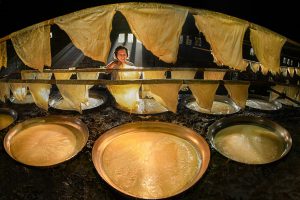
Set against the backdrop of intersecting spiritual and riverine cultures, the local cuisine boasts a rich “flavor map,” featuring dew-soaked rice paper (banh trang phoi suong), Trang Bang thick noodle soup (banh canh Trang Bang), and vegetarian cuisine closely tied to the region’s spiritual sites and culture. Meanwhile, the riverine landscape lends its own culinary character, as with a sweet, sticky bowl of Nang Thom rice alongside fermented fish hotpot (lau mam) and braised field fish in a clay pot (ca dong kho to). Visiting Tay Ninh, tourists will venerate its sacredness, admire the currents that connect green ecosystems, and savor the distinctive flavors of a region endowed with azure rivers and emerald mountains.