
Story: Huong Quynh
Photos: Ba Ngoc
Based in Hanoi, the musicians of GOm create music with ceramics.
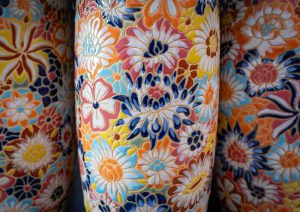
Many artists embrace simplicity as a creative philosophy, seeking to move audiences through the most elemental sensations. Whenever GOm’s musicians start to play, it feels as though one is listening to drops of water falling from a cave’s stalactites, to the murmur of streams deep in a forest, or to a mother’s loving lullaby. Their rare sound purity is even more precious when one learns that GOm’s instruments are crafted from a raw, earthy material with deep roots in Vietnamese life: ceramics. A GOm performance surprises from the very first glance at the stage, where rows of ceramic jars, urns, vases, and pots stand ready.
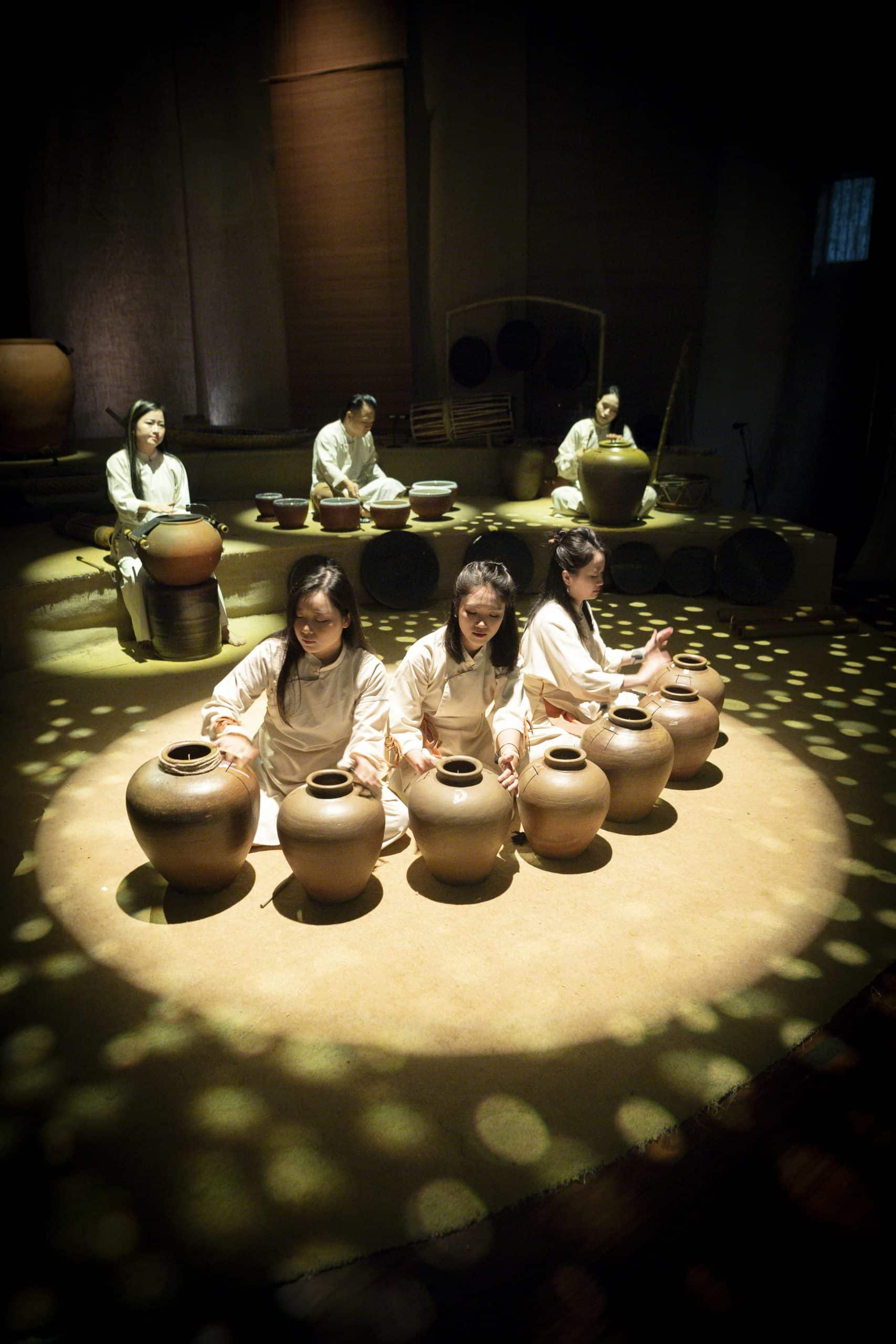
Even the name carries layers of meaning. Dinh Anh Tuan, one of the three founding artists behind this innovative musical project, explains that GOm, when written with the Vietnamese diacritic, means gom – ceramic. In English, “go” means movement, or, more broadly, a journey of searching. It also evokes the Vietnamese sense of gathering and collecting. The group’s members aim to tell stories through music inspired by indigenous cultural materials.
Nearly 15 years ago, Tuan, Nguyen Duc Minh, and Nguyen Quang Su founded the ensemble Dan Do. Their instruments were made of bamboo and modeled on the do, a traditional fish trap. The artists used these instruments to express the Vietnamese soul in a contemporary artistic language. They captivated audiences in Vietnam and across Asia and Europe. Never content to stand still, the trio continued searching day and night for materials rooted in Vietnam’s traditional culture. Eventually, they found their answer in ceramics. Mastering earth, water, and fire to create musical instruments became their shared goal. They struggled to make ceramic jars and vessels with the right thickness, curvature, or slit to produce their desired sounds. Connecting these instruments into an ensemble was also difficult. The artists poured their hearts into each stage of experimentation, refinement, and creation until their instruments produced the desired, emotionally rich sounds.
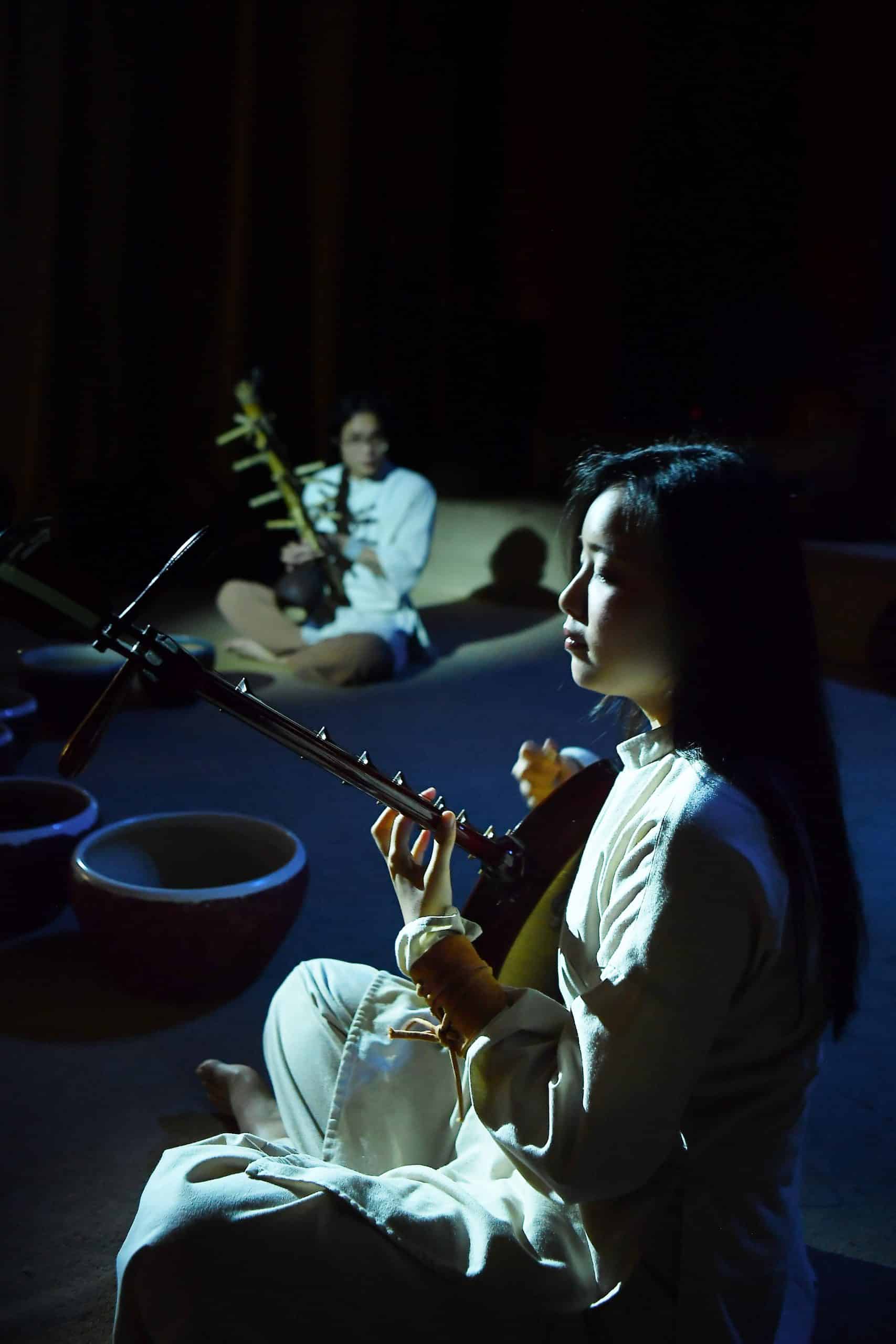
Each instrument has its own soul: the trong chum produces deep notes like a giant bass, while the trong lang resonates with low, warm tones, like echoes rising from the subconscious. Ceramic gongs, bells, and clay pots bring gentler, more contemplative sounds. GOm deserves admiration not only for their instruments, but also for their role as established artists who patiently teach and, most importantly, inspire younger musicians to play these new instruments. GOm functions as a collective, encouraging individual creativity through collaboration. Senior artists do not impose rigid formulas on the younger generation but guide their musical sensibility and open pathways for creative thought. This continuity across generations is clearly visible on stage, where many young performers are students enrolled in institutes of traditional music.
GOm’s success lies not only in its instruments, but also in the way the music is performed and expressed. The fluid movement of the artists’ hands evokes that of ceramic artisans working at the wheel, shaping clay. The performers seem to surrender themselves to each piece as if they, too, were immersed in molding ceramics. Audiences are led into an imaginative world, passing through layers of cultural memory carried by sound and the artists’ moving hands. Each rhythm awakens a different emotional register.
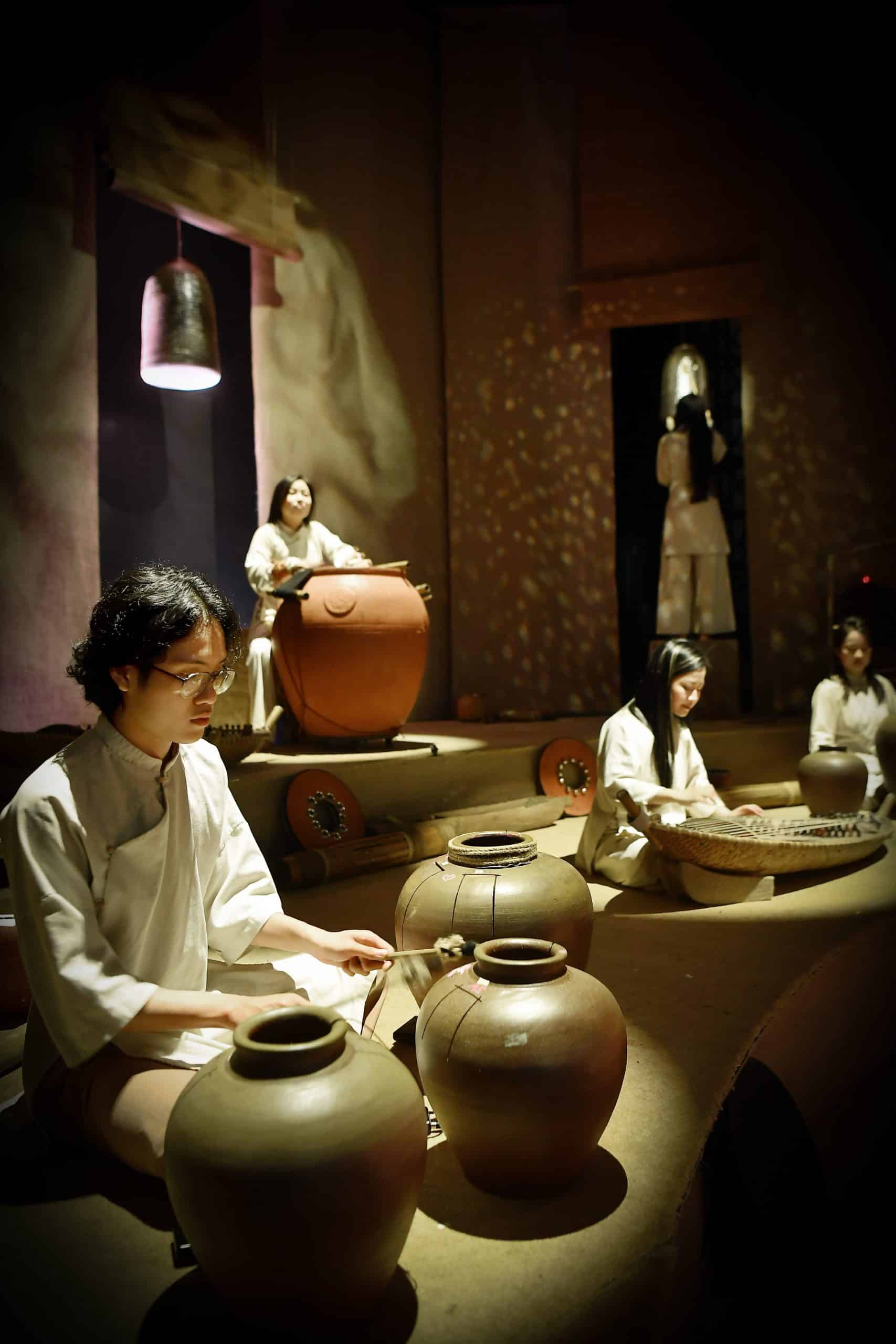
With traditional materials at their core, GOm’s creators weave local cultural expression into their performances. They use vocal and linguistic elements from many ethnic communities, including the Ha Nhi, Lo Lo, Tay, Nung, Muong, and M’Nong. The result is a seamless whole. Performances unfold continuously, with no pause. This, too, is one of GOm’s distinctive qualities. The audience is invited into a state of complete concentration, able to surrender fully to the flowing source of sound.
More than an artistic performance, each GOm show embodies a spirit of creativity by connecting heritage and contemporary practice, explored through experiments with Vietnamese ceramics. These sounds, at once primal and new, stand as a striking testament to artists who have devoted themselves to preserving the nation’s treasured cultural wealth.