Story: Nguyen Phuoc Bao Dan
Photos: Bui Thanh Trung
Each spring, the people of Ly Son gather to perform the Khao Le The Linh Hoang Sa ceremony, a sacred ritual honoring the naval soldiers who sacrificed their lives affirming Vietnam’s maritime sovereignty.
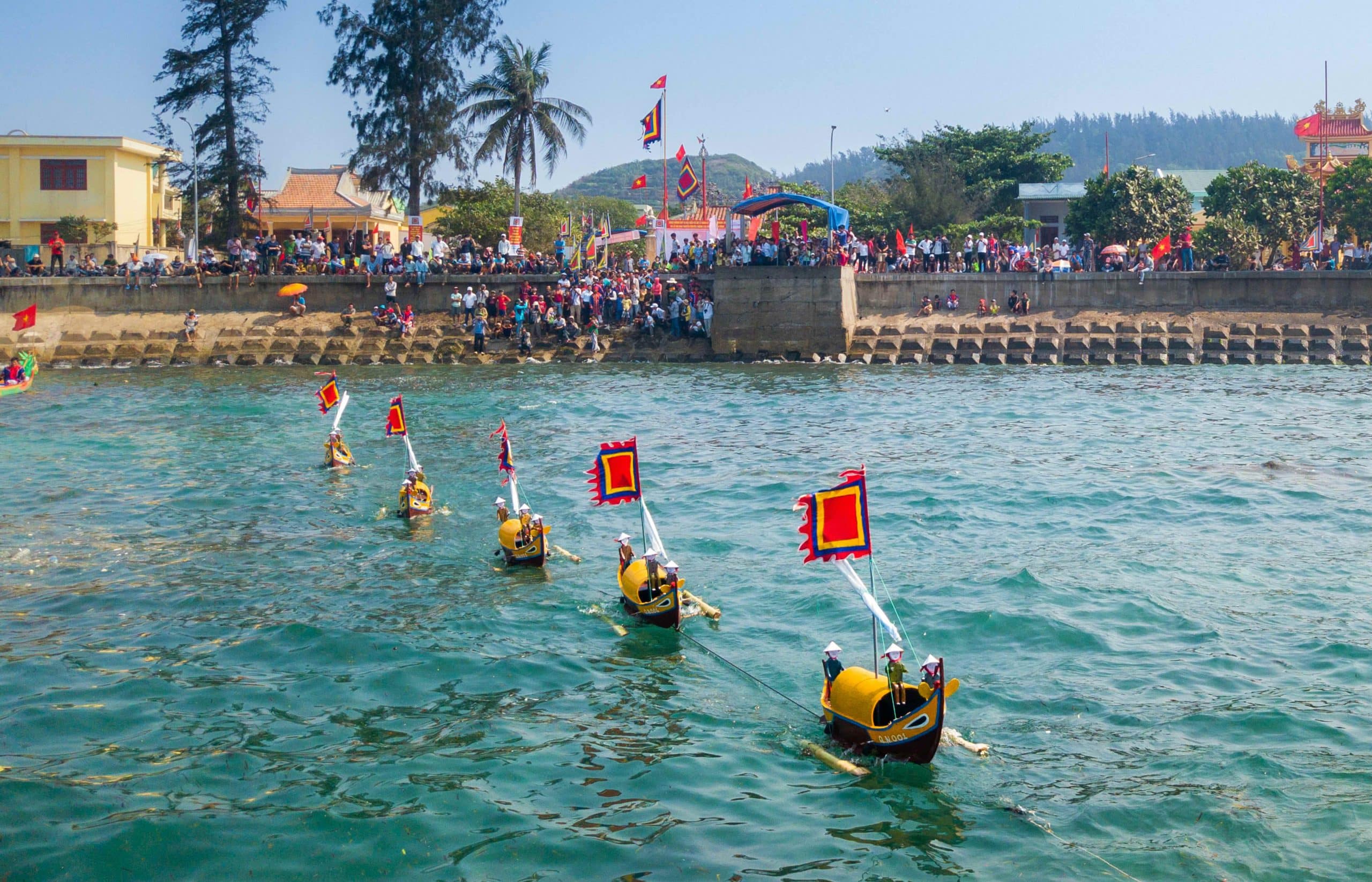
Every year, during the second and third lunar months, residents of Ly Son Island District in Quang Ngai Province solemnly hold the Khao Le The Linh Hoang Sa ceremony at Am Linh Temple. This is a dignified ritual dedicated to the naval soldiers of the Hoang Sa Flotilla and the Bac Hai Detachment, men who sacrificed their lives during the dynastic era in the course of asserting Vietnam’s sovereignty over its seas and islands.
A tribute to those who helped establish maritime sovereignty
Some of the earliest written records related to the Hoang Sa Flotilla appear in Thien Nam tu chi lo do thu, an old atlas and geographic compendium compiled when Lord Trinh Can (1633–1709) ordered the creation of the Tu chi lo do in the seventh year of Chinh Hoa (1686). In a marginal note, it records: “In the middle of the sea, there is a long sandbank called the Golden Sandbank, about 400 dam in length and 20 dam in width, rising in the sea from the Dai Chiem Estuary to the Sa Vinh Estuary. Each year, in the last month of winter, the Nguyen send 18 boats there to collect goods, mostly gold, silver, currency, firearms, and ammunition.” Nearly ninety years later, in 1744, Le Quy Don’s Phu Bien Tap Luc (Miscellaneous Chronicles of the Pacified Frontier, 1776) records:
“The Nguyen established the Hoang Sa unit with 70 men, conscripting people from An Vinh village. They rotated duty yearly. Each man received official orders for a two-month assignment, carried provisions sufficient for six months, traveled on five small fishing boats, and after three days and three nights at sea would reach those islands.”
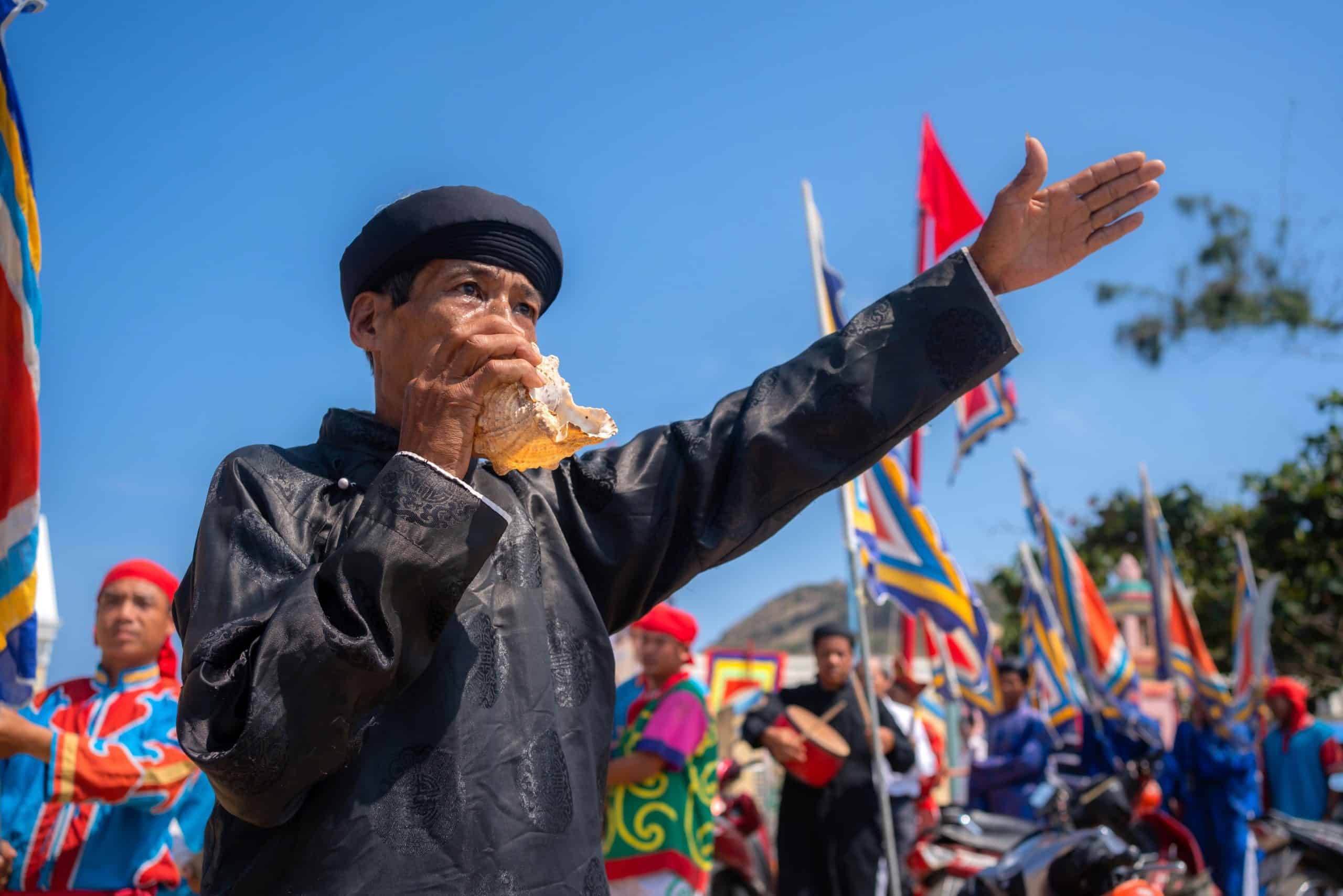
Under the monarchy, the men assigned to the Hoang Sa unit typically undertook a voyage of 120 nautical miles (about 222 km) from Cu Lao Re, today’s Ly Son, to the Hoang Sa Archipelago. It was a journey filled with danger and uncertainty amid the wind and waves of the open sea. For that reason, in addition to essential seafaring supplies, each man had to prepare items for the worst-case scenario: a pair of reed mats, seven bamboo battens, seven rattan cords, and an identification tag engraved with his full name, hometown, and service details.
If tragedy struck, a man’s comrades would wrap his tagged body inside the mat, reinforce it lengthwise with the seven bamboo battens, bind it tightly with the seven rattan cords, and commit it to the sea, holding onto the fragile hope that it might drift ashore to be found by people on the mainland, who might lay the lost man to rest in his motherland.
That hope, however, rarely came true. Those who perished at sea were often “brought home” to their village only in symbolic form, as effigies made from mulberry branches and clay, and were buried in “wind graves” on the island, memorial tombs for those whose bodies were lost to the vast ocean.
A deeply humane ceremony
A folk verse alludes to the Khao Le The Linh Hoang Sa ceremony:
Hoang Sa, earth and sky, boundless and wide.
Those who set out may go, but never return.
Hoang Sa, easy to leave, hard to come back.
In the second month, offerings are made for the Hoang Sa soldiers.
“Khao Le” refers to a ritual offering held on a fixed annual schedule, subject to customary rules and long-standing traditions. “The Linh Hoang Sa” means “substituting for the Hoang Sa soldiers”, because effigies “given life” by a ritual master are used to represent the wandering souls of soldiers lost at sea. Long ago, the Khao Le The Linh ritual was organized by local villages and clans before the Hoang Sa Flotilla departed under royal orders, offering spiritual reassurance to the men heading out to affirm maritime sovereignty. Even today, the people of Ly Son continue to hold this annual ceremony with great reverence, as a way to remember and honor their ancestors’ merit and sacrifice.
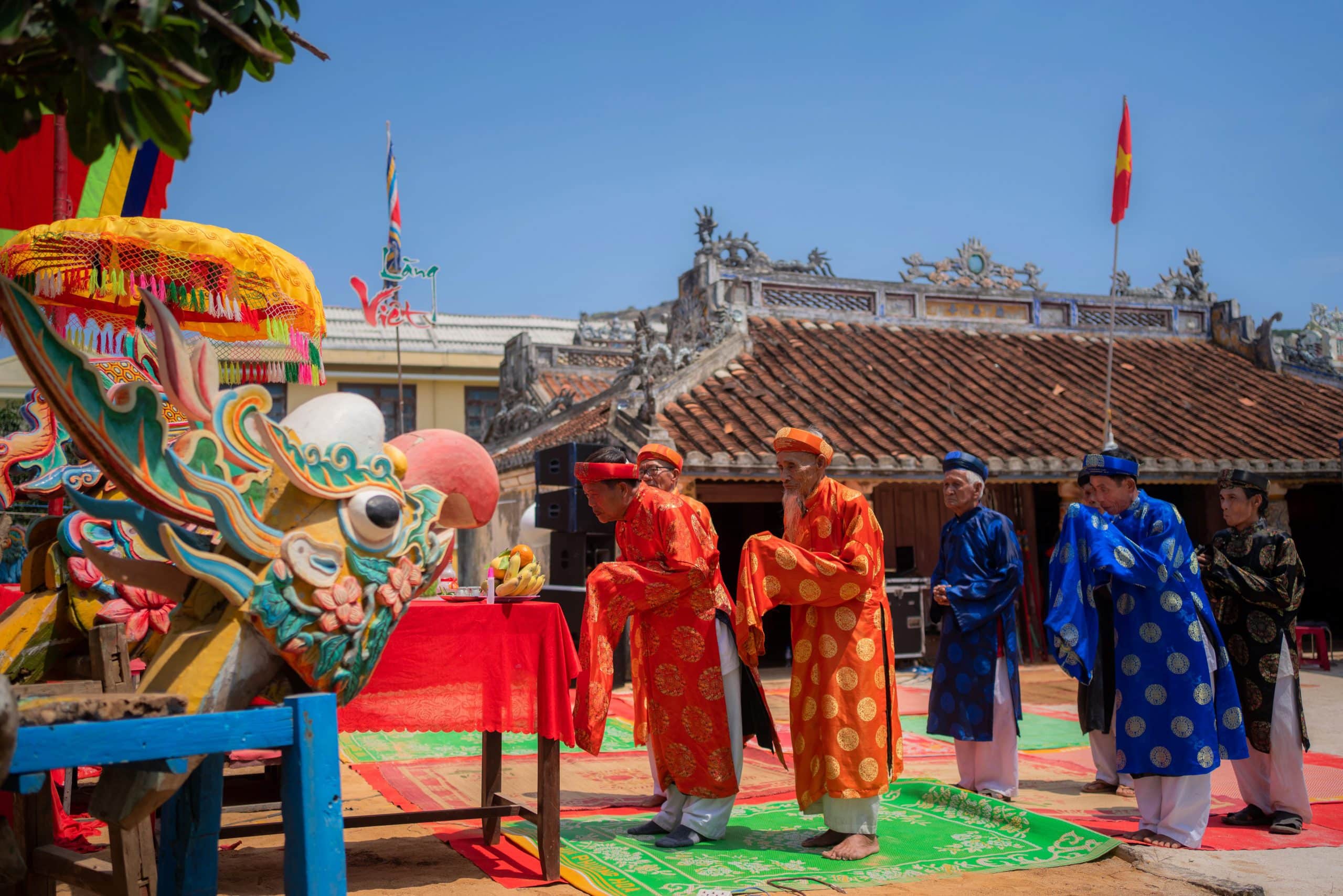
On the first day of the observance, offerings of betel and areca, wine, and fruit are presented. After that, preparations continue for the ceremonial boat and the spirit tablets. On the afternoon of the third day, the sound of gongs and drums draws clan members and the wider community to gather at Am Linh Temple for the Cao yet rite, a formal announcement and invocation. The ritual master shapes the effigies from rice flour or from clay and straw. That evening, offerings of pork and chicken are prepared for the Chanh te, the principal ceremony, which takes place at midnight. The Chanh te unfolds in the sacred atmosphere of Am Linh Temple, proceeding through the full sequence of ritual offerings: the first, the second, and the final. At the same time, an additional rite is conducted in the temple courtyard for the souls of those who died at sea, soldiers associated not only with Hoang Sa and Truong Sa, but also for the Water Deity and for all who met untimely deaths elsewhere on rivers and seas.
The Khao Le The Linh Hoang Sa ceremony is remarkable due to the presence of spirit tablets, the ceremonial boat, and the “substitute” effigies. The spirit tablets are made of red ceremonial paper, reinforced with wood or bamboo at the back, and fixed into a section of a banana trunk – each bearing the name of a departed soldier. During the proceedings, the ritual master prays for the Water Deities to return the departed soul to its ancestors, after which the tablet is burned. The ceremonial boat is made by binding banana trunks into a raft that carries a small bamboo-and-five-colored-paper boat, complete with sails, flags, and streamers. It evokes the light patrol boats once used to cross immense distances at sea and guard the homeland’s maritime frontier.
After the rites are completed, the ritual master symbolically entrusts each soldier’s name and soul to the effigies. The effigies are placed onto the ceremonial boat, marking the start of the send-off. The procession is led by young men carrying flags, a vertical banner, and the ceremonial boat. Next come the ritual master, clan elders, and relatives. A gong-and-drum troupe brings up the rear. The procession moves from Am Linh Temple to the wharf. After final prayers, strong young men push the ceremonial boat out and release it to the waves before it drifts into the open sea.
Throughout history, Vietnam’s journey of asserting sovereignty over its seas and islands has cost the blood, tears, and even the lives of its soldiers. Many members of the Hoang Sa Flotilla and the Bac Hai Detachment never returned, forever resting in the heart of the ocean. Each year, the islanders perform the Khao Le The Linh ceremony as a profoundly humane tribute and expression of gratitude to those sons of the nation who bravely gave their lives for the Fatherland.