
Story: Quynh Anh
Photos: Shutterstock
From Santa Monica to Laguna Beach, Southern California’s coastline reveals a way of life shaped by the sea.
There are places you visit simply to look around, capture a beautiful moment, and take it home as a memory. And then there are places that make you want to linger long enough to feel the rhythm of life that was there long before you arrived. California – or Cali, as many call it – belongs in the second category.
Where every day is a beach day
One perfectly ordinary afternoon in Santa Monica, as I sat on the sand watching the world around me, I realized the people nearby did not seem to be “going to the beach” at all. There were no excited shouts, no rush to make the most of every minute. A few young people jogged past wearing headphones; others lay stretched out reading books; nearby, a mother and child built a sandcastle. Along the beachfront path, bicycles drifted by, some ridden by people fresh from work, a briefcase slung across the handlebars.
Everything unfolded so naturally that, unless you paid close attention, you might think nothing was happening at all.
Californians do not need a special reason to go to the beach. They do not need a holiday, or even a plan. At the end of a workday, they may simply drive to the shore the way someone else might stop at a familiar café – not because there is anything new there, but because it is always there: steady, comforting, and offering a familiar sense of balance.
California has about 1,350 kilometers of coastline, stretching from the sun-warmed south to the darker, colder waters of the north. It is also home to the most striking stretch of the Pacific Coast Highway, widely regarded as one of the world’s most beautiful coastal drives. Along California’s beaches, each place carries its own mood, yet all share the same way of life, one in which the sea remains central, inseparable from everyday life.
The many moods of California’s South Coast
When speaking of Southern California’s beautiful beaches, one cannot overlook Santa Monica, a destination that embodies the region’s coastal lifestyle. Here, the sea and the urban expanse of Los Angeles meet so naturally that the boundary between them seems to vanish.
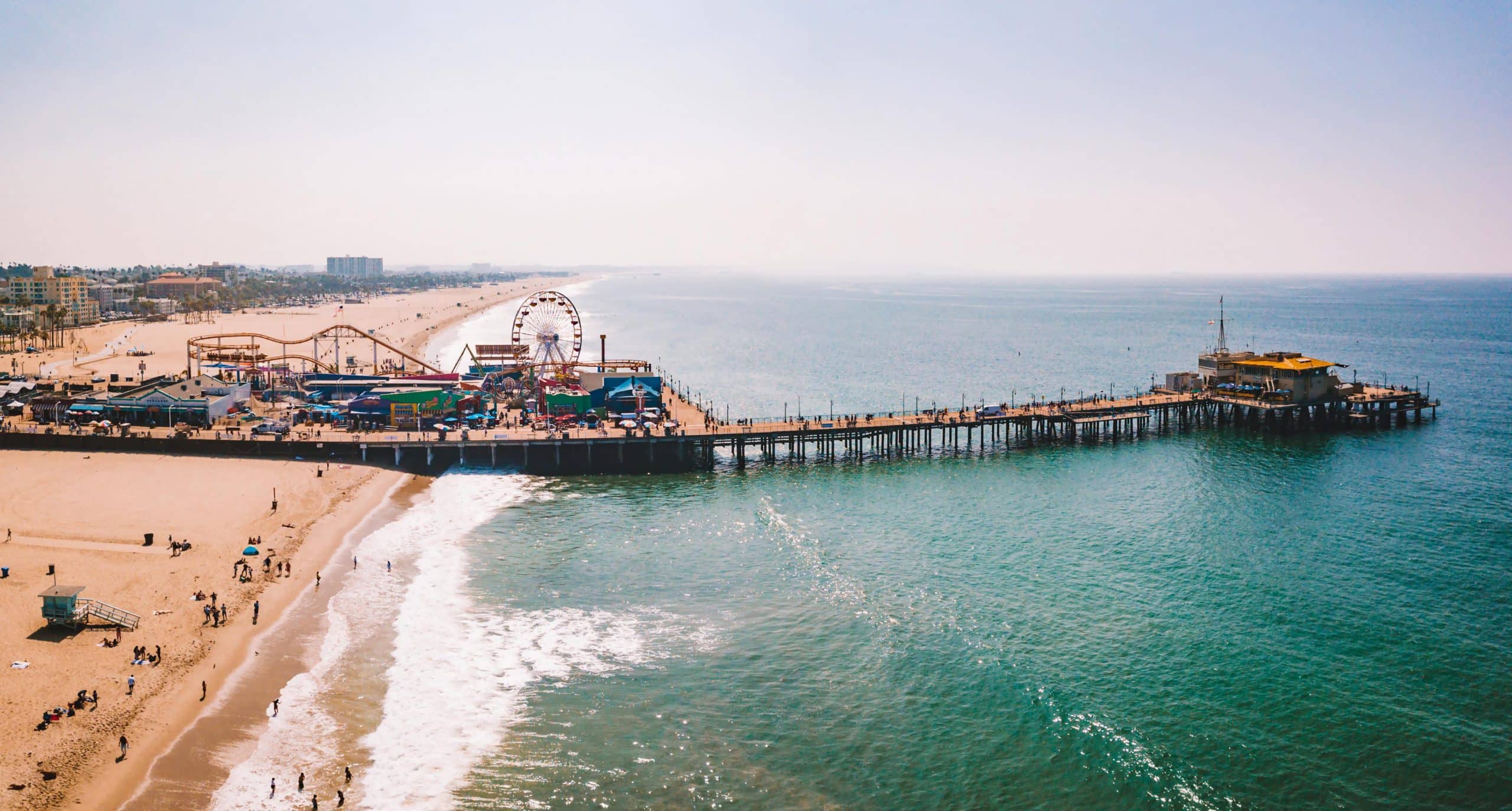
The beach stretches for more than 3.5 miles (about 5.6 kilometers), with fine white sand and cool blue water, making it ideal for walking, jogging, cycling, swimming, and surfing. A bike path runs along the shoreline, and beach volleyball courts are open to the public. After dark, the Ferris wheel lights up, while cafés, eateries, and charming souvenir shops contribute to a youthful, open, and lively seaside atmosphere that is still very much part of daily life.
Almost everyone who visits Santa Monica stops at Santa Monica Pier, home to the “End of the Trail” sign, the symbolic end point of the legendary Route 66, which stretches across eight states from Chicago before reaching California.
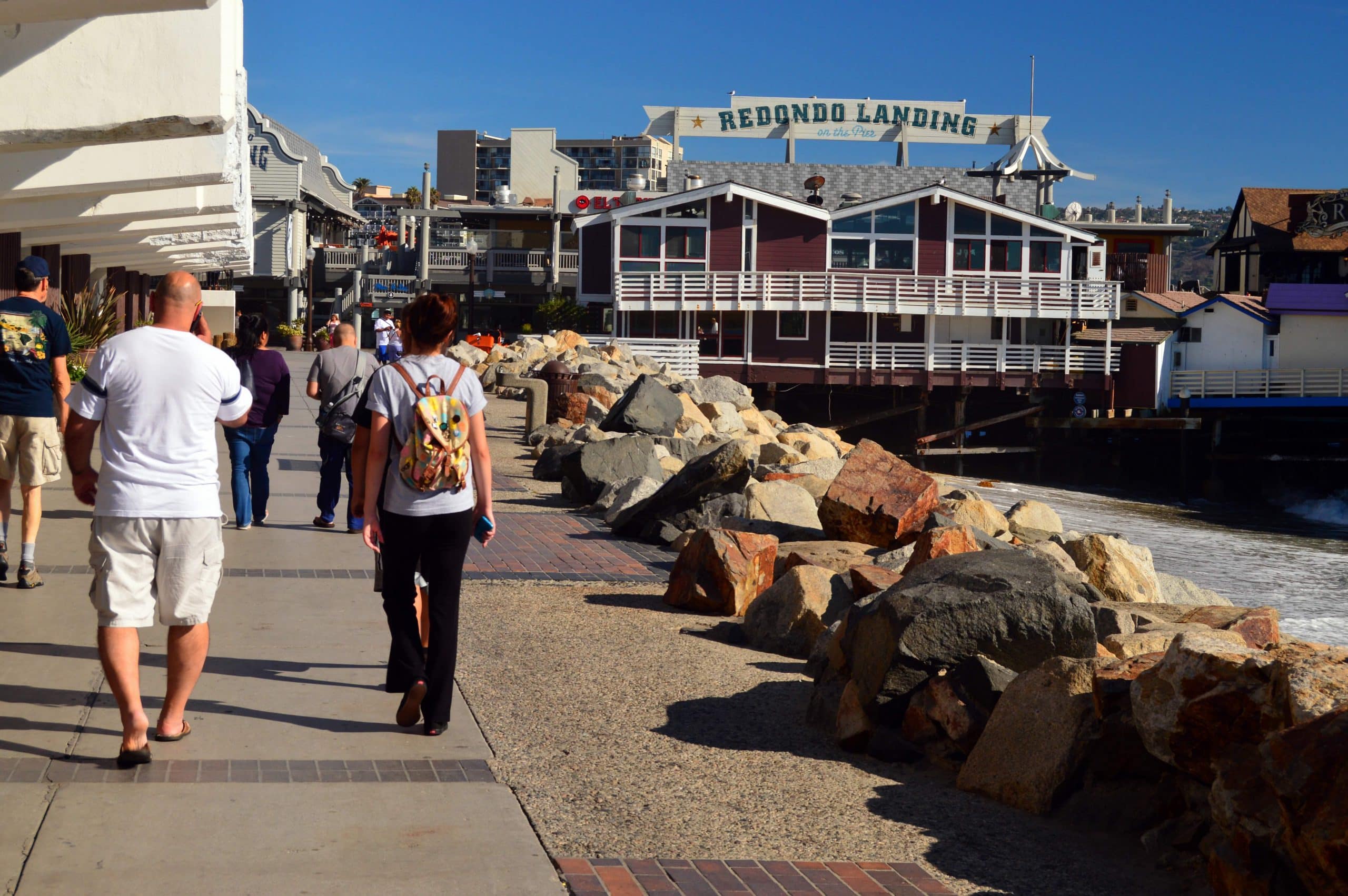
Further south, Redondo Beach moves at a slower rhythm. Surf culture began taking root here in the early 20th century, when Hawaiian watermen first rode the waves. Since then, the spirit of the sea has found its way into every corner of the town.
The horseshoe-shaped pier stretching into the ocean, the calm waters of King Harbor, the moored boats, and the small streets leading into Riviera Village all offer a distinct feeling: you do not need to go anywhere, only stay awhile and let everything drift gently by.
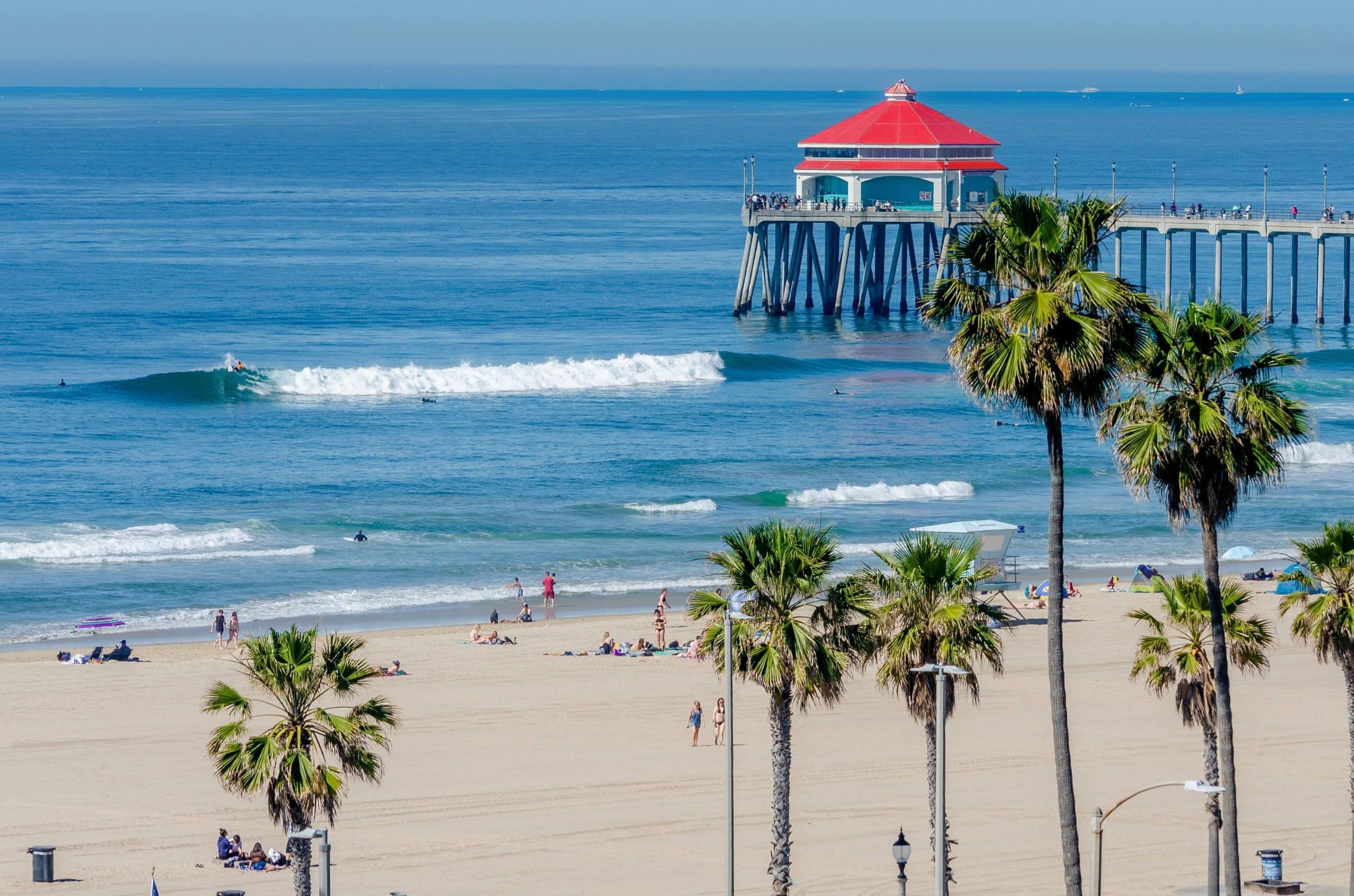
Farther along the coast, Huntington Beach unfolds on an almost boundless scale, with more than 10 miles (around 16 kilometers) of uninterrupted shoreline. The water temperature stays between 15 and 20°C year-round – cool enough to feel like the ocean, yet warm enough to draw people back day after day.
Known as “Surf City USA,” Huntington Beach treats surfing as more than an activity; it is a way of measuring the pace of life. Time here is counted by the tides, the wind, and the waits between waves. From early surf legends of the 20th century to ordinary afternoons on the sand, everything comes together to create a place where the sea does more than shape the landscape – it shapes the way people live, move, and learn patience.
And then there is Laguna Beach, where the coastline breaks into cliffs and small coves, shaping the experience in a different way. Here, the sea folds inward, creating spaces that feel more private and self-contained. The light, the terrain, and the long history of an artist community have turned this place into a meeting point between nature and the inner self, where people do not merely look at the sea, but see themselves reflected in it.
After visiting the beaches of Southern California, you may not remember exactly what color the sea was that day, whether the waves were large or small, or whether the sky was bright or overcast. But you will remember the feeling of sitting there and doing nothing at all, yet somehow feeling complete. Sometimes, the moments that seem most uneventful – no dramatic finale, no grand story, no obvious highlight – are precisely the ones that shape how we want to experience life.
Perhaps that is not only how locals go to the beach. It is how they exist in a world that is always demanding that things be memorable.