Nguyen Ngoc Thien
Off the coast of Nhon Ly, the sudden appearance of a Bryde’s whale transforms the sea into a place of wonder, belief, and living tradition.
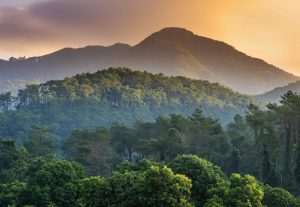
In recent years, Nhon Ly, a coastal peninsula in Quy Nhon Dong ward, Gia Lai province, has become an increasingly popular tourist destination in Central Vietnam. Boasting striking terrain with mountains on one side and the sea on the other, Nhon Ly impresses visitors with its long stretches of sand, clear blue water, and unique natural rocky reefs.
This area is home to many famous scenic spots, such as Eo Gio, a bow-shaped bay hugged by cliffs, considered one of the most beautiful places in Vietnam to watch the sunrise, and Ky Co, a pristine beach bordered by mountains on three sides, known for its signature two-tone water and smooth white sand.
Along with beautiful scenery, Nhon Ly is culturally rich, with long-standing fishing villages that preserve ancient coastal traditions. Shrines dedicated to the Whale Lord, the Cau Ngu (fishing prayer) Festival, and Whale God worship have been maintained for many generations. This creates a tourism space rich in both natural value and cultural depth.
A thrilling journey over the waves
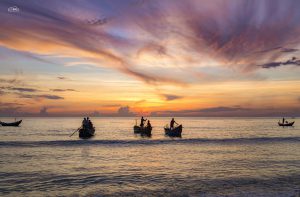
In the early days of July 2025, right at dawn, we followed some local fishing boats off the coast, heading to an area where, just a few days prior, a Bryde’s whale had been spotted. Out of respect, the locals call this species “Ca Ong” (Whale Lord).
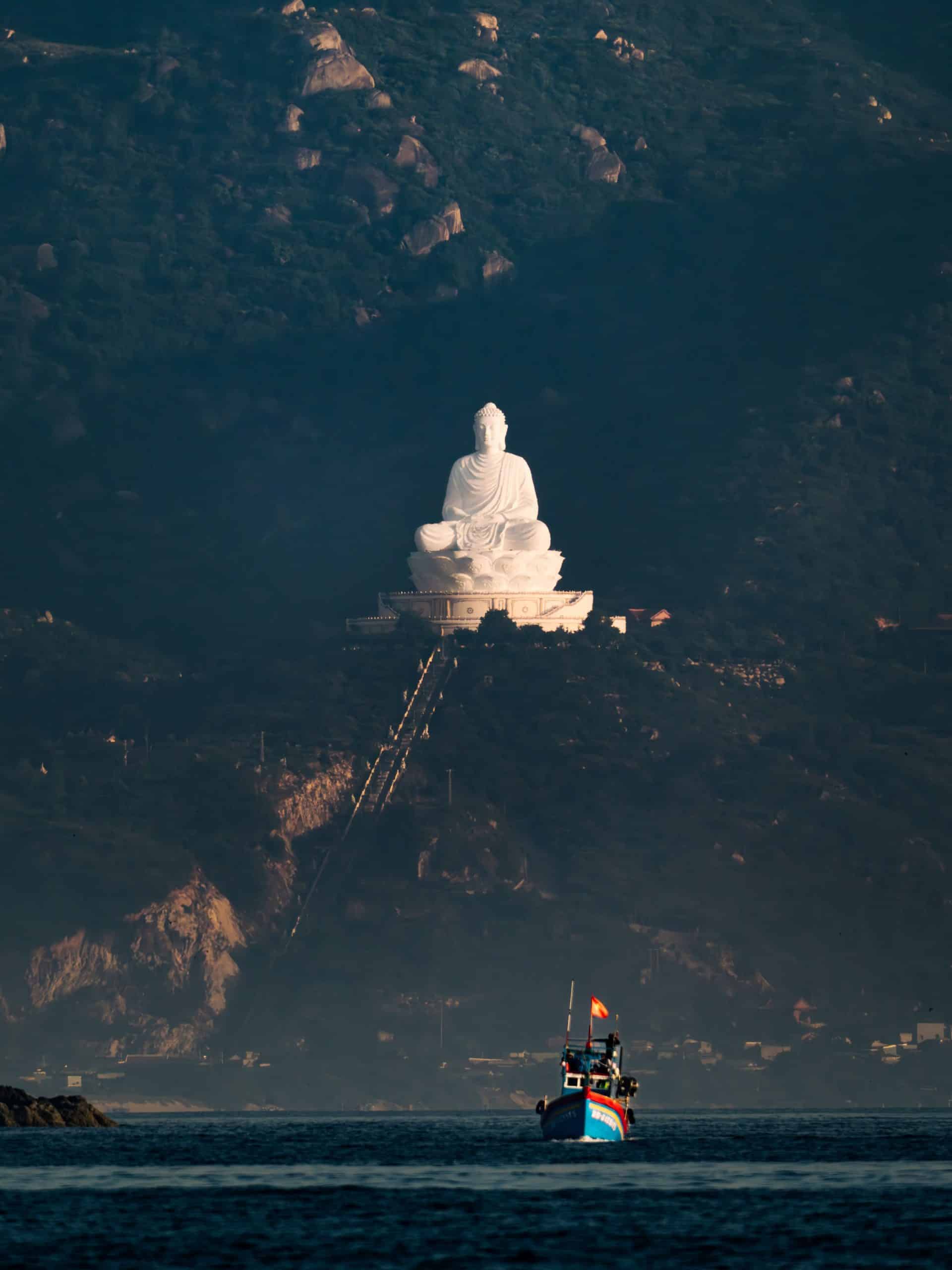
There are many records of the “Whale Lord” surfacing to hunt in the waters in front of Ong Nam Hai Temple and the Lady Buddha statue at Phuoc Sa Pagoda, places tied to this fishing community’s spiritual beliefs.
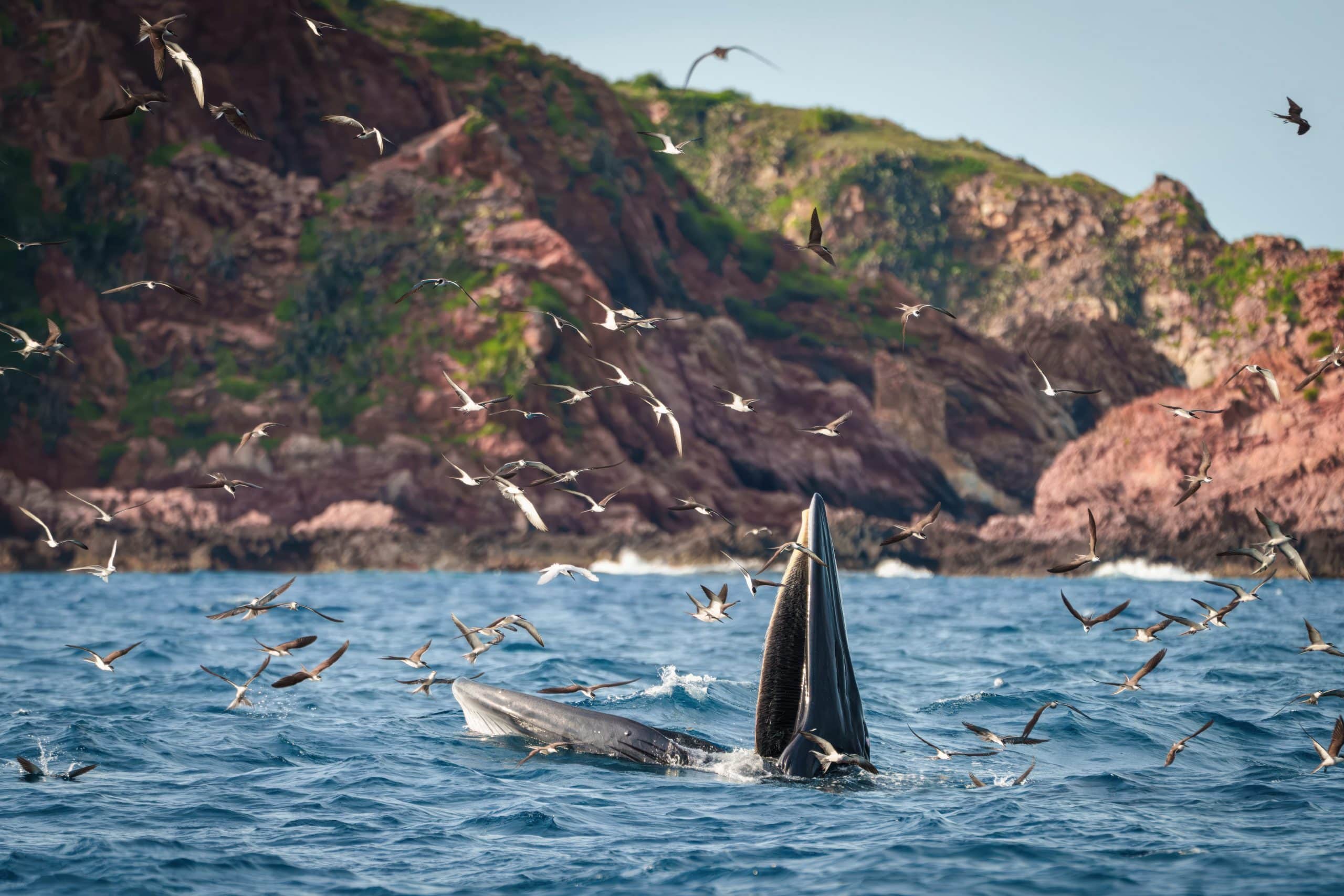
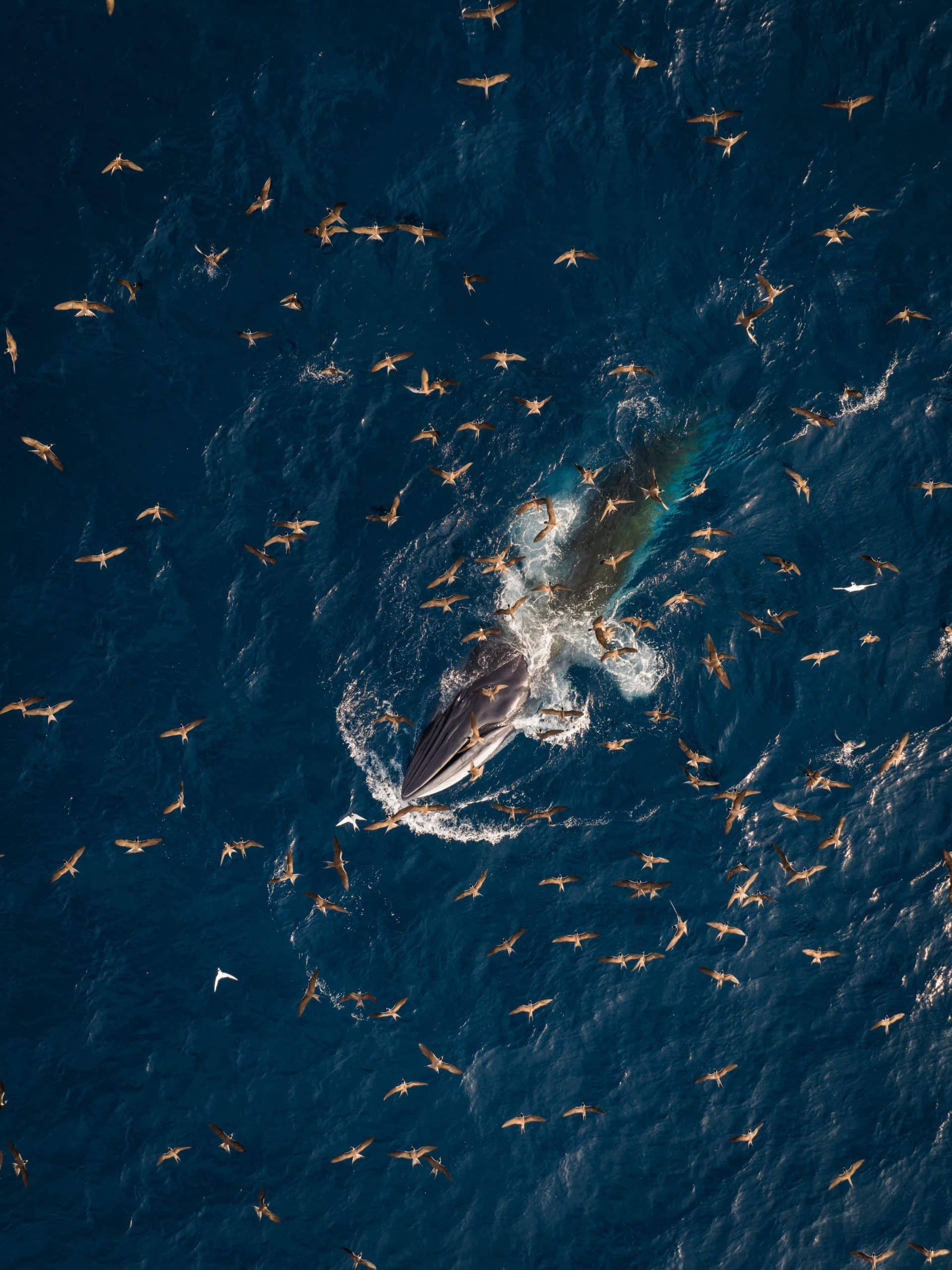
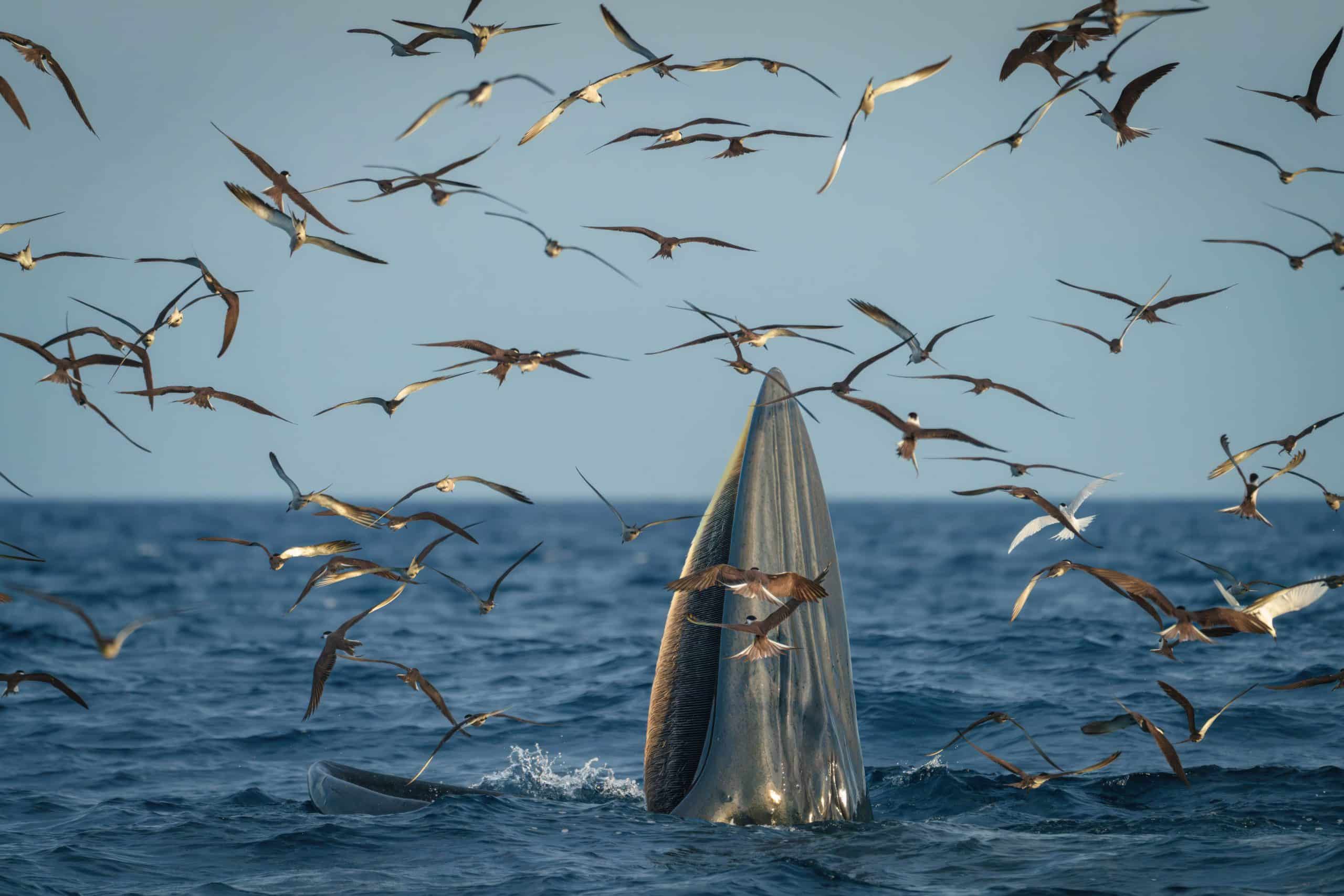
Around 5:30 AM, flocks of terns covered a corner of the sky to the east, soaring in the air like the first signs of an upcoming miracle. According to fishermen, when these birds appear in such large numbers, there is usually a school of fish down below, and the Whale Lord will be nearby. As if by destiny, some moments later, we saw the Bryde’s whale surface, circle, and snap at a school of small fish gathering near the shore. We quickly set up our drone and telephoto lens, keeping a safe distance to avoid disturbing the whale’s natural behavior. After about half an hour, the whale dove deeply and disappeared into the blue water.
In the late afternoon, the Bryde’s whale reappeared, still right in front of Ong Nam Hai Temple. This time, it surfaced more frequently, swimming around and hunting for hours. Witnessing this powerful creature biting at its prey amidst the golden evening light made the seascape of Nhon Ly more glorious and vibrant than ever.
Not everyone who sets sail is lucky enough to meet the Whale Lord. Some photographers wait for days in the sun and wind, but the sea remains silent, leaving only distant ripples. The sea granted us a rare privilege to witness and capture the shape of this whale amidst the waves of Nhon Ly.
The “gentle giant” of the tropical seas
The Bryde’s whale (Balaenoptera edeni) is a species of baleen whale, distributed mainly in tropical and subtropical waters worldwide, including the East Sea (Bien Dong) region. They can appear closer to shore than many other whale species, especially in places with abundant food sources such as anchovies, herring, or plankton.
Compared to many long-distance migratory whales, Bryde’s whales are often associated with warm waters and tend to follow their food sources. The appearance of Bryde’s whales near the coast of Nhon Ly can be seen as a positive sign regarding the food supply and vitality of these coastal waters.
For the local people, the Whale Lord is not only a sacred mascot but also a symbol of luck and the divine connection between humans and the ocean. For us, the journey to track the Whale Lord in Nhon Ly was not just a filming trip but an opportunity to capture a miraculous natural moment in these waters.
Whale worship – a unique part of this coastal culture
For generations, the coastal residents of Central Vietnam have worshipped the Whale Lord as a guardian deity. In Nhon Ly, the Ong Nam Hai Temple is a sacred place of worship, preserving whale bones that the fishing community calls “ngoc cot” (sacred bones).
According to folklore, the Whale Lord often rescues boats in distress in the open sea, guiding those caught in storms safely to the shore. Therefore, upon discovering a departed whale washed ashore, an event respectfully referred to as “Ong luy” (the passing of the Whale Lord), fishermen typically organize a solemn funeral, burn incense, and bury the body according to customs, treating the whale as a patron god.
Amidst the stunning natural scenery of Nhon Ly, the appearance of a Bryde’s whale is not only an interesting biological phenomenon but also a meeting point between nature and culture. This reminds us that the sea is not just a source of livelihood but also a highly unique spiritual space for coastal people, a place they always view with respect and gratitude.
This summer, we hope to be lucky enough to meet the Bryde’s whale again, to feel the sea’s sacredness once more, and to capture beautiful images amidst the vast ocean and sky.