
Story: Mai Phuong
Photos: Nguyen Huu Thong
Discover the art of making lotus tea in Bac Ninh province.
My Do village, in Da Mai ward, Bac Ninh province, along the banks of the Thuong River, has long been known for rustic delicacies such as bun cha, My Do che kho (sweet green bean paste), and especially lotus-scented tea.
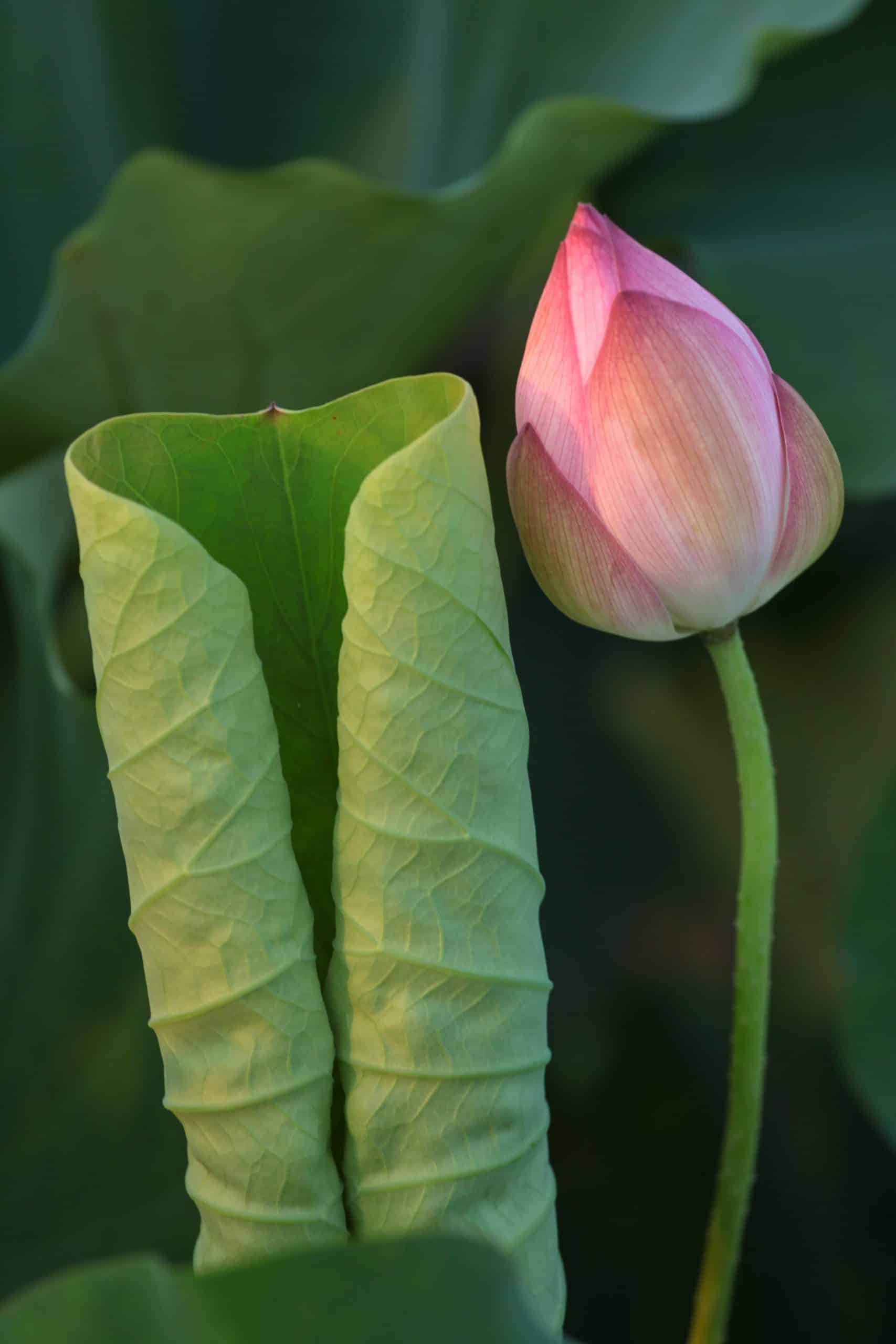
If Tay Ho lotus tea is acclaimed as the “peerless tea of antiquity,” My Do lotus tea is no less distinguished. Though their flavors differ, each has its own distinct, elegant intensity. Tay Ho lotus tea is traditionally scented by placing Thai Nguyen tea buds inside a lotus flower, which is then tied shut to absorb the fragrance before drying. My Do lotus tea is created using another meticulous method: tea buds are repeatedly mixed, scented, and carefully incubated with lotus stamens. The entire incubation and drying process relies on the tea producers’ practiced intuition.
The family of Mrs. Phan Thi Day and Mr. Ngo Chi Trung, both born in 1940 in My Do, have been making lotus tea for over 60 years. Mrs. Day has practiced this craft since she was 20. The first villagers known to make lotus tea were the late Mr. De and the late Mr. Ly Ta. Mrs. Day assisted them and eventually mastered the craft.
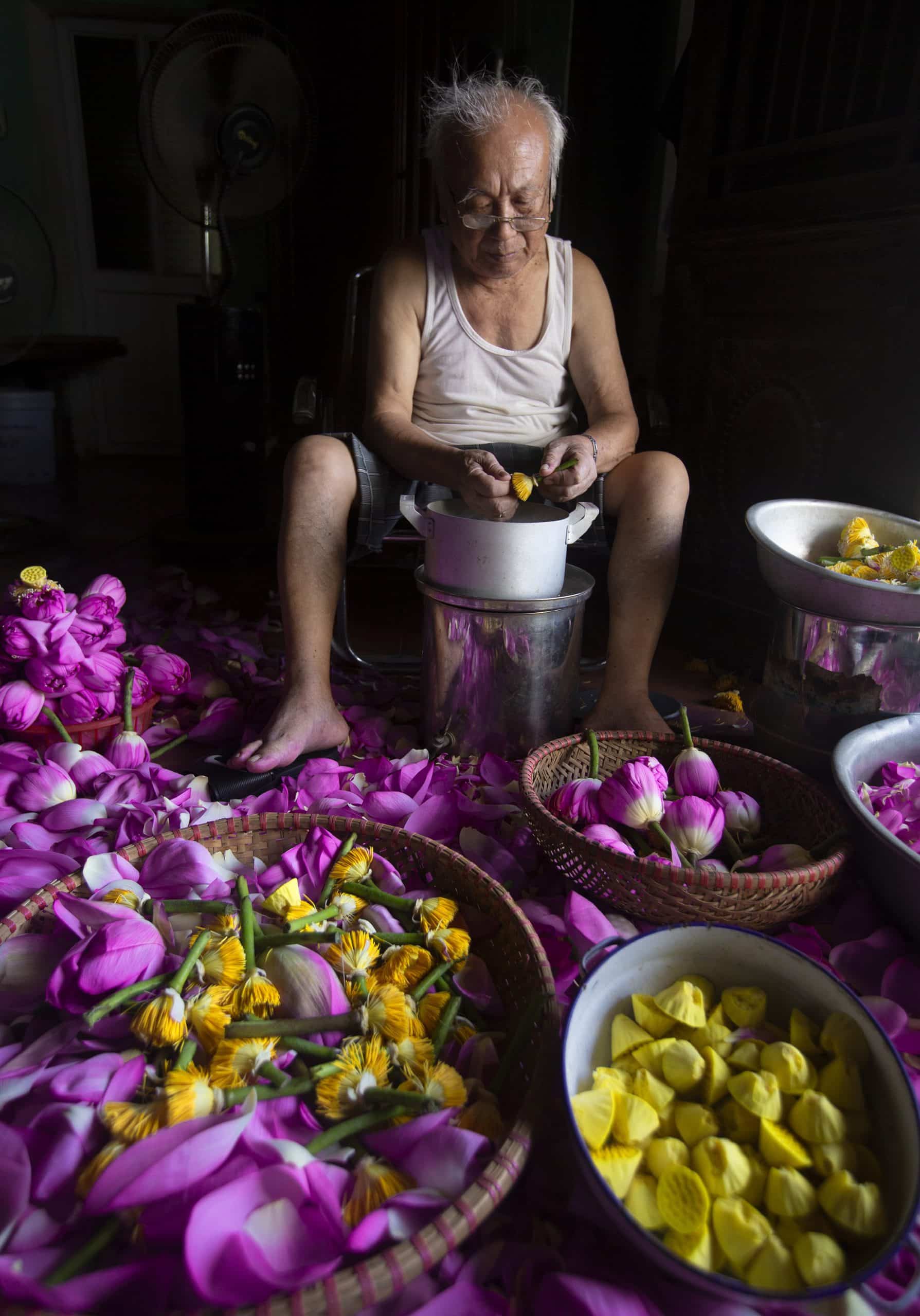
Harvested at their peak in May, lotus flowers are carefully prepared by removing the petals and central seed pods, leaving only the stamens. Premium Thai Nguyen tea buds are then mixed with the lotus stamens at a ratio of 100 lotus flowers to 100 grams of tea. The hands of the person mixing must be thoroughly washed with strongly brewed tea so they carry its aroma. Once evenly blended, the tea buds and stamens are placed in pots for incubation. A wooden stick is inserted into the center to release moisture, preventing the tea from becoming damp. The pot is covered and left to incubate for two days, after which the mixture is sifted to remove the stamens. The tea buds are then transferred to paper bags for drying.
Drying is done using charcoal, electricity, or sunlight. The paper bags are arranged neatly on racks. Maintaining the perfect temperature is an art that ensures the tea dries slowly without becoming brittle or losing its fragrance. After the first drying, the tea is sifted again to remove any remaining stamens, and the scenting process is repeated. Three rounds of scenting and incubation with lotus fragrance, followed by three rounds of drying, produce the finished tea: tightly curled buds with a deep lotus aroma. After drying, the tea is left to cool before being stored in small glass bottles with tight stoppers.
Each bottle holds just over 100 grams of tea, preserving its fragrance. Cradled in the hands, the lotus-scented buds release a fragrance like a subtle, distinctive perfume. The first note is the lotus at its most radiant, rich under the morning sun. The second is cooler, more expansive. The third is a gentle balance of sweetness and astringency.
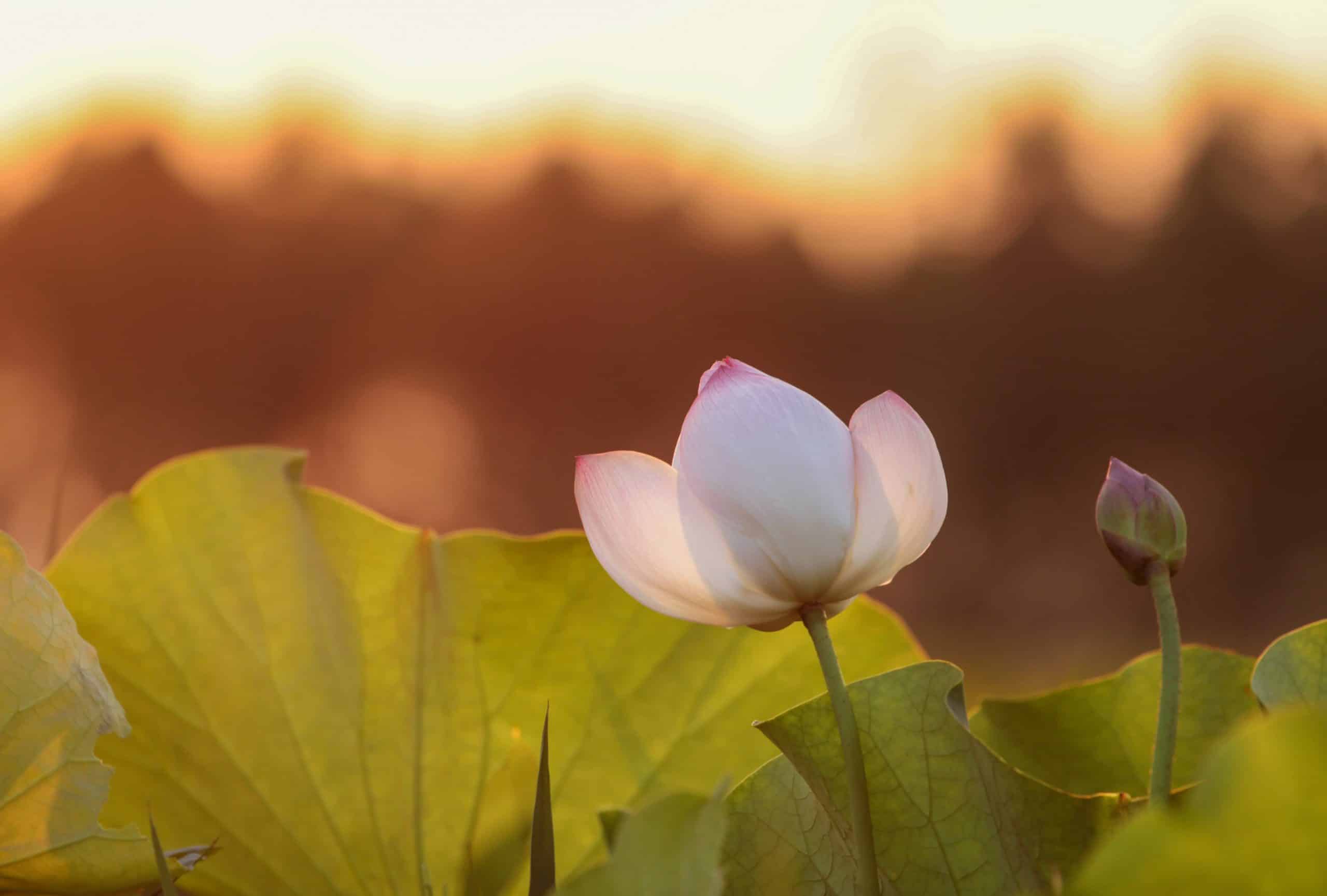
On the palate, the tea begins lightly astringent, then opens into a mellow, spreading sweetness. A sip of the freshly brewed tea evokes the feeling of standing before a lotus pond – calm, yet quietly uplifting. Elegant and refined, lotus tea represents the pinnacle of Vietnamese tea craft, a delicate fusion of Thai Nguyen tea from the mountains and the pure lotus fragrance of the countryside.
Mrs. Day notes that producing lotus tea cannot be rushed. Flowers on the verge of blooming are harvested at dawn and processed immediately. Even working diligently, a person can handle only about 400 flowers a day. With two or three people carefully separating petals throughout the day, they can scent just 1 kilogram of undried lotus tea.
Now over 80, Mr. Trung and Mrs. Day have passed the craft on to their son and daughter-in-law. In the village – now designated an urban neighborhood – a few other families also make tea. At prices ranging from VND 300,000 to VND 500,000, and up to VND 1 million for 100 grams of premium lotus tea, the family still cannot produce enough to meet demand.
In summer, flowers from lotus ponds in Da Mai, Viet Yen, and Yen Dung are used to produce My Do lotus tea. Today, as the area devoted to lotus cultivation around the city shrinks, sourcing lotus buds is a challenge. Lotus pond owner Hoang Van Giang, who manages 10 mau of wetlands in Da Mai ward, shared that his family has grown lotuses for many years, both to supply Mr. Trung and Mrs. Day’s family and to make their own tea. Despite the difficulties, he continues the trade, finding simple joy in the vast blooming lotus ponds around his home.
The life of a flower is fleeting, yet it finds a new existence, sublimated within the lotus tea buds. According to Buddhist philosophy, the flower and its fragrance are reborn, blending with the tea’s aroma and entering the body of the drinker, helping humanity elevate itself through the creation of material wealth, literature, and art.
When savoring lotus tea, many older people with country roots will surely recall their beloved rural homeland, where vast lotus ponds shone under the moonlight and the summer breeze filled their childhood with the scent of lotus blossoms.