Story: Vu Thi Hang
Photos: Kim Dung
The Eighteen Patriarchs of Tay Phuong Pagoda embody spiritual depth, artistic mastery, and human emotions.
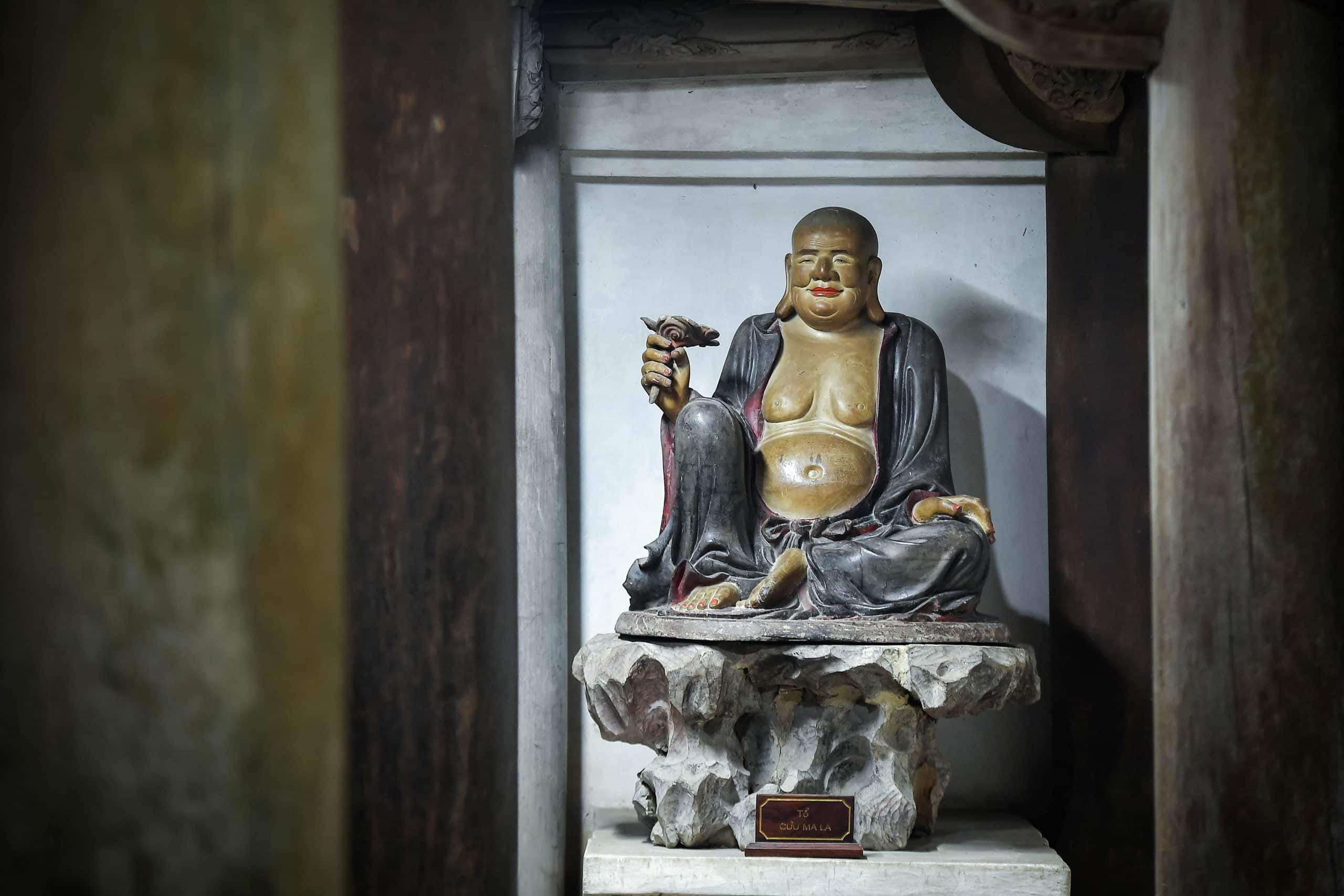
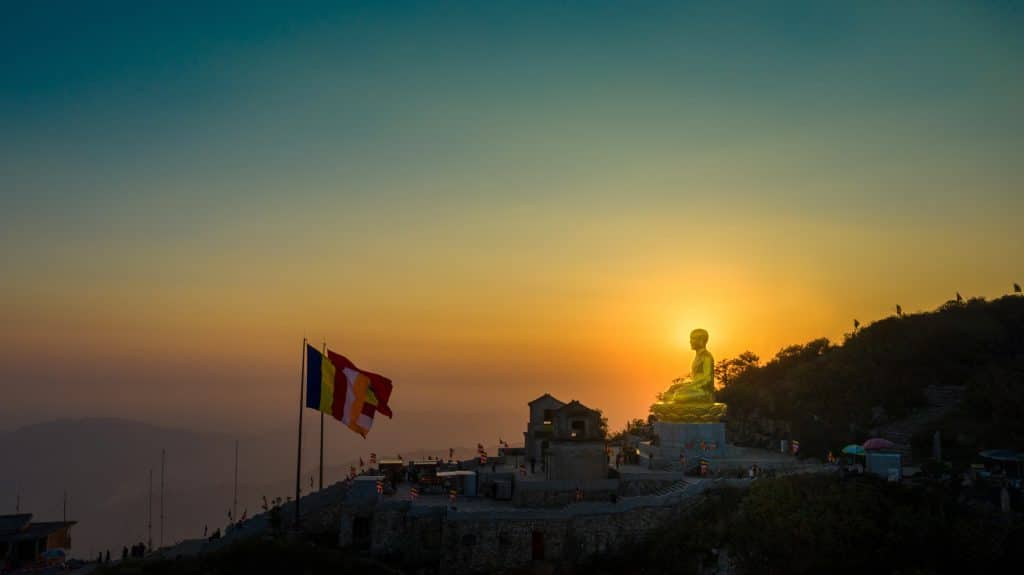
Located on Cau Lau Mountain in Tay Phuong Commune, Hanoi, Sung Phuc Pagoda is commonly known as Tay Phuong Pagoda. While the exact date of its initial construction remains unclear, many researchers suggest it was built between 1632 and 1635. In 1639, the pagoda underwent a major restoration, sponsored by Lord Trinh Trang (Thanh Do Vuong, 1623–1657). Later, Lord Trinh Giang (1729–1740) commissioned large-scale renovations and the creation of statues during the reign of Vinh Huu (1735–1740). In the late 18th century, Phan Huy Ich, a high-ranking official of the Tay Son dynasty, sponsored further restorations and the casting of a bell.
Today, Tay Phuong Pagoda is renowned throughout Vietnam for its distinctive architecture and exceptional Buddhist sculptures. Its collection of 18th-century statues – recognized as a National Treasure in 2014 – stands as an artistic masterpiece. Among them, the Eighteen Patriarchs are considered the most vivid portraiture in Vietnamese Buddhist sculpture. The artisans gave each figure a distinct, highly individualized, and lifelike presence.
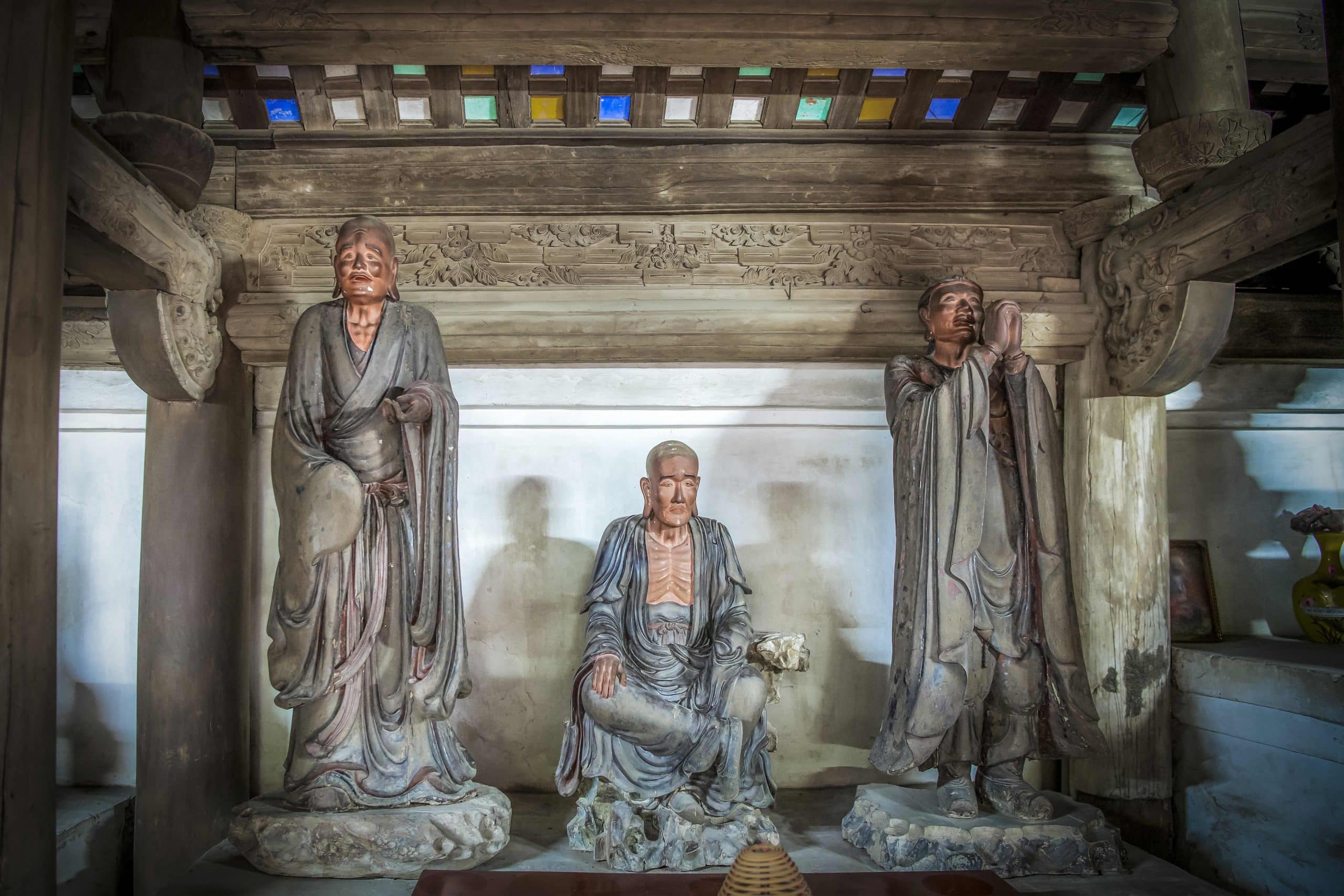
In popular usage, this set of 18 statues has long been known as the “Eighteen Arhats.” However, by comparing their iconography with Chinese and Vietnamese Buddhist texts, many researchers believe they depict the Successive Patriarchs – a lineage of Buddhist masters originating in India. This re-identification not only clarifies the figures’ classification but also reveals the depth of philosophical thought and Buddhist knowledge embedded in the artisans’ work.
The greatest value of this collection lies in its ability to harmonize religious solemnity with portrait-like individuality. While they remain objects of worship, they are not rigidly confined to conventional paradigms. Each statue emerges as a distinct presence, carrying a unique aura and inner world. One appears contemplative, another serene; some are jubilant, others austere. Some seem immersed in deep meditation, others lost in thought, while a few evoke a relaxed intimacy. Despite sharing the same thematic lineage, no two statues are alike. Viewers feel they are not simply standing before a collection of Buddhist statues, but encountering a richly nuanced world of expressions.
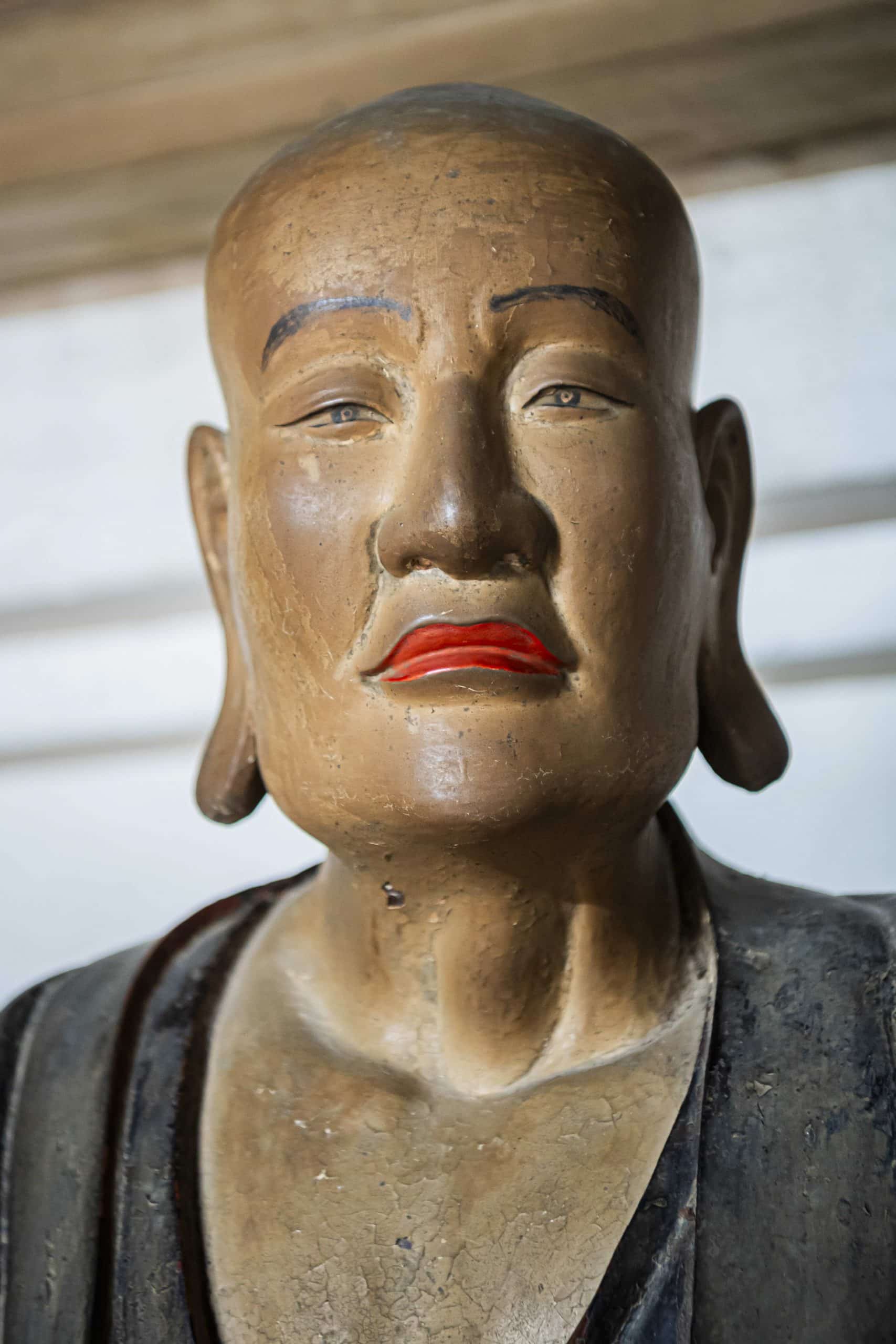
The long-ago artisans were remarkably skilled at capturing expression. Through facial features, seated postures, hand gestures, or the slightest tilt of the torso, they infused each statue with rare vitality. There are gaunt, sorrowful faces that evoke a profound inner world; fuller, radiant faces that reflect benevolence and tolerance; and statues that carry the mystical, solitary aura of those who have delved deeply into Zen practice. Overall, the collection evokes a wide range of emotions, from contemplation and tranquility to humor and levity.
Another triumph of this statuary system is the artistry in handling form and volume. The statues are large and well-proportioned, with robust but not heavy physical forms. The sculptors did not merely carve stationary blocks of wood; they created a sense of movement within stillness. The lacquer coating also plays a crucial role in the collection’s allure. The deep black lacquer, combined with vermilion red, highlights the structural volumes while lending a solemn, time-worn quality to the entire pantheon.
Looking deeper, the value of the Tay Phuong Pagoda statues lies not only in their masterful sculpting but also in their capacity to humanize the religious world. The patriarchs from the scriptures, through the hands of Vietnamese artisans, are brought closer to earthly life. They are no longer mere symbols of doctrine but presences with distinct personalities and emotions.
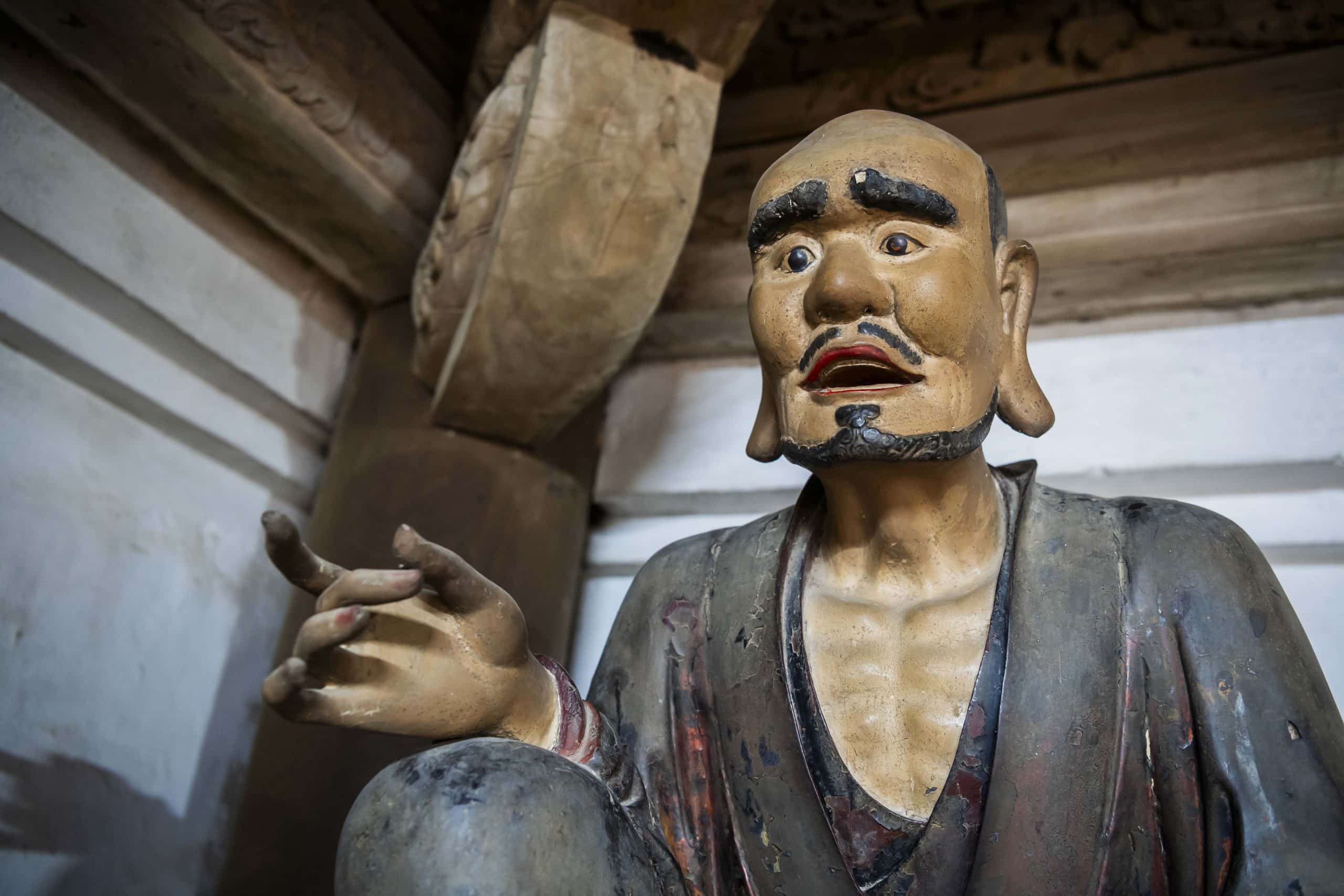
Therefore, the collection is not only the heritage of Tay Phuong Pagoda or of Buddhism alone but represents a pinnacle of 18th-century Vietnamese art. Here, religious spirit, realistic perception, and the formative talent of folk artisans converge to create a rare sculptural ensemble. Drawing on motifs and classical tales passed down through texts, the artisans did not copy mechanically but reimagined the figures through their own ideas and emotions. As a result, the statues carry both symbolic meaning and a powerful aesthetic resonance. Few sets of religious statuary are as rich in ideology, refined in form, and capable of leaving such a profound emotional impact on the viewer. For this reason, the collection has long been regarded as a benchmark for traditional Vietnamese wooden sculpture.
Drawing on motifs from scriptures and ancient paintings, the craftsmen of yesteryear breathed extraordinary vitality into the Eighteen Patriarchs at Tay Phuong Pagoda. Each statue appears to harbor a life of its own, emerging with a distinctive posture, aura, and emotional rhythm. Through a free and expressive sculptural language, the collection stands not only as a zenith of 18th-century Buddhist sculpture but also as a model for many later pagodas to study and emulate.