
Story: Phan Quoc Vinh
Photos: Phong Nguyen
In even the humblest setting, Hue food is refined and unforgettable.
I left Hue a long time ago…
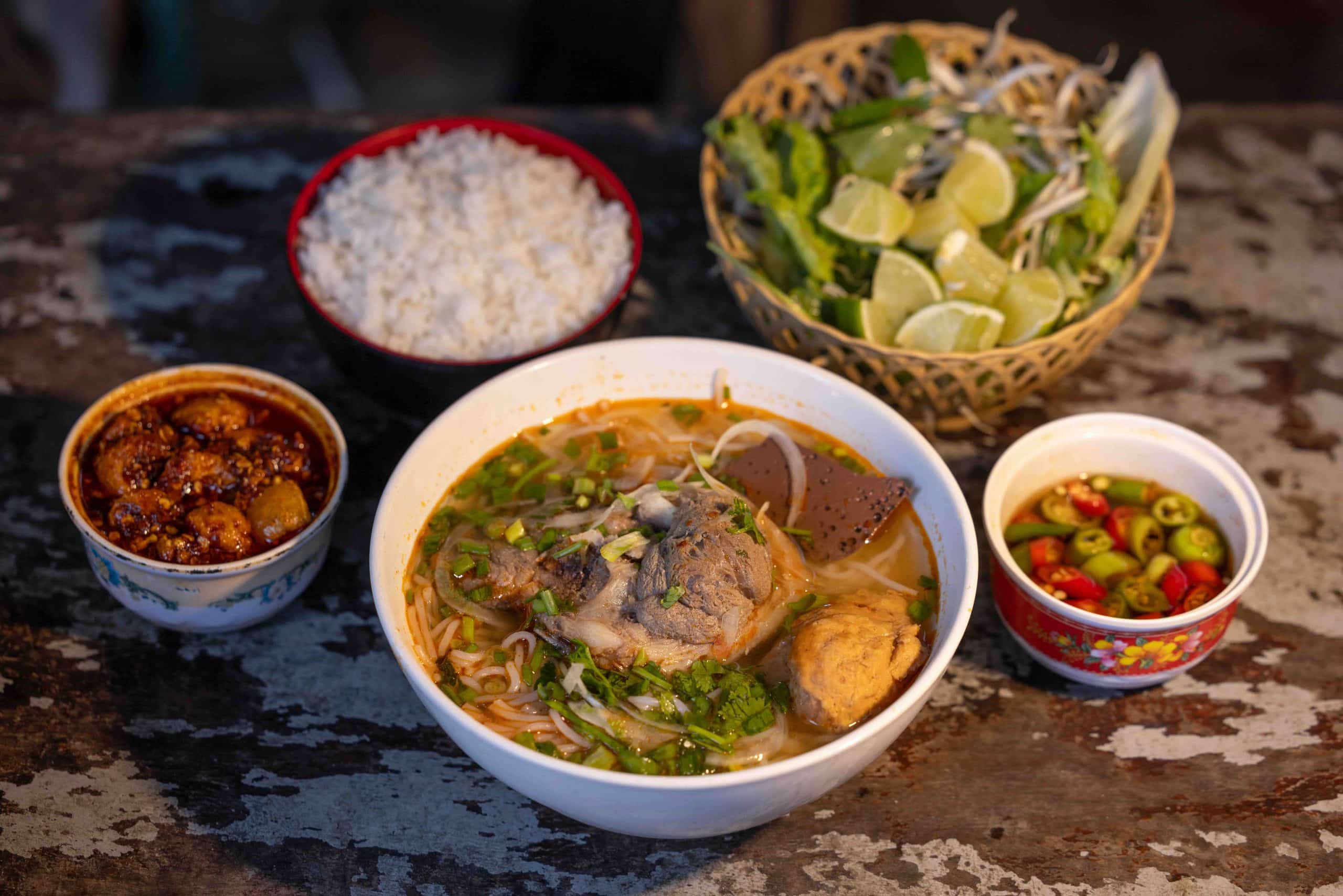
Living through winters abroad, when cold winds slip through my collar, I find myself thinking of misty mornings along the Perfume River, the familiar calls of o and me (local ways of addressing women in Hue), and the city’s humble street-side eateries. I recall steaming bowls of bun bo, fragrant with fermented shrimp paste and lemongrass, plates of translucent tapioca dumplings filled with shrimp, and bowls of com hen with the gentle sweetness of baby clams.
The more I remember, the more I realize that these flavors have stayed with me for almost half a lifetime and belong nowhere except Hue.
Hue is not only celebrated for its refined royal cuisine but also remembered for its everyday street food. What defines Hue’s dishes, ultimately, is not luxury but the hands that make them – those of o Doi, o Be, me Keo, me Thuan, and many other hardworking and remarkably skillful women. In Hue, good food is often associated with a specific person on a particular street. People do not simply say they are going out for rice porridge; they say they are going to the pork rice porridge stall on Nguyen Lo Trach Street. If they mention banh loc, they mean the stall on Dang Huy Tru Street. Hue is small, so these places are easy to find.
Pork knuckle rice porridge on Nguyen Lo Trach Street is a case in point. The rice is lightly roasted before being simmered into a smooth, thick consistency without becoming overly dense. The pork is tender and rich without turning greasy. What completes the dish is the dipping sauce made from fermented shrimp paste, with plenty of sliced green chili – fragrant and sharply spicy. Only then is it fully satisfying, as people in Hue would say, especially during the long rainy season.
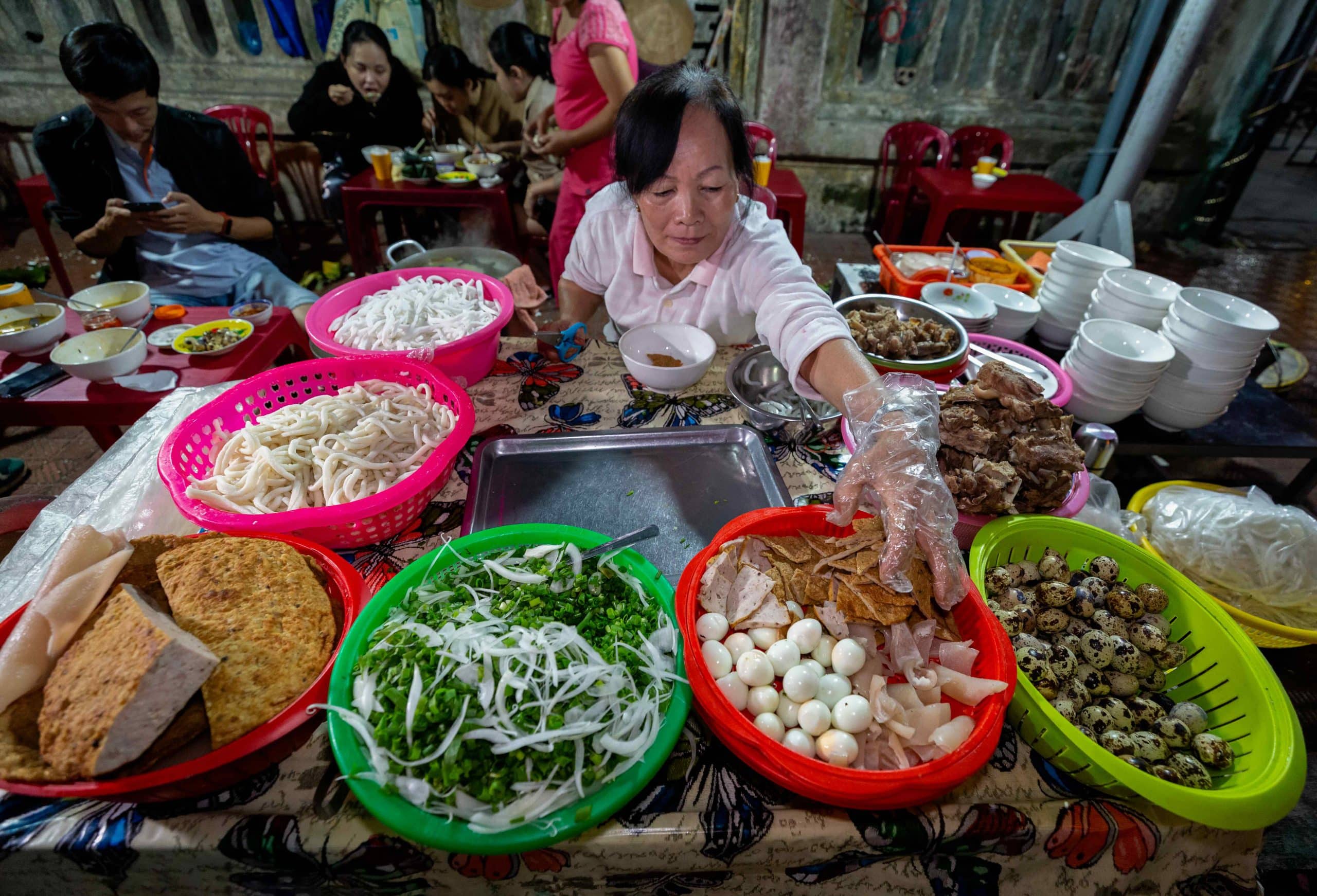
The same is true of Hue-style banh canh, which many insist must be really spicy to be truly enjoyable. Indeed, a bowl of Nam Pho banh canh features soft rice noodles in a gently thickened broth made from shrimp and crab, enriched with tapioca starch for consistency. Without the deep red hue of annatto oil, the dish would lose half its soul. Meanwhile, banh canh on Han Thuyen Street offers a different experience with a clearer broth, gently sweet from simmered bones, served with pork sausage, pork, sometimes thin slices of pig skin, quail eggs, and bits of crispy pork fat. Whatever the variation, they share that distinctive Hue spiciness, warming one through Hue’s rainy afternoons and lingering just enough to make those who leave never forget this city.
The banh loc on Dang Huy Tru Street near my home has remained consistently plump and appealing over the years. Made from tapioca starch, the dumplings are boiled to achieve a pleasantly chewy texture. The shrimp and pork filling is well-seasoned and tinted a distinctive orange-red color. The vegetarian version is filled with mung beans. The dumplings are topped with scallion oil, sprinkled with fried shallots, and served with sweet fish sauce. Each bite unites chewiness, saltiness, and spiciness in harmony, carrying the flavors of rivers, fields, and the skilled hands of the women who sell these dumplings by the roadside.
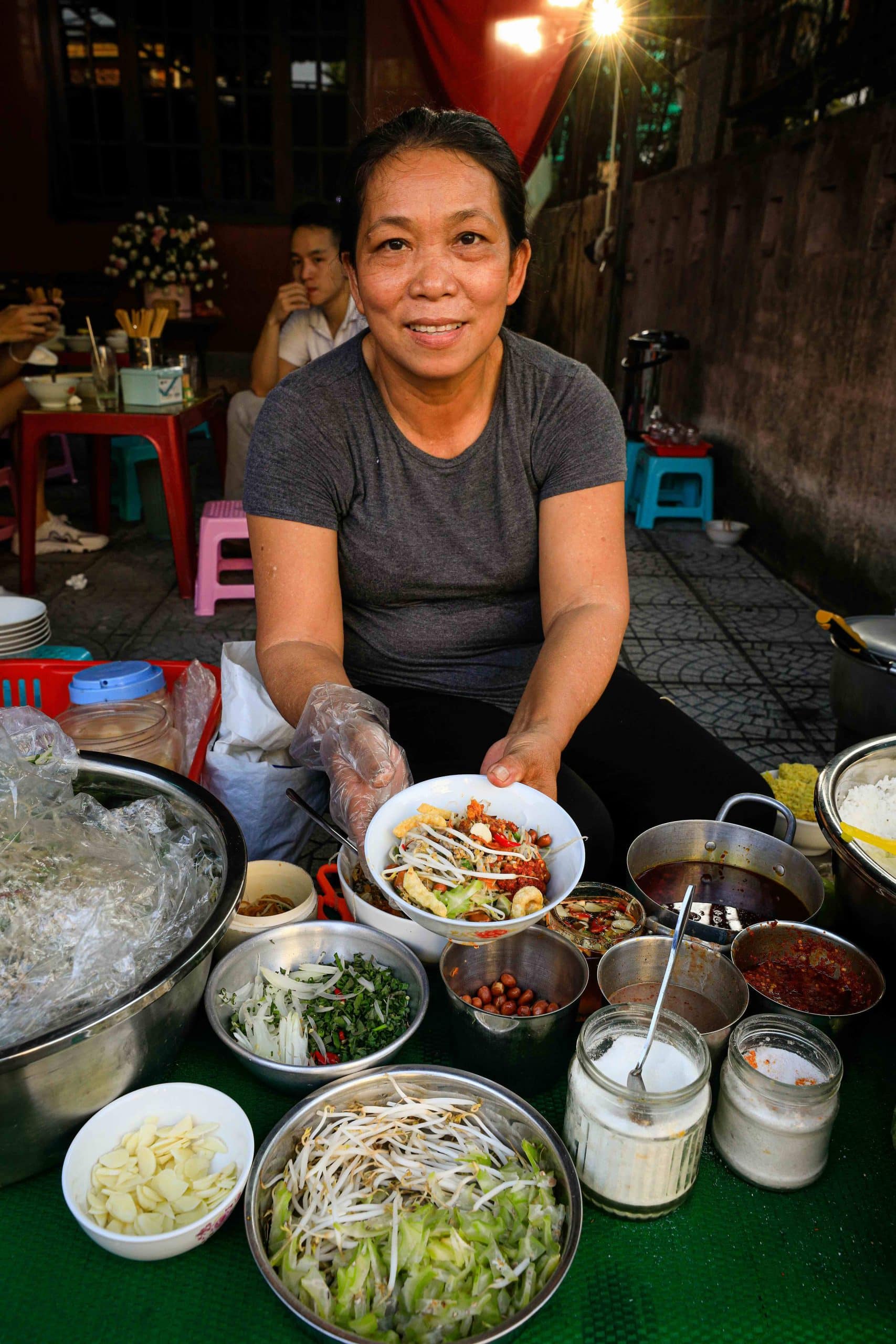
A story about Hue food would be incomplete without mentioning banh beo. Nearly twenty years ago, I accompanied John Krich, a reporter from The Wall Street Journal, as he tried this Hue delicacy for the first time. He was struck by the sight of small bowls neatly arranged on a tray. The steamed rice cakes are soft, topped with ground dried shrimp, crispy pork skin, and some fried shallots.
As he added fish sauce, I suggested he pour it more generously and make it spicier to fully appreciate the flavor. He laughed, then winced at the heat, before nodding in approval. I still remember his expression when he realized that Hue’s refinement lies in such seemingly simple details.
The creaking shoulder poles of bun hen vendors, steaming bowls of banh canh, baskets of fresh green herbs, and small bowls of fermented shrimp paste all reveal that Hue’s ingredients are not elaborate, but chosen with great care. The rice must be fresh with the right level of stickiness. Shrimp and crab come from Tam Giang Lagoon, while clams are gathered from the Perfume River. Fresh herbs include taro stems, banana blossoms, and bean sprouts. The small “chi thien” Hue chili is both fragrant and intensely fiery. Above all is ruoc – a seasoning capable of stirring a deep sense of longing in those far from home.
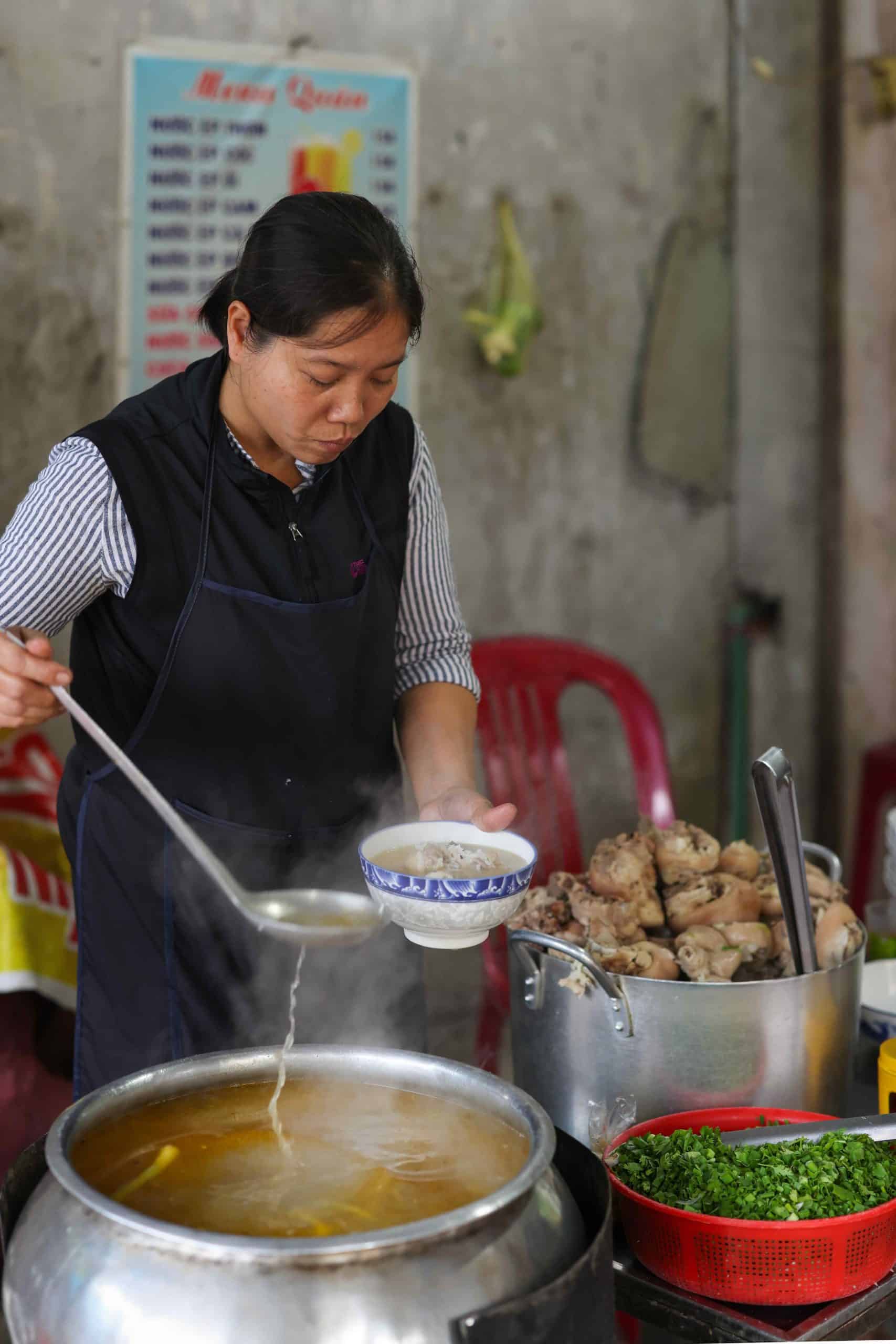
The human warmth in Hue’s cuisine also makes it unique. The spaces may be cramped and the tables simple, but the food is always prepared with care.
Today, Hue is on its way to becoming the “Culinary Capital of Vietnam.” The title is not merely symbolic but reflected in the experience of diners from near and far. It is the street food vendors – the o and me – who tirelessly keep the fires in their kitchens burning, as they best understand what it means for a dish to truly “taste like Hue.”
Living far from home, I can dine in Vietnamese restaurants or recreate many dishes myself. Yet each time I taste them, I feel something is missing. Perhaps it is the early-morning calls of street vendors, the steam rising from pots of broth, or a gentle Hue voice asking, “What would you like to eat?”
Hue’s humble everyday cuisine is not only about food. It is memory, longing, and a part of the soul of those who love this land.