
Story: Trung Chanh
Photos: Lam Phong, Le Hoang Vu
Organic-oriented mixed rice and shrimp farming is helping An Giang’s coastal farmers adapt to climate change, reduce production costs, raise product value, and pave the way for sustainable agriculture.
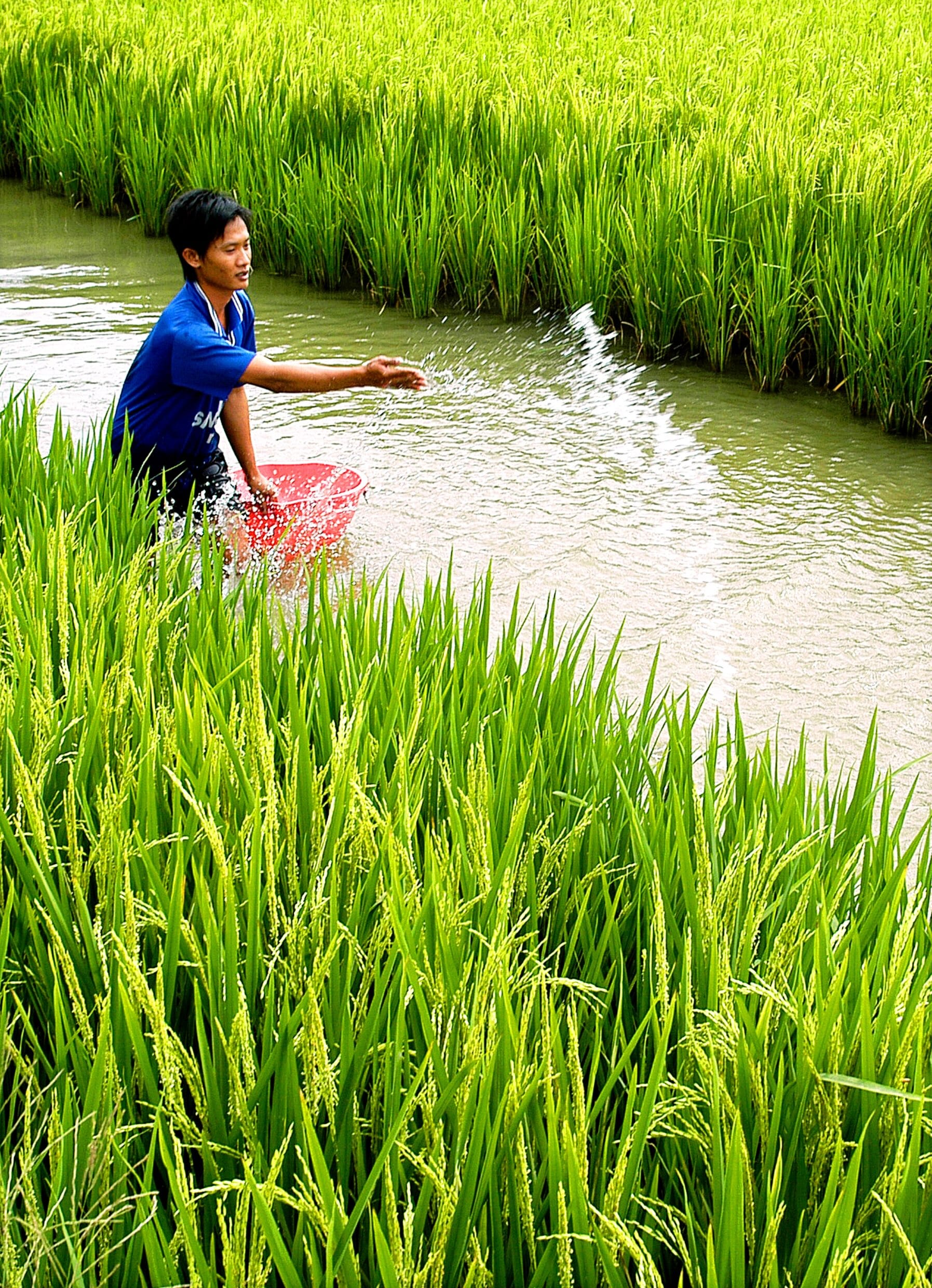
Walking through the coastal fields of the Southwest, now part of An Giang province, a profound shift in agricultural production becomes clear. Gone are the days when locals frantically built embankments to block salinity and retain freshwater for year-round rice cultivation. Instead, the rotational farming of rice and shrimp is increasingly prevalent. This flexible model works with natural cycles rather than against them.
From survival to strategy
Having worked in the rice fields for nearly 30 years, veteran farmer Le Van Thuan from Dong Thai commune, An Giang province, vividly recalls the days when every dry season brought constant fear of saltwater intrusion. Back then, locals tried every possible means to combat the salinity, struggling to retain freshwater for continuous rice cultivation. The harder they fought, the deeper and longer the salinity intruded, leading to many failed harvests.
The transformation began when people accepted living with salinity. During the dry season, as tides push saltwater into the paddies, the fields become an ideal habitat for shrimp farming. When the rains arrive and freshwater returns, farmers wash away salinity and condition the soil for planting rice. A flexible production cycle was thus established, aligning naturally with ecological rhythms.
According to Mr. Thuan, this transition has freed farmers from the precarious, worsening cycle caused by monocropping rice. Raised in a natural environment with minimal reliance on industrial feed, the shrimp are healthy and less susceptible to disease. Meanwhile, following the shrimp season, the soil is enriched with abundant organic matter from dead algae, microorganisms, and molted shrimp shells, making it exceptionally fertile.
As the rice season begins, this organic reservoir contains natural nutrients that help rice plants thrive, significantly reducing reliance on chemical fertilizers and pesticides. Farmers not only cut down on costs but also mitigate negative environmental impacts.
From the initial pilot models, the area under this mixed rice-and-shrimp system has steadily expanded. In the 2025-2026 crop season, An Giang province recorded nearly 75,000 hectares using this method. Notably, a change toward organic and ecological production is increasingly evident, marking a qualitative leap rather than a mere expansion in scale.
All of this signals a fundamental shift in production mindset. Instead of focusing solely on the output, farmers are pursuing long-term objectives: preserving the soil, protecting the environment, and securing sustainable livelihoods for future generations.
One ecosystem, dual value
The core appeal of the rice-and-shrimp model lies not merely in the rotation of two commodities but in the formulation of a closed agricultural ecosystem. The shrimp season enriches the soil by creating vast amounts of natural organic matter. In contrast, the rice season helps purify the aquatic environment, curbing pathogens and creating optimal conditions for the subsequent shrimp crop. The two production cycles mutually support each other, generating a stable ecological loop with a high capacity for self-balancing.
Amidst the backdrop of increasingly extreme climate change, this adaptability is a tremendous advantage. If one crop encounters risks, farmers still secure an income stream from the other, thereby minimizing losses and stabilizing their livelihoods.
The rice-shrimp model also demonstrates clear advantages in economic efficiency. While rice yields are lower than in specialized rice-growing zones, at about 5.5 – 5.7 tons/hectare, the selling price is VND500 – 1,000/kg higher. Specifically, companies often purchase rice produced through ecological and organic methods at a 20-30% premium.
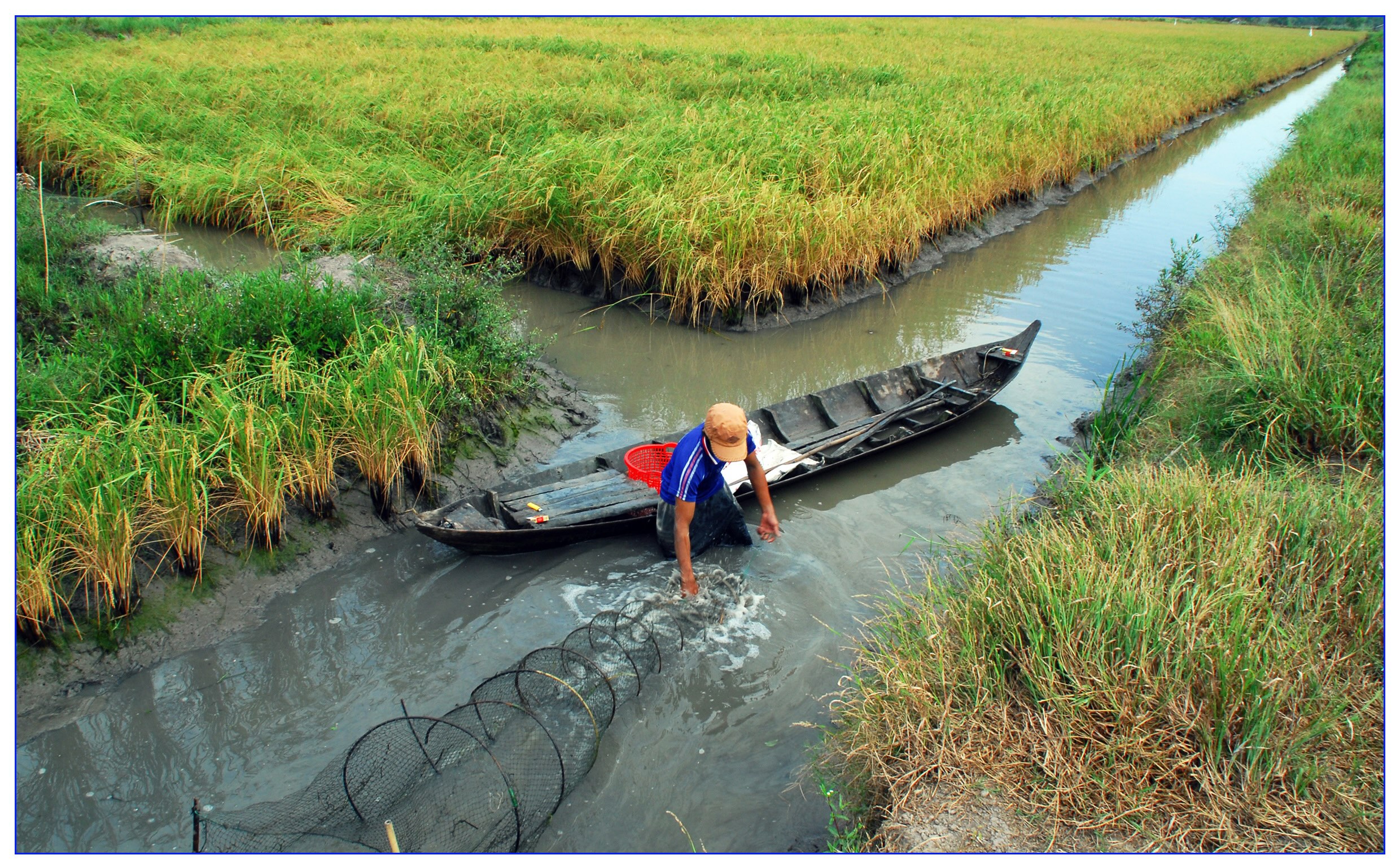
Meanwhile, significantly reduced input costs, achieved by following nature, have yielded higher actual profits than those from traditional farming methods. Instead of investing heavily for high yields, farmers are investing rationally for sustainable returns.
Regarding the shrimp season, farming the shrimp in rice paddies helps limit disease outbreaks and reduces dependence on industrial feed. With firm meat, the shrimp are highly favored by the market and fetch stable prices, often higher than those of intensively farmed shrimp.
By delivering dual value on the same plot of land, the integration of rice and shrimp serves not only as an agro-economic solution but also as a pathway aligned with global trends in green and responsible agriculture. This model is now opening up numerous export opportunities.
Global demand for clean, organic rice is steadily rising, particularly in stringent markets such as Europe and Japan. Rice grown in rice-and-shrimp regions and cultivated through ecological processes is well-positioned to meet international standards such as SRP and GlobalGAP.
More than a commodity, it carries the narrative of an environmentally responsible farming model – a clear example of adapting to climate change, which continues to challenge sectors and nations worldwide.