

Story: Kincoi
Photos: Shutterstock
In Copenhagen, bicycles outnumber people. Yet what truly sets the city apart is how locals embrace cycling as a way of life – a cultural hallmark of this ancient, beautiful Nordic gem.
On my first morning in Copenhagen, I was amazed to see hundreds of bicycles stopped at red lights, neatly lined up at major intersections during rush hour. No honking, no jostling. When the light turned green, the flow of people silently glided away, as smooth as water. The typical sights of modern metropolises, such as ostentatious supercars or long lines of taxis, are completely absent here. This creates an interesting paradox: Copenhagen is one of the wealthiest and most expensive cities in the world, yet its residents commute in a profoundly humble way.
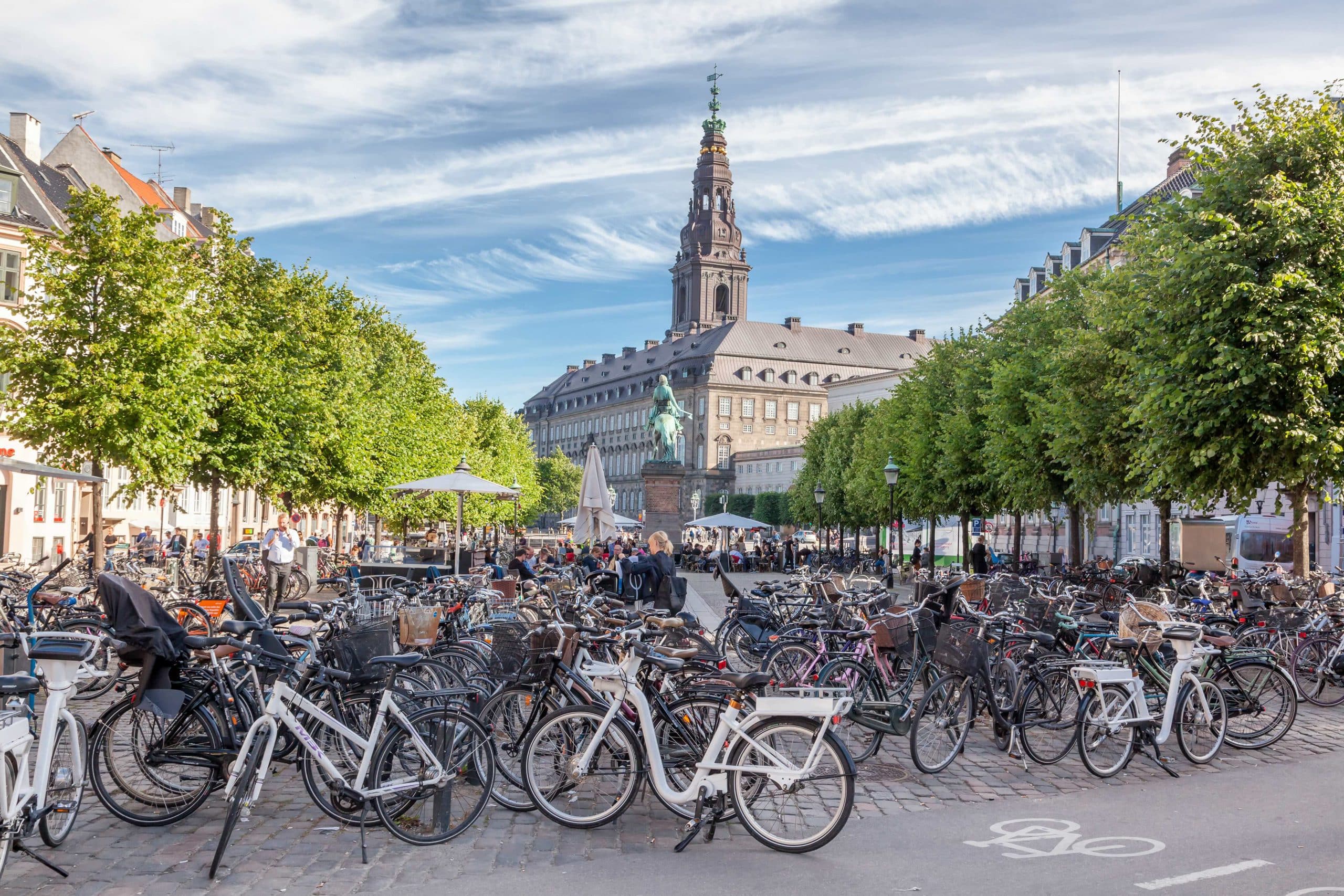
I had heard good things about Copenhagen’s cycling culture: they boast hundreds of kilometers of dedicated bike lanes, and over half the population commutes by bicycle. But it wasn’t until I held the handlebars and slowly rode down wide avenues and narrow streets, weaving through parks, residential areas, and along the canals, that I realized numbers are merely numbers. Copenhagen offered me a journey of discovery by bicycle – something I had never thought of before, not just to try, but to harmonize with the city’s rhythm, like a local.
Following other rolling wheels, my bike glided down streets lined with twin rows of towering trees, the light filtering through the canopy into a soothing green. I leaned into the curves and exclaimed in sheer excitement when a mirror-like lake appeared before my eyes, complete with slowly swimming swans. I suddenly realized I had forgotten my GPS, lost track of my destination, and had been cycling aimlessly for ages. I was busy observing a woman in a light beige trench coat riding a bike with one hand while holding a coffee cup in the other. On the sidewalk, an older man in a straw hat walked his bike, strolling with his old friend.
In many wealthy cities, transportation is a way to display status. The opposite is true in Copenhagen: office workers in suits cycle, bank directors cycle, as do young women in trendy outfits. Here, cycling is not a weekend sports activity or a form of exercise for health, nor is it a trendy “green” choice. It is the very breath of the city, occurring naturally without any effort. For the locals, a bicycle is not merely a vehicle but a lifestyle choice. For me, it was a wide-open door into the rhythm of life in Copenhagen. I could simultaneously commute, observe, and reflect – a rare privilege amid the rush of city life.
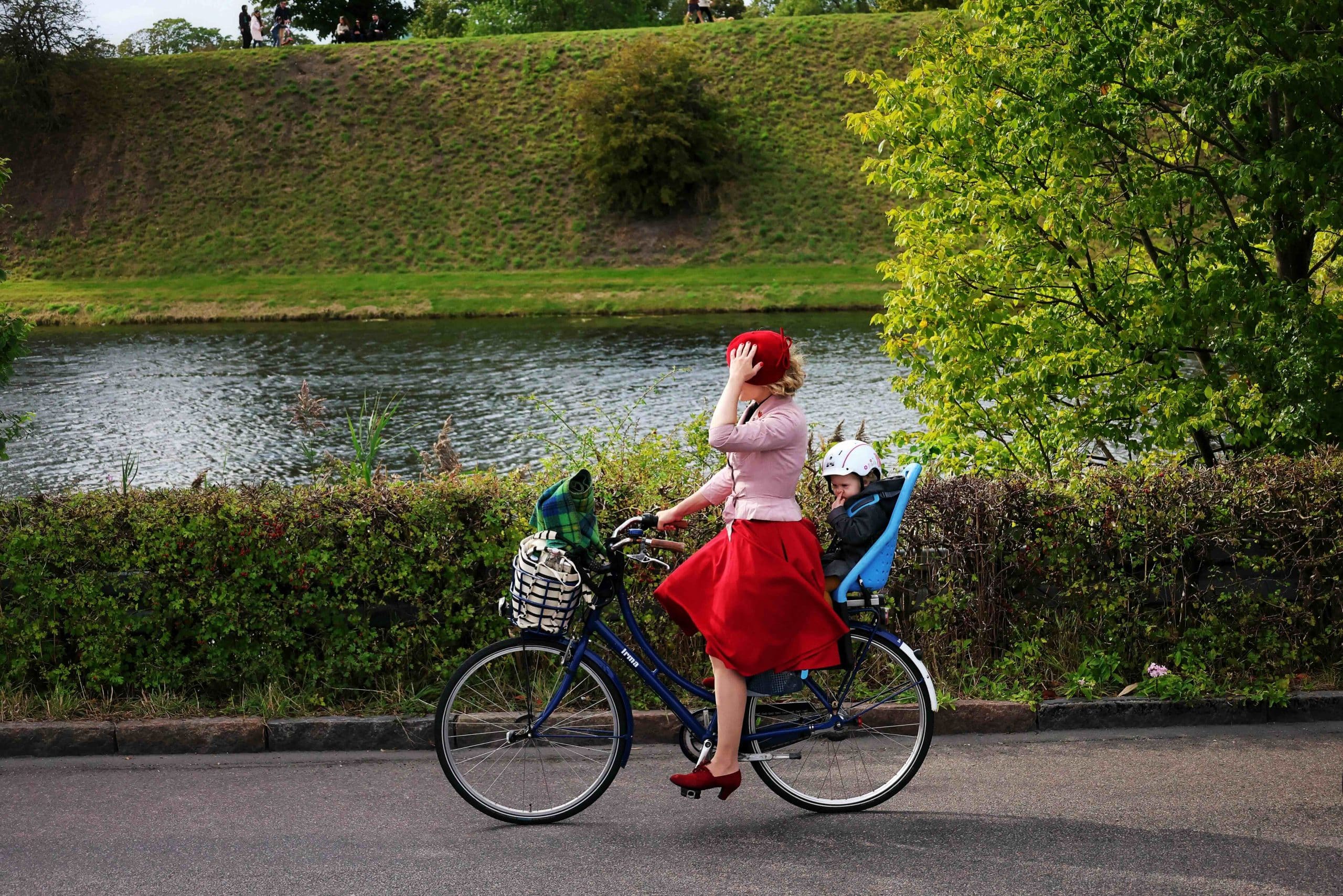
One of this city’s most endearing sights is its cargo bikes: bicycles with a box in front, similar to the cyclo in Vietnam. Residents use cargo bikes to take their children to school, walk their pets, carry groceries home from the market, and more. If a family wishes to enjoy a picnic by the canal or in the park, they use a cargo bike to transport all the necessary items. These ordinary yet beautiful moments evoke memories of Hanoi in the 1970s and 1980s – just as leisurely, with narrow streets where bicycles and cyclos were the main modes of transportation. This unexpected similarity deepened my heart’s connection to Copenhagen.
Cycling in Copenhagen is also enjoyable thanks to its well-designed bike infrastructure. Almost every street has its own bike lane, traffic lights have signals specifically for bicycles, bike parking lots are common, and you can even bring bikes onto trains at certain times. In recent years, Copenhagen in particular, and Denmark in general, have been accelerating the development of a bicycle highway system, incorporating features like air pump stations, footrests, safe intersections, traffic lights synchronized with the average cycling speed, and parking areas near bus stops and train stations to facilitate residents traveling by bike.
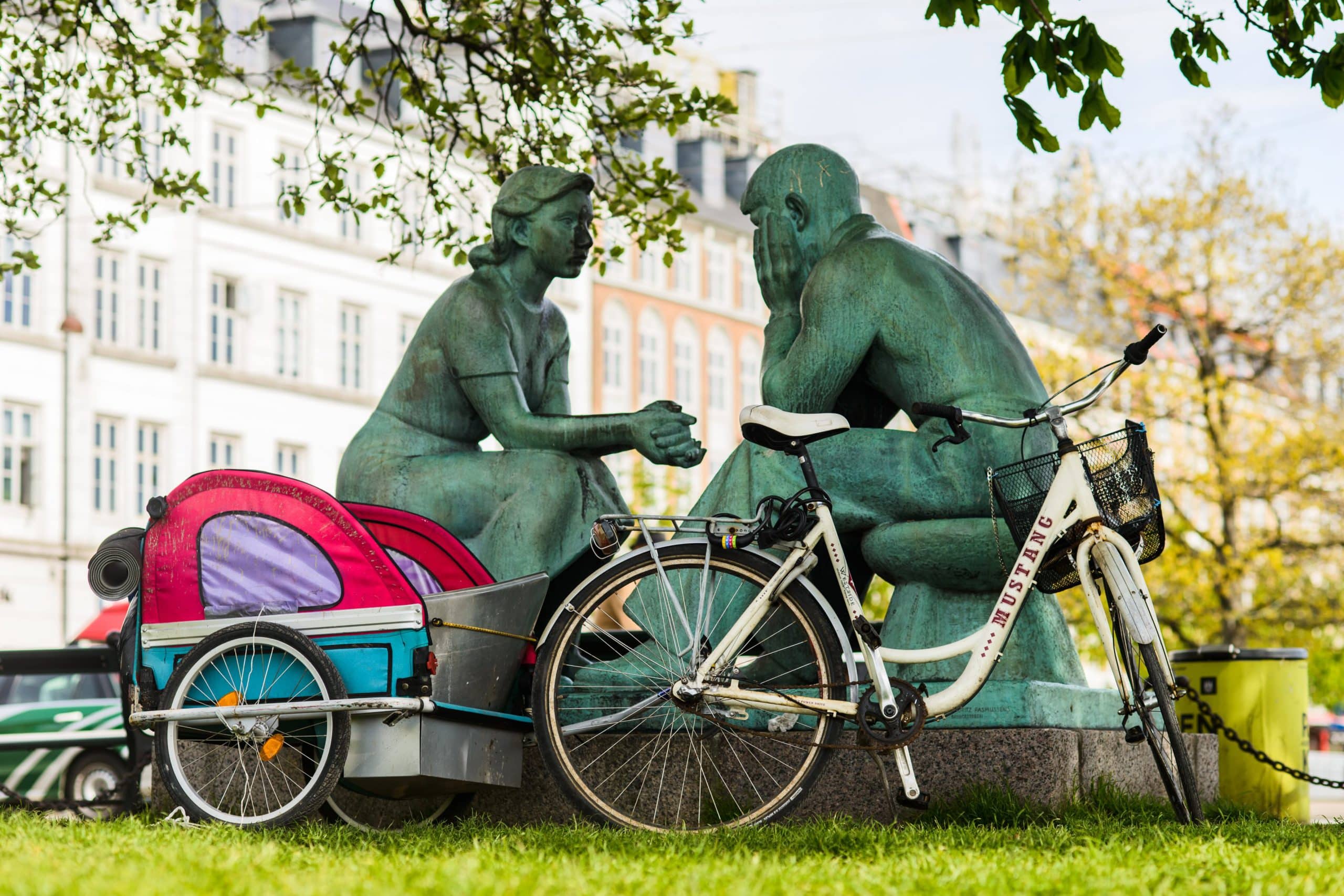
Renting a bicycle in this city is easy. Rental bike services are ubiquitous. Alongside the city’s public bike-share system dotted across the inner city, you’ll find local shops clustered in central spots near train stations, hotels, and hostels. You don’t need to plan or book days in advance. Whether renting or returning a bike, the process takes only a few minutes. Locals report that using a tech app to rent a bike from the public system is convenient, but renting from locally owned shops is much more interesting. They will help adjust the saddle to suit your height, attach a basket or a child seat if needed, offer advice on suitable routes, and, notably, supply cargo bikes upon request.
Leaving Copenhagen, my clearest memories aren’t of the magnificent royal palaces, the vibrantly colorful Nyhavn Harbor, or the priceless museum treasures, but of the gentle breeze caressing my hair as I leisurely cycled down the street, the rhythmic hum of rolling wheels, and the soft ring of a bicycle bell echoing from afar. These memories aren’t extraordinary, yet that’s precisely what makes them truly special.