
Story: Ha Quyen
Photos: Cat Dang
Amid the rush of Hanoi, wooden stamps preserve moments in time.
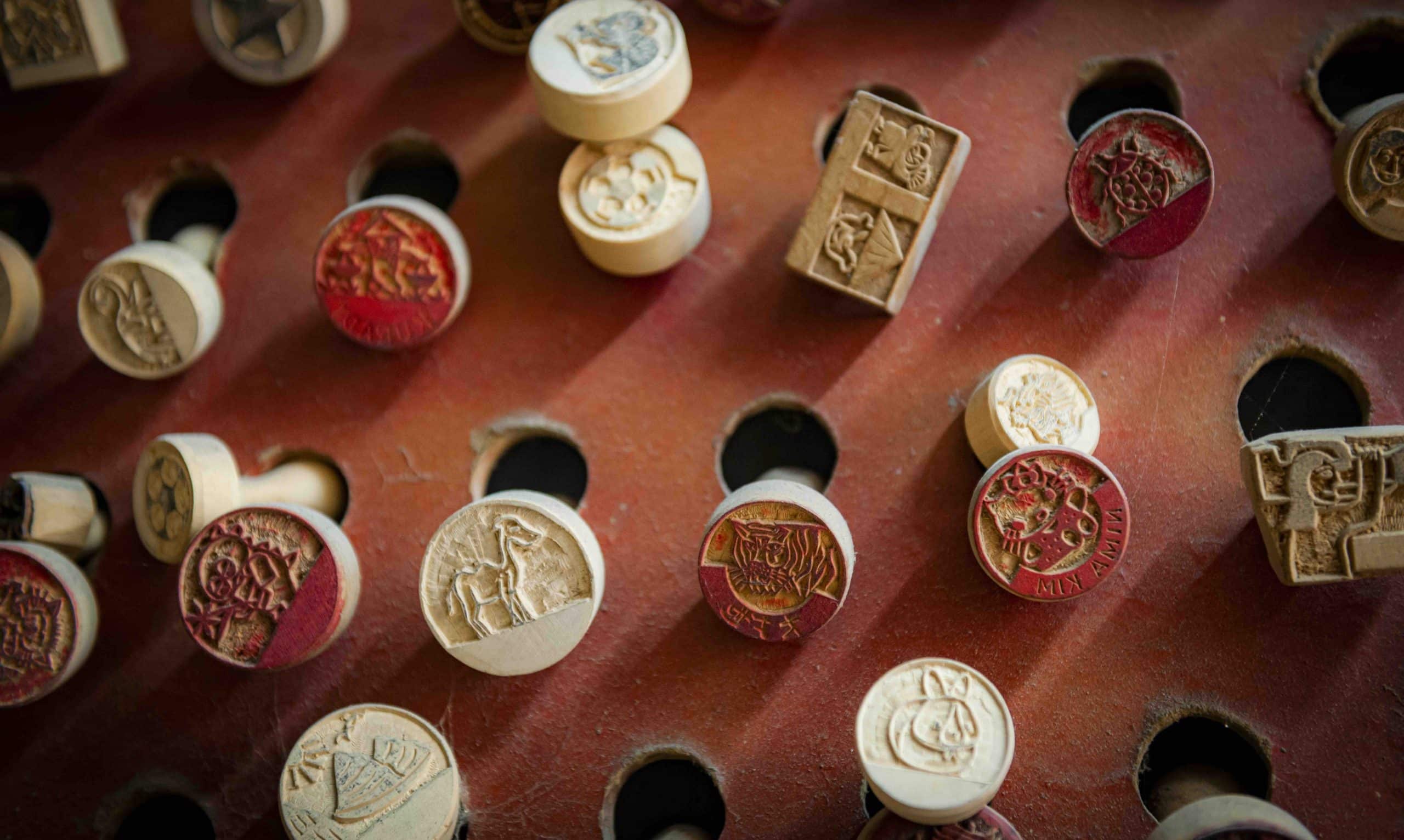
Amid the hustle and bustle of a vibrant Hanoi, traditional craft villages and workshops serve as fragments of memories, preserving the capital’s cultural hues through the tides of change. While people often mention useful products like Bat Trang ceramics or Van Phuc silk, an old craft endures right in the heart of the Old Quarter. Here, artisans still carve small wooden blocks, creating rustic stamps that serve as keepsakes and help preserve memories.
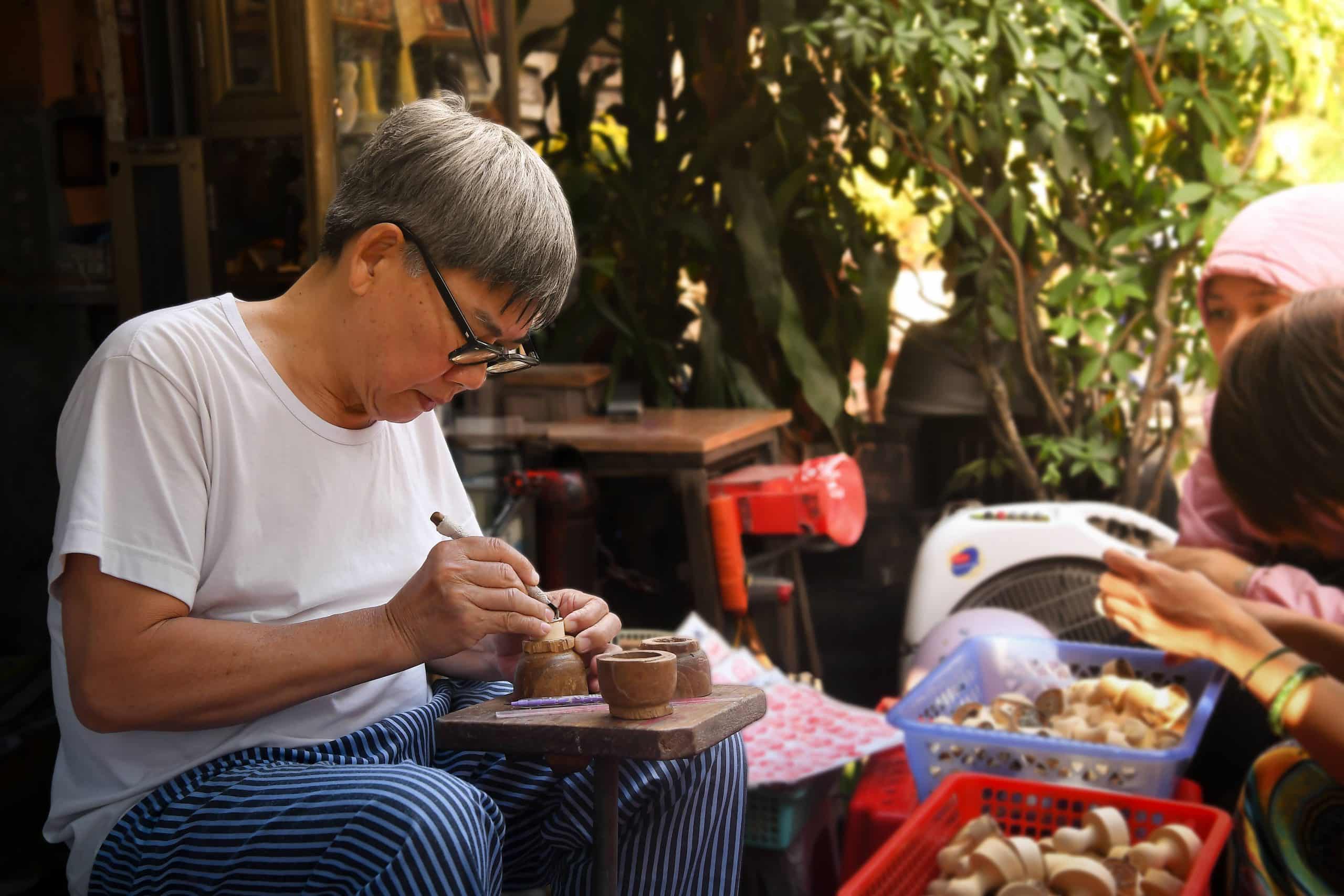
Visiting a small shop at 6 Hang Quat Street, I silently watched Mr. Pham Minh Thien, born in 1970, as he meticulously carved these small wooden blocks. After learning the trade from his grandfather, Mr. Thien opened his shop in the 2000s. Today, his family business has expanded into three adjacent storefronts, creating a lively artisanal corner on this bustling street. Starting with pre-cut rough wood blocks, he waits for customers to choose a design, then smooths the surface, sketches the pattern, and carves the stamp. Each finished stamp is usually sold with a red ink pad so that customers can leave their personal mark on notebooks or postcards.
Looking back in time, woodcarvers originally specialized in mooncake molds and woodblocks for folk paintings. In those days, artisans mainly carved chữ triện (seal script), an ancient typography rooted in Asian culture. However, in recent years, wooden stamps have become trendy, and carvers have adapted. Today’s wooden stamps are no longer confined to classical motifs but are highly diverse, catering to different customer demographics. While foreign tourists favor symbols of Vietnamese culture such as lotus flowers, the Hoan Kiem Lake turtle, conical hats, ao dai, or street flower vendors, Vietnamese youth prefer cute, playful designs with a touch of international pop culture. Most notably, the artisans can carve individual or group portraits from photographs, skillfully translating the feel of digital pictures into raised carvings on wood. Thanks to each artisan’s talent, the carved faces appear rustic yet vivid. These stamps are unique, one-of-a-kind gifts that perfectly capture personal memories.
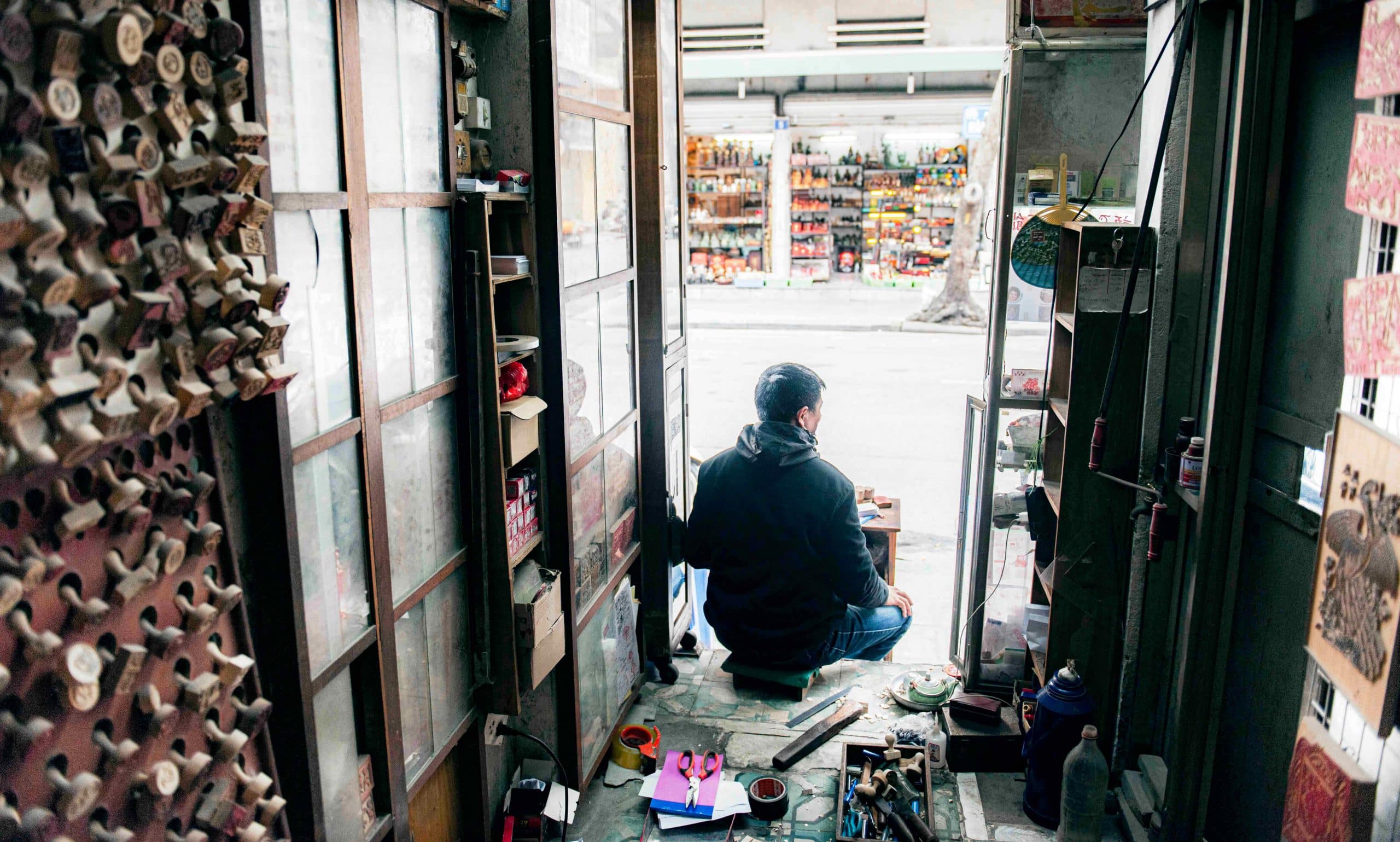
In recent years, the shop has grown significantly busier, especially during the summer and festive seasons when crowds flock to the Old Quarter. According to Mr. Thien, during peak tourist periods in dry weather, it’s not uncommon to see queues of customers waiting to buy these handmade stamps. Their joy extends beyond receiving the final product, as they enjoy watching the artisans work amid the city’s bustling streets. While the lines on handmade stamps are less precise than those cut by machine, it is precisely these slightly rough, rustic strokes that make these stamps so appealing. With growing appreciation for uniqueness, more people love these handmade products. Every carved stroke reveals the artisan’s dedication and adds a distinct, personal touch that cannot be copied.
When you buy a wooden stamp for 70,000 – 100,000 VND, you are not just getting a souvenir but a cultural fragment of Hanoi’s Old Quarter. Each red stamp printed on paper marks time and memories. If you ever have the chance to stroll around the capital, be sure to visit Hang Quat Street. You can discover a traditional craft street and choose a stamp to bring home.