
Story: Lam Duong
Photo: Dao Canh
Visitors can’t forget Hoi An’s sun-washed colors and jewel-toned lanterns.
In a few lines of luc bat poetry, a long-preserved folk verse about Hoi An captures a deep longing for the old town. Once a bustling trading port, this ancient settlement reveals itself not through grandeur, but through familiar images and quiet details.
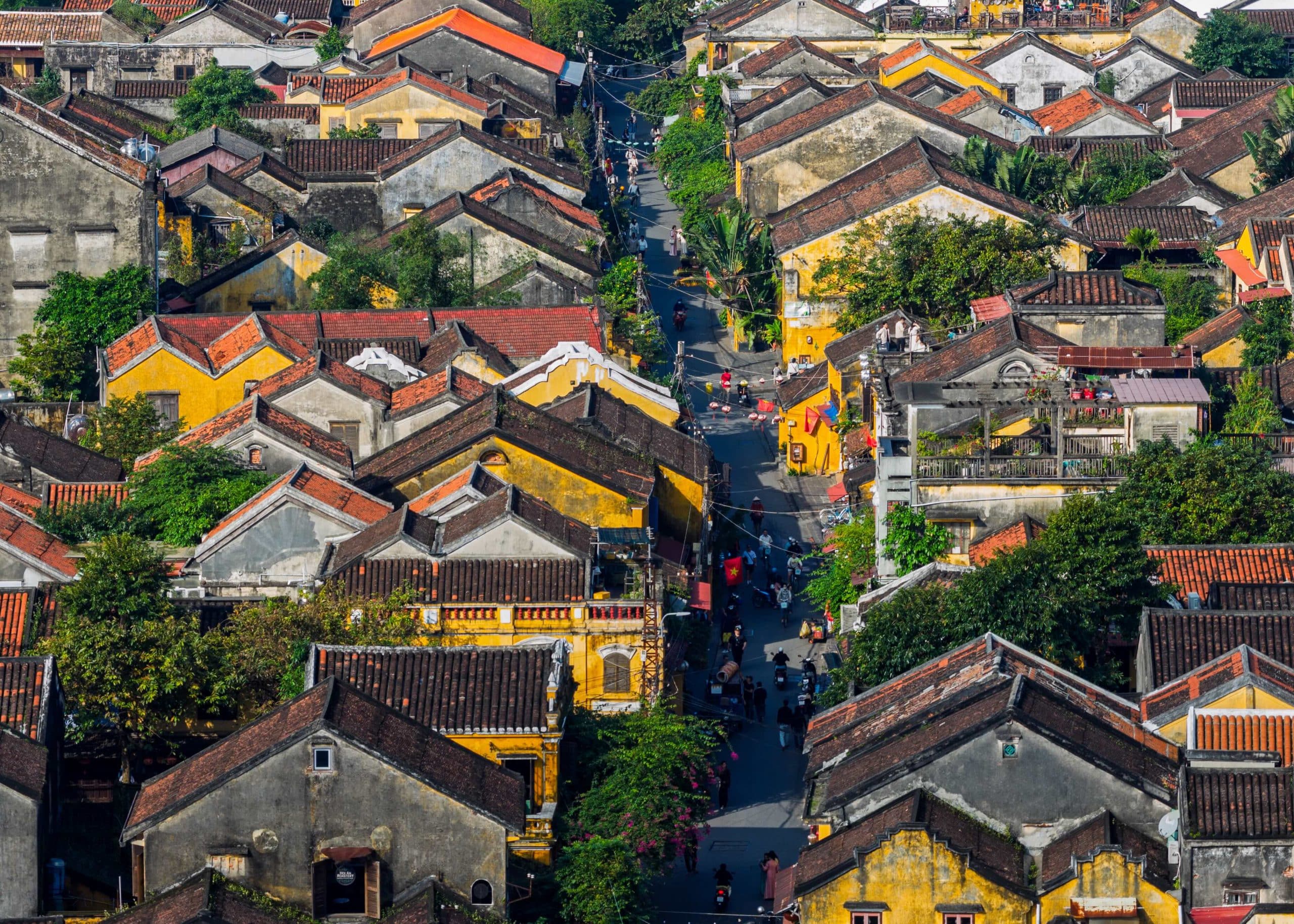
The people of Hoi An seem to welcome visitors with a gentle, enduring warmth. What makes the town unforgettable is its singular palette: sunlight glowing on yellow walls, green moss clinging to old tiled roofs, the deep brown of aged wood, vivid bougainvillea cascading over eaves, and even the weathered “door eyes” hanging above ancient entrances and gazing silently onto the streets.
I remember Hoi An the way one remembers a film woven from fragments of nature, architecture, and everyday life. At times, I feel less like a visitor than someone returning to a familiar place in memory, where stories are told through color.
Hoi An unfolds slowly beneath one’s footsteps along Tran Phu, Nguyen Thai Hoc, and Bach Dang streets. The yellow walls constantly shift in tone: radiant beneath the midday sun, softened in the late afternoon, and more contemplative after the rain. Even in bright sunlight, the yellow never feels harsh. Instead, it glows with warmth and clarity, accentuating the old tube houses with their narrow facades and deep interiors. Against this backdrop, the vivid green moss covering the yin-yang tiled roofs quietly evokes the many changes the town has endured through time.

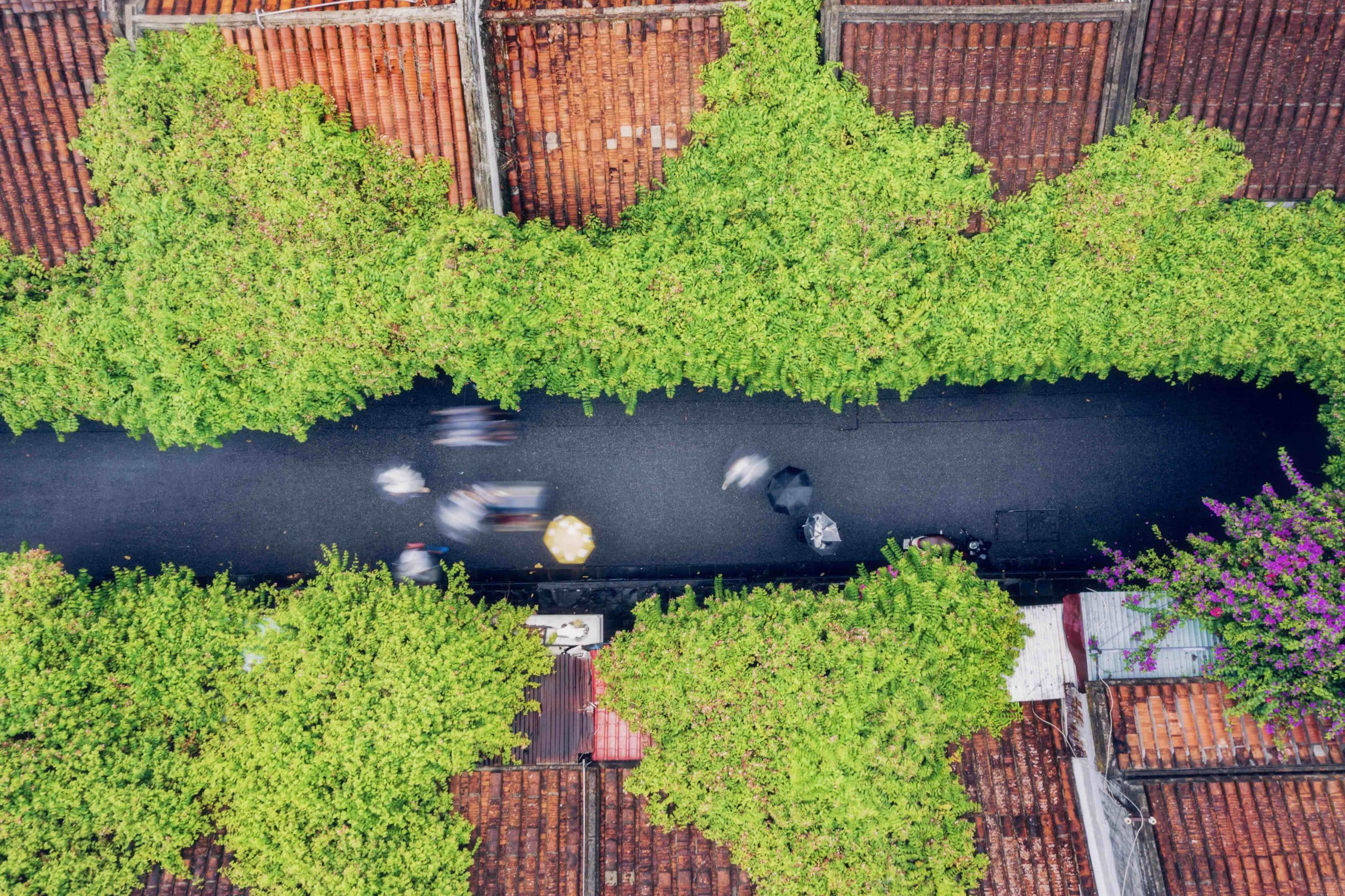
Some mornings, when the first sunlight touches the rooftops, the moss-covered tiles seem to slow time itself. I can feel the town’s gentle breathing in every old wall, roofline, and shaft of light. Looking up at balconies and wooden windows, I am drawn to the bold colors of the bougainvillea. Clusters of blossoms – pure white, vivid pink, deep purple – form bright splashes against the old walls. In Hoi An, bougainvillea does more than decorate the streets. It softens the yellow walls, the dark wood, and the green tiled roofs, giving the town an added sense of grace and tenderness.
The color that inspires the deepest contemplation is the brown of old wood found in doors, columns, beams, railings, and especially the ancient “door eyes” of traditional houses. These door eyes serve not only as decorative details, but also as quiet expressions of local beliefs and ways of life. Each house seems to possess its own gaze, silently watching passersby and witnessing the town’s many transformations while preserving a calm untouched by time.
To better appreciate the wood’s color and the marks of time, visitors can stop at Tan Ky Ancient House on Nguyen Thai Hoc Street, Phung Hung Ancient House on Nguyen Thi Minh Khai Street, or Quan Thang Ancient House on Tran Phu Street. Hoi An’s beauty lies not only in its yellow facades and moss-covered roofs, but also in its wooden frames, carved details, open courtyards, deep corridors, and the soft shafts of light filtering through old windows. Each house holds a different layer of memory: polished brown wood, darkened beams aged by time, pale yellow walls, and faded heirlooms passed down through generations.
As evening falls, lanterns illuminate Hoi An’s palette with new colors. Along the old streets, beneath the eaves of houses and shops and within narrow alleys, rows of red, yellow, green, blue, and purple lanterns cast glowing trails into the night. By day, Hoi An moves visitors with the quiet beauty of its yellow walls, tiled roofs, and old wood. When the lanterns are lit, the town becomes lively, warm, and full of life. Their glow does not diminish the old town’s historic charm. Instead, it adds another festive layer of color, making every corner shimmer in its own way.
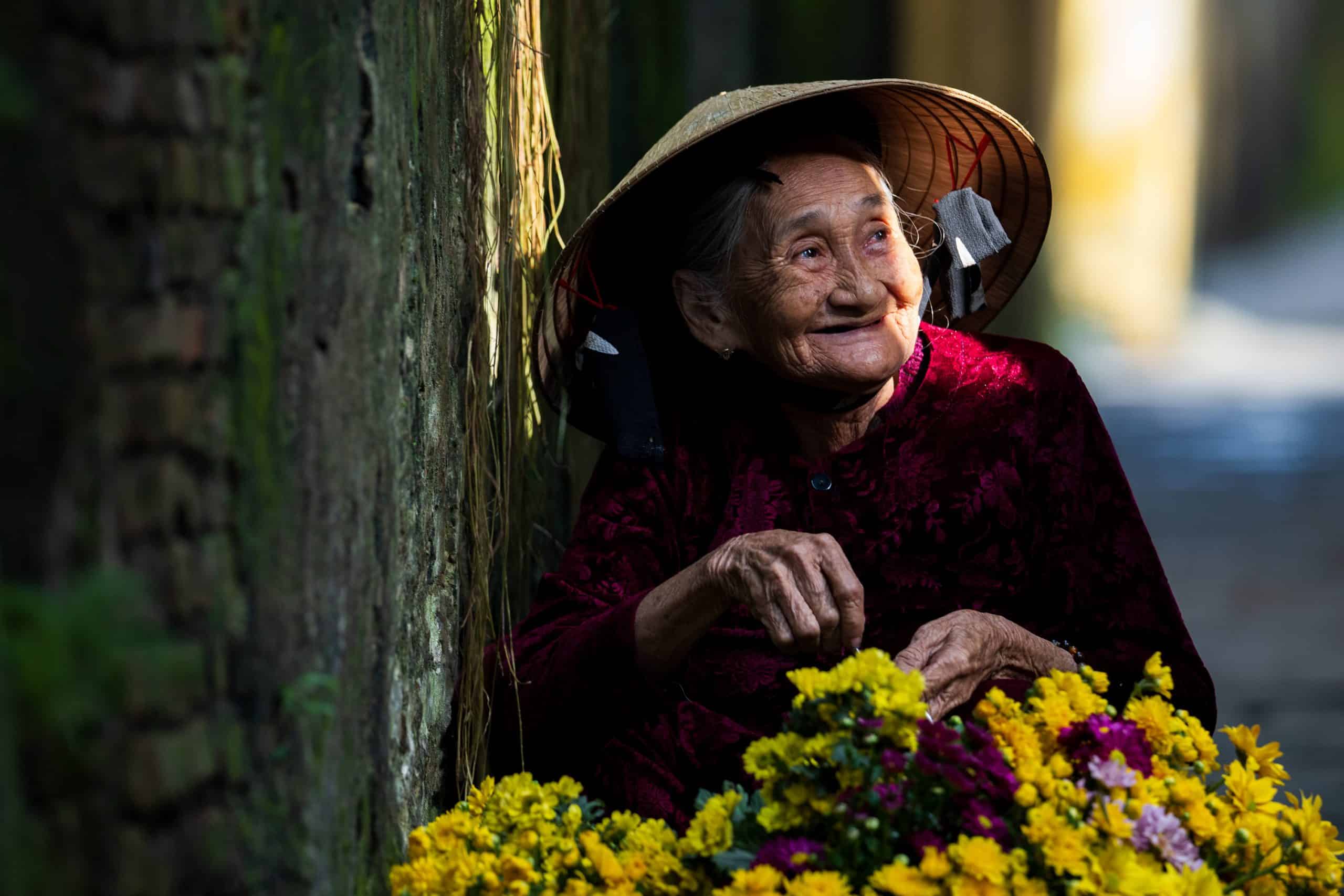
To me, the colors of Hoi An are not only seen. They linger in memory like a fragrance, a footstep, a quiet pause. Sunlight warms the yellow walls. Moss deepens the tiled roofs. Wood lends gravity to the old eaves. Bougainvillea brings softness and vitality. Lanterns illuminate the night with warm memories. Together, they create a Hoi An that feels both ancient and gentle – a place where every street corner becomes a promise, leaving those who depart longing to return.