
Story: Nam Hoa
Photos: Thu Phan
Nearshore wind farms are bringing new sights and sustainability to Vietnam’s West Coast region.
Along Vietnam’s West Coast, nearshore wind farms are redrawing the horizon with the steady rhythmic rotation of their white blades. Amidst the immense expanse of sky and water, this majestic scenery opens up a distinctive experience – where humans “harvest the wind” from the sea to generate clean energy in the land of the Nine Dragons.
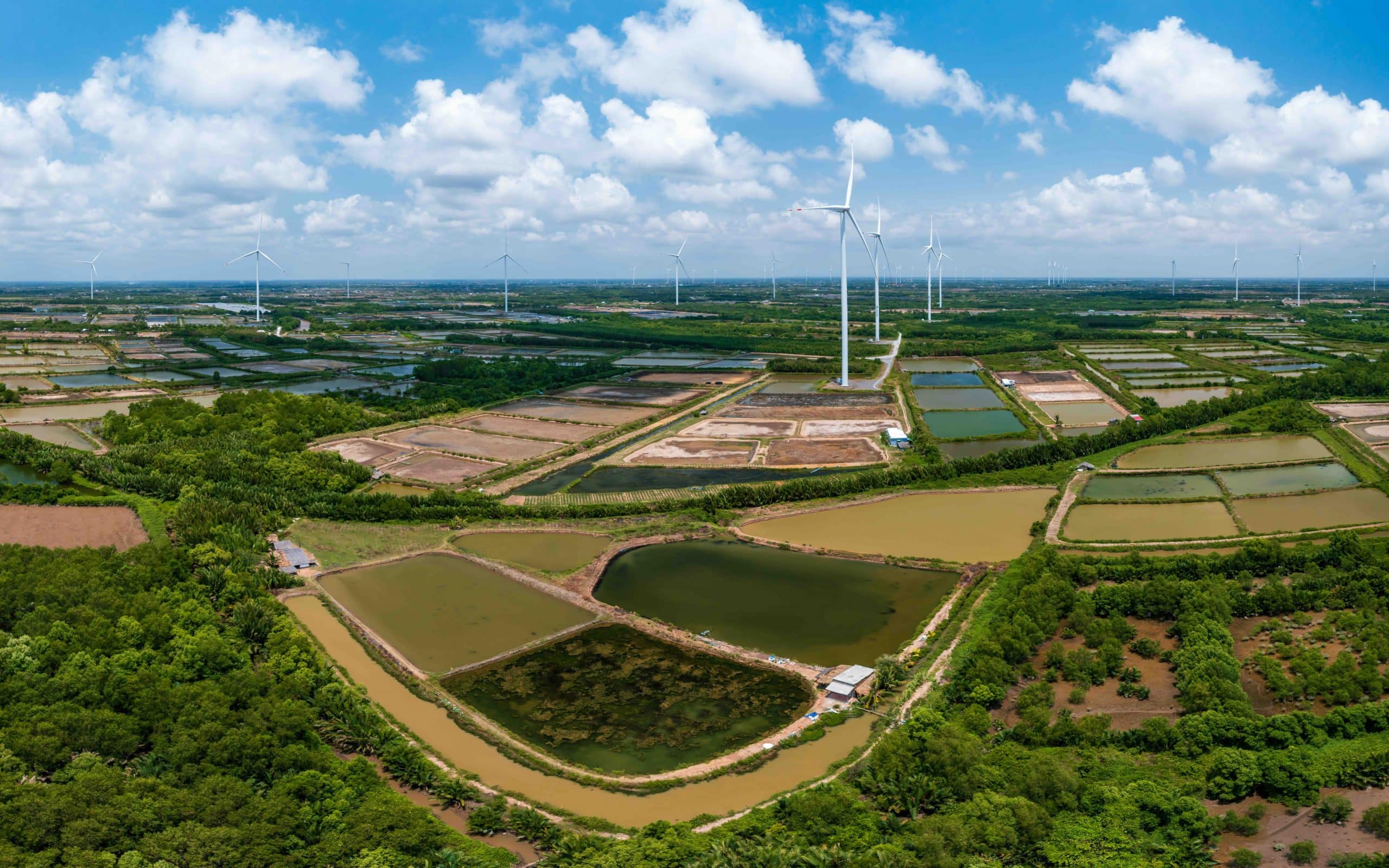
A marvel on the coastal waves
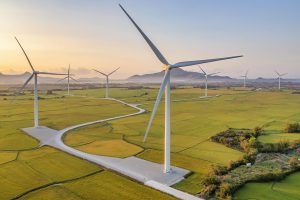
My memories of Vietnam’s West include leaning coconut groves and intricate networks of canals. But upon returning to this coastal region, I was astonished to see that a modern marvel has emerged on the Western Coast, stretching across the sea’s surface and creating novel visual highlights. In nearshore wind farms, pristine white turbine towers stand in rows, reaching high amidst the vast sky and water. These structures are clearly visible along the coasts of the former Bac Lieu province (now part of Ca Mau province), Tra Vinh, and the former Ben Tre (now part of Vinh Long province), helping to shape a new natural landscape in the Mekong Delta.
For me, views of the West’s nearshore wind farms served as a unique source of inspiration. Unlike the tranquil beauty of the sea and sky, the turbine towers create a rhythm of ceaseless movement. Seen from shore, the rows of slender white turbines stand out against the reddish-brown, alluvium-rich sea. As the blades spin steadily in the wind, drawing circles against the sky, they create a strong rhythm that makes the scene feel full of motion.
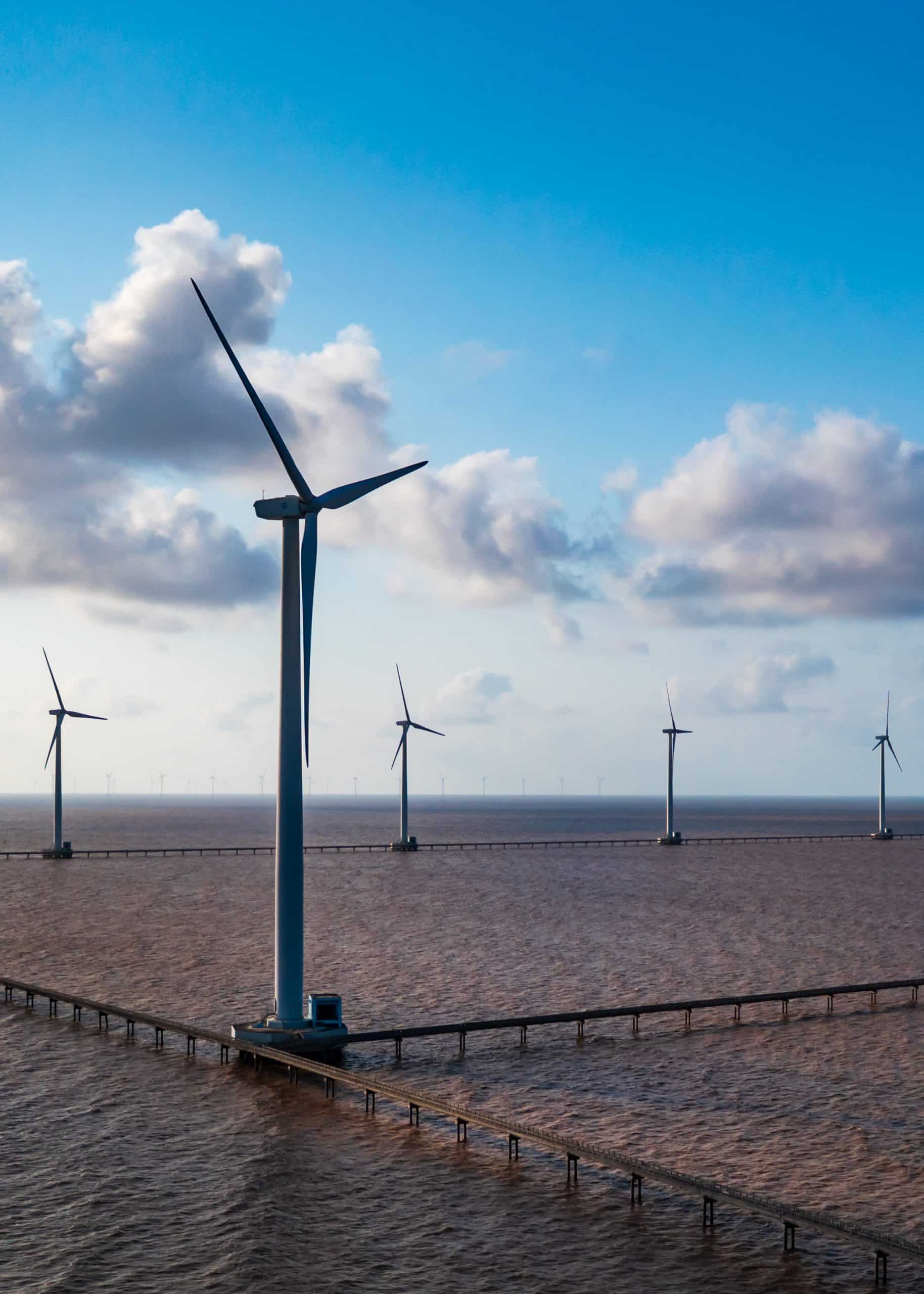
The allure of these wind farms lies in their overwhelming scale, which struck me as I stood at the foot of the soaring steel pillars. The sight was especially amazing as dawn broke over the sea. Under the brilliant golden sun or in the reddish-violet of dusk, the shimmering turbine towers appeared magical, like a giant army guarding the coast. The wind whistling through the blades blended with the murmuring waves, creating a sound unlike the familiar rhythm of the sea. Gazing out at nearshore wind farms in the West, I felt as if I were standing before a majestic landscape, where engineering structures emerge amid the vast sea.
The presence of these wind farms has opened up a different way of perceiving the harmony between humans and nature. Each turbine tower is an energy-harvesting machine that also serves as an artistic focal point, bringing this sea region to life. Standing before the slow, steady rotations, I breathed in the salty sea breeze while taking in the full beauty of a coastal region that is changing every day. It was a striking experience, marking the West’s vigorous transformation toward sustainable development.
Green winds on the Western Sea
Hidden behind the beauty of these white blades lies the story of the Southern Coast’s transformation. With sea breezes blowing day and night, this region has significant potential for sustainable energy development. The nearshore wind farms not only beautify the scenery; they also operate as giant “green factories,” converting an abundant natural resource into a stream of clean energy. Harnessing wind to generate electricity harmonizes economic development with environmental protection, advancing Vietnam’s goal of achieving net-zero emissions by 2050.
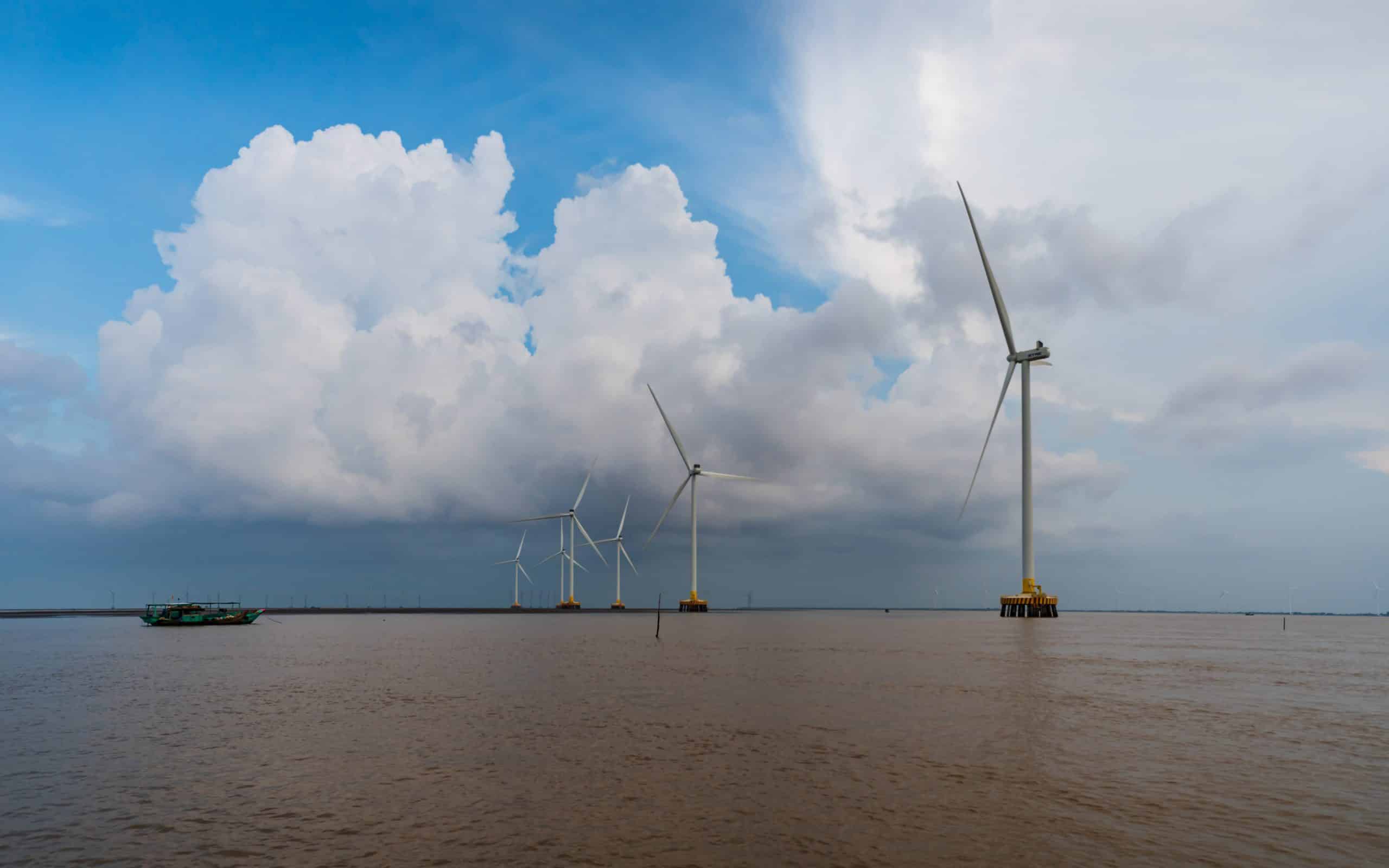
The transition to clean energy is imperative as climate change increasingly impacts the Mekong Delta. Instead of relying on traditional fossil fuels, developing wind power helps reduce carbon emissions and opens up more space for green growth. Besides harvesting wind energy, the turbine towers rising over the sea also open up an avenue for exploratory tourism associated with clean energy facilities. These are new destinations on the West’s tourism map. I realized that people come not only to admire a marvel but also to see how this land is adapting and preserving its living environment, while standing on the boundary between nature and technology, where the sea breeze is “seen” through giant rotations.
In reality, wind power projects along the coast are changing local life and the economy. The clean electricity is integrated into the national power grid, contributing to a stable energy supply. Renewable energy projects also unlock additional employment opportunities, services, and new tourism ventures for coastal communities.
In the coming years, nearshore wind power projects in the West are expected to continue expanding, connecting into a clean energy corridor along the coast. This process demands significant investments in technology and resources, as well as an approach that harmonizes with the coastal ecosystem. Every rotation of these white blades evokes a changing West: more modern, more vibrant. Wind energy is a crucial resource for Vietnam’s green development trajectory, helping position Vietnam on the global clean energy map.