
Discover the violent history and opulent beauty of Saint Petersburg’s most famous building, the Winter Palace
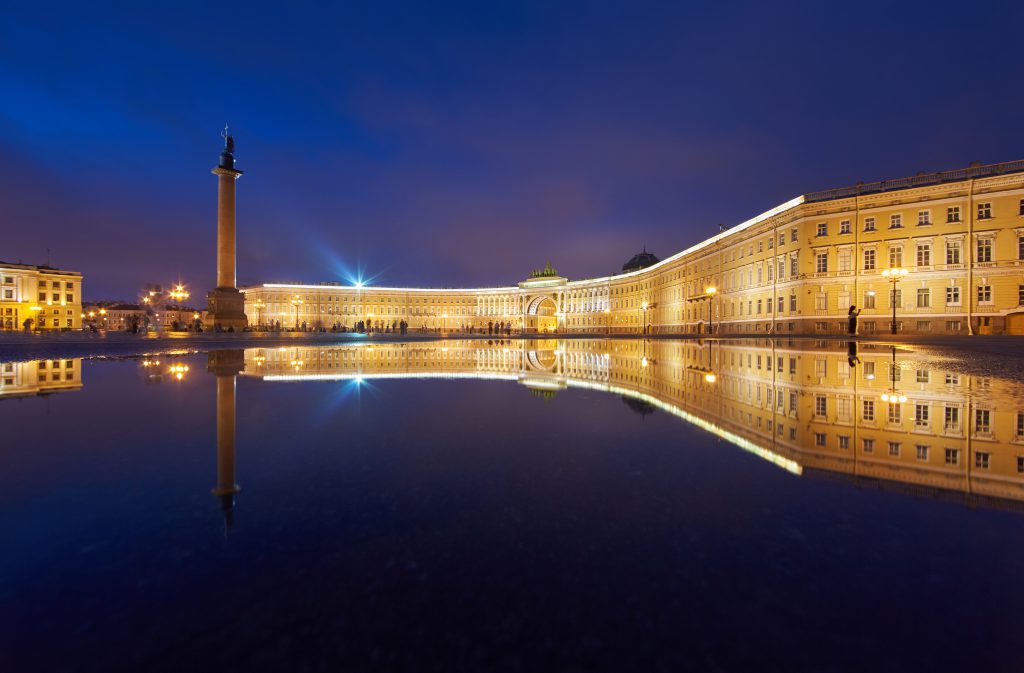
In Saint Petersburg, a city known for its rich culture and architectural beauty, the Winter Palace stands out. Set on the bank of the Neva River, this massive palace is a marvel of Baroque architecture. From the late 1700s until 1917 the Winter Palace was the official residence of the Russian monarchs. The palace was built on a massive scale to symbolize the power of the Russian Tsars, who ruled more than 125 million subjects by the end of the 19th century. The palace reportedly features an astonishing 1,786 doors, 1,945 windows and 1,057 opulent halls and rooms. Today, many of these rooms are open to the public.
Standing three-stories tall and painted in pale green and white, the Winter Palace now serves as the main building of the Hermitage Museum. This world-famous museum is home to more than three million artefacts and art works from around the world. In rooms shining with gold leaf and crystal, visitors can marvel at masterpieces by many of history’s greatest artists, including Leonardo da Vinci, Michelangelo, Raphael, Rembrandt, Renoir, Cezanne, Manet, Monet, Van Gogh, Matisse, Gauguin and Rodin – to name just a few.
Along with artworks, the Hermitage houses a mind-blowing collection of ancient treasures including 18-19th century gold and jewels, coins and archeological finds from places like Egypt, Iran, China, Tibet, and Japan. Visitors should also make time for the halls of Russian culture and history, which provide a good introduction to Russian art. It’s said that if you spent just one minute gazing at every item in the Hermitage you’d need 11 years to see the whole collection! Occupying the Winter Palace and four more buildings along the bank of the Neva, the Hermitage is the largest museum in Russia and one of the most famous museums in the world.
The present Winter Palace is actually the fourth palace to be built on this site. The first Winter Palace was designed in 1711 for Peter the Great, who, in a drive to Westernize Russia at the end of the 17th century, ordered the creation of a new city – Saint Petersburg. The first Winter Palace was in reality just a log cabin. Peter the Great had a grander house built there in 1711, which in turn was replaced by the third Winter Palace in 1727. Compared to the palaces in other European capitals, this building was relatively small and simple. The palace that stands today was designed by Bartolomeo Rastrelli and built between 1754 and 1762.
The current Winter Palace is most closely associated with the widow of Emperor Peter III, Catherine the Great, who succeeded him in 1762. Following her husband’s murder in a coup, Catherine the Great paraded her young son, Paul, on the Winter Palace’s balcony, then took control of the kingdom. Almost all of the subsequent Romanovs lived there, the last being Alexander II, who ruled from 1855 until he was assassinated in 1881. The Winter Palace was then deemed too unsafe and the royal family moved to the secluded Palace of Gatchina, about 45 km south of Saint Petersburg. In 1905, unarmed demonstrators were fired upon as they marched towards the Winter Palace to petition the emperor. Known as “Bloody Sunday” or “Red Sunday”, this event sparked nationwide outrage and is considered one of the key events leading to the Russian Revolution in 1917.

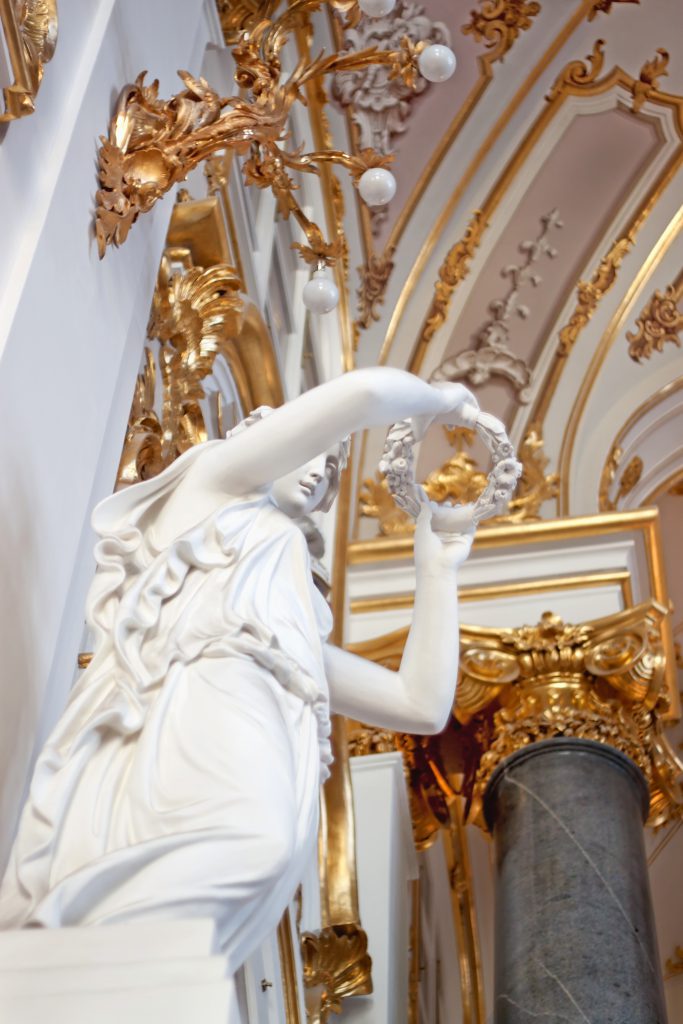
Today the Hermitage welcomes more than three million visitors a year, with about 3.8 million in 2025. Entering the splendidly ornate halls it’s easy to imagine the lavish royal parties once held here, when visiting dignitaries gazed in awe at the intricate and expensive decorations. The State Gala Staircase is covered by a red velvet carpet and decorated with giant mirrors, sculptures, frescoes and gilded wood carvings. Be sure to peek into the Small Throne Room, created for Tsar Nicholas I in 1833. After a fire destroyed most of the Winter Palace in 1837 this room was recreated exactly as it was previously. The walls are lined with crimson velvet adorned with embroidered silver double-headed eagles. Covered in silver gilt, the throne itself sits in a recessed alcove.
On the third Thursday of each month, entry is free for visitors under 18 and students. For ticketing information about the Winter Palace and Hermitage go to www.hermitagemuseum.org.
Frequently asked questions about the Winter Palace
Is the Winter Palace still standing?
Yes. The Winter Palace was damaged during the Siege of Leningrad in 1941–1944 and was later fully restored. Today it is the main building of the State Hermitage Museum in Saint Petersburg.
What is inside the Winter Palace?
The palace houses the main collections of the Hermitage, from paintings by Leonardo da Vinci, Rembrandt and Matisse to ancient treasures from Egypt and Asia. State rooms such as the State Gala Staircase and the Small Throne Room keep their imperial decoration.
Who lived in the Winter Palace?
The Winter Palace was the official residence of the Russian monarchs from the late 1700s until 1917. Catherine the Great made it her home, and after Alexander II was assassinated in 1881, the royal family moved to the Palace of Gatchina.
Why was the Winter Palace built?
It was built on a massive scale to show the power of the Russian Tsars. The present palace, designed by Bartolomeo Rastrelli and completed in 1762, is the fourth Winter Palace on this site.