Huynh Phuong
As southern Vietnam prepares to enter the rainy season, it’s time to prepare for a new crop. This is when the Khmer community celebrates the New Year, or Chol Chnam Thmay.
Vietnam is home to more than 1.3 million Khmer people, accounting for 1.37 percent of the country’s population, mostly concentrated in the Southern region. Chol Chnam Thmay is the largest and most eagerly awaited festival of the year for Khmer people. In Khmer, Chol means “to enter,” and Chnam Thmay means “new year”, so the celebration is also known as the “Festival of Entering the New Year”. This year’s Khmer New Year celebrations span three days, from April 14 to 16.
A time of reunion
As their New Year approaches, Khmer families save money, decorate their homes and Buddhist altars, buy new clothes, and prepare two indispensable cakes, banh tet and banh it, which symbolize warmth and abundance.
Throughout the year, every child has likely upset their parents at some point. During the New Year reunion meal, the eldest child typically speaks on behalf of their siblings, offering thanks, asking forgiveness for past mistakes and shortcomings, and wishing their grandparents and parents good health and a long life with their descendants.
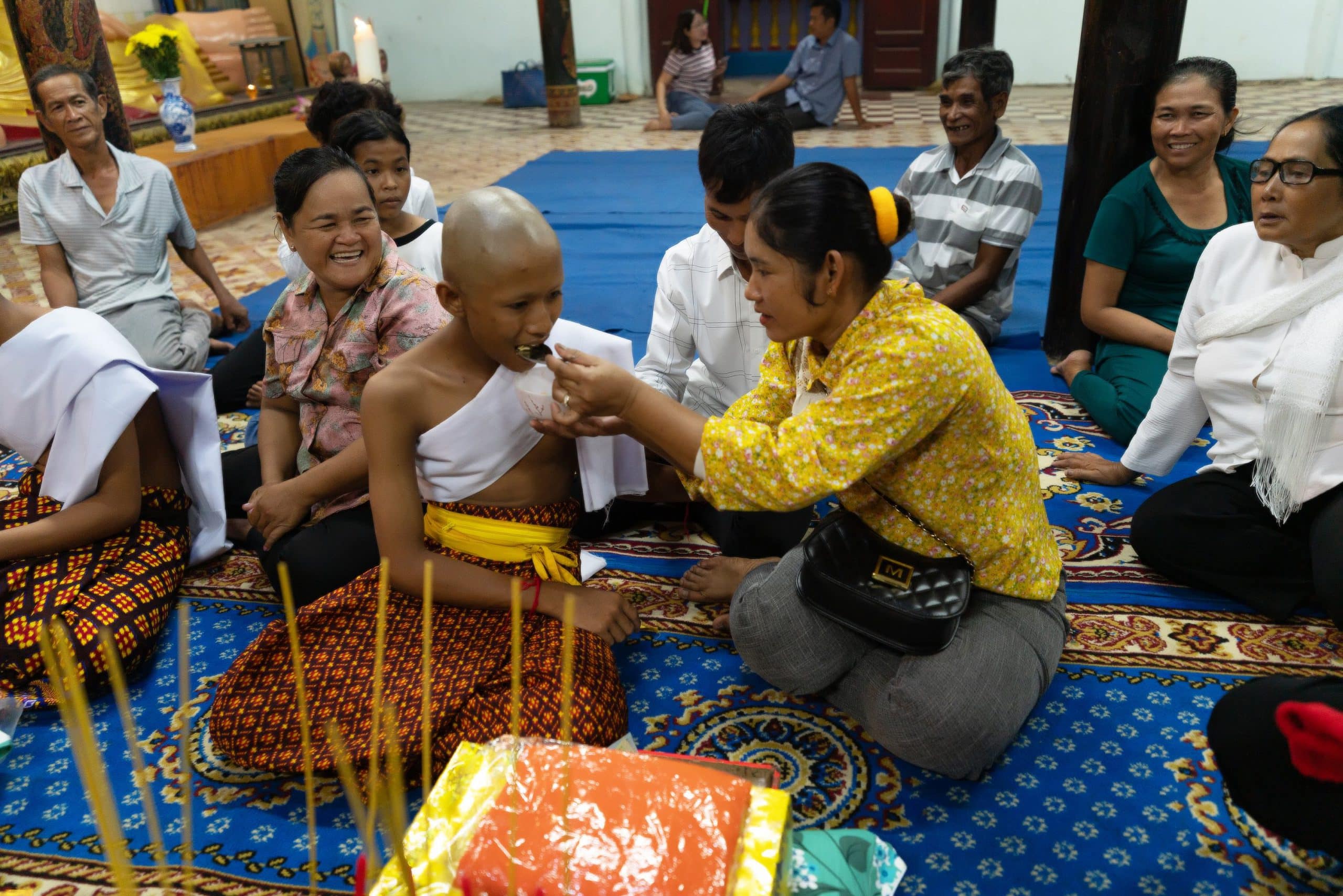
During Chol Chnam Thmay, some families send their adolescent sons to the pagoda for a period of monastic study so they may grow into mature and thoughtful adults. The young novice has his head shaved, exchanges his trousers for a sarong, and replaces his shirt with a white cloth draped over his shoulder from left to right, symbolizing his renunciation of worldly life.
For Khmer communities, the local pagoda forms the center point of their faith, cultural activities, festivals, and New Year celebrations. Upon entering any Khmer pagoda in southern Vietnam during Chol Chnam Thmay, visitors will find a lively atmosphere. Well-known examples include Candaransi and Pothiwong pagodas in Ho Chi Minh City, as well as Doi Pagoda, Som Rong Pagoda, Kh’leang Pagoda, and Chroi Tum Chas Pagoda in Can Tho.
As drums accompany lam thon dances, bursts of laughter echo through the hamlet, and visitors delight in folk games such as tug-of-war, flour-throwing, and blindfolded pot-smashing, all of which test participants’ strength and agility. Travelers are also captivated by young Khmer men and women dressed in vibrant traditional attire. This is the perfect occasion to enjoy traditional musical performances and the distinctive sound of five-tone ensembles.
According to Venerable Hoang Dat, a monk studying at Doi Pagoda, the week before the Khmer New Year is the busiest at the temple. The monks trim ornamental trees and erect and decorate the stage so local people can gather to celebrate, sing, and have fun.
On New Year’s Eve, families gather to prepare an outdoor altar, light incense and candles, and offer cakes, flowers, and fruit to bid farewell to the old Tevoda deity and welcome the new one, hoping to receive blessings. They believe that Tevoda descends from heaven to care for the people for one year, after which a new deity replaces them.
Unique rituals
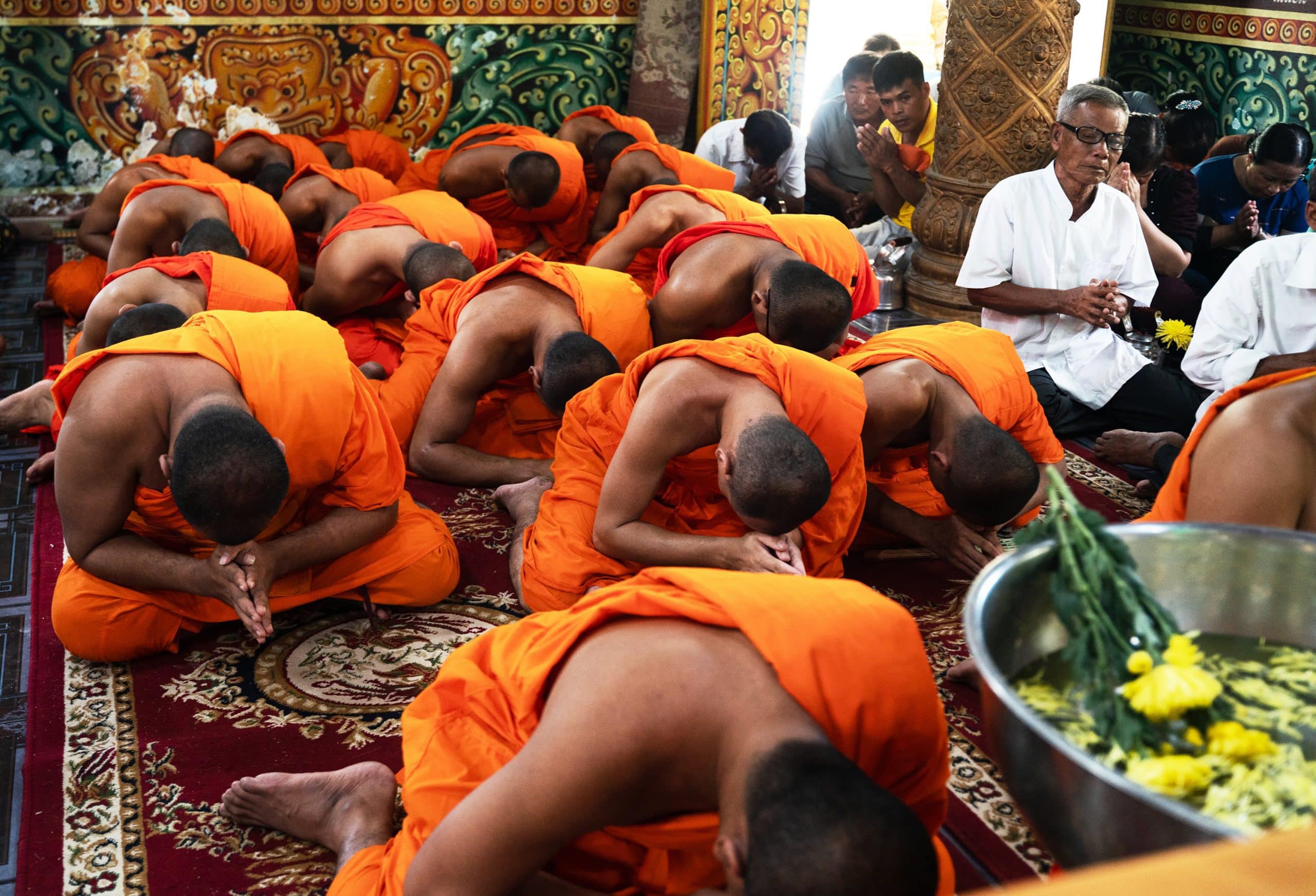
The first day of the Khmer New Year is called Chol Sangkran Thmay. On this day, people choose the most auspicious hour, bathe and dress in new clothes, go out to celebrate, and bring incense and candles to the pagoda for a ceremony to welcome the New Year calendar, known as Maha Sangkran. Under the guidance of an Achar, a respected figure who serves on the pagoda’s management board, people walk around the main sanctuary three times to welcome Tevoda and ask for protection and blessings, marking the arrival of the New Year for the Khmer community.
The second day of the festival is called Wonbof. Early in the morning, people offer meals to the monks. In the afternoon, they build ritual sand mountains, known as Puon phnom khsach, within the pagoda grounds in the hope of receiving good fortune.
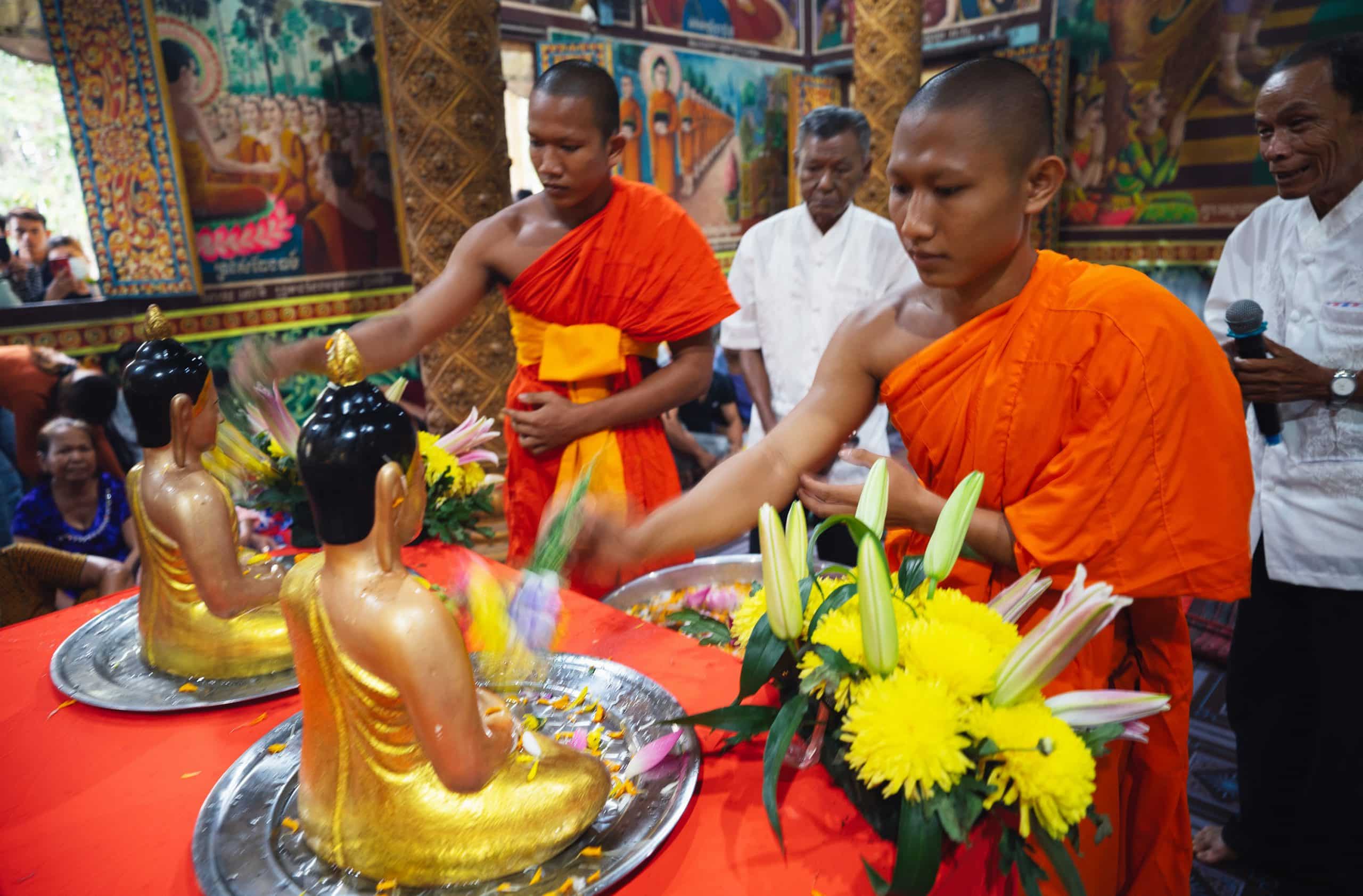
The ritual of bathing the Buddha is held on the third day of the festival. Monks use chrysanthemums to sprinkle scented water onto the Buddha statue. According to Khmer beliefs, the water used in this ritual is sacred, carrying prayers and heartfelt wishes for goodness and peace. In addition to bathing the Buddha statue, some pagodas also perform a bathing ritual for elderly monks. After this ceremony, the monks are invited to stupas containing ashes to conduct the Bangskol chanting ritual for deceased relatives.
The traditional Khmer New Year is an occasion for people to learn about kindness, compassion, and mutual support. Khmer civil servants, public employees, members of the armed forces, and workers are granted three days off for this celebration. It is a precious opportunity for those living far from home to return and reunite with their families in a joyful atmosphere, while also helping preserve and promote the cultural identity of the Khmer community.