An Binh – Nguyet Minh – Minh Nguyet
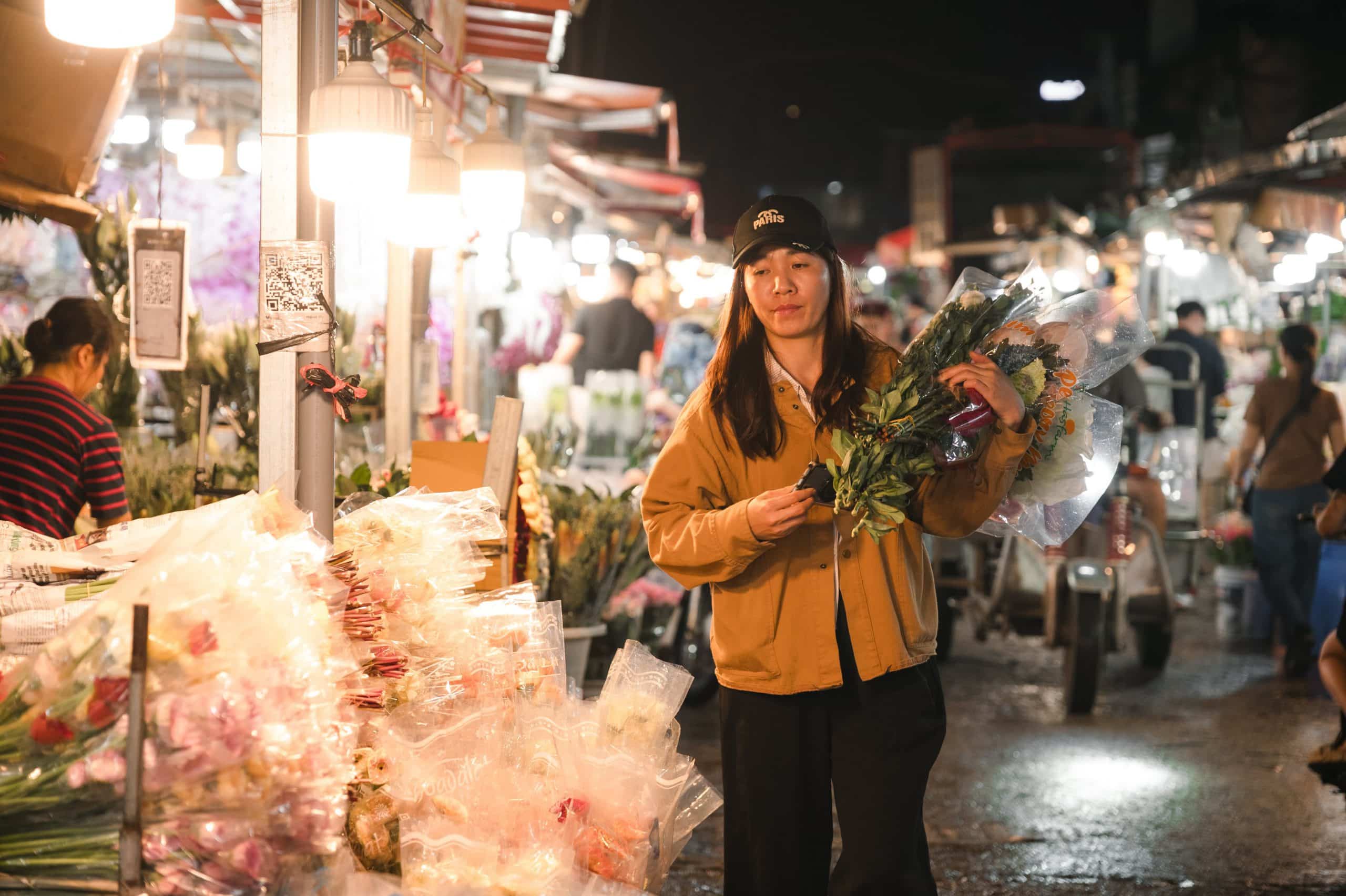
When Hanoi falls asleep, another rhythm of life begins at Quảng Bá Flower Market. Beneath the flickering night lights, trucks filled with flowers move in and out, while vibrant colors blend into the stillness of the night, creating an atmosphere that is both lively and poetic. Though not widely known as a tourist destination, the night flower market has gradually become a unique experience for many visitors. Here, they can touch the authentic rhythm of Hanoi’s daily life and discover a cultural beauty hidden within the simplest moments.
While most of the capital sinks into sleep, amidst the quiet darkness of the city there remains a space glowing with lights and flowers. That place is Quảng Bá Flower Market, a night market rarely mentioned in most travel guidebooks, yet it is slowly becoming a “hidden gem” for travelers seeking authentic local experiences.
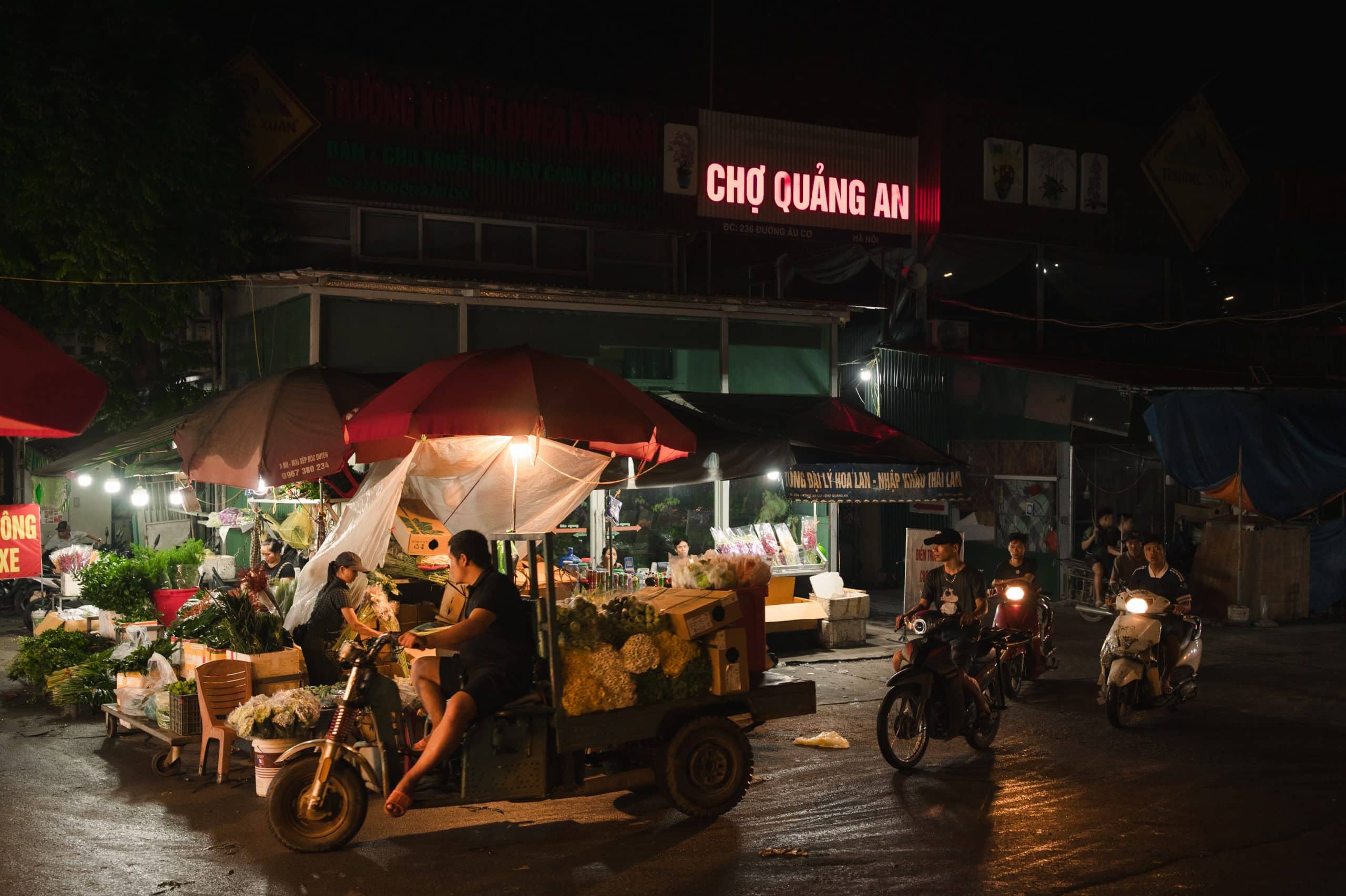
Located at 236 Au Co Street, Tay Ho District, Hanoi, Quang Ba Flower Market has long been known as one of the largest and most famous wholesale flower markets in the capital. The market starts becoming lively from around 11 PM and reaches its busiest hours between 2 and 3 AM, when trucks carrying flowers from major flower-growing areas such as Tay Tuu, Me Linh, Da Lat, and nearby provinces continuously arrive. To fully experience the beauty of these “flowers in the night,” visitors can park along the roadside near the market or at nearby temporary parking areas before wandering through the vibrant rows of flower carts glowing under the night lights.
A “Unique” Experience for Visitors
Unlike conventional tourist attractions designed specifically for travelers, the night flower market exists first and foremost as part of Hanoi’s everyday life. Ironically, it is this authenticity that fascinates many visitors. They do not come here on guided tours or for staged experiences, but rather step into the market on their own as a way to connect with the genuine lives of local people.
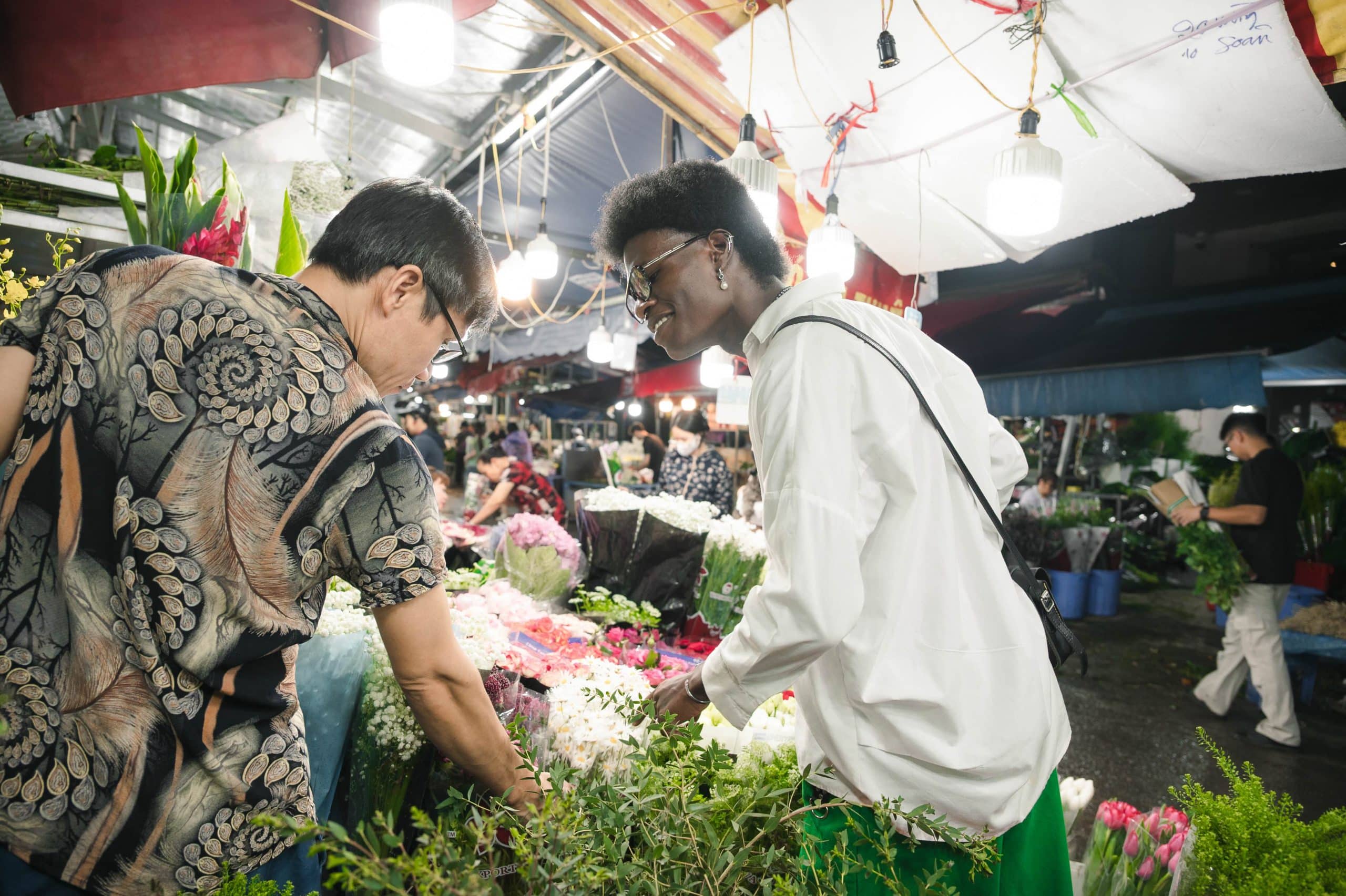
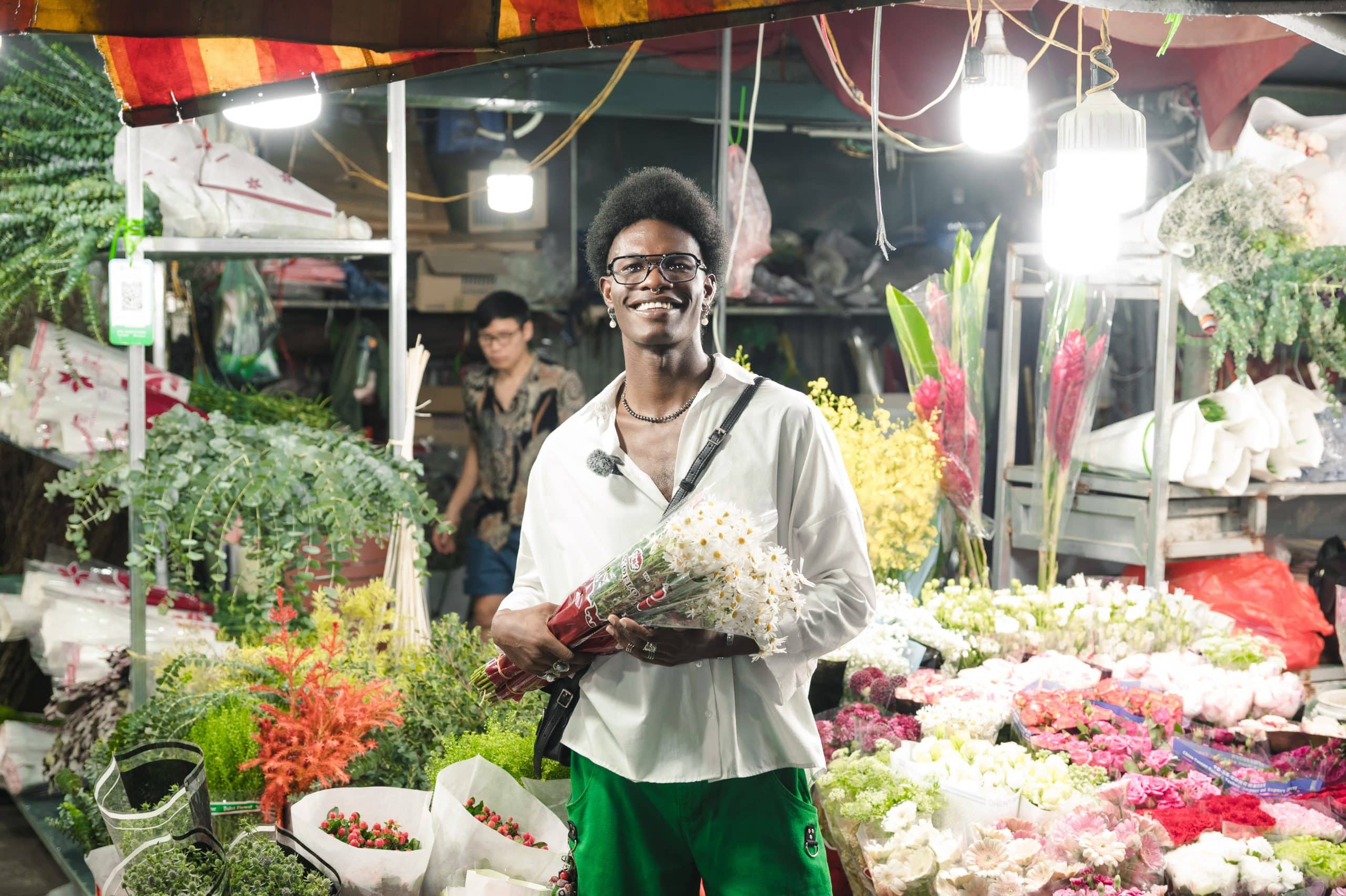
Stellio, a visitor from France currently living and working as a model in Vietnam, said he discovered Quảng Bá Flower Market completely by chance through a student friend’s recommendation. After spending nearly a year in Hanoi and visiting most of the city’s famous attractions, he began searching for places that felt “less touristy” in order to experience the local lifestyle more deeply.
“I really love places like this, places that are not made specifically for tourists but truly reflect the daily rhythm of local life,” Stellio shared.
For Stellio, the idea of a flower market remaining bustling at 2 or 3 a.m. is almost unimaginable in France, where flowers are mainly sold during the daytime. Therefore, experiencing Quảng Bá Flower Market at midnight felt incredibly new and refreshing to him. He spent time wandering around, taking photographs, and enjoying the atmosphere.
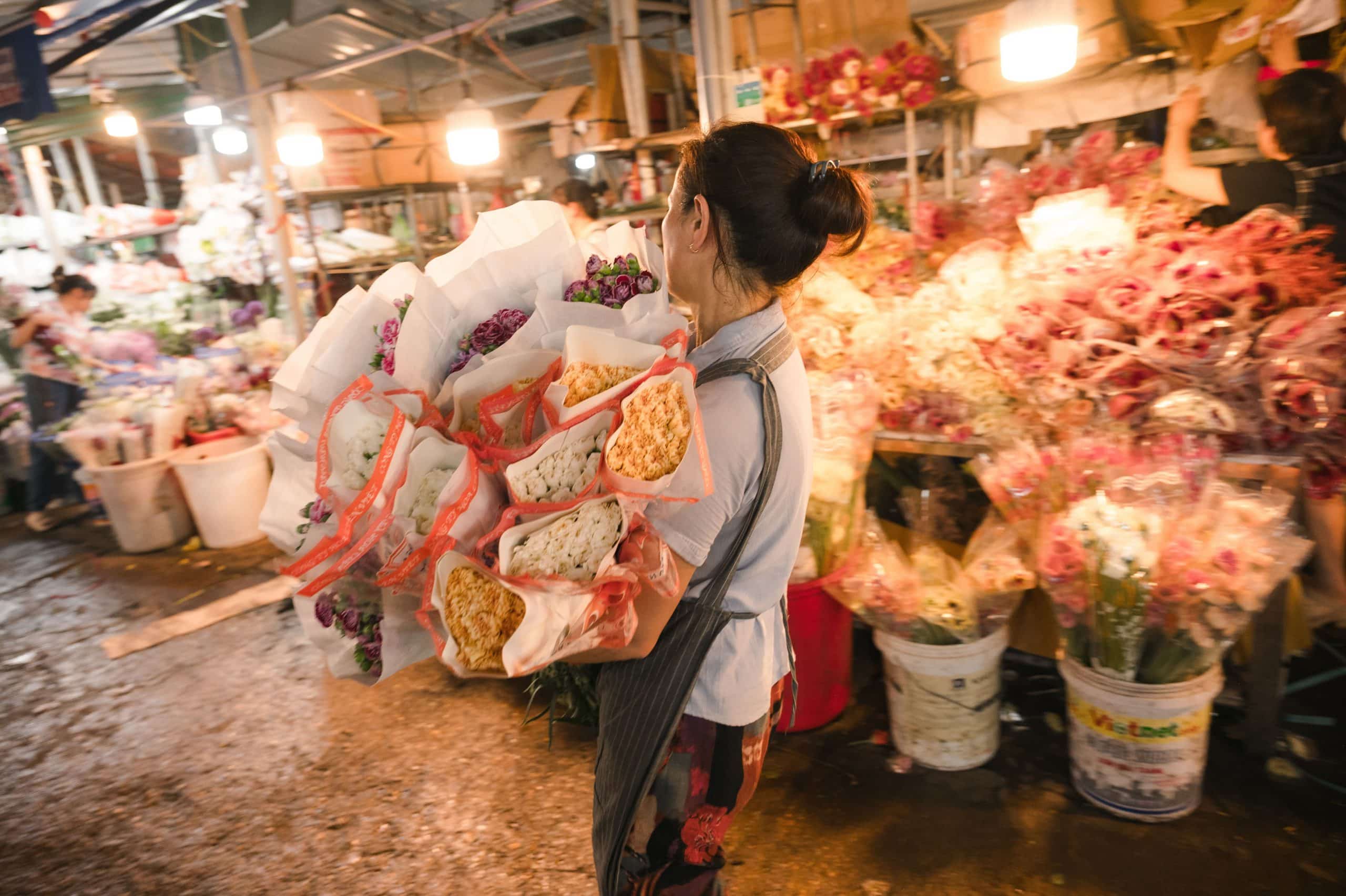
“For me, this is not only a memorable experience, but it also reveals another side of Hanoi, a city that is attractive not only because of its heritage and cuisine, but also because of the vibrant everyday life hidden behind the night.”
For many visitors, the experience goes beyond simply exploring a market. It feels like stepping into a slice of Hanoi’s identity, where beauty lies not in famous landmarks, but in the poetic simplicity of local daily life. At that moment, the “colors of flowers in the night” become more than just a visual image – they become an emotion that Hanoi leaves in the hearts of those who visit.
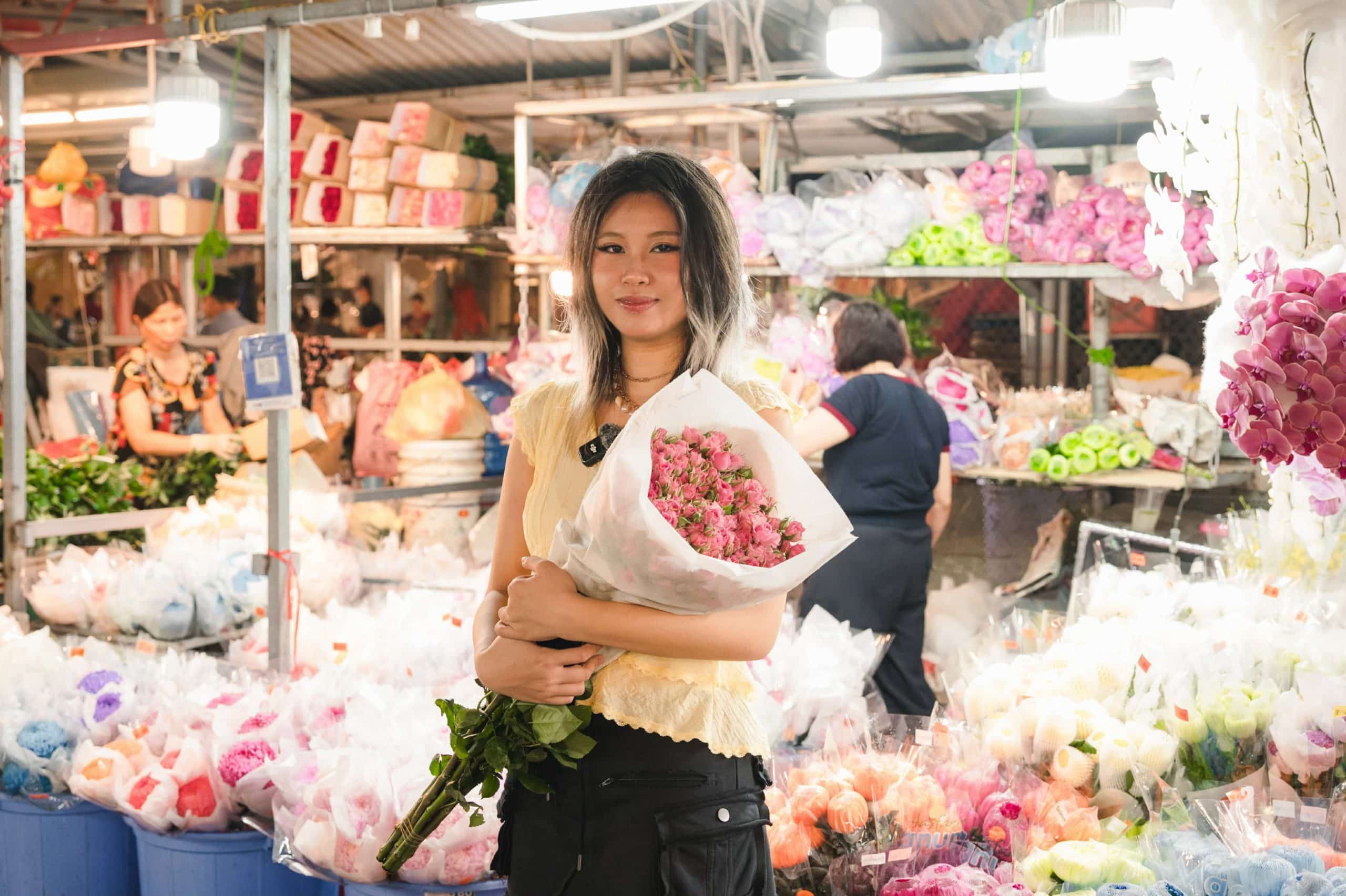
Thanh Mai, a young visitor from Bắc Ninh, shared that she came to Quảng Bá Flower Market after moving into a new home, hoping to buy flowers to make the space feel warmer and more welcoming.
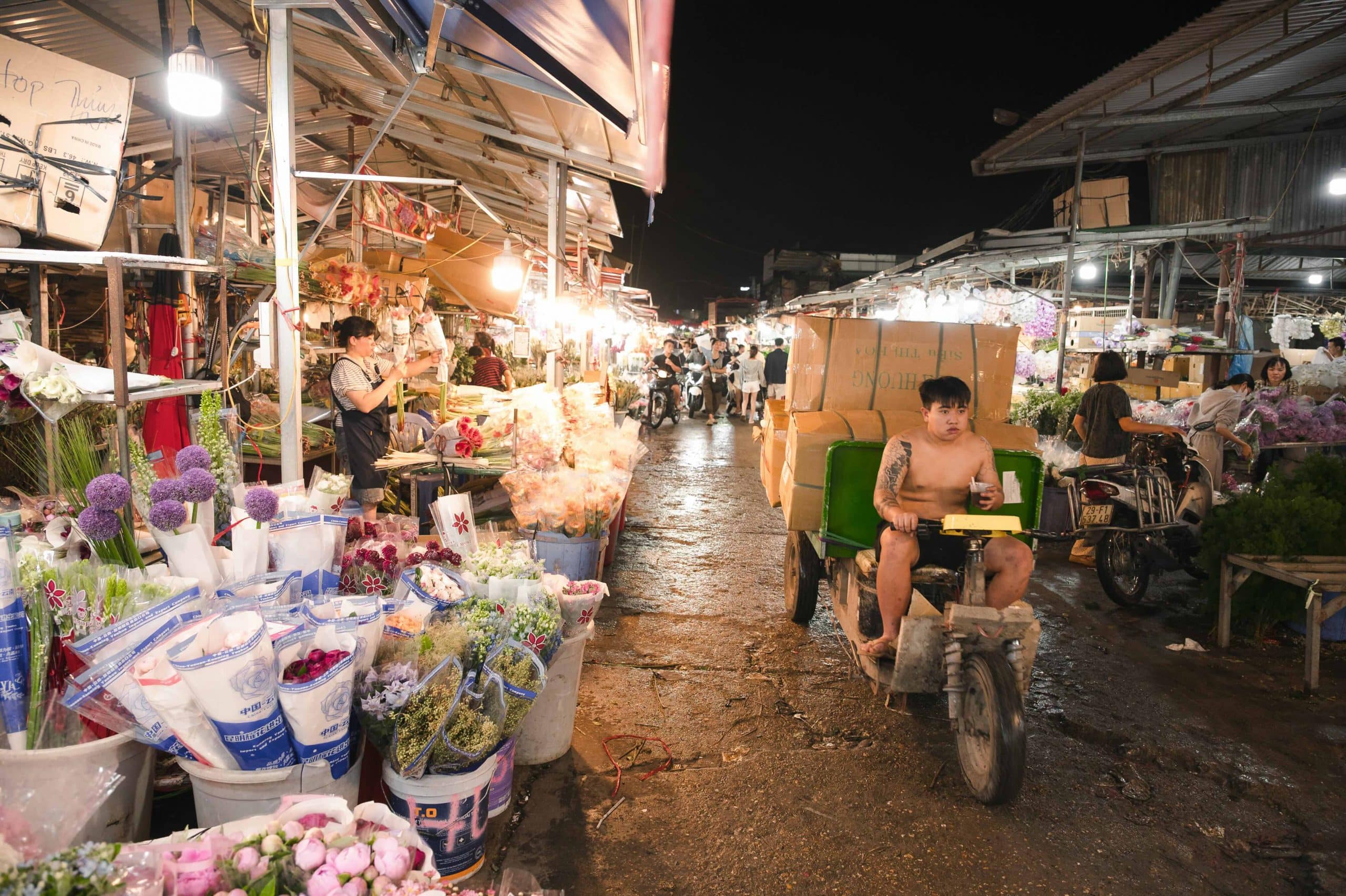
“I recently moved to Hanoi to study, so I learned about the market through friends. I think having a flower market open at night is very convenient for young people like me because during the day I’m busy studying and working, and only at night do I have free time to walk around and choose flowers. It wasn’t until I came here myself that I realized how lively the market is at night, such as flower trucks constantly moving in and out, crowds everywhere, and such a different feeling compared to daytime.”
Mai also expressed her hopes for the future: “I think it would be wonderful if more tourists knew about this place, because it represents such a unique aspect of Hanoi’s daily life that cannot easily be found elsewhere.”
An Everyday Cultural Space of Hanoi
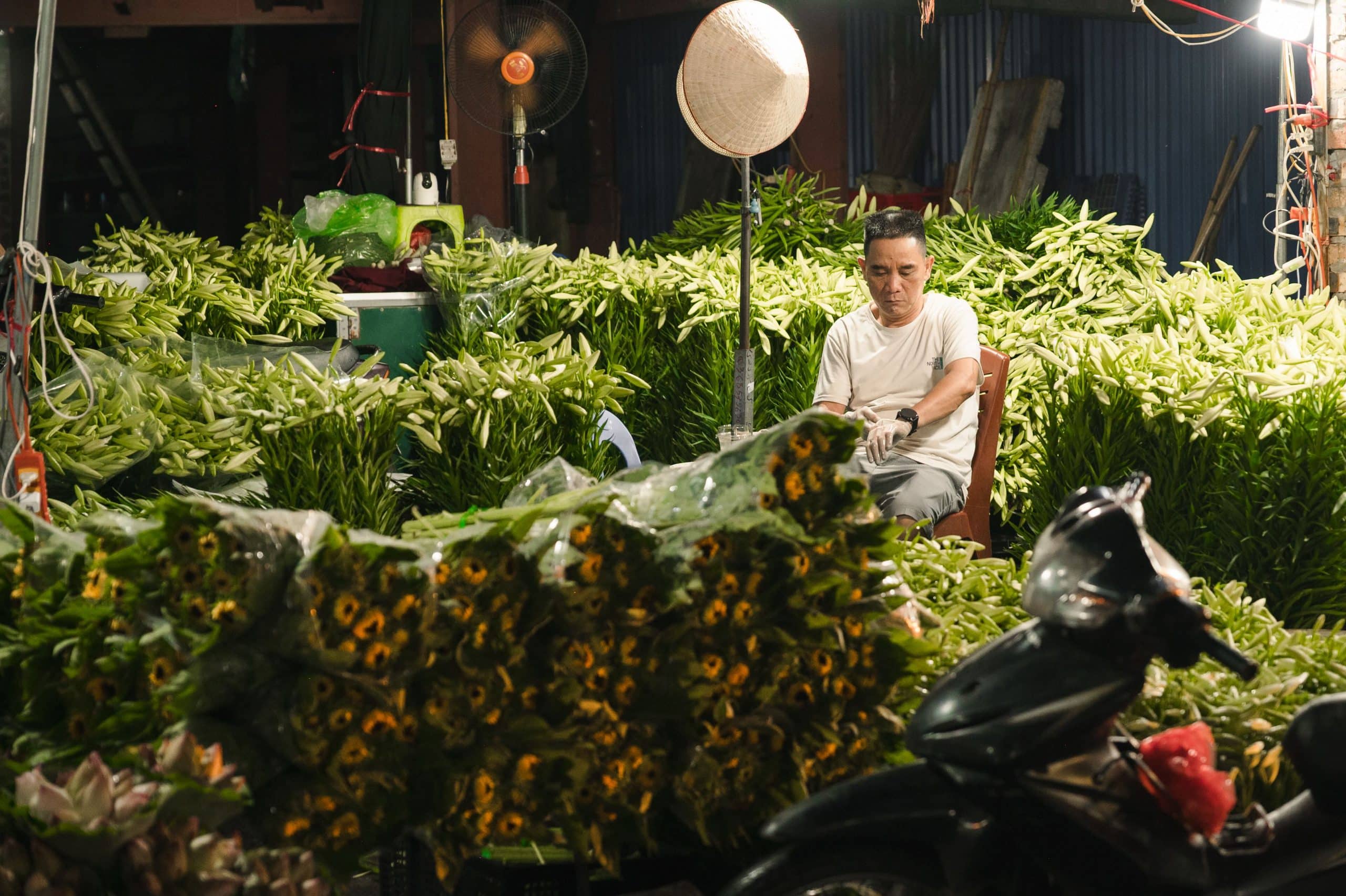
For many Hanoians, Quảng Bá Flower Market is more than just a trading place, it has become an essential part of the city’s rhythm of life. The market is considered the “source” of Hanoi’s flower trade, where trucks carrying flowers from major flower-growing regions arrive throughout the night before spreading across shops and streets as the new day begins.
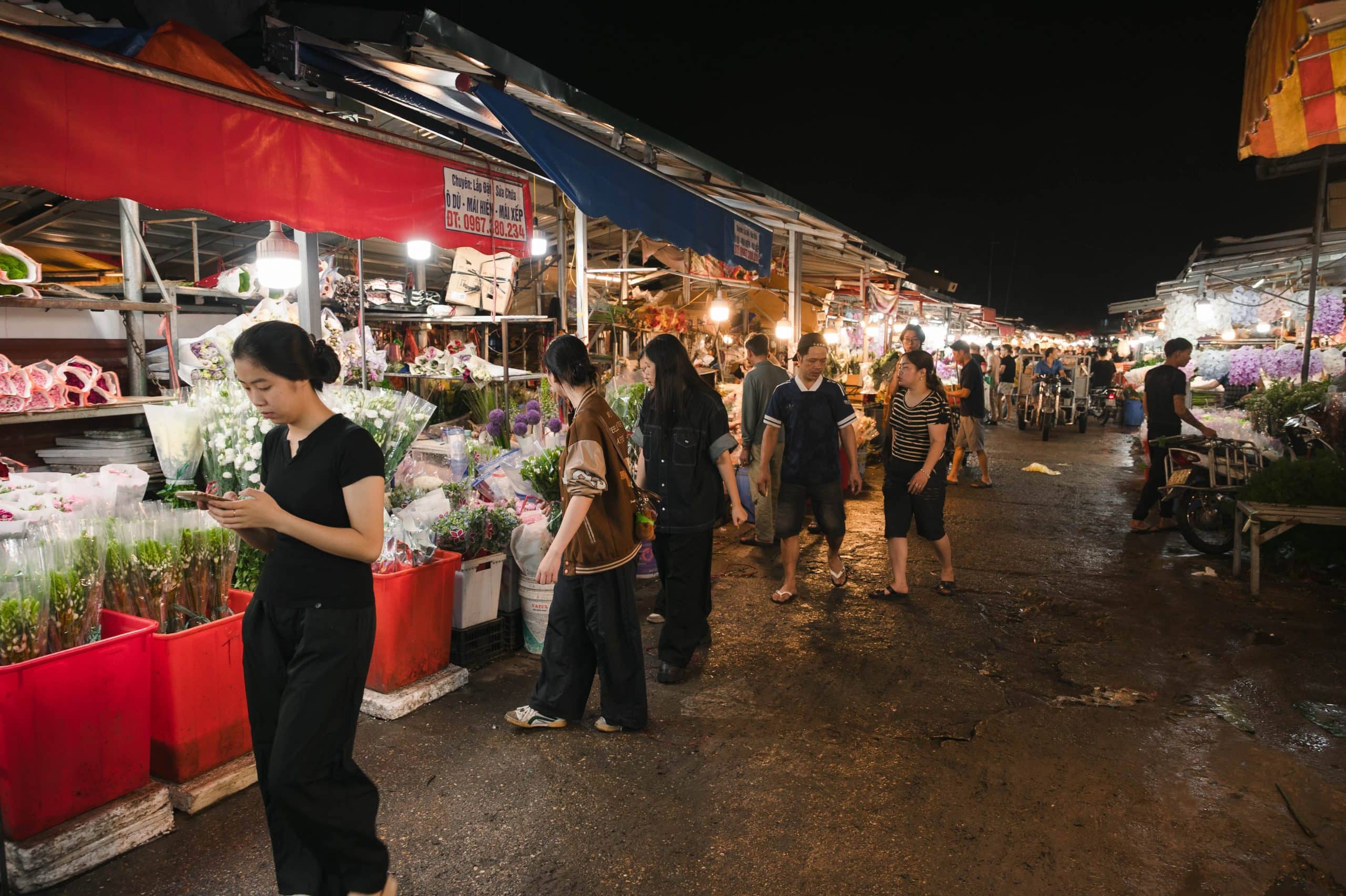
Beyond commercial activity, the market is also a familiar destination for local residents seeking the freshest, most beautiful flowers, including rare varieties not commonly found in ordinary markets. Many believe that to find the best flowers, one must arrive very early, around 1 or 2 a.m. because only a few hours later, as the city awakens, the market gradually quiets down and the finest flowers have already dispersed throughout Hanoi.
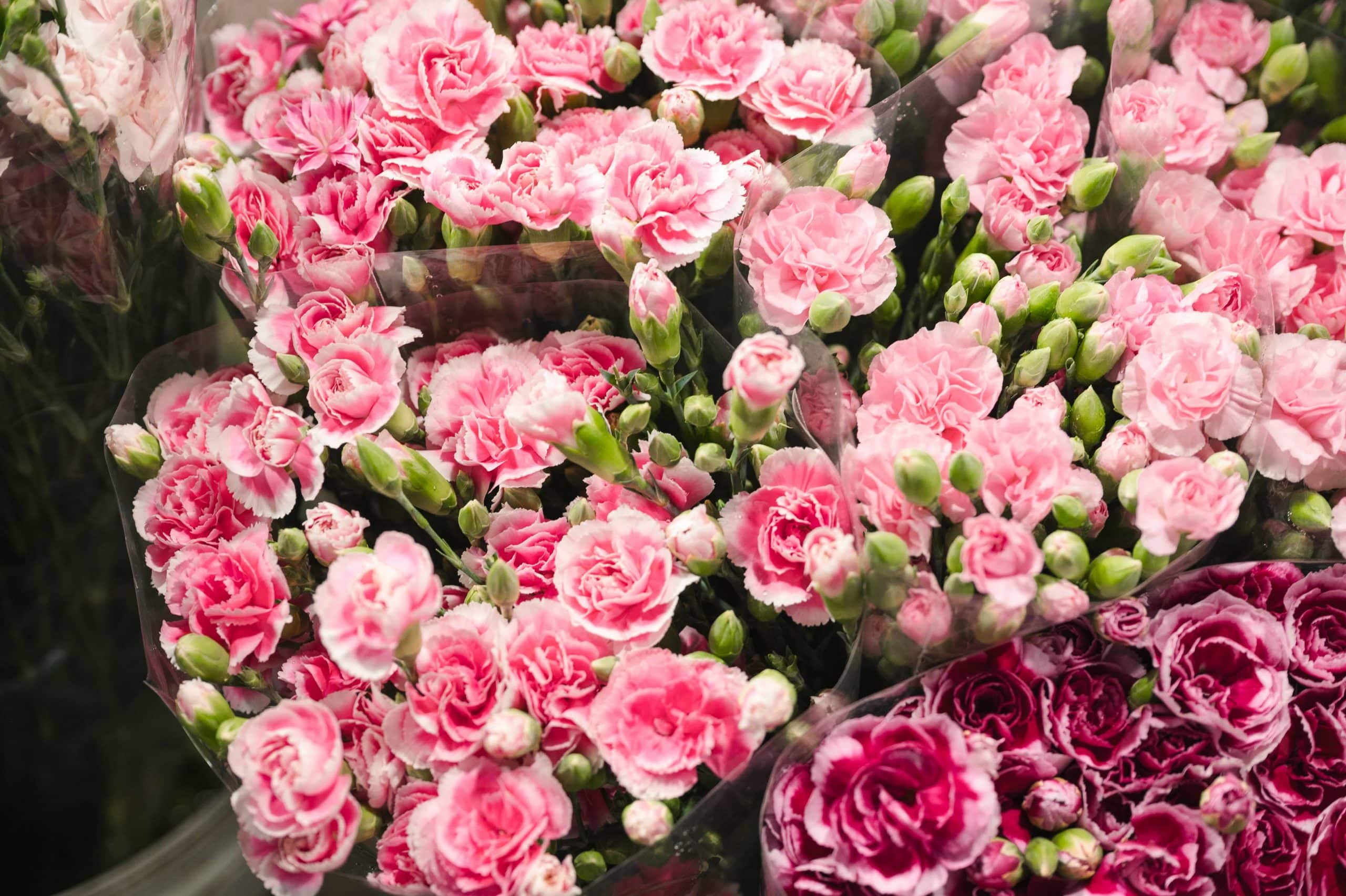
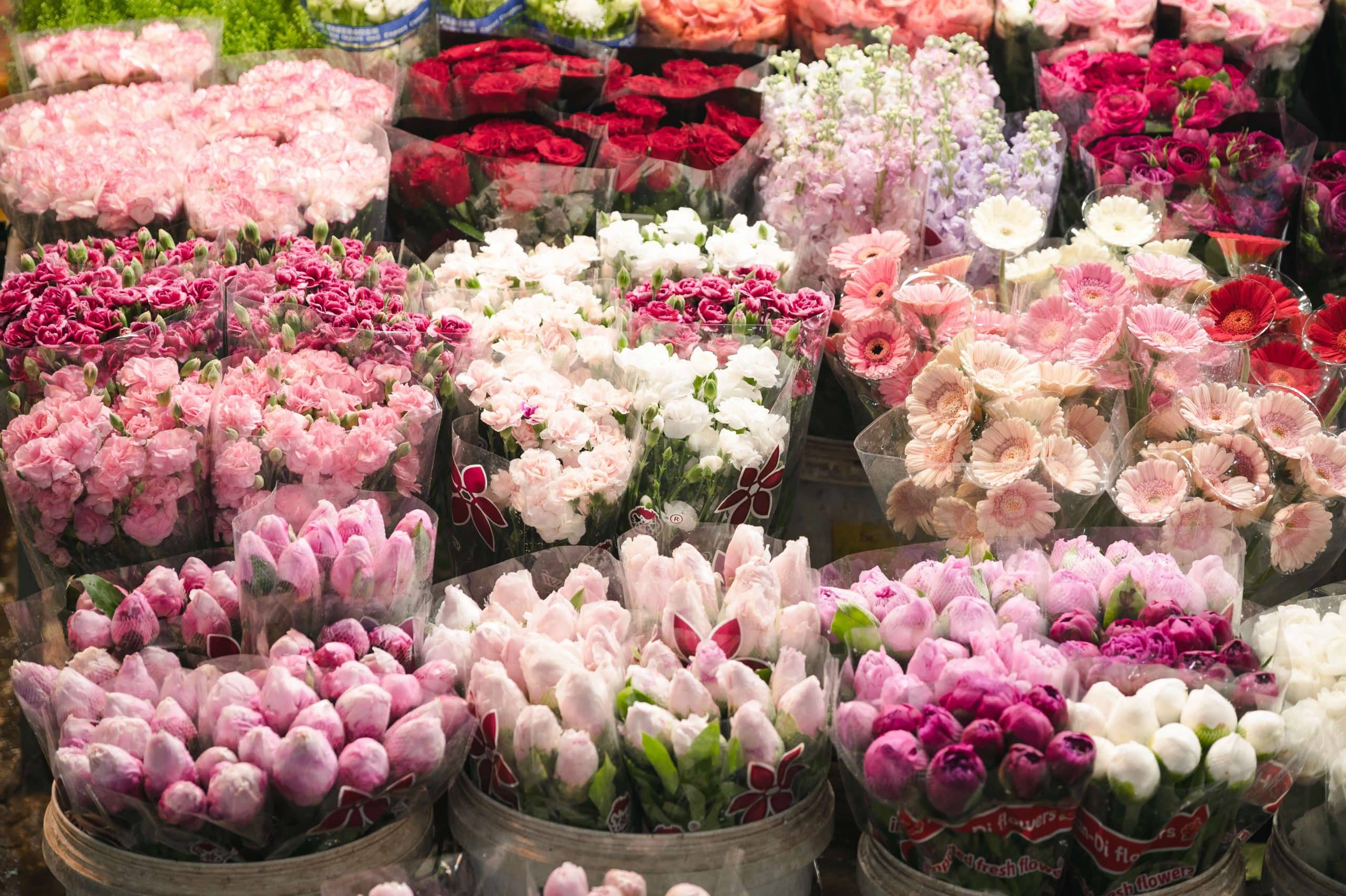
For seasoned flower buyers, flowers with firm stems, green leaves, and buds that have not fully bloomed are often considered the best choices, as they tend to stay fresh longer after being brought home. With flowers such as tulips, lilies, and roses, many people prefer selecting half-open buds so the blossoms can continue to bloom beautifully over the following days. Rather than purchasing flowers immediately at the market entrance, regular visitors also recommend walking further inside, where buyers can find a wider variety of flowers, larger selections, and often more reasonable prices.
The night flower market is also closely tied to the lifestyle and hobbies of many young people. One young couple shared:
“We usually come to the market at night because that’s when the flowers have just arrived, so they are fresher and more diverse. For us, flowers are not only for decorating our home or preparing for the first day of the lunar month, but also a part of our everyday routine. Both of us enjoy flower arranging, so from time to time we come here together to choose flowers and simply stroll around.”
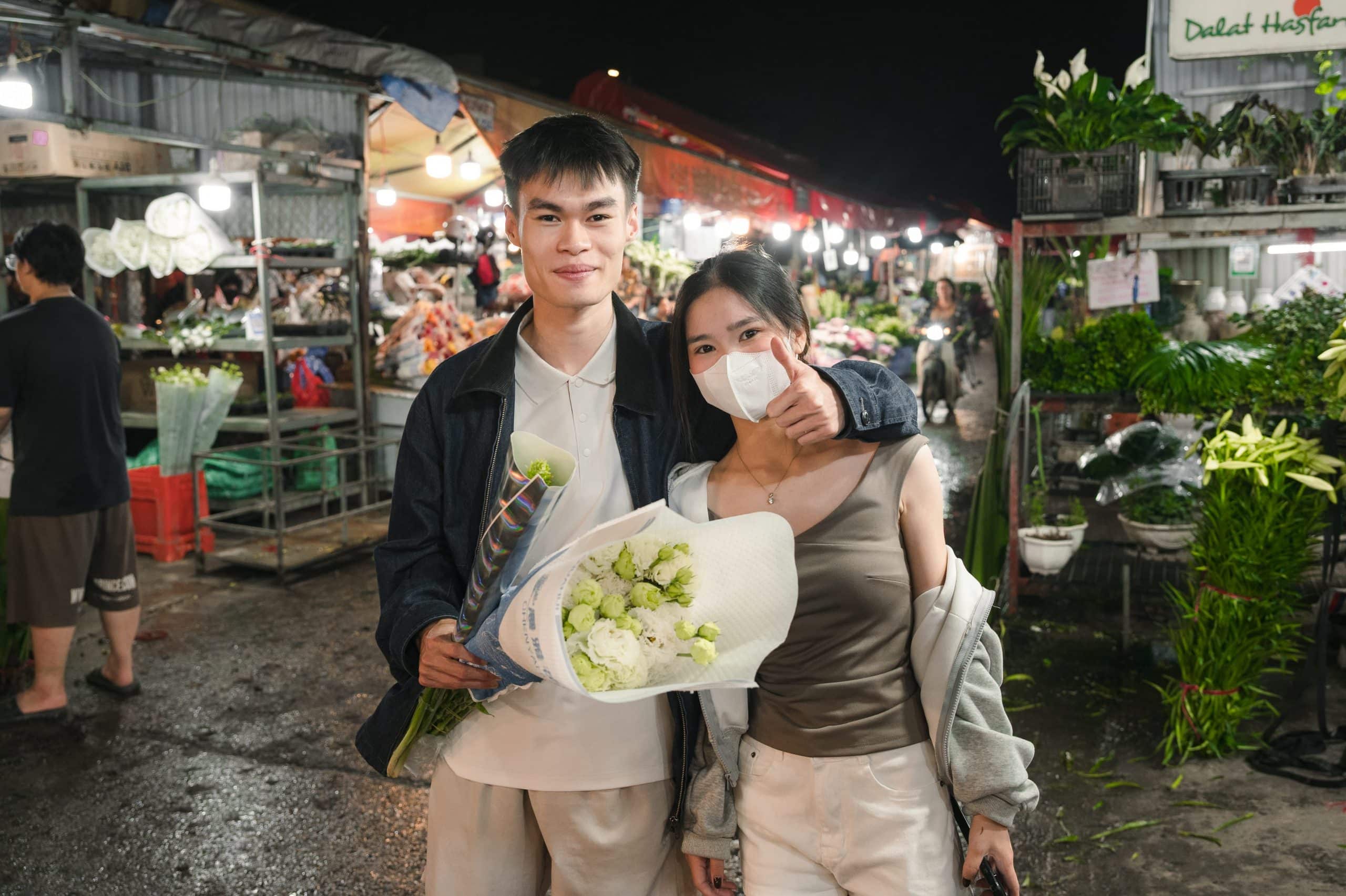
Amid the vibrant colors of flowers glowing through the late-night hours, wandering through the market together has become a uniquely Hanoi way of enjoying the city. As a result, Quảng Bá Flower Market is not only a place of trade, but also a familiar gathering spot for flower lovers and photography enthusiasts alike.
According to the young couple, the most picturesque area for photography lies deeper inside the market, where rows of flower carts stand closely together beneath warm yellow lights, creating a scene that feels both dazzling and cinematic. The sight of vendors swiftly arranging bouquets, trucks constantly moving in and out, and the thin mist typical of Hanoi at dawn gives every frame a beauty that is at once ordinary and deeply poetic.
Beyond the flower-filled pathways, many visitors also choose to take photos near the entrance of the market around 3 a.m., when trading activity reaches its peak and the glow of night lights blends with the colors of fresh flowers, forming a uniquely atmospheric scene rarely found elsewhere.
After strolling through Quảng Bá Flower Market, many people continue their early-morning exploration of Hanoi by heading toward West Lake to watch the sunrise and enjoy the peaceful atmosphere at the start of a new day. Around the market, there are also numerous eateries and cafés that open early to serve night-market visitors, including late-night phở stalls, hot bánh mì vendors, and sticky rice shops along the Âu Cơ – Nghi Tàm – Yên Phụ route. For visitors seeking a more relaxing experience after exploring the market, the lakeside cafés around West Lake that open at dawn provide an ideal setting to unwind while watching the city gradually awaken after a long night.
Promoting Vietnamese Culture to the World
As experiential tourism becomes increasingly popular, modern travelers are no longer searching only for “must-see attractions.” Instead, they wish to live like locals and immerse themselves in spaces that genuinely reflect the spirit of a city. The night flower market, with all its spontaneity, intimacy, and authenticity, perfectly fulfills that desire.
Having been connected with Quảng Bá Flower Market for more than seven years, Phi, owner of the flower shop “Thế Giới Hoa Tươi,” shared that in recent years the market has evolved beyond a wholesale trading space and gradually become a destination for many visitors, especially international tourists seeking to experience Hanoi’s nightlife.
Witnessing these changes, Phi expressed hope that in the future Quảng Bá Flower Market will become an even more attractive destination for both domestic and international visitors.
From a traditional local market serving everyday needs, Quảng Bá Flower Market is gradually opening up a different way of promoting the image of Hanoi and Vietnam to the world – not through staged tourism products or famous symbols, but through the most ordinary, authentic, and unfiltered rhythms of daily life. It is precisely this simplicity that creates a lasting attraction, allowing visitors not merely to “pass through” a place, but to truly immerse themselves in the living soul of Hanoi and experience the city in its own unique way.