
Story: Nam Hoa
Photos: Amachau, Chien Do
Experience Pu Luong’s cool mornings, cloud-filled valleys, and serene villages tucked among limestone mountains.
In late autumn, the air in Pu Luong turns cool. White clouds spill into the deep valleys, covering the terraced fields and leaving only the roofs of stilt houses peeking out like small boats. We arrived early one morning, when dew still clung to the leaves and smoke from Thai kitchens drifted upward to merge with the clouds.
Following clouds across the terraces
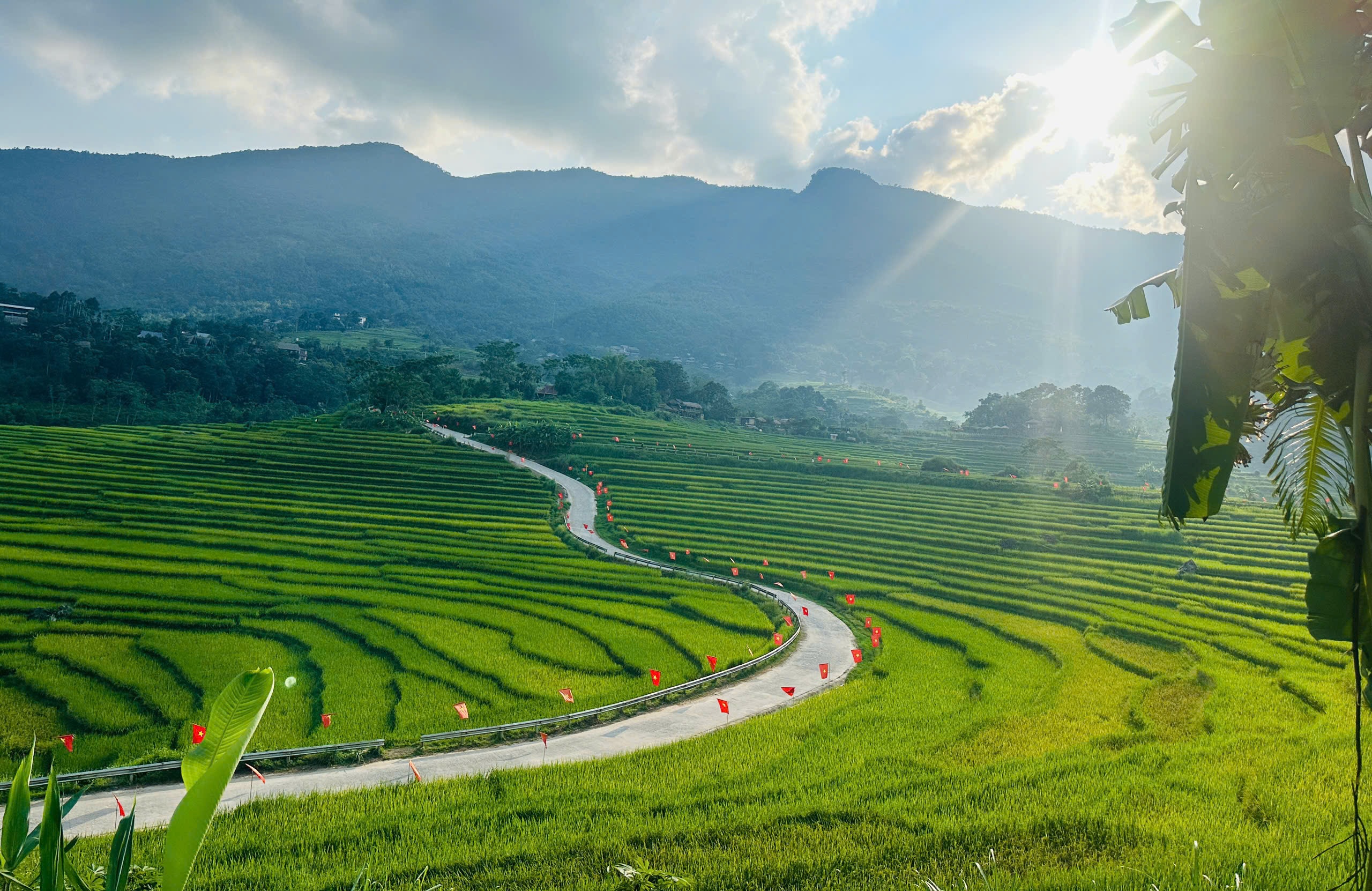
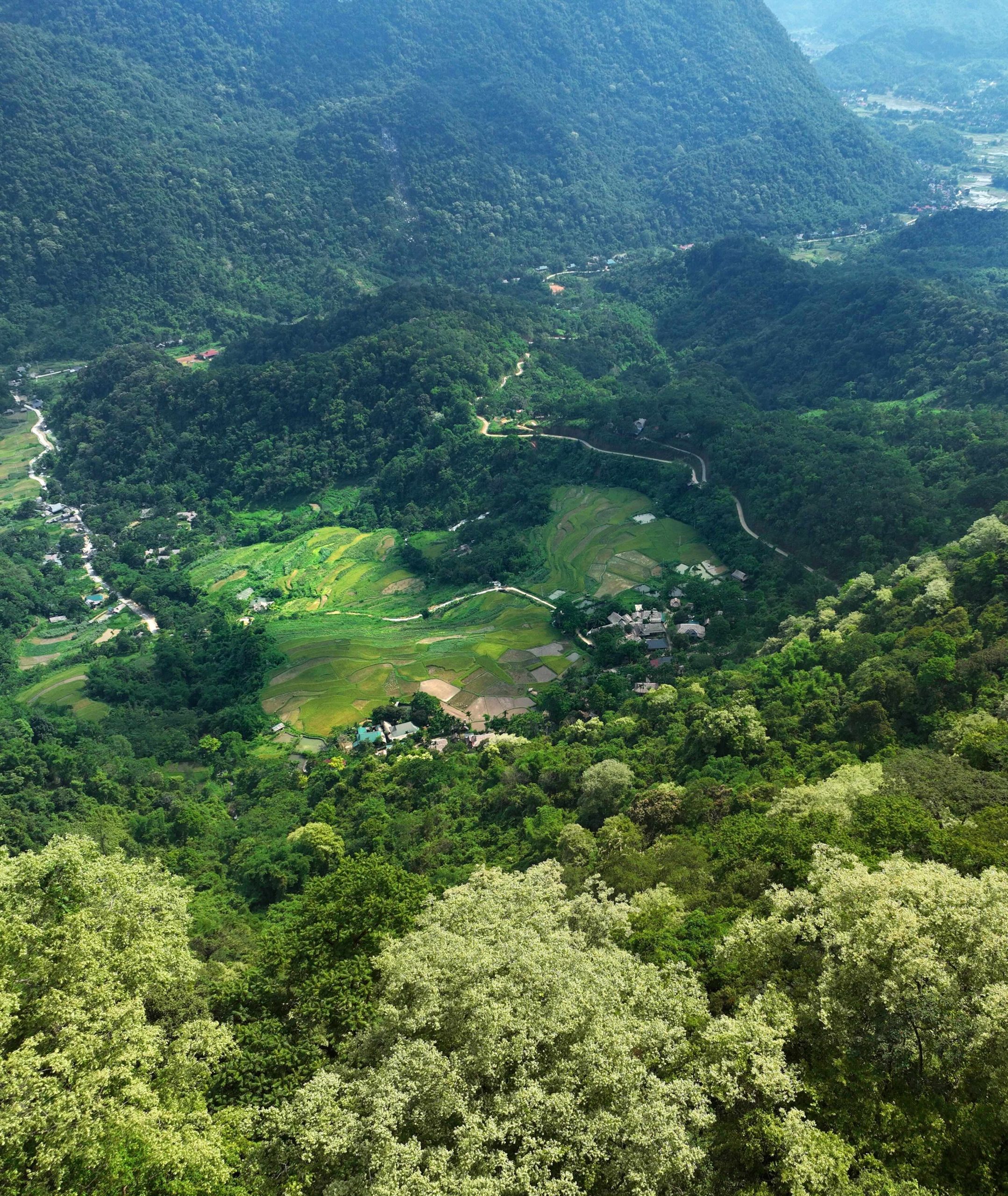
From above, Pu Luong unfolds as a valley of rice fields nestled among limestone mountains. The terraces climb the slopes in layers and change color with the seasons: during the flooding season, they gleam like mirrors; when the rice ripens, the valley turns golden; and by early winter, the fields lie fallow as clouds take over the landscape.
A narrow road curves in an S-shape through the valley, disappearing behind the mountains before reappearing farther away. We woke before dawn to chase the clouds, waiting for the first rays of sunlight to touch the peaks. Mist rose from the valley floor, slowly swallowing the road before revealing it again in fragments.
We descended to Don Village, where most residents are Thai. Simple wooden stilt houses stand beside the terraced fields, lining both sides of a stream. In the morning, the village wakes to roosters crowing, neighbors calling to one another, bamboo brooms sweeping verandas, and other familiar sounds drifting from warm kitchens. Amid this unhurried rhythm, we instinctively slowed our pace to enjoy the mountain village’s peaceful simplicity and quiet charm.
Kho Muong lies deep among limestone ranges. From the edge of the village, a trail crosses the fields and enters an increasingly narrow valley before reaching Bat Cave. More than 2 km long and formed over hundreds of millions of years, the cave contains remarkable stalactite formations. Some resemble waterfalls, others the roofs of stilt houses or blooming lotus flowers. Beyond several narrow passages, vast chambers open up inside the mountain, creating an impressive subterranean landscape.
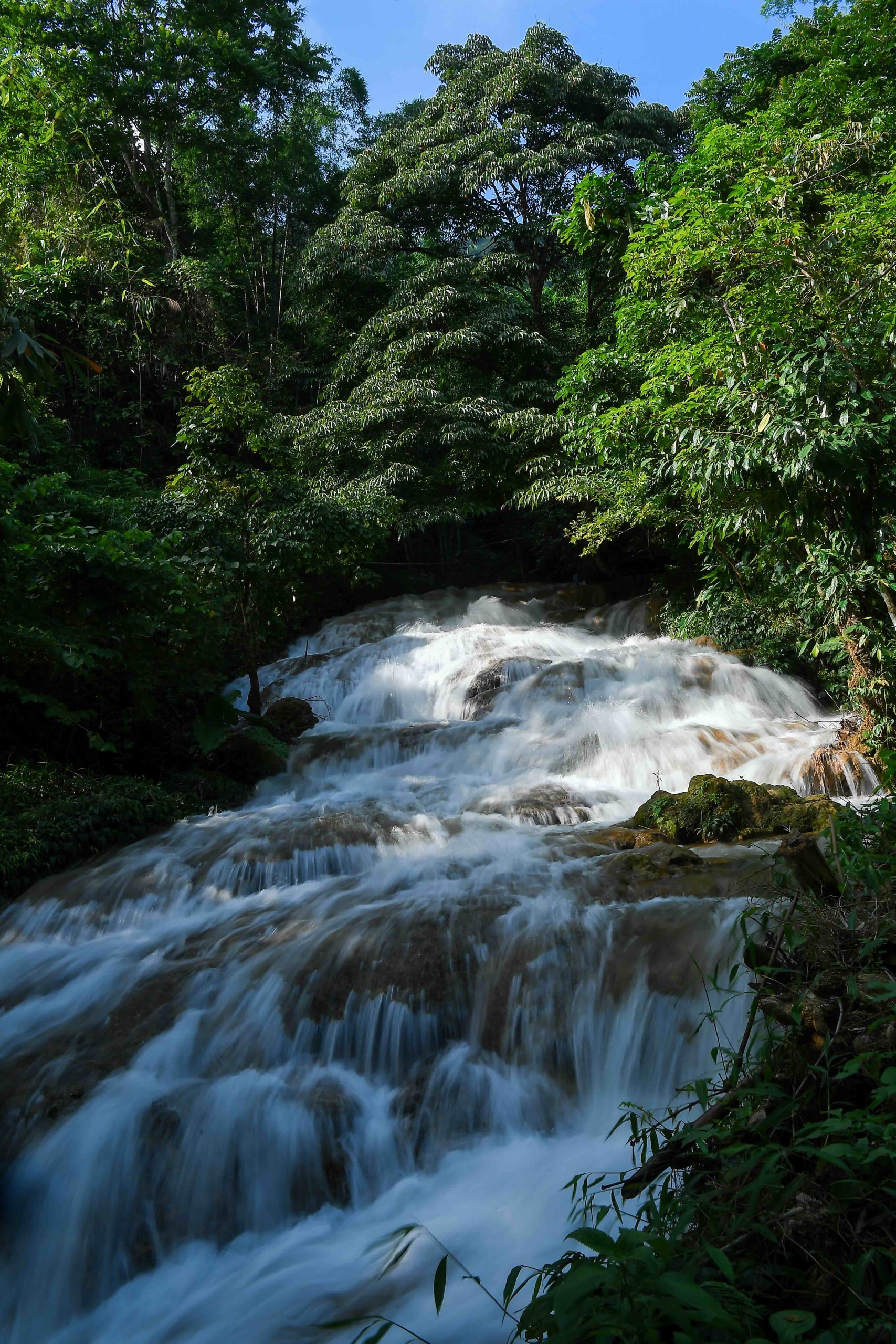
We heard Hieu Waterfall before we saw it. After crossing a suspension bridge and passing through the villagers’ fields, we came upon the waterfall, cascading over several rocky tiers into clear pools below. From there, we continued trekking to Son Ba Muoi, a highland village surrounded by mountain ranges. The higher we climbed, the lower the clouds seemed to settle over the slopes, while the rooftops far below shrank into tiny brown dots.
The loom’s rhythm
In Pu Luong, Thai and Muong stilt houses stand among fields and farmland. Daily life follows the rhythm of the seasons: mornings in the fields, afternoons back in the village, and freshly harvested rice spread out to dry in front of houses. The local culture reveals itself naturally through these ordinary scenes.
We won’t forget the steady sound of a shuttle moving across a loom. Using cotton spun and dyed with natural materials, Thai women weave brocade cloth decorated with patterns inspired by plants, animals, the sun, and streams. Passed down through generations, this weaving craft is closely tied to traditional clothing, bedding, and a Thai bride’s dowry. Today, brocade weaving also provides artisans with extra income, helping keep the craft alive.
After dark, the village quickly falls silent, leaving only the sounds of insects and burning firewood. At dawn, roosters greet the rising sun while a chill still lingers on the veranda and kitchen smoke drifts through the air. Holding a cup of hot tea and watching the fields and mountains gradually emerge from the mist, we realized how different it felt to stay overnight rather than simply pass through. Only by staying can visitors fully experience the sounds and rhythms of village life.
A typical village meal beneath a stilt-house roof might include Co Lung duck, dam xanh fish, bamboo-tube rice, forest bamboo shoots, bitter-leaf soup, and banana blossom salad. During the rainy season, there may also be steamed rock snails served with a richly flavored dipping sauce. The dishes are simple yet carry the distinctive flavors of the mountains and forests.
A journey to Pu Luong may include a trek, outings to enjoy the golden rice season, or an early morning spent chasing clouds. Yet what followed us down the mountain were memories of shuttles and looms, the taste of bamboo-tube rice, and morning clouds drifting over stilt-house roofs.