
Story: Phuong Tran
Photos: To Chi Hung, Phuong Tran
Leaving Beijing behind, a journey into the mountains reveals the Great Wall in all its varied grandeur.
Leaving Beijing’s Forbidden City, the Summer Palace, winding hutongs (traditional alleyways), and bustling avenues behind, you head north from the ancient imperial capital into the mountains. The Great Wall of China runs along their ridges, forming one of humanity’s greatest feats of engineering.
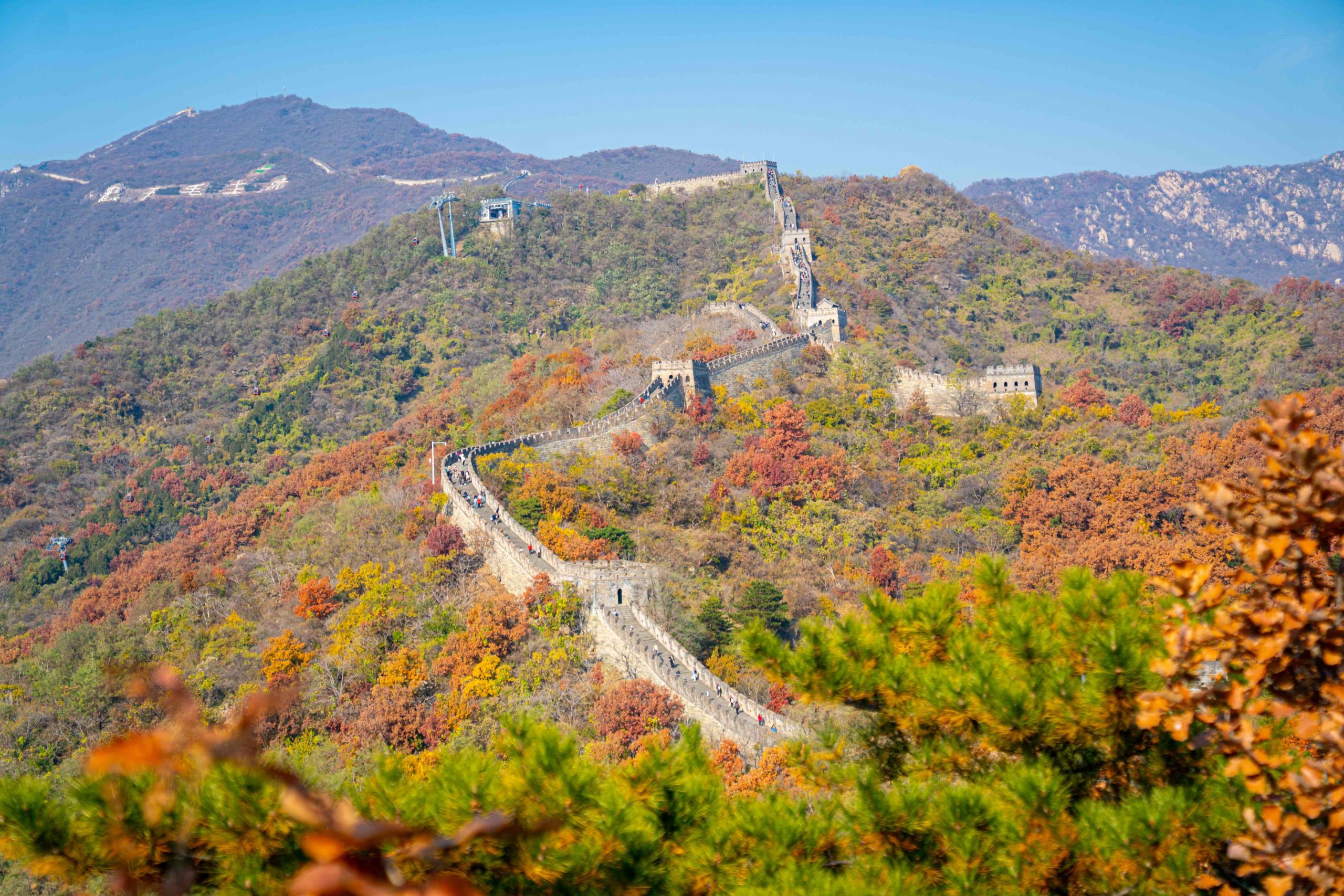
Seen from afar, the Great Wall follows the land’s contours, climbing toward mountain peaks, descending into valleys, disappearing behind forests, and reappearing on distant slopes. Yet it is not one continuous wall, nor was it built by a single emperor or dynasty. Rather, it is an extensive system of fortifications, mountain passes, watchtowers, and military supply routes, constructed, linked, expanded, and restored over many centuries.
Since ancient times, northern China has bordered the vast deserts, grasslands, and steppes of Inner Asia. This frontier was both a region of conflict and a corridor for migration, trade, diplomacy, and cultural exchange. More than two thousand years ago, after unifying China, Qin Shi Huang, the First Emperor, ordered existing fortifications along the northern frontier to be connected and extended to defend against incursions from the north. Later dynasties continued this work, though most of the brick-and-stone sections visible around Beijing today were built during the Ming dynasty.
The Great Wall was therefore more than a boundary. It was also a zone of contact between civilizations with different ways of life and traditions. Armies, merchants, and diplomatic envoys crossed its mountain passes. Cultures met, interacted, and influenced one another. Each pass served not only as a defensive stronghold but also as a gateway for trade and cultural exchange.
Around Beijing, the Great Wall takes many forms. Some sections have been extensively restored, while others still bear the marks of centuries gone by. Some easily accessible sections are crowded; others are remote and challenging. Each offers a different way to experience this extraordinary monument.
At Badaling, the Great Wall appears in its most imposing and familiar form. Its broad walkways and watchtowers stretch across the mountains, creating the iconic image often seen in books, photographs, and films. Badaling is among the most visited sections of the Great Wall. For first-time visitors, its grandeur leaves a lasting impression.
Mutianyu offers a more tranquil landscape. Here, the Great Wall winds through forested mountains, appearing and disappearing along the slopes. Spring brings blossoms, summer blankets the hills in lush greenery, and autumn paints the forest in brilliant shades of red and gold. Well restored yet generally quieter than Badaling, Mutianyu is ideal for visitors who wish to combine walking along the Great Wall with enjoying the scenery.
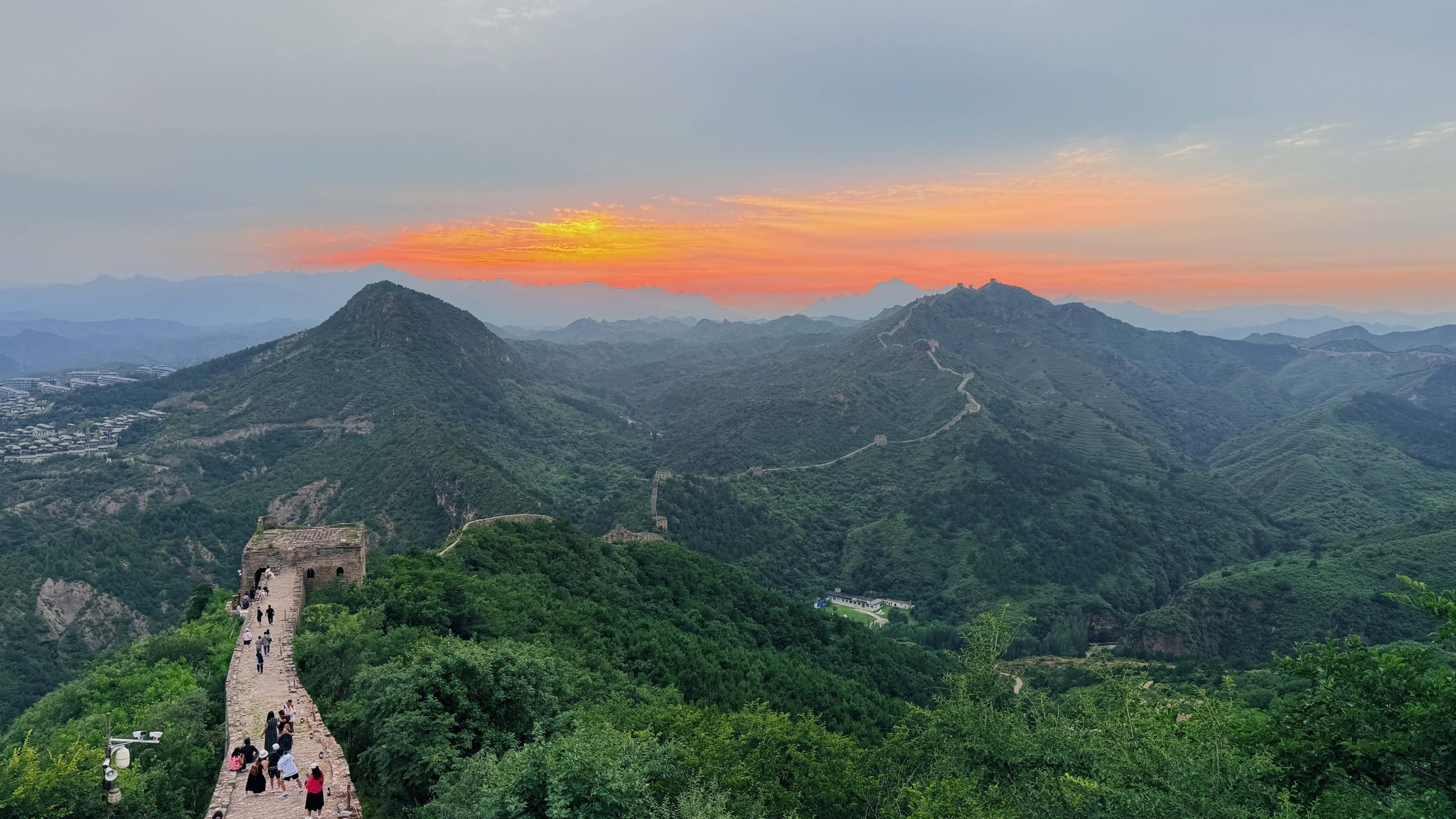
Farther northeast, in neighboring Hebei Province, lies Jinshanling. Here, restored sections alternate with older, weathered stretches. Watchtowers stand at varying elevations along the ridgelines, showing how earlier generations used the terrain for surveillance and defense. In the early morning, mist fills the valleys; toward evening, sunlight turns the stonework golden. Walking here offers a deeper appreciation of the Great Wall’s immense scale and the hardships those who built and guarded it endured.
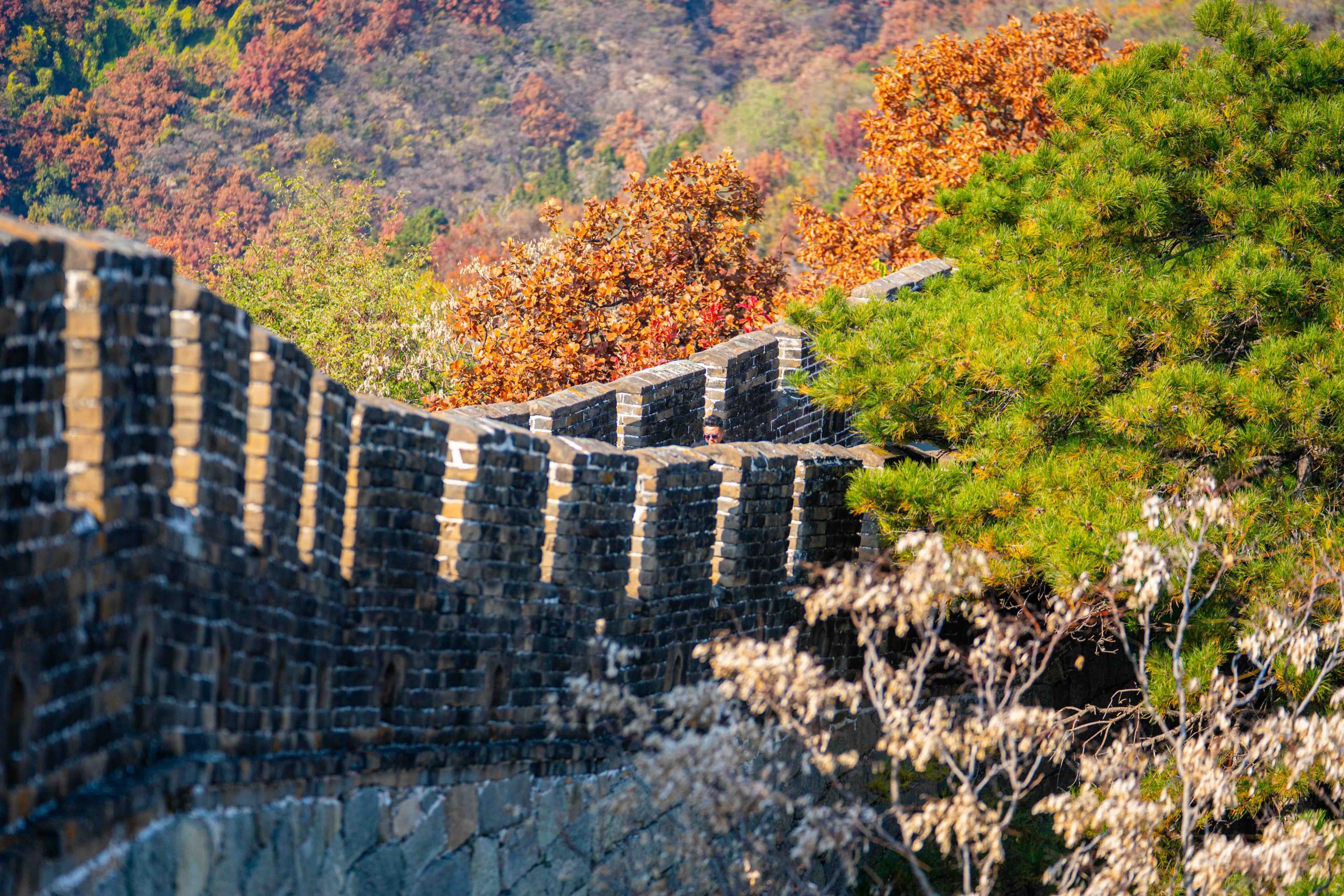
At Huanghuacheng, the Great Wall follows the mountains before meeting a lake. Ancient sections are reflected in the water, creating a landscape unlike those found elsewhere. In summer, yellow flowers bloom across the hillsides, echoing the name Huanghuacheng, which means “Yellow Flower City.” The combination of stone fortifications, water, and forested mountains makes it especially picturesque.
Juyongguan illustrates the Great Wall’s role as a military gateway. Situated in a narrow valley leading toward Beijing, it once controlled an important northern route into the imperial capital. Its most remarkable feature is the Cloud Platform, or Yuntai, a white marble structure dating from the Yuan dynasty. Although the towers that once stood above it have disappeared, Buddhist relief carvings and inscriptions in several writing systems remain. They reflect the cultural exchanges that took place at this gateway to the capital.
Gubeikou has a quieter, more contemplative atmosphere. For centuries, this mountain pass through the Yanshan range served as a strategic route connecting the Chinese heartland with the northern steppes. Much of the Wall around Panlongshan and Wohushan remains unrestored. Its weathered walls, grass-covered paths, and crumbling watchtowers evoke the hardships along China’s ancient remote frontiers.
Not far away is Simatai, a section of the Great Wall that overlooks Gubei Water Town. Simatai follows a steep mountain ridge, with watchtowers overseeing the valley. During the day, its dramatic terrain is clearly visible; after dark, carefully placed lighting illuminates the Great Wall against the shadowy mountains. Simatai is especially known for its nighttime visits to the Great Wall.
I lived in Beijing for more than a decade, and those years remain some of the most memorable of my life. What I love most about the city is that history is not confined to museums. It lives in the streets, the hutongs, the temples, the ancient fortifications, and even the mountains beyond the city.
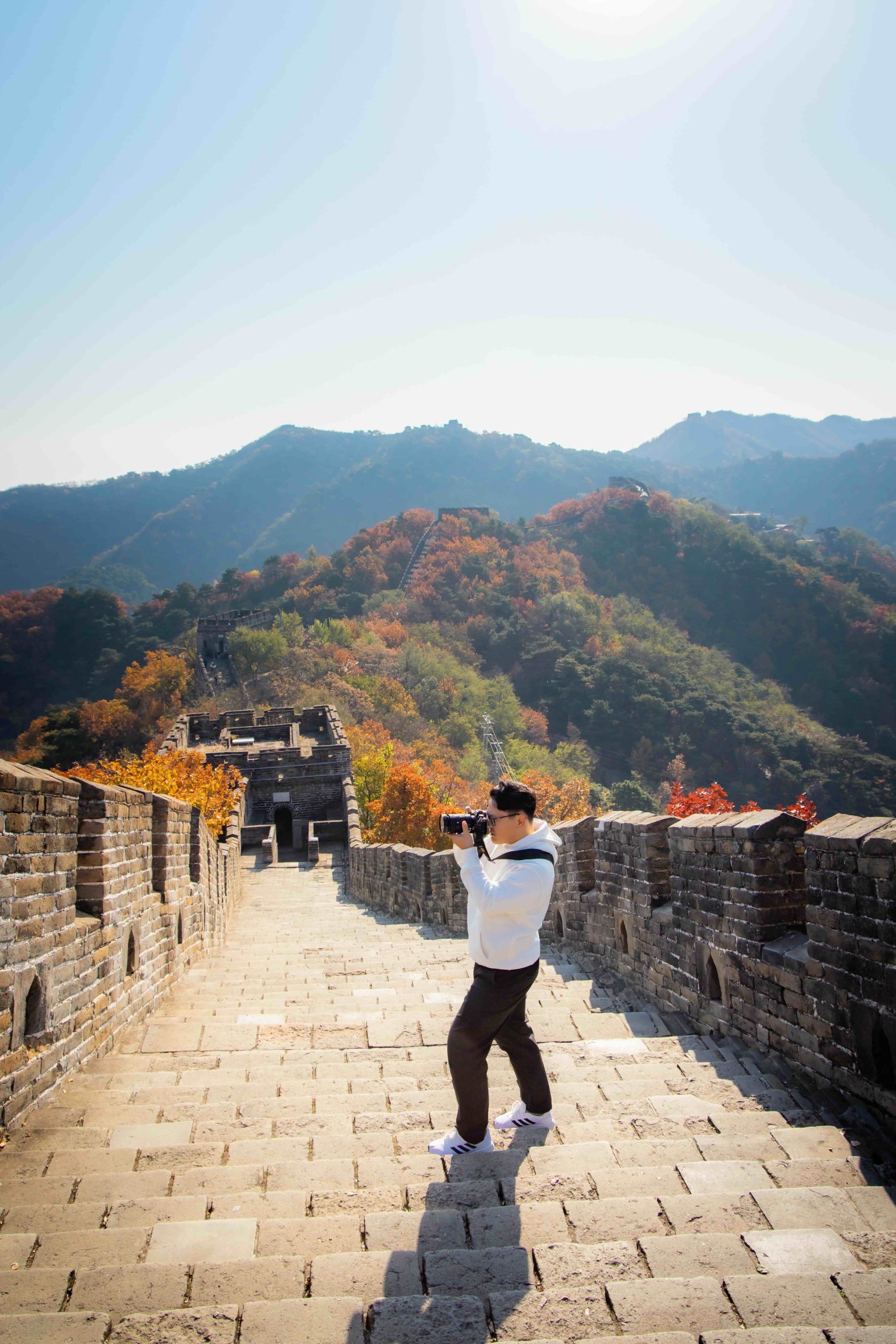
Simatai is my favorite section of the Great Wall. At the foot of the Great Wall, Gubei Water Town recreates the atmosphere of an old northern Chinese town, with tiled roofs, stone-paved streets, small bridges, canals, and traditional courtyard houses. In the evening, lantern light shimmers across the water, while the illuminated Great Wall rises along the nearby ridges.
Many people have heard the Chinese saying, “He who has never been to the Great Wall is not a true hero.” Yet visiting the Great Wall doesn’t require conquering its steepest slopes. What matters is choosing a journey that suits you and a schedule that lets you appreciate the landscape and remaining traces of history.
We come here not merely to admire a famous landmark, but also to imagine the battles, journeys, and encounters that once unfolded along this ancient frontier. Among the mountains of northern China, history is neither distant nor confined to books. It comes alive with every step.
Vietnam Airlines operates direct flights linking Hanoi and Ho Chi Minh City with Beijing. Please visit www.vietnamairlines.com for more information and special offers.