Story: Tri Tuc
Photos: Man Moi
Discover the authentic heritage of Vietnamese cuisine. Scents stir memories, and flavors awaken longing.
There are scents and tastes that, with just a fleeting touch, warm the heart again.
The aroma of freshly harvested sticky rice carried by the breeze, the savory scent of fish sauce, fermented shrimp paste and soy paste lingering in quiet kitchens… Every Vietnamese person carries a memory of home in their heart – woven from fragrances and flavors to form an invisible heritage that has endured through generations.
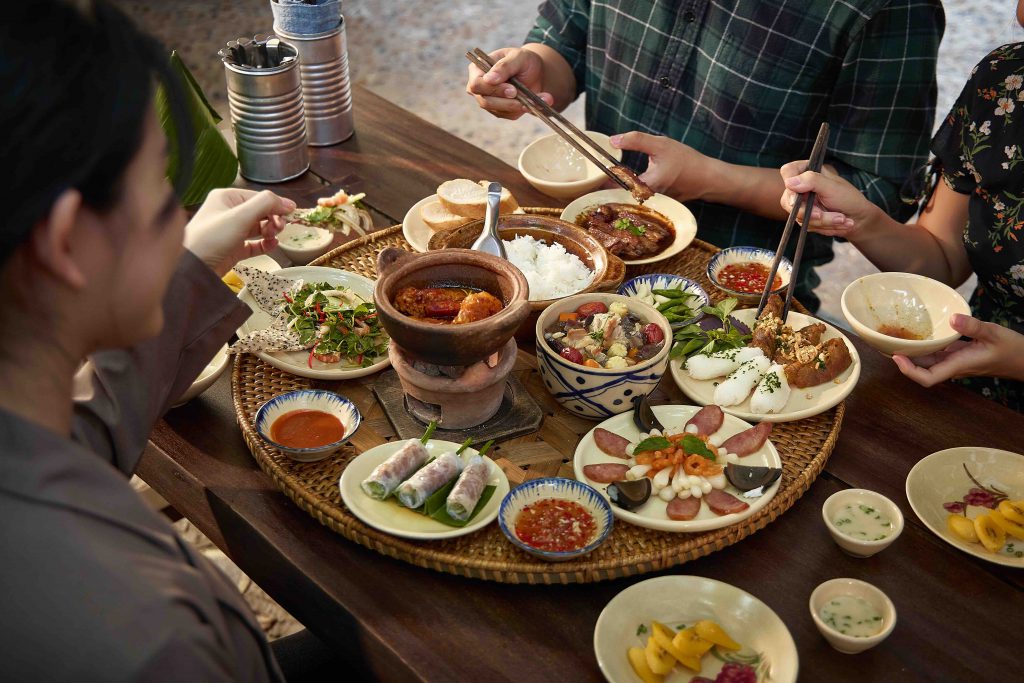
Born from a deep love for Vietnamese culinary culture, Man Moi created the Tastes of Our Homeland series – a journey to rediscover folk wisdom and preserve the country’s living culinary heritage.
Now in its 11th season, this series has presented nearly 200 authentic Vietnamese dishes, bringing together dozens of culinary artisans, experts, and researchers from across the nation.
Each season tells a story through scents and tastes, reviving dishes once thought forgotten and breathing new life into rare ingredients that have been long absent from modern tables.
Rice and fish sauce – the humble soul of Vietnam
Rice and fish sauce – humble yet proud symbols – bind Vietnamese culture from North to South.
From the Red River Delta to the Mekong’s fertile riverside fields, the hands of Vietnamese artisans transform rice into countless forms: noodles, cakes, pho, porridge, vermicelli… Each “strand of memory” nourishes the three regions, crafted with delicate care through every step from selecting, soaking, grinding, and cooking – all in harmony with nature, balancing yin and yang, simple yet complete.
And then, fish sauce – ngu lo, literally “dew of the sea” – recorded as early as the 10th century, remains the thousand-year soul of Vietnamese cuisine. In the North, there is ragworm sauce from Tu Ky, a rare treasure of the moonlit season. In the Central region, Hue’s mam ruoc is pungent yet poetic. In the South, mam ca tren and mam tom cha are fermented with the rhythm of the tides, rich with the taste of the alluvial earth.
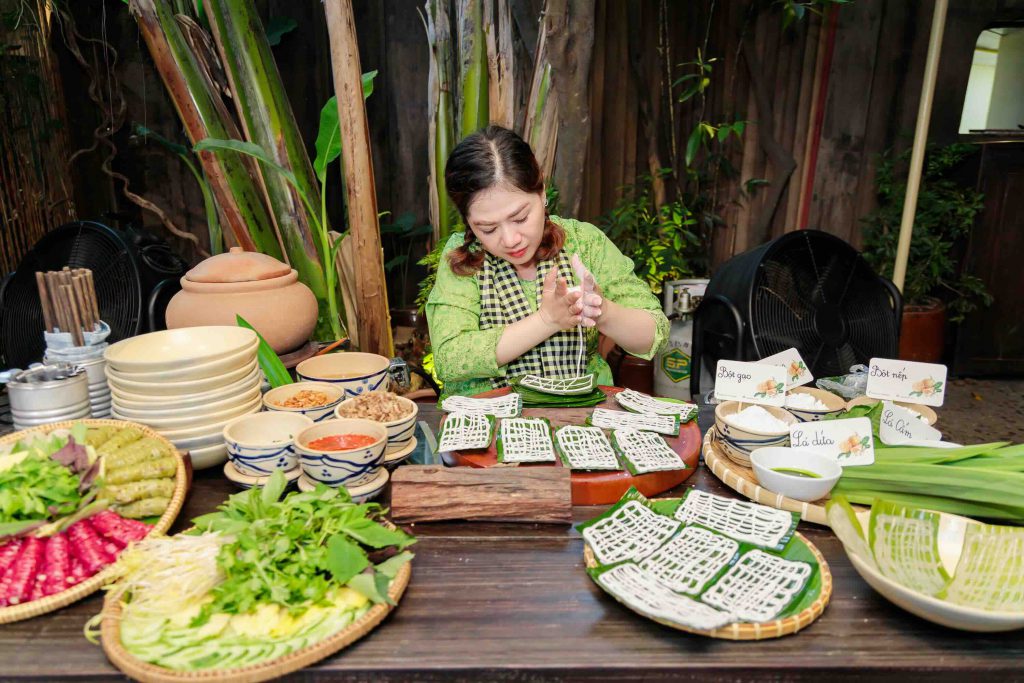
“When tasting Hanoi’s Cha ca, chefs from Belgium were astonished by the accompanying bowl of mam tom (fermented shrimp paste) – its sharpness softened with a touch of rice wine, whisked into a light foam with green lime, and finished with a drop of ca cuong essence. Tasting that rosy, fragrant foam, they exclaimed, ‘Nothing else could ever replace this!’ – as recounted by the chef Bui Thi Suong, in the season of the series titled Mam muon mien (Fish Sauce from All Regions).
Hue – Where cuisine is woven like brocade
In Hue, the cuisine is likened to weaving brocade – meticulous, graceful, and refined.
Clear as jade, bun giam nuoc harmoniously blends broth made from pork liver, fermented soy paste, peanuts, sesame, and the delicate goby fish of the Huong (Perfume) River. Paired with summer jellyfish, hand-pounded crab cakes, and fresh shrimp, the flavors are refined yet rich, gentle yet profound.
This dish was featured in the season titled Hue – Remembering Mother of Old, where every element reflected the soul of Hue – understated, elegant, and poetic.
Southern lands – where flavors tell stories
Farther south, along the Tien and Hau rivers, folk songs echo softly across the waters. Over 300 types of traditional cakes still preserve the spirit of the countryside in each banana leaf wrap. Banh tet is engraved with wishes in every slice. Ben Tre offers fragrant Giong Luong coconut cakes. Introduced by migrants from Nghe An, banh nghe is tender and glutinous, kneaded from sticky and plain rice flour, once famed throughout the southern plains.
In Go Cong, the legendary nham, once served to Emperor Tu Duc, remains rustic yet graceful, simple yet noble.
The flavors of the Mekong is a heartfelt voyage through the Land of the Nine Dragons – sweet, generous, and full of life, both in terms of the land and its people.
From the forests to the sea
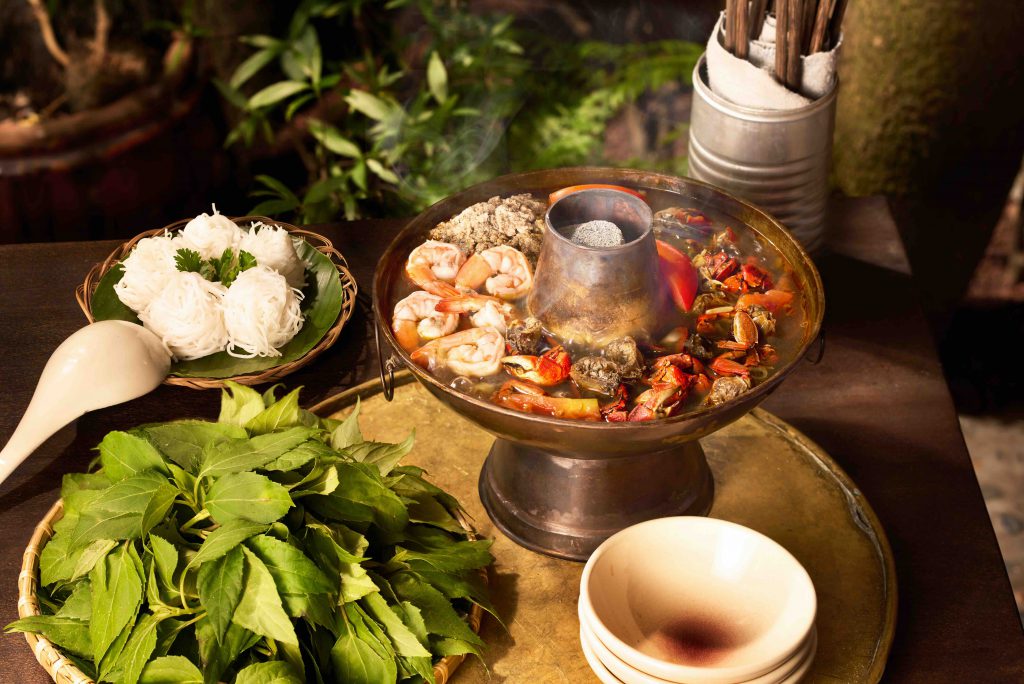
Can Gio – where the forest meets the sea – resounds with stories about the harmony between humans and the mangrove forests. Here, one finds dried kim leaf salad with Lap So fish and three-striped crab hotpot with buoi leaves – dishes whose very names carry the scent of a salty breeze and the tartness of forest leaves.
Beyond the mainland, the journey extends to the islands. In Ca Mau, ca nau braised with giac fruit carries the tang of sea salt. On Phu Quoc, sea urchin sweet soup – bold and intriguing – adds a distinctive touch to Vietnam’s map of flavors.
A living heritage of taste
Vietnamese cuisine is a living heritage – crystallized from indigenous wisdom, memory, and affection passed down through the hands of grandmothers and mothers. The Vietnamese, often reserved in their words, tell their stories through jars of fish sauce, grains of salt, and bowls of coconut cream. Their dishes do not boast; they whisper – subtle in fragrance, meticulous in flavor – yet profoundly captivating to all who taste them.
Throughout every Tastes of Our Homeland season, Man Moi not only revives authentic Vietnamese flavors but also bridges tradition and modernity, preserving the cultural heartbeat of Vietnam.
Each scent of seasonal rice or taste of rural cakes tells the story of this land – gently, yet deeply, touching hearts around the world.
Tastes of Our Homeland – a culinary project honoring authentic Vietnamese delicacies initiated by Man Moi
www.facebook.com/manmoi.vietnam