Story: Nam Hoa
Photos: Thu Phan
During the twelfth lunar month, Ho Chi Minh City’s biggest Chinatown transforms into a vibrant tapestry of traditions.
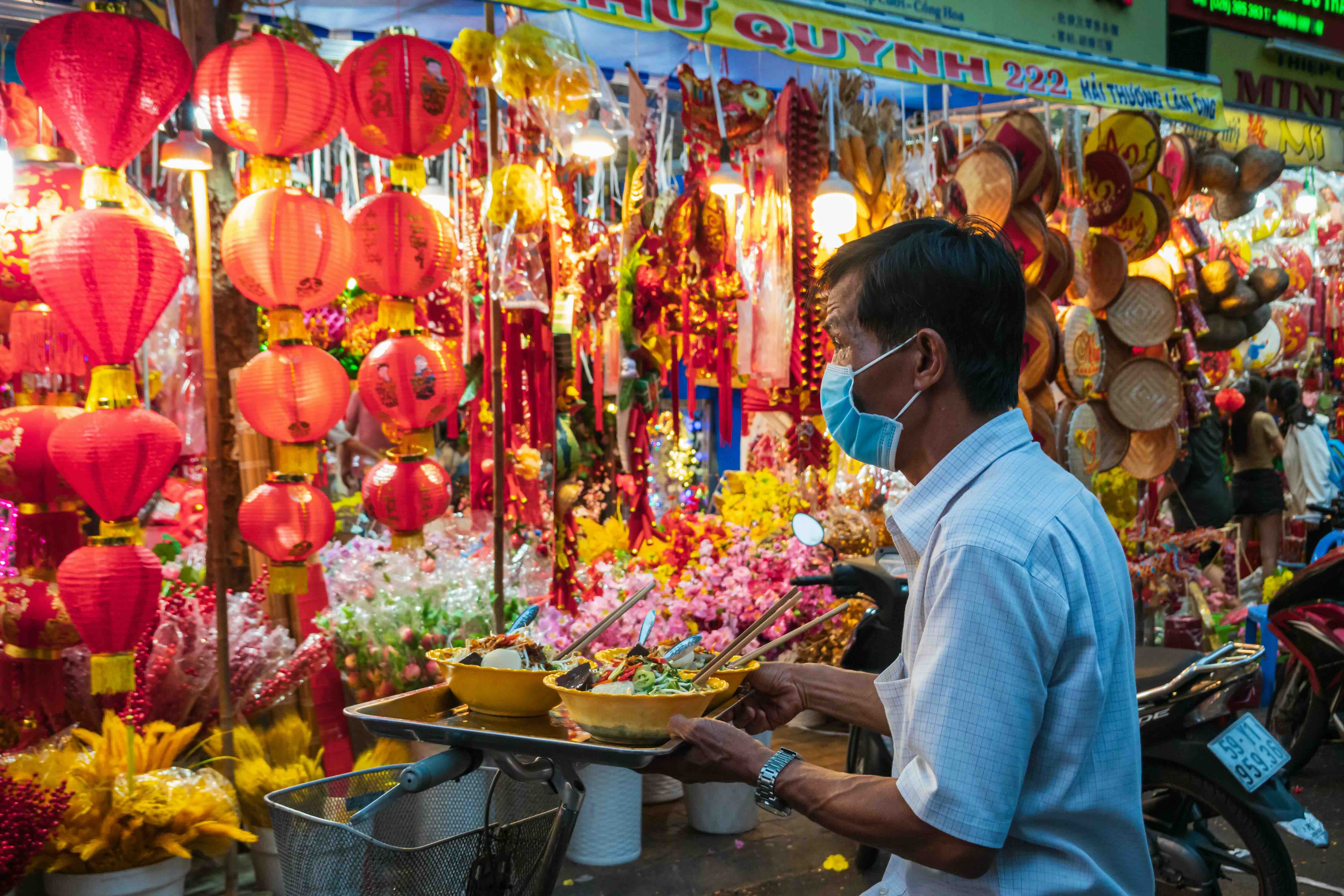
sweet puddings
Tet begins in the market
From the first days of the lunar twelfth month, Cho Lon – the largest Chinatown in Ho Chi Minh City – already hums with the spirit of spring. Rows of bright red lanterns line the streets, lively chatter fills the air, and the faint scent of incense drifts between the shops. Here, Tet arrives in its own way: earlier, deeper, and more richly than in any other marketplace in the city. More than a trading hub, during Tet Cho Lon feels like a grand, living stage where culture, belief, and memory come together. Tet shopping in Cho Lon is about more than running errands; it is a journey of rediscovering tradition through banh to (Nian Gao), pairs of red couplets, and paper firecrackers, all evoking an image of Tet deeply rooted in community identity.
From early morning, amid the red and gold of lucky money envelopes, parallel couplets, joss papers, and lanterns hanging in bright clusters along the stalls, streams of people move through the market streets around Hai Thuong Lan Ong, Thap Muoi, and Le Quang Sung, turning the area into a vivid current of color. Under the southern sunlight of the twelfth month, Cho Lon’s bustle comes not only from the crowds but from a spirited rhythm, where every step and every exchange seems to carry the breath of Tet. Within this exuberance, alongside the long-established ethnic Chinese community, stand members of Vietnam’s ethnic majority and ethnic Khmer locals, as well as travelers seeking the Tet ambience of old Saigon. Together, they form a naturally interwoven and enduring cultural tapestry. However, the Chinese influence remains the most distinct, reflected in the shop layouts and in goods shaped by traditional beliefs, feng shui, and age-old customs.
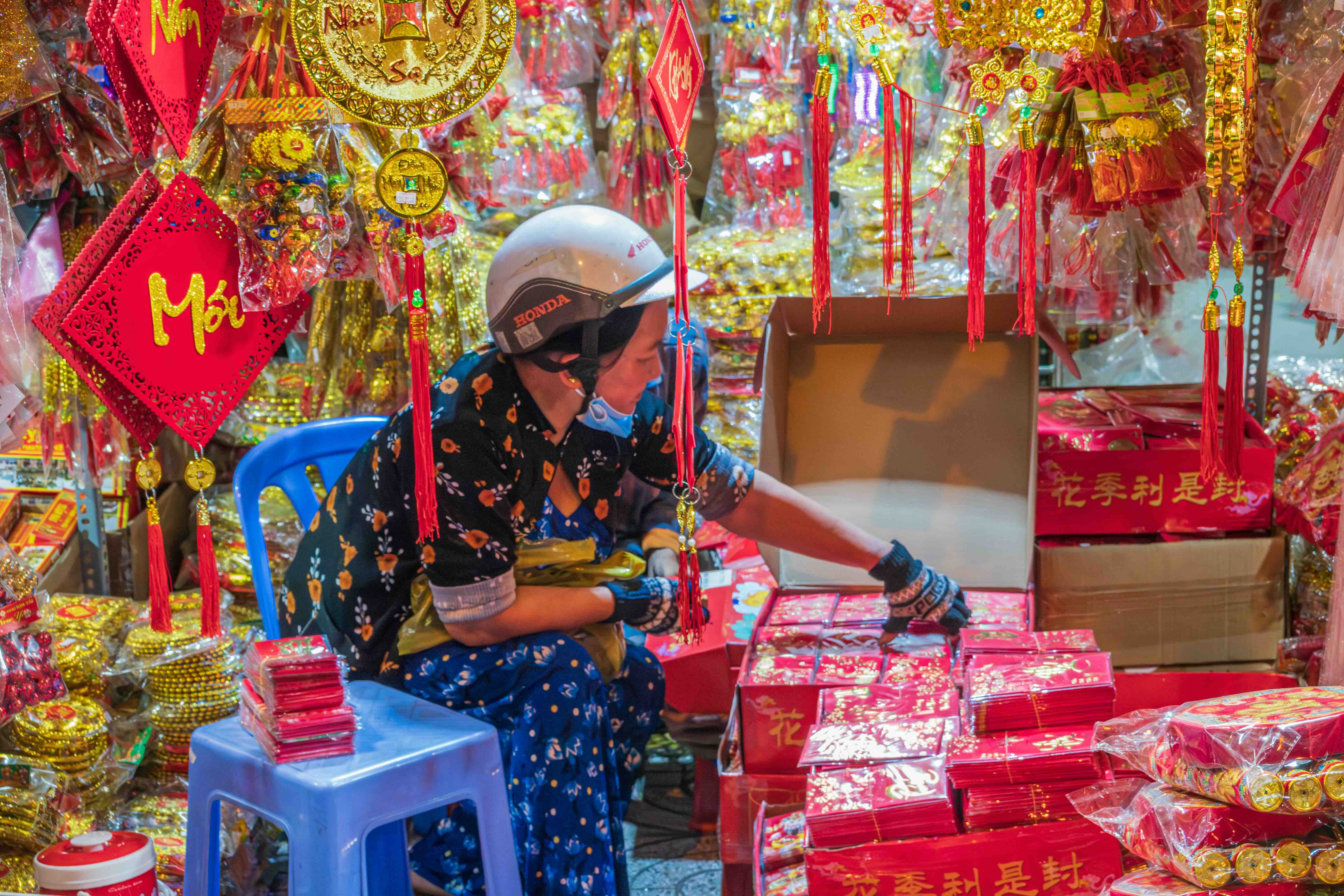
People don’t visit the calligraphy stalls only to buy parallel sentences but to learn the meaning behind each phrase. A single couplet can carry a whole year’s hopes. Shopkeepers, speaking in both Chinese and Vietnamese, are always ready to chat, explaining the chosen lines in detail. Here, selling is part of cultural exchange, not just business.
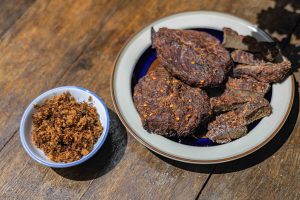
At the food stalls, traditional treats like candied ginger, nian gao, and cured sausages draw steady crowds. Shoppers sample, chat, and reminisce about where they bought last year’s batch, which flavor stood out two years ago, and how prices compare this season. These small conversations weave a shared network of memory, where Tet is not merely a time of year but a way of life.
The threads of shared memory
For many families living near Cho Lon, Tet shopping here has become a household ritual. Children are brought along to sense Tet approaching in the couplet-filled stalls, in the sellers’ laughter, in the billowing incense smoke, and in the neatly stacked joss paper prepared for ancestor worship. All of it becomes an unspoken lesson in cultural continuity.
Unlike modern supermarkets and shopping malls, Cho Lon has its own distinctive shopping rhythm, which is unhurried yet never sluggish. Vendors and customers chat like longtime friends, and buying and selling feels as much like conversation as transaction. A stack of votive papers or a bundle of fragrant incense is carefully selected.
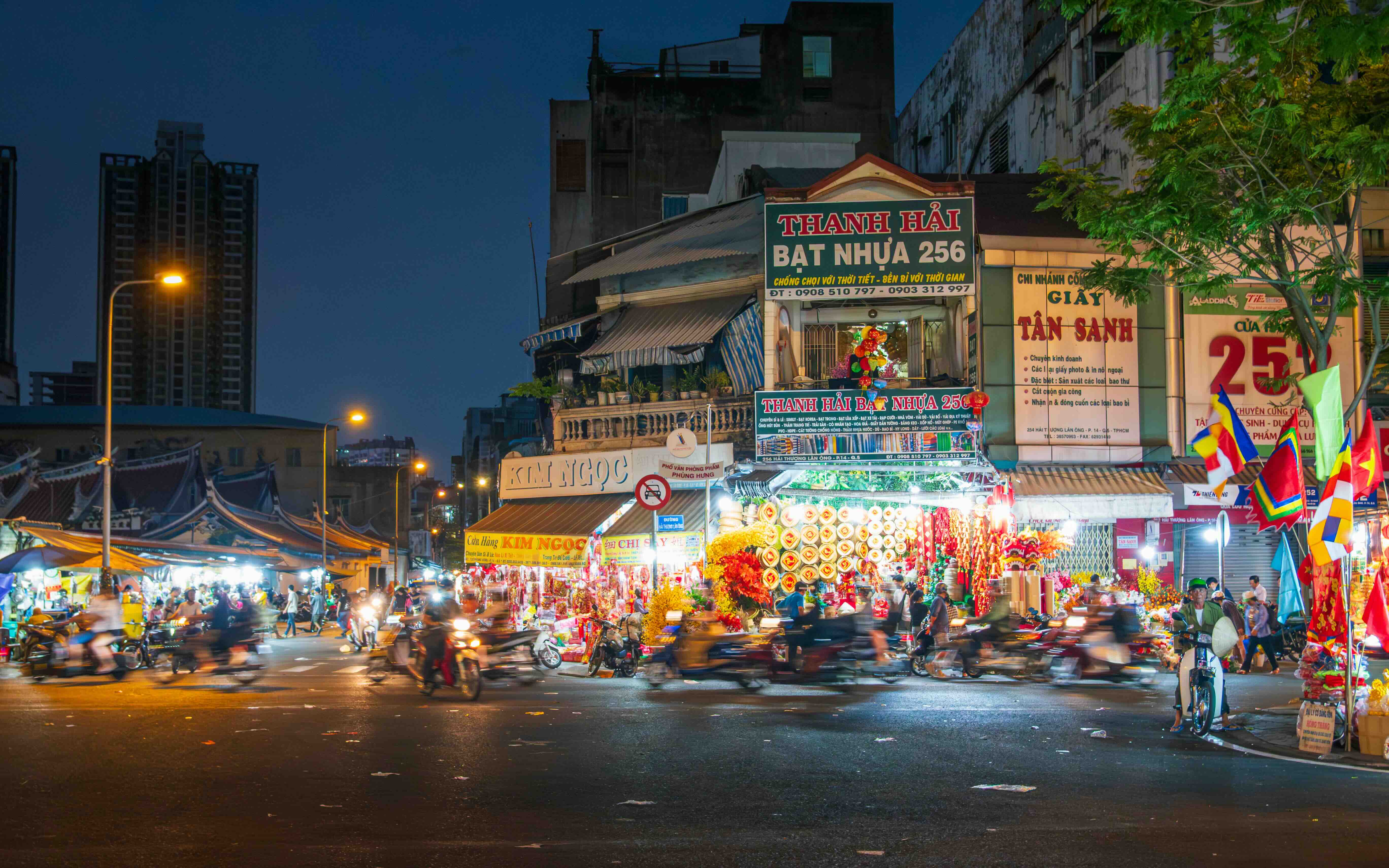
Here, Tet shopping is not about material abundance but about preserving sincerity. Items used for worship, such as incense, votive papers, and candles, are placed in prominent, reverent positions. Vendors do not call out or haggle at these stalls; shoppers quietly approach and select what they need. In the midst of the bustling market, this quietness underscores a sacredness the community still cherishes.
The Tet culture of Cho Lon’s ethnic Chinese community is not insular. Over years of coexistence and cultural exchange, ethnic Vietnamese and ethnic Khmer locals, and even foreign visitors, have gradually embraced these customs, eating nian gao, hanging red couplets, and displaying lanterns. In return, many ethnic Chinese families now include banh chung, pickled shallots, and mixed vegetable pickles in their Tet feasts. This gentle blending shapes Cho Lon’s unique identity, a culture vibrant, deeply rooted, and naturally adaptive.
When evening falls, Cho Lon grows even livelier. Lanterns glow, red couplets stand out beneath warm yellow lights, and shoppers continue browsing for boxes of candied fruit, bundles of sausages, or handfuls of fragrant incense. No one rushes since everyone knows Tet arrives more quickly when the heart is already joyful.
Amid the changes of modern life, Cho Lon still keeps its distinctive Tet rhythm – deliberate yet attentive, simple yet deeply meaningful. A day of Tet shopping here fills not only shopping bags but memories. Those memories are formed by heartfelt conversations, festive red couplets, and the lingering fragrance of incense drifting through the narrow streets – quintessentially Cho Lon and quintessentially Tet.
Vietnam Airlines offers direct flights between Dien Bien, Quang Ninh, Ha Noi, Hai Phong, Thanh Hoa, Nghe An, Quang Tri, Hue, Da Nang, Khanh Hoa, Gia Lai, Dak Lak, Lam Dong, An Giang, Ca Mau and Ho Chi Minh City.
Please visit www.vietnamairlines.com for more information and special offers.