Diem Cao
Welcome the Lunar New Year with a visit to the flower fields of Gia Kiem in Dong Nai.
While the Mekong Delta has Sa Dec, where vast, vibrant flower fields stretch beside silt-laden rivers, the Southeast takes pride in its own flower-growing region: Gia Kiem in Dong Nai. Here, blooms rise from the rich red basalt soil.
chrysanthemums stand ready
to welcome Tet
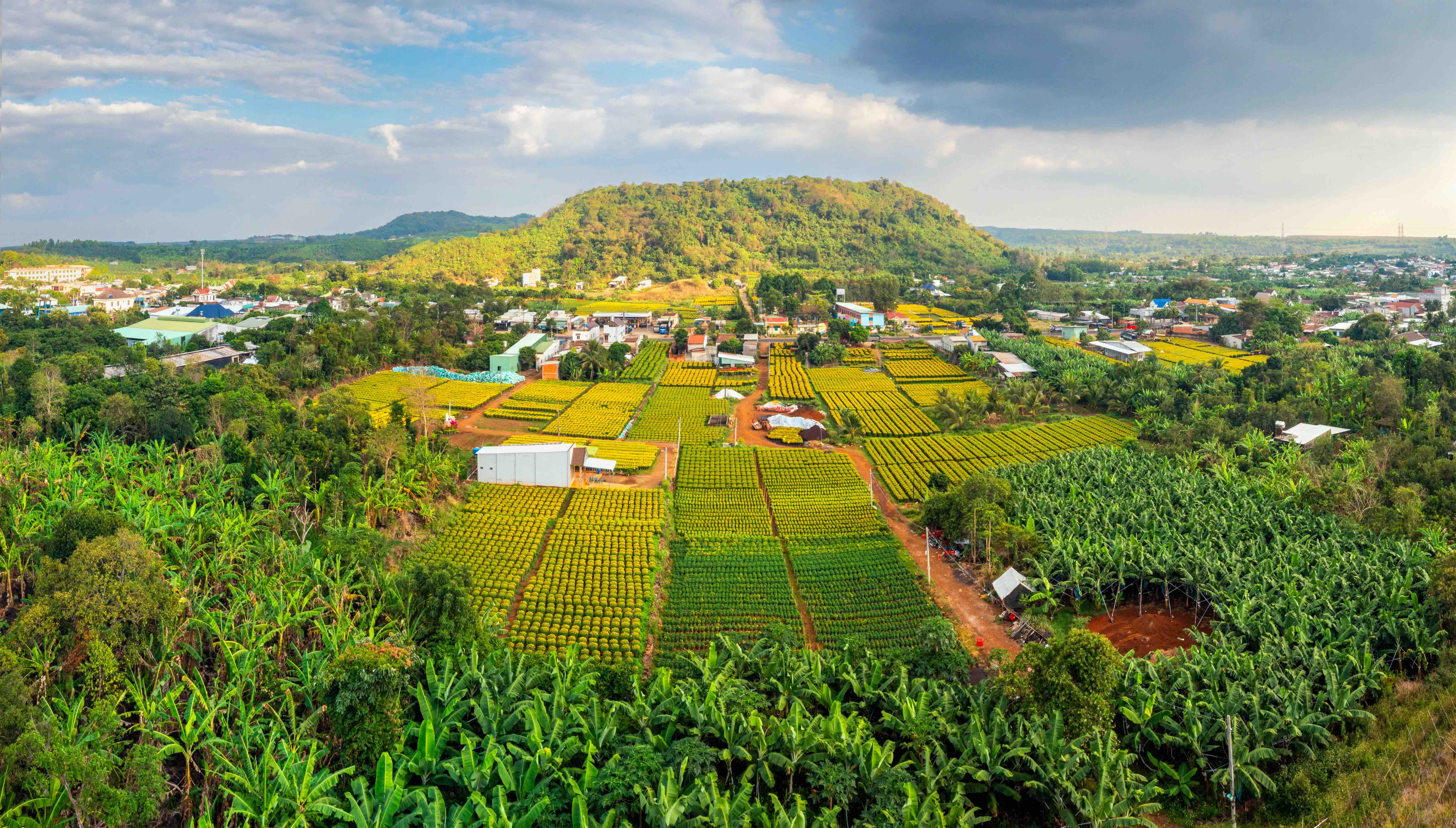
In the twelfth lunar month, when the north wind carries a crisp chill, Gia Kiem enters its most anticipated season. The excitement here doesn’t rise from bustling noise, but from a distinctive fragrance: the rich, moist scent of loose, airy basaltic soil mingling with chrysanthemums in full bloom. Gia Kiem is more than a place – it holds a living heritage, nurtured by generations of resilient people and by the generosity of the land. Unlike the fertile alluvium of the Mekong Delta, Gia Kiem’s prosperity rests on its characteristic red soil, rich in iron oxide and minerals.
Many of the settlers in this area were Catholic migrants from the North. They brought their faith, their religious traditions, their agricultural know-how, and a tireless spirit, settling on what was once a wild, untamed land. They built homes, established parishes, and raised bell towers that stood tall beside blooming fields, where evening prayers mingled with the scent of yellow chrysanthemums every Lunar New Year. From this fertile basalt soil grew a community both devout and diligent, transforming the area into the Southeast’s largest “Tet flower capital”. The golden hues of this region’s blossoms and the warmth of its people shine in unison.
A tale of two seasons
The journey of the Tet flowers grown in Gia Kiem begins in the rainy season and ends in the final month of the lunar year, spanning two seasons with sharply contrasting weather. The first step involves selecting seeds from Dalat in the misty highlands, where premium varieties of crystal chrysanthemums and large-headed chrysanthemums thrive. These varieties are perfectly suited to Gia Kiem’s basalt soil. Each morning, trucks leave Gia Kiem for Dalat and return with precious seedlings.
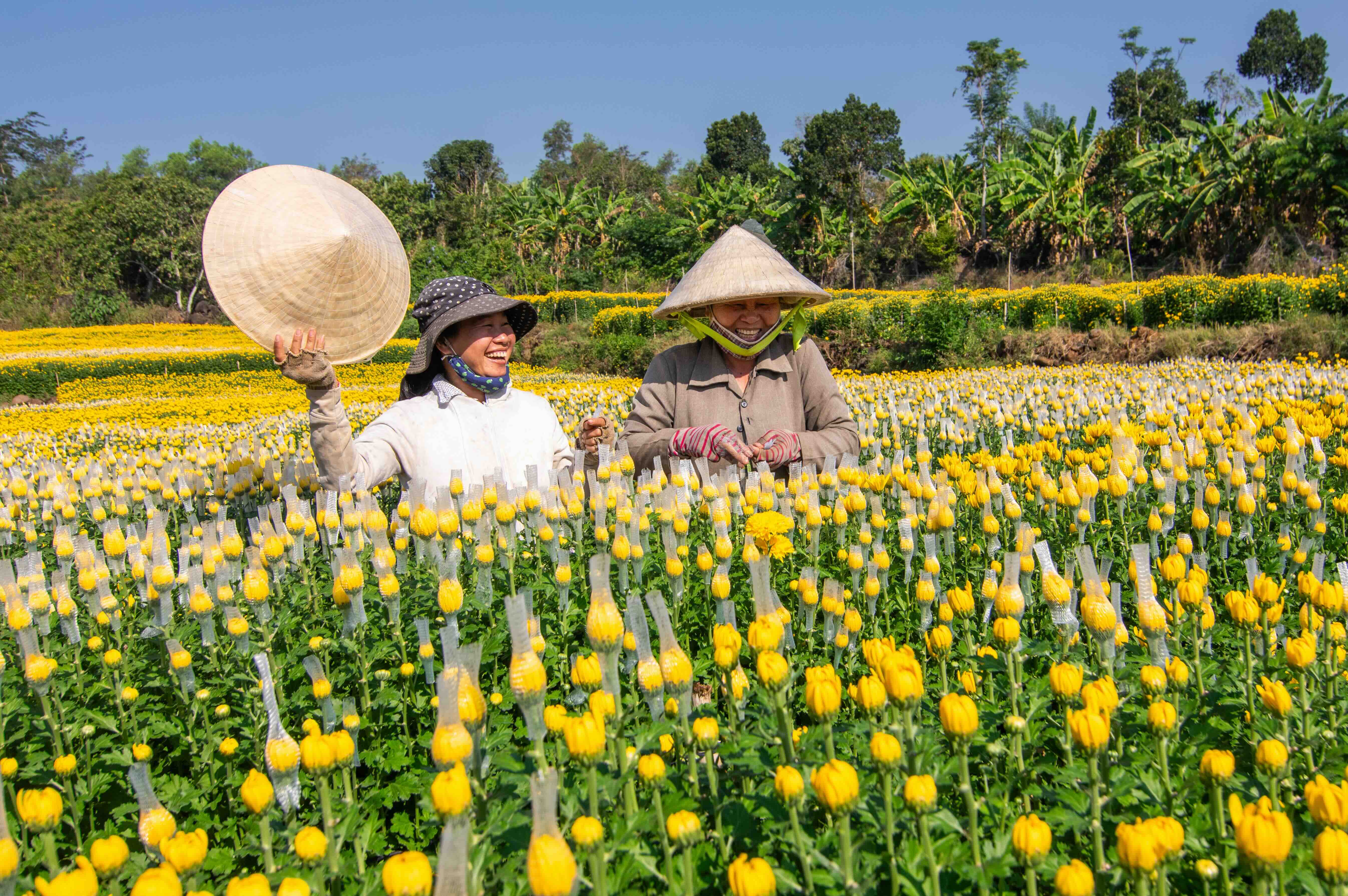
During Dong Nai’s rainy season, the red soil turns moist and friable, creating ideal conditions for young plants. Farmers carefully cut the seedlings and set them into ash-rich soil. In just ten days, the young plants take root and are transplanted into large concrete pots, allowing them to grow sturdy, develop strong roots, and bloom beautifully for an extended period.
Throughout the rainy season, the growing plants demand meticulous attention. The basalt soil, nourished by the rain, enables the roots to anchor deeply and fully absorb nutrients. The growers carefully pinch each plant’s tips, shape the canopy, and secure the stems with bamboo stakes, ensuring the plants grow tall and bloom in perfect, rounded forms.
Bright colors and lights
As the final month of the lunar year draws near, Gia Kiem transforms into a vibrant canvas where daytime colors and nighttime lights merge into a springtime symphony. In the early morning, mist lingers over the red soil, yet along National Highway 20, dozens of hectares of flowers are already in full bloom: the golden hues of chrysanthemums, the deep scarlet of cockscomb. Visitors and traders arrive to admire and shop, turning the fields into a lively festival of color.
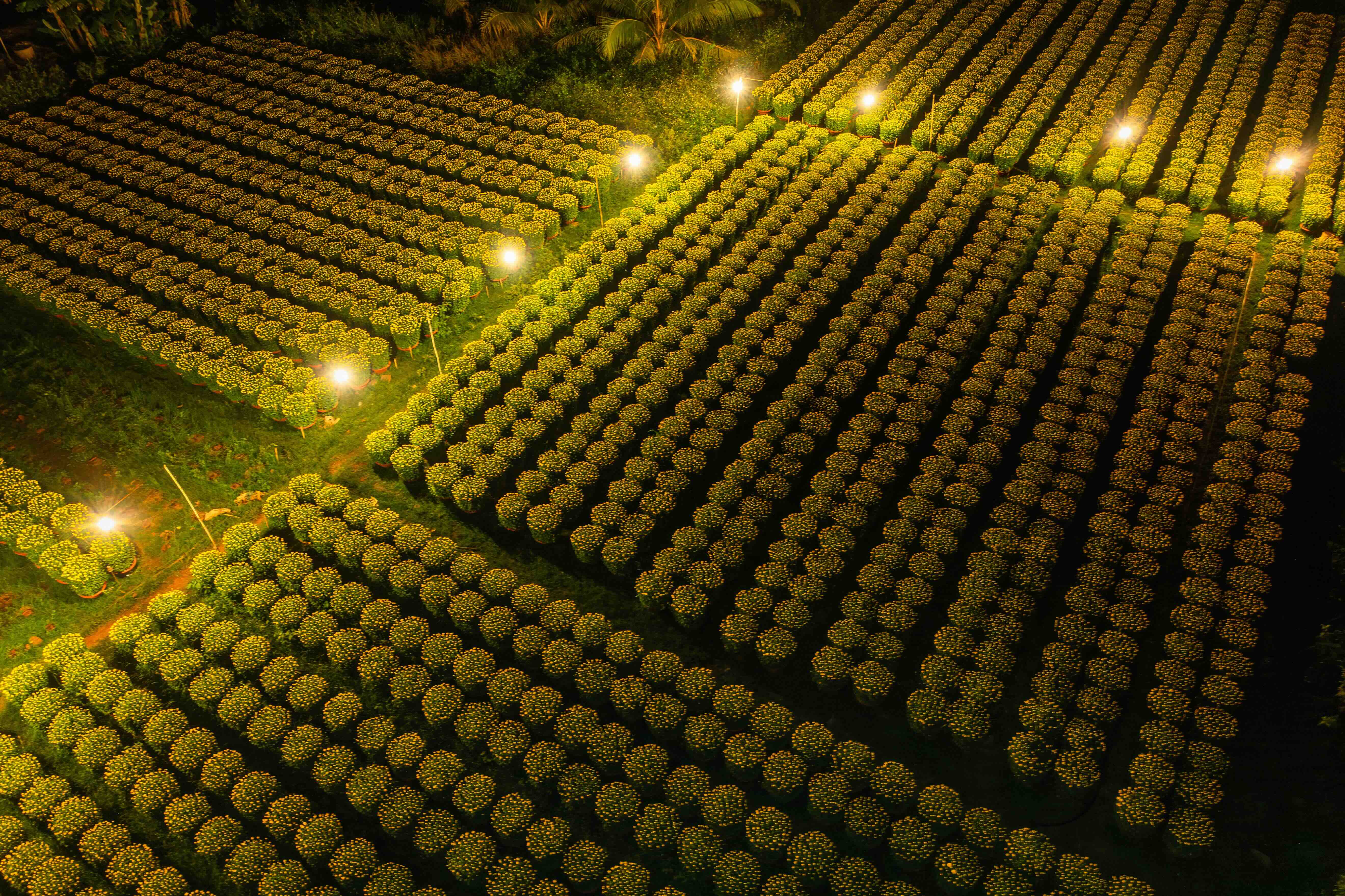
As night falls, the flower village resembles a dazzling festival of lights. Thousands of bulbs glow continuously from 8 p.m. to 4 a.m. the next morning. These special lights prevent the chrysanthemums from blooming too early, ensuring vibrant, golden blossoms that align with the Lunar New Year.
After the full moon of the twelfth lunar month, the atmosphere grows even livelier. Trucks of all sizes line up, waiting to transport flowers across the southern provinces. The flower market buzzes with laughter and chatter. Visitors come to purchase the flowers and to capture the essence of spring by posing for bright, cheerful photos in the radiant fields.
A living heritage
Today, despite the rapid pace of urbanization, Gia Kiem still preserves its identity thanks to steadfast farmers who continue their ancestors’ craft. While many young people leave in search of new opportunities, others stay to maintain this trade, learning sustainable farming methods, selling flowers online, and welcoming visitors to experience their work firsthand. They are finding new ways to continue the village’s story without losing their roots, ensuring that Gia Kiem’s flower-growing tradition remains a living heritage – timeless and sustainable in the heart of the blazing red basalt lands of the East.
Visit Gia Kiem in the days leading up to Tet, when the scent of spring wafts over the basalt soil. More than a marketplace, it is a place to admire the blossoms and enjoy the lively rhythm of the “harvest days.” The resilient golden hues and red earth will forever stand as a quiet, heartfelt dialogue between this region and its people.