Story: Dam Duc Vu
Photos: Thai Pham, Le Lai, Monkey Minh
In the heart of a thousand-year-old ceramic village, the Bat Trang Museum emerges not to frame heritage, but to open a conversation about the past, present, and future of Bat Trang ceramics.
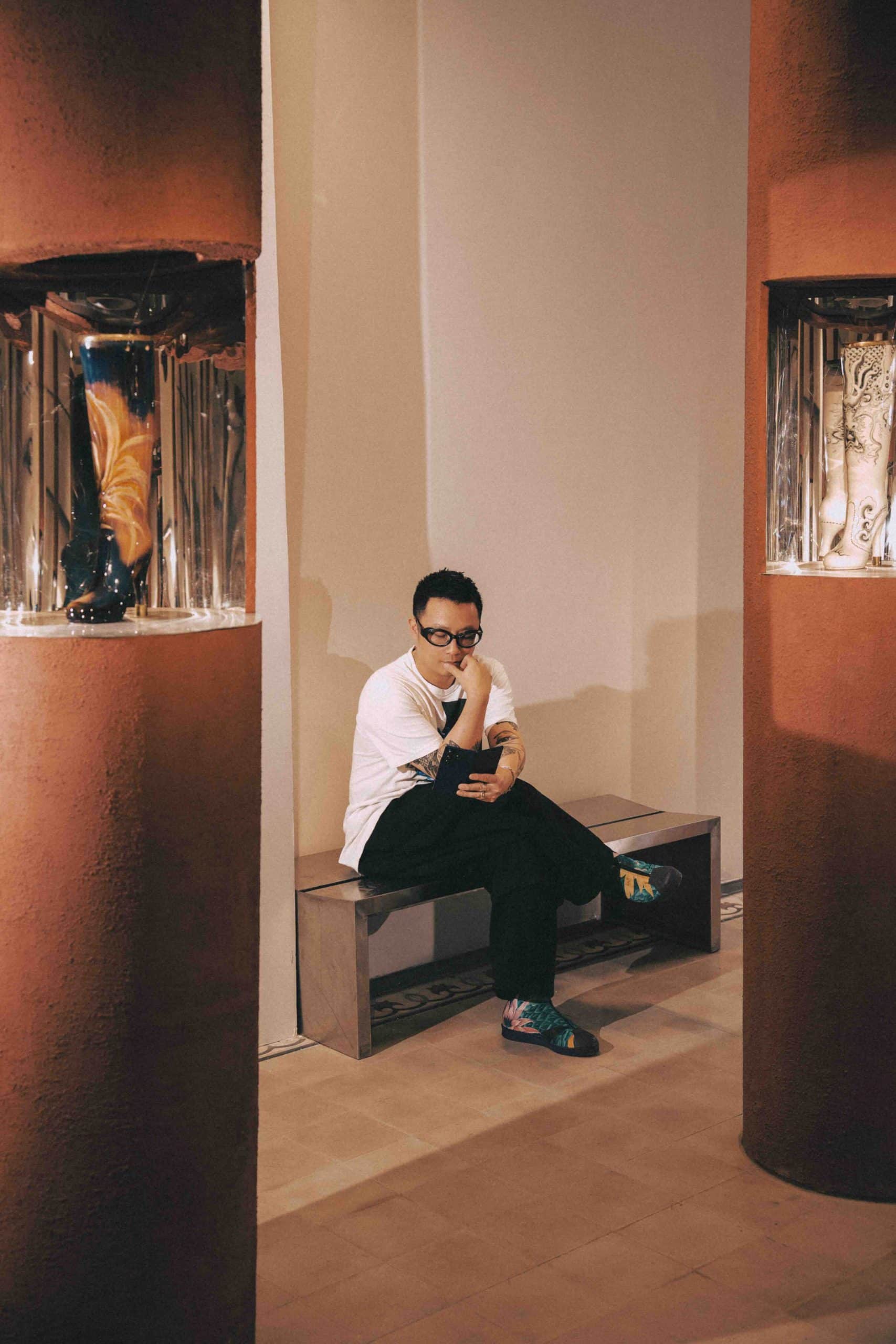
Heritage meets Vu Khanh Tung, who now runs the musium he inherited from his late father, to hear his story of heritage – and learn how a private museum can serve as a creative force within contemporary cultural life.
Is the Bat Trang Museum a museum, an architectural work, or a cultural statement?
From the moment it was named The Art Museum of the Soul of Vietnamese Earth – Bat Trang, my father, the late People’s Artisan Vu Thang, envisioned it not merely as a place to preserve artifacts, but as an open heritage space where traditional values could be disseminated through creativity. “Bat Trang” itself encapsulates the village’s craft tradition and ceramic history, while “art museum” extends to other creative forms, where ceramics are placed in dialogue with architecture, design, and contemporary life.
I returned with a desire to continue that spirit by forging new connections, allowing ceramics to engage more deeply with contemporary thought. I intentionally renamed it the Bat Trang Museum – a name that preserves local identity while naturally connecting with the international language of the concept of a “museum.”
What moment convinced you that Bat Trang ceramics needed a new storytelling space?
It was when I saw twelve ceramic shoes my father created on display at the 2022 exhibition “The Ceramic Shoes of Bat Trang and a Stroll Through Italian Culture” in Hanoi. The exhibition space was carefully designed in its entirety – from visuals and sound to scent – creating a cohesive and emotionally rich experience.
Previously, my father’s work was shown mainly in the craft village, reaching a relatively limited audience. At that exhibition, however, the response from the public and the media – especially young people – showed that, when presented in a different context, ceramics could become a more relatable form of expression, closer to everyday life and emotion. That experience convinced me that creating new narrative spaces for heritage can open more accessible pathways for future generations.
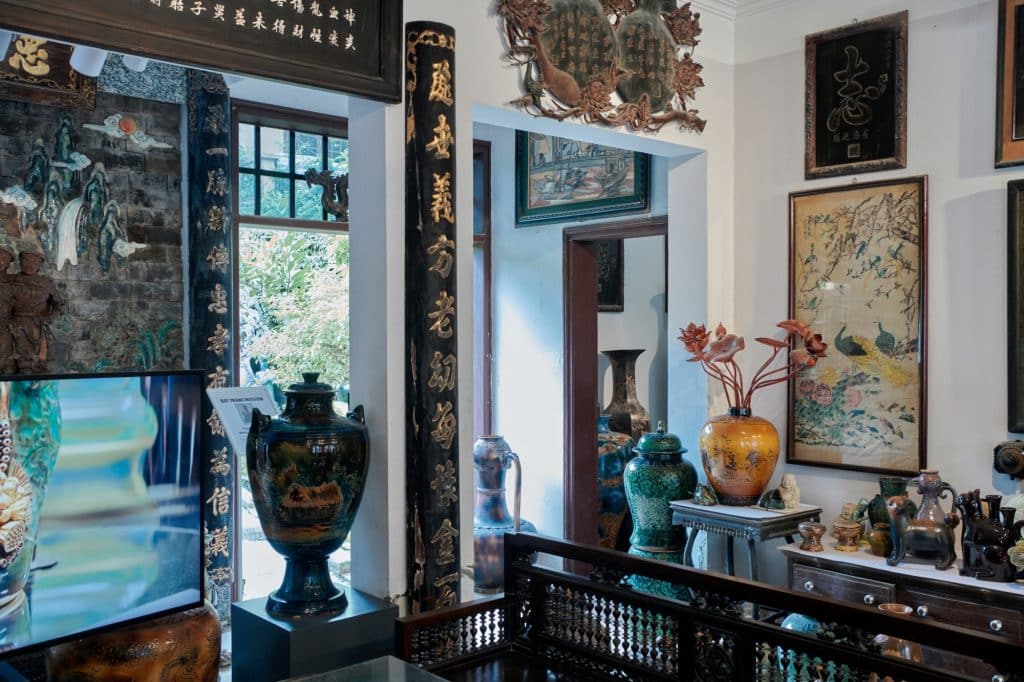
What does it take for heritage to be not only viewed but also engaged in dialogue?
The Bat Trang Museum does not prioritize static or “completed” exhibitions. Instead, we have developed the Bat Trang Museum Atelier (BTMA) – the successor to our family’s nearly 50-year-old ceramic workshop – as a space of practice, where heritage continues to be used, researched, and placed in dialogue with contemporary artists and designers.
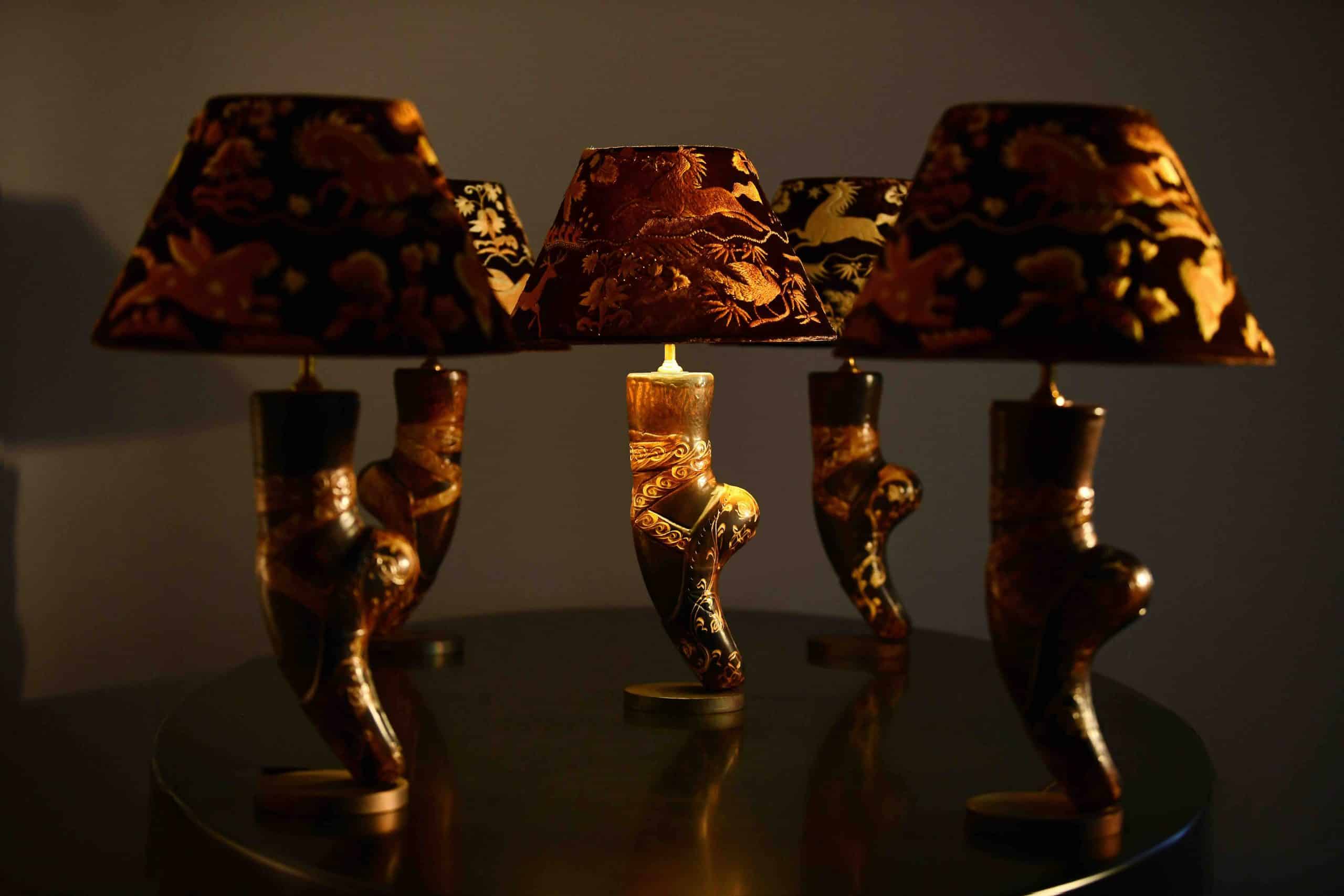
Core elements of traditional ceramics – form, glaze color, motifs – are distilled and then developed through collaborative projects. Con Vit Collection, created with Beaulo and architect Nguyen Ha, exemplifies how BTMA works: starting from my father’s original pieces, the team reexamined form, proportion, and spirit to create contemporary designs such as the Togan lamp and Nga Nga vase.
This dialogic spirit continues through projects like Rong Pho, An Nam, Ai Oi, Ma Nien, and the fusion of ceramics and embroidered velvet in works such as Thang Hoa and Suoi Nguon, including the Ballerina table lamp. Each project takes a different approach, yet all aim to keep heritage alive through practice rather than static display. At the same time, collaboration and product development generate the resources needed to sustain and nurture the museum.
What have younger generations gained from these dialogues?
I don’t think young people need to carry the burden of redefining Bat Trang ceramics. What matters more is that they find a genuine connection to their roots, as a rich source of heritage. When that connection runs deep enough, creativity emerges naturally through working and experiencing, without the need to force differentiation.
Bat Trang ceramics have always been rich enough to open new pathways, as long as practitioners remain patient and honest with the craft. Revitalizing a craft village, in my view, cannot come from a single individual – it is a collective process that requires time and sustained dialogue.
Do you worry that innovation might dilute the essence of the craft village?
To me, there is no clear boundary between the old and the new. The real boundary lies in how practitioners approach heritage. Innovation only becomes meaningful when grounded in tradition, with patience and respect for what already exists.
I don’t believe Bat Trang needs to be measured by comparisons or rankings. More importantly, it is a layered living space – where ceramics, architecture, and community life have been nurtured across generations. If the Bat Trang Museum can serve as both a stopping point and an initial point of contact that sparks curiosity, encouraging visitors to delve deeper into the village’s story, then it has fulfilled its role.
Do you see the Bat Trang Museum project as something that needs to be completed?
I don’t view the Bat Trang Museum as something to be finished, but as an ongoing journey. My father laid the first bricks under the most difficult circumstances. My role is to continue that path – so that the spirit of labor and creativity can be preserved, expanded, and passed on to future generations. Heritage is only truly sustainable when it continues to be told, renewed, and kept in dialogue with its time.