Story: Nam Hoa
Photos: Thai Viet Hoan
Discover the sights and sounds of Tan Thong Hoi Village – long known for its handmade beaded bamboo curtains.
I arrived in Tan Thong Hoi Village, Cu Chi Commune, Ho Chi Minh City, on a mild sunny day. A quiet, narrow lane lay beneath rows of trees, where slivers of sunlight filtered through the canopy and fine bamboo dust drifted lazily in the air. On the outskirts of Vietnam’s most dynamic city, time seemed to slow down in this peaceful craft village. Bamboo leaves, layers of paint, and the soft rustling of beaded bamboo curtains bore a simple yet deeply resonant story.
Where hands tell stories
The beaded bamboo curtain craft village of Tan Thong Hoi was founded around 1975 and flourished during the 1980s and 1990s, when its products were exported to many countries worldwide. Today, after facing various challenges, the village is quieter than during its golden years. Nonetheless, the craft still supports local residents and contributes to promoting Vietnam’s image internationally.
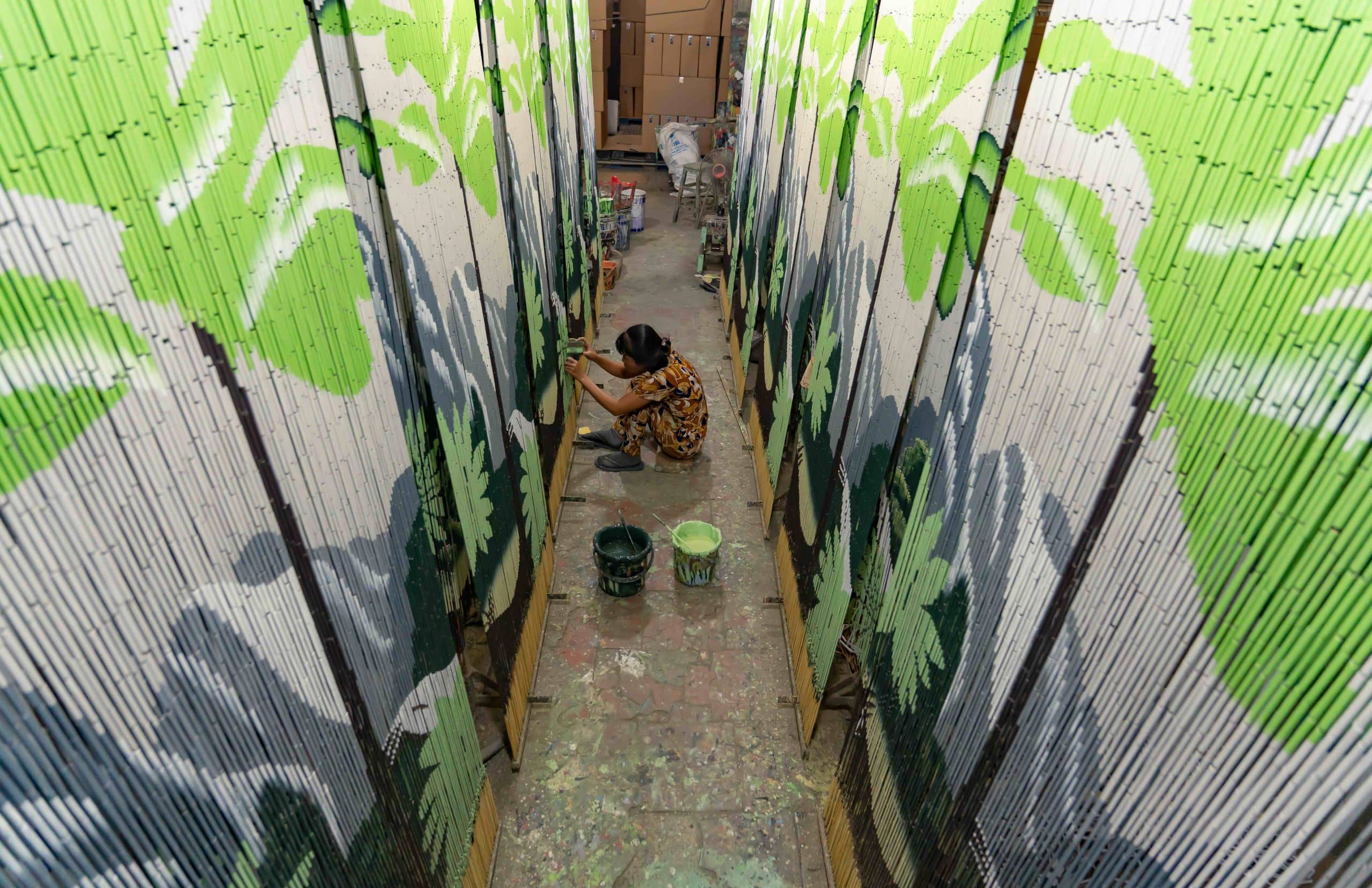
Beaded bamboo curtains are handmade. Artisans begin by selecting bamboo that is neither too young nor too old, which is cut into even sections, before being soaked, dried, polished, threaded, framed, and painted. Every step demands skill and experience gained over time. The bamboo is sliced into small segments about 6 cm long, mixed with sand to remove the outer membrane, then soaked in bo hon water – a traditional preservation method – to prevent termites. The pieces are sun-dried or kiln-dried at appropriate temperatures. Once ready, the bamboo beads are threaded and assembled. Dry bamboo segments are strung together on thin metal wires and hung on fixed frames to form bamboo curtains. This process requires great precision. Only skilled artisans can create a uniform and sturdy curtain.
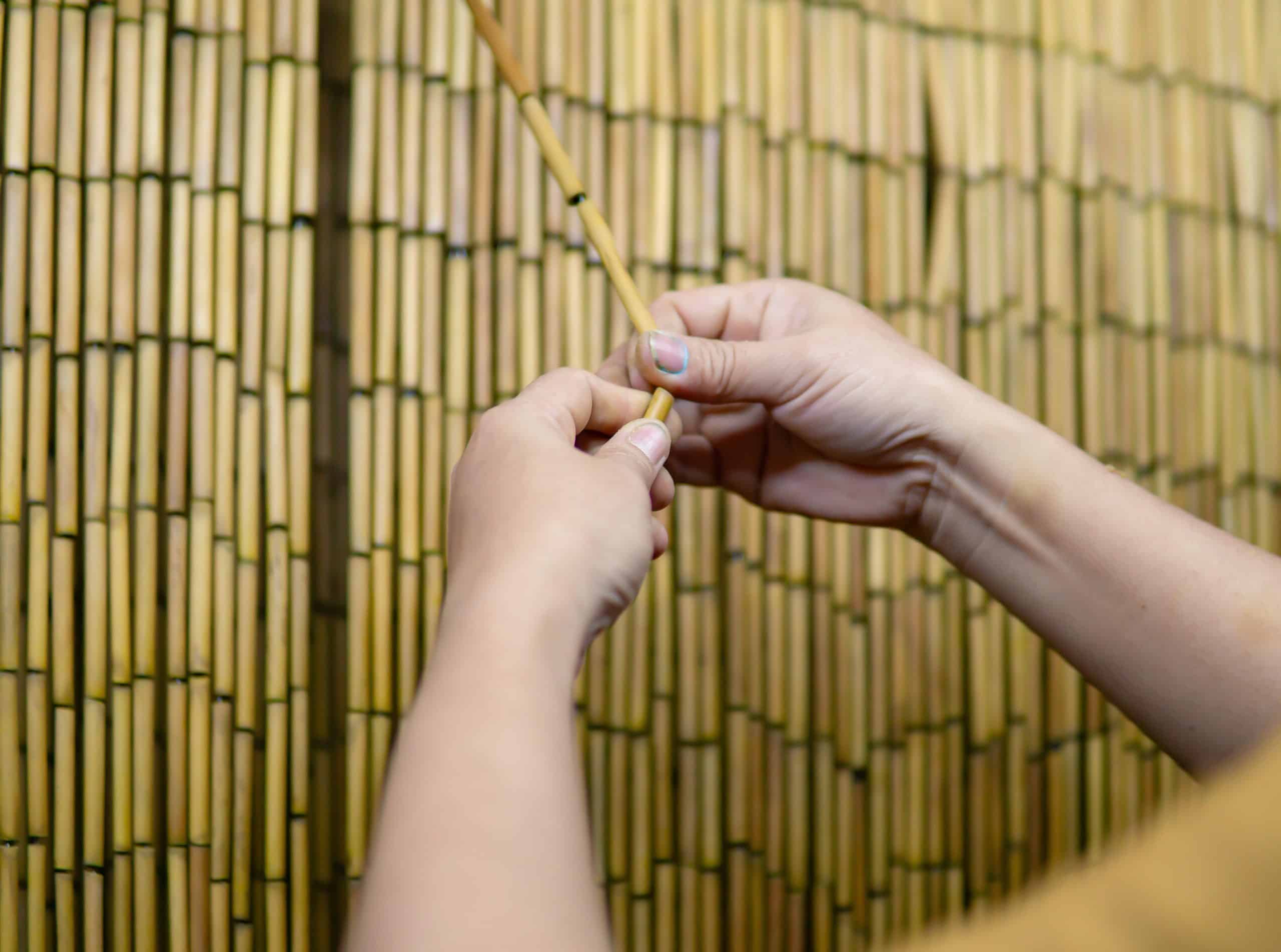
The final stage is key and demands aesthetic sensibility: painting decorative patterns onto the curtains. Artisans mix paint colors based on experience and intuition rather than fixed formulas. The painting technique is distinctive: instead of brushes, artisans use small sponge pads soaked in paint to create patterns. It takes great skill to achieve delicate and vivid strokes. Each finished bamboo curtain is unique, bearing the unmistakable imprint of its maker.
When bamboo beads rustle in the wind
For villagers, beaded bamboo curtains are more than sunshades. Each bamboo bead, wire strand, and tiny knot gathers fragments of time, creating a symphony that only patient listeners can hear.
Beneath a bamboo grove, I entered a small workshop resonating with the soft clatter of touching bamboo beads. The faint scent of bamboo lingered in the pale sunlight as elderly artisans focused on threading carefully polished bamboo beads onto wire. They nodded gently in greeting, their hands never pausing. “Sit and relax. We’re framing the curtains,” explained an artisan. “The afternoon wind is beautiful today – the curtains will sound lovely.” Indeed, these curtains must be heard as well as seen.
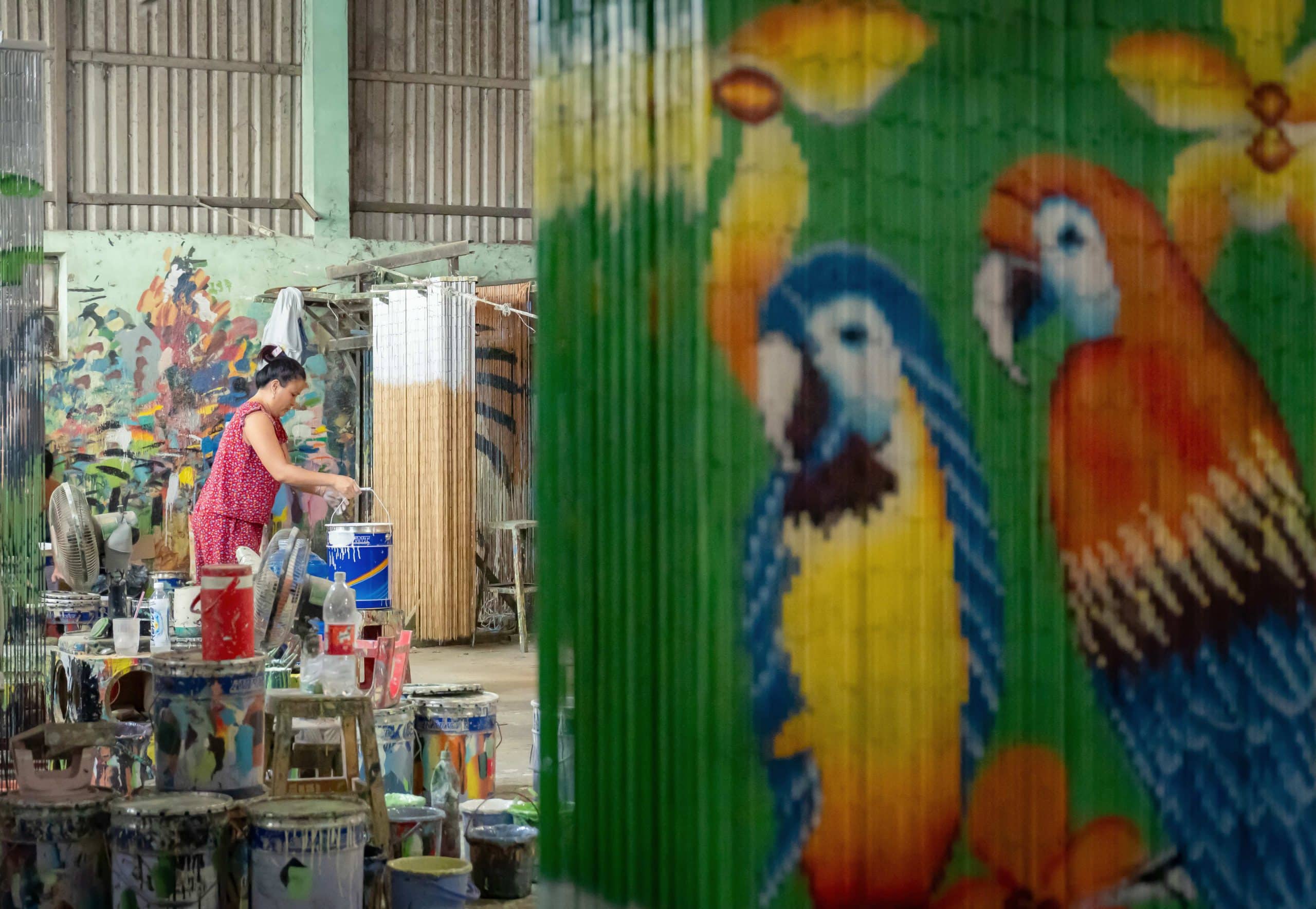
I touched a newly finished curtain, feeling the coolness of the bamboo, inhaling the faint scent of fresh paint, and listening to its sound. In the golden afternoon light and gentle breeze, the bamboo curtains began to speak. Their sound was soft yet rhythmic, quietly inviting me to linger. In this tranquil place, my heart felt unexpectedly stirred. The faint clicking of bamboo beads reminded me of the murmured conversations of old friends, evoking something ancient and distant, yet strangely close.
An elderly artisan spoke to me, his eyes holding both pride and concern – pride in a craft handed down through generations, concern over whether younger hands will have the patience to string wires evenly, dry bamboo, or mix paint by hand. I realized I was experiencing a different kind of travel: not simply observing, but stepping into a rhythm of life shaped by process, repetition, and quiet skill. Standing alone in the empty yard, I listened as the wind moved through each string of bamboo beads. In that moment, understanding came to me. The sound was the breath of this place. Wind has no form, yet it becomes real when it touches bamboo – just as memory needs something tangible to take shape.
I left Tan Thong Hoi carrying a small beaded bamboo curtain, hoping that one day, when I open a window, the wind will pass through it and create that familiar sound – fragile, gentle, and enduring.