Vinh Dav
As the year ends, Hanoi’s peach blossom villages burst with color and fresh hopes for a brilliant year ahead.
When the air turns crisp in Hanoi, the mid-river islets carry the scent of alluvial soil, mist drifts over the sandbanks, and the streets grow more lively. For the city’s peach tree growers, it’s the most crucial season of all, every bud tended with care as they prepare for the approaching spring.
to welcome the spring
At this time of year, Hanoians begin inviting one another to “go see the peach blossoms.” More than a simple year-end outing, the journey to the peach-growing villages along the Red River – especially Nhat Tan and Phu Thuong – has become a cherished ritual, a way to feel the pulse of the year’s final days and glimpse the first signs of spring. It is the most beautiful season in these villages, when visitors come not only to admire the flowers, but to experience the soul of Tet in the northern tradition, the enduring essence of ancient Thang Long.
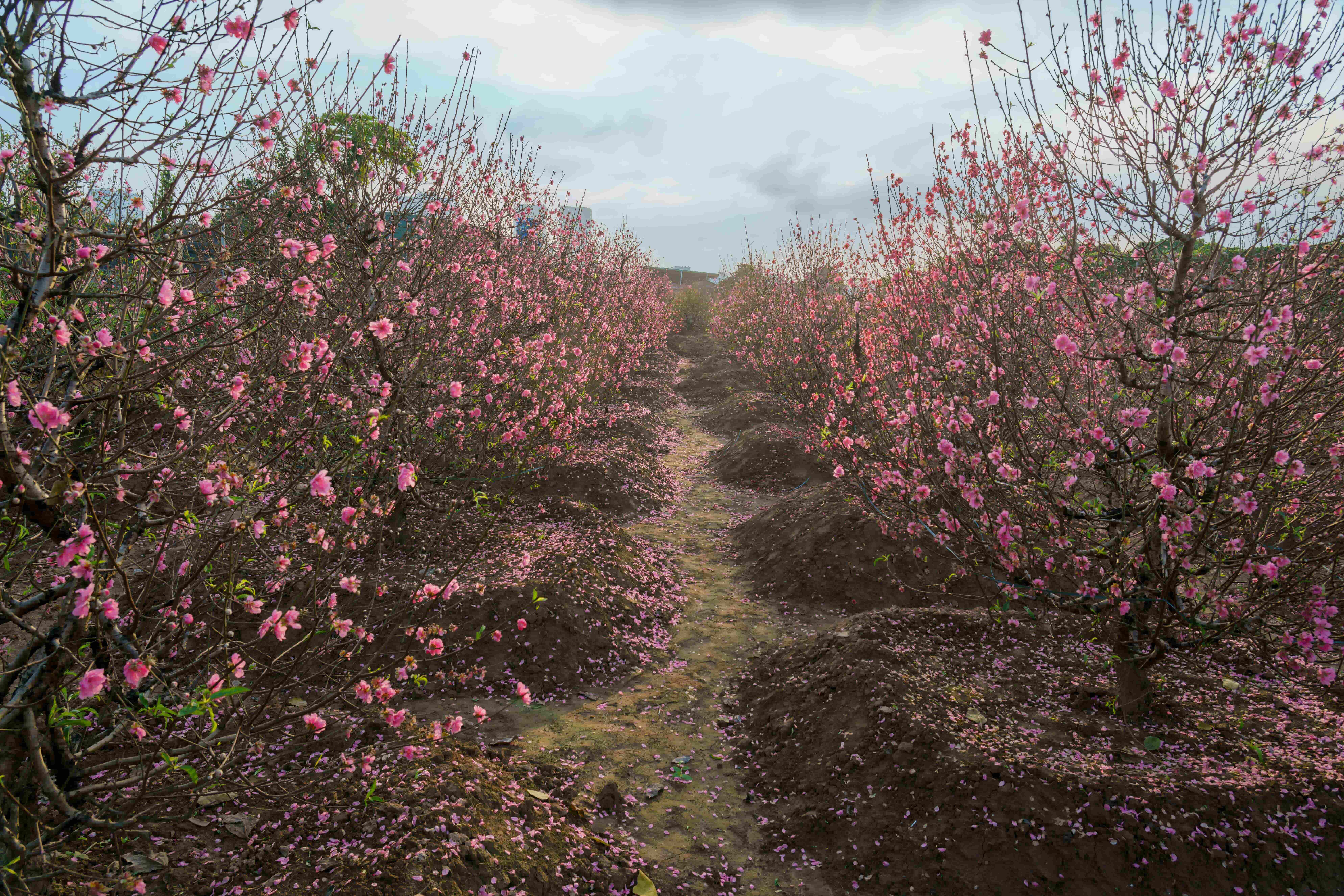
From the city center, it takes only 15 to 20 minutes to reach Au Co Street, from where many small lanes – such as Lane 264, 374, and 464 – lead straight into the gardens of Nhat Tan, Hanoi’s largest peach blossom village. Another flower-viewing route winds under Nhat Tan Bridge through Lane 16 An Duong Vuong toward Phu Thuong. Leaving behind the urban bustle, visitors step into an entirely different world: vast fields awash in bright or pale pink blossoms, the joyful excitement of shoppers and sightseers, laughter echoing across the gardens, and the faint fragrance of pollen drifting in the wind. All of these elements create a fresh, vibrant tableau that heralds the approach of spring.
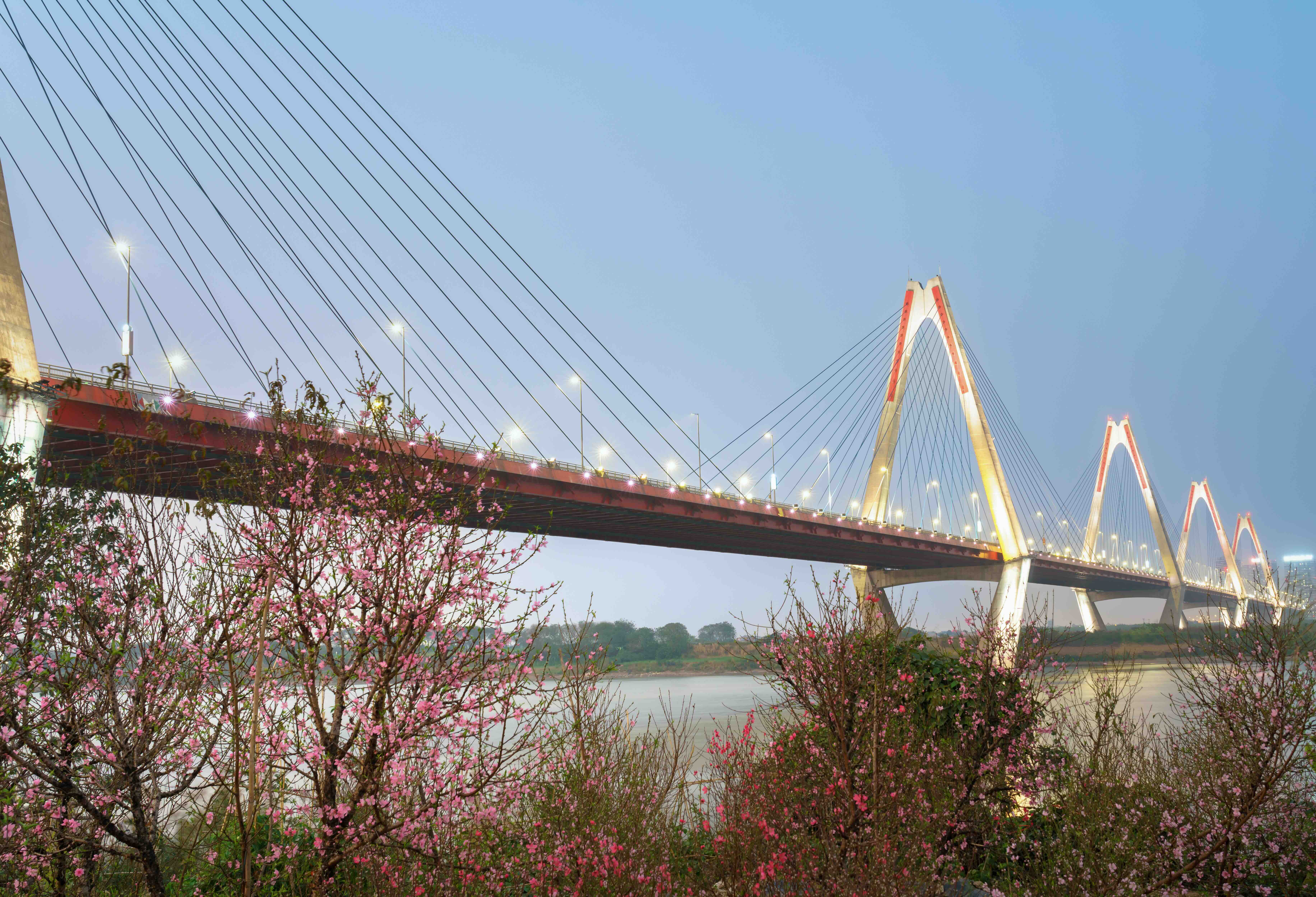
Viewed from above, the arc-shaped alluvial strip embracing inner Hanoi stretches from Dong Ngac Ward through Phu Thuong to Hong Ha, ending at Bo De. While this strip of land is long, only Nhat Tan and Phu Thuong boast the ideal soil and microclimate for cultivating peach trees. Centuries ago, this soil lay on the riverbed. Over time, alluvial deposits formed a layer of fertile soil washed clean of salinity, rich in organic matter, and able to retain moisture.
Unlike the newer floodplains on the Long Bien side, Nhat Tan’s higher elevation allows quick drainage and prevents the soil from becoming waterlogged. Moreover, the Red River flows east to west at this stretch, meaning the strong winter monsoon winds and humidity that heavily affect areas downstream pose less of a threat to Nhat Tan, which is protected by a line of houses and dykes. These special conditions are suited to growing highly sensitive peach trees, helping them to withstand rot and develop strong branches with evenly formed buds. Blessed by nature, the people of Nhat Tan transformed this area into the “spring lifeline of Thang Long.” As local flower growers like to say: “The soil here has a spirit – give it little, and it still thrives; plant anything, and it blossoms.”
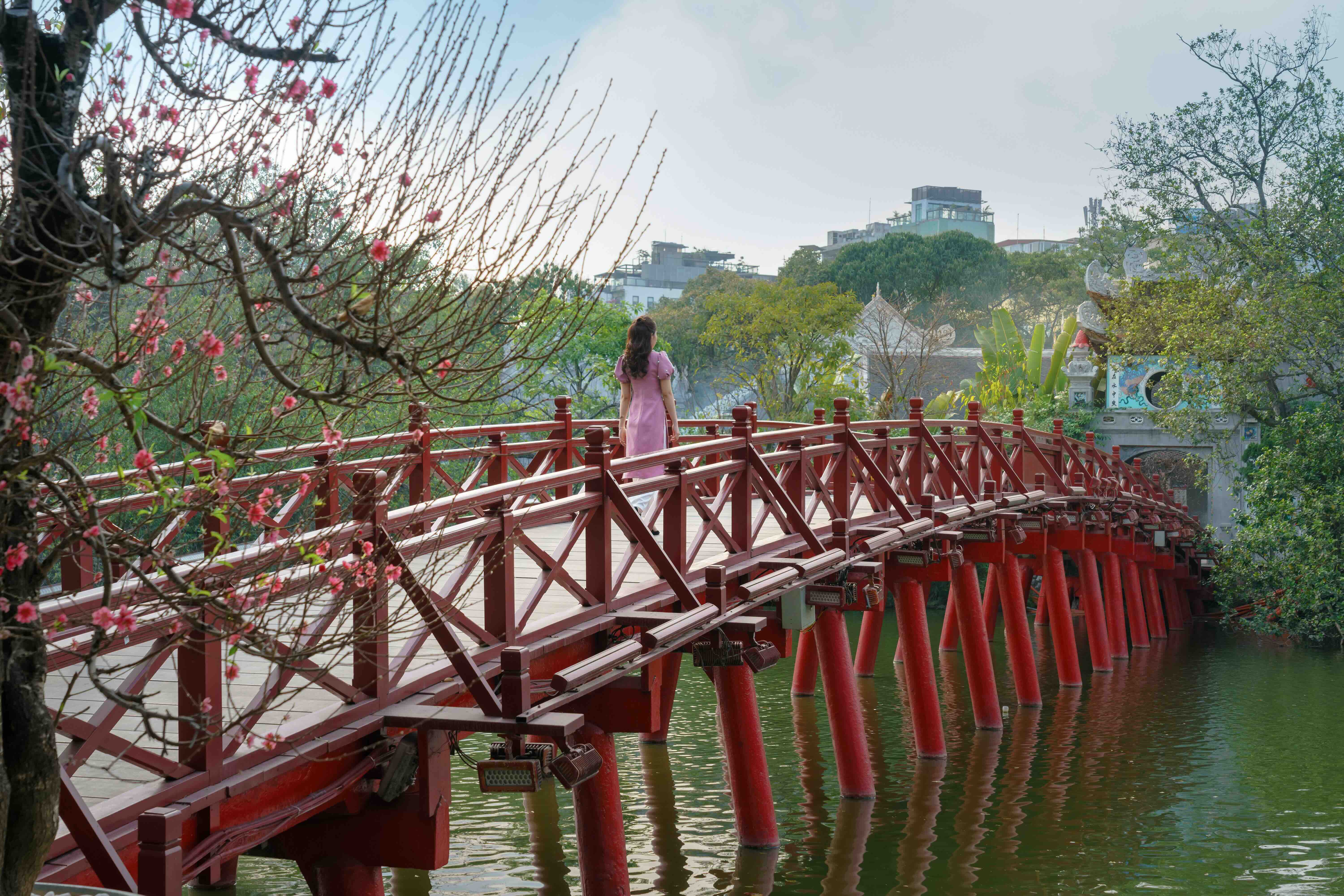
The greatest secret of these peach growers lies in their mastery of timing the blossoms to open between the 23rd and 28th days of the last lunar month – no matter how unpredictable the weather. From late October to early November in the lunar calendar, leaves are stripped to interrupt the tree’s growth, sending it into an early “winter’s sleep.” Afterward, growers carefully manipulate the trees to delay blooming – limiting water, shading the plants, reducing fertilizer, or girdling the bark – or to accelerate it, by warming roots, increasing sunlight, covering the trees with plastic, or applying booster nutrients. Thanks to this careful artistry, in the days before Tet, visitors are greeted by dazzling blossoms: vivid pink dao Bich, soft pastel dao Phai, and pure white Bach Dao, whether on ancient trees, sculpted bonsai, or The peach trees.
Visitors to the peach villages do more than sightsee and take photos. They come to chat with the artisans, listening eagerly as they describe special varieties of peach trees such as Long Giang, Huyen Nhai, Truc Quan Tu, Ngu Phuc, and Tam Da, or learning how to distinguish dao Bich from the rare dao that thon variety.
These are cultural encounters almost untouched by time, right in the heart of the capital. At these moments, spring touches the earth. Tet is not felt in shopping malls but in the hands of farmers and the season’s first vibrant blossoms. These experiences are reminders of the spirit of this land: despite shrinking farmland and rising concrete towers, the peach growers remain steadfast, tending each root and awaiting each bud – much like Hanoi quietly preserves fragments of its old soul amid the modern cityscape.
Amid the city’s hurried pace, Hanoi’s peach blossom villages hold the gentle hues of spring. Beyond capturing beautiful photographs, a visit offers a deeper understanding of the city’s elegant, understated charm, where spring begins with a single pink bloom. Here, Hanoians “plant Tet in the autumn,” tending each bud as one nurtures hope. When a blossoming peach branch is placed on the family altar, time, earth, and people meet in the most sacred moment of the year. As one grower told me, her face bright with pride: “We grow peach blossoms not just to sell flowers, but to keep spring alive.”