Story: Prof. Dr. Trinh Sinh
Photos: Amachau
For millennia, the Vietnamese village has been the foundation of social life, cultural continuity, and collective identity.
How old is the Vietnamese village? Recent archaeological excavations at the Vuon Chuoi site in Hoai Duc, Hanoi reveal that communities belonging to the Phung Nguyen, Dong Dau, Go Mun, and Dong Son cultural periods – dating back several thousand years BCE – had already established villages and hamlets in this area. Archaeologists have uncovered postholes from stilt houses and clusters of ancient graves, evidence of a sizable and stable settlement. Together with contemporaneous sites in Hoai Duc, including Chua Gio, Vinh Quang, Giang Xa, Go Chua, Lung Hong, and Go Chien Vay, Vuon Chuoi formed part of one of the region’s most active networks of interconnected villages. From such clusters emerged the early Vietnamese village: communities of ancient Viet people living side by side, cultivating the Red River Delta and laying the foundations of the Vietnamese nation.
Over thousands of years, the Vietnamese village evolved alongside the Vietnamese people, developing a character distinct from that of villages in neighboring countries. Western scholars recognized this difference early on. In 1936, Pierre Gourou observed that villages were “surrounded by a bamboo hedge,” whose dense, thorny branches formed an effective barrier against thieves, while also marking a “sacred boundary” of the village community¹.
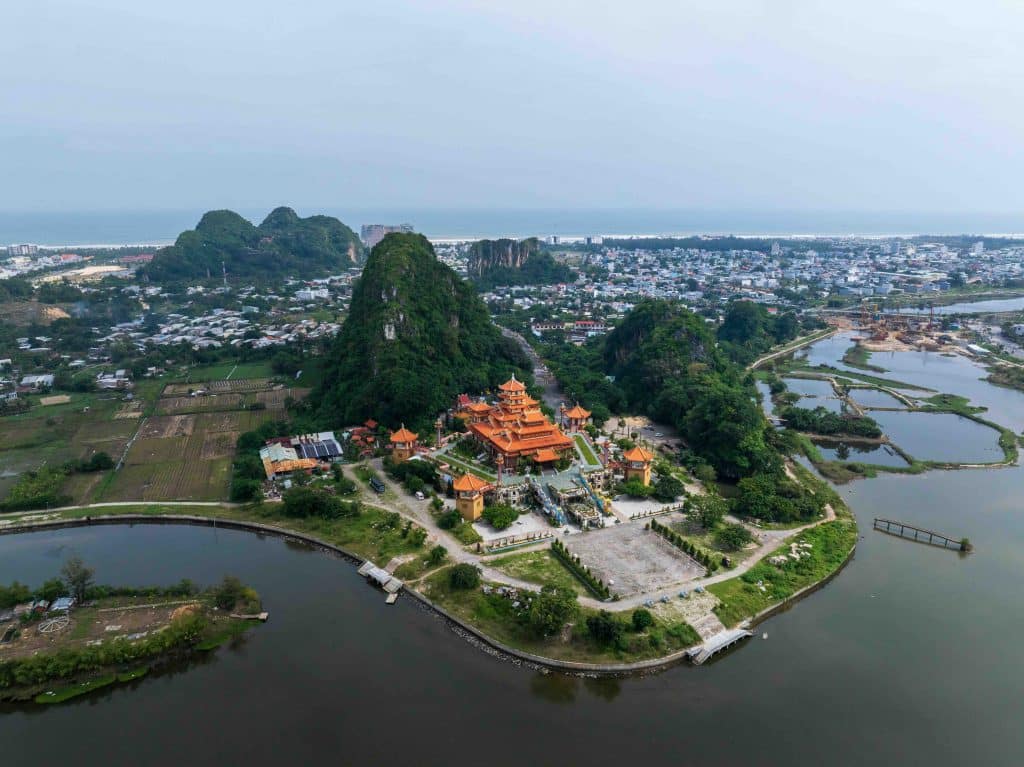
Within this bamboo enclosure ran village paths, often skirting ponds, and two or three village gates, usually built of brick. A typical village also included a communal well, a communal house (dinh) dedicated to the Thanh Hoang (the village tutelary deity), and a pagoda for Buddhist worship. Even today, many Vietnamese villages preserve these traditional features, including Duong Lam (Hanoi), Tho Ha (Bac Ninh), Lang Sau (Bac Ninh), Hung Lo (Phu Tho), and others.
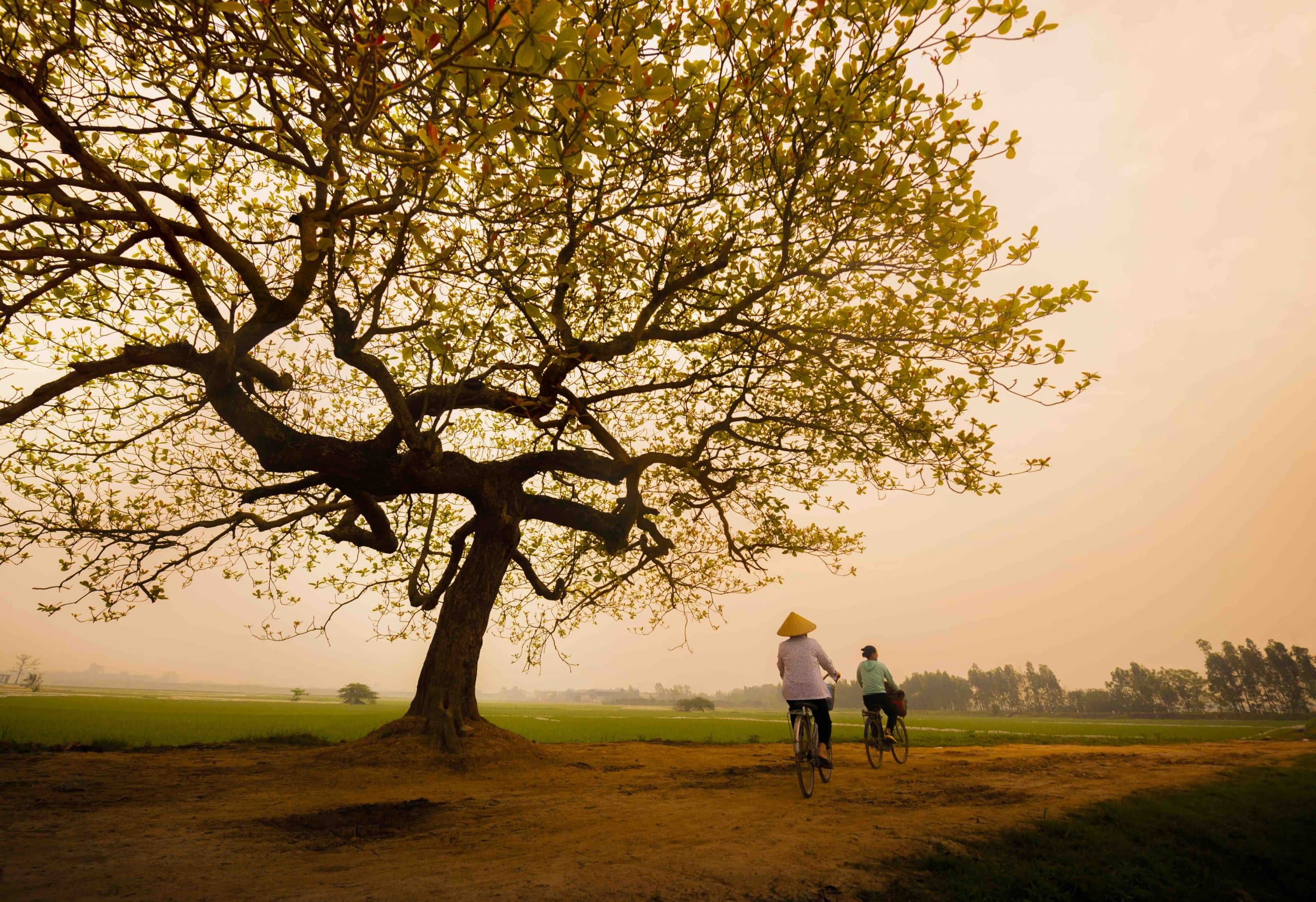
For Vietnamese musicians, the village has long served as a source of inspiration. The composer Van Cao, for example, captured its familiar rhythms and imagery in the lyrics of the song Lang toi: “My village, green in the shade of bamboo; the evening bell, the church bell ringing. Life is joyful in the beloved countryside; areca palms and a boat, a river…”
The village’s shared communal space is easy to picture and often strikes most deeply for those who have lived far from home. Folk verses express this sentiment clearly: “The banyan tree, the water landing, the communal courtyard / Travel far and I miss what we share, my dear.” This trio forms a central symbolic image of the village. Other familiar symbols include bamboo groves, the river, temple and shrine roofs, paved village lanes built with bricks set vertically, and the village well, long remembered as a meeting place for young couples on full-moon nights.
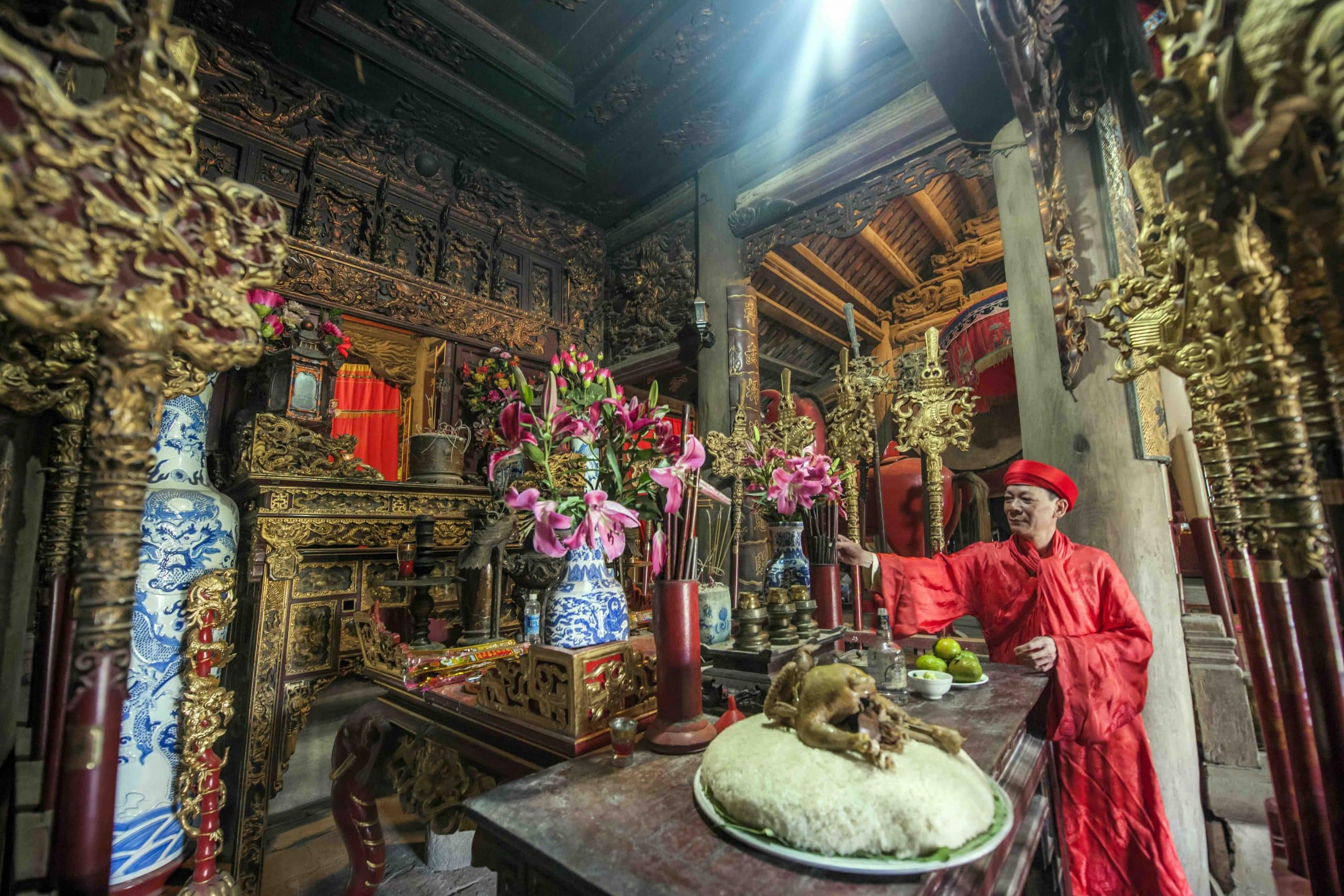
The village’s spirit also endures in its religious sites. The saying, “Each village rings its own bell; each village worships its own saint,” reflects a common pattern in which every village maintains its own sacred order. Typically, a Vietnamese village has a pagoda dedicated to the Buddha and a communal house devoted to the Thanh Hoang . These sites also preserve important tangible heritage, most notably the wood carvings created by folk artisans in communal houses. Executed with skill and precision, the carvings range from elite symbols such as dragons and phoenixes to scenes of everyday life, and include animals familiar to farming and village routines, among them horses, monkeys, fish, birds, and cats.
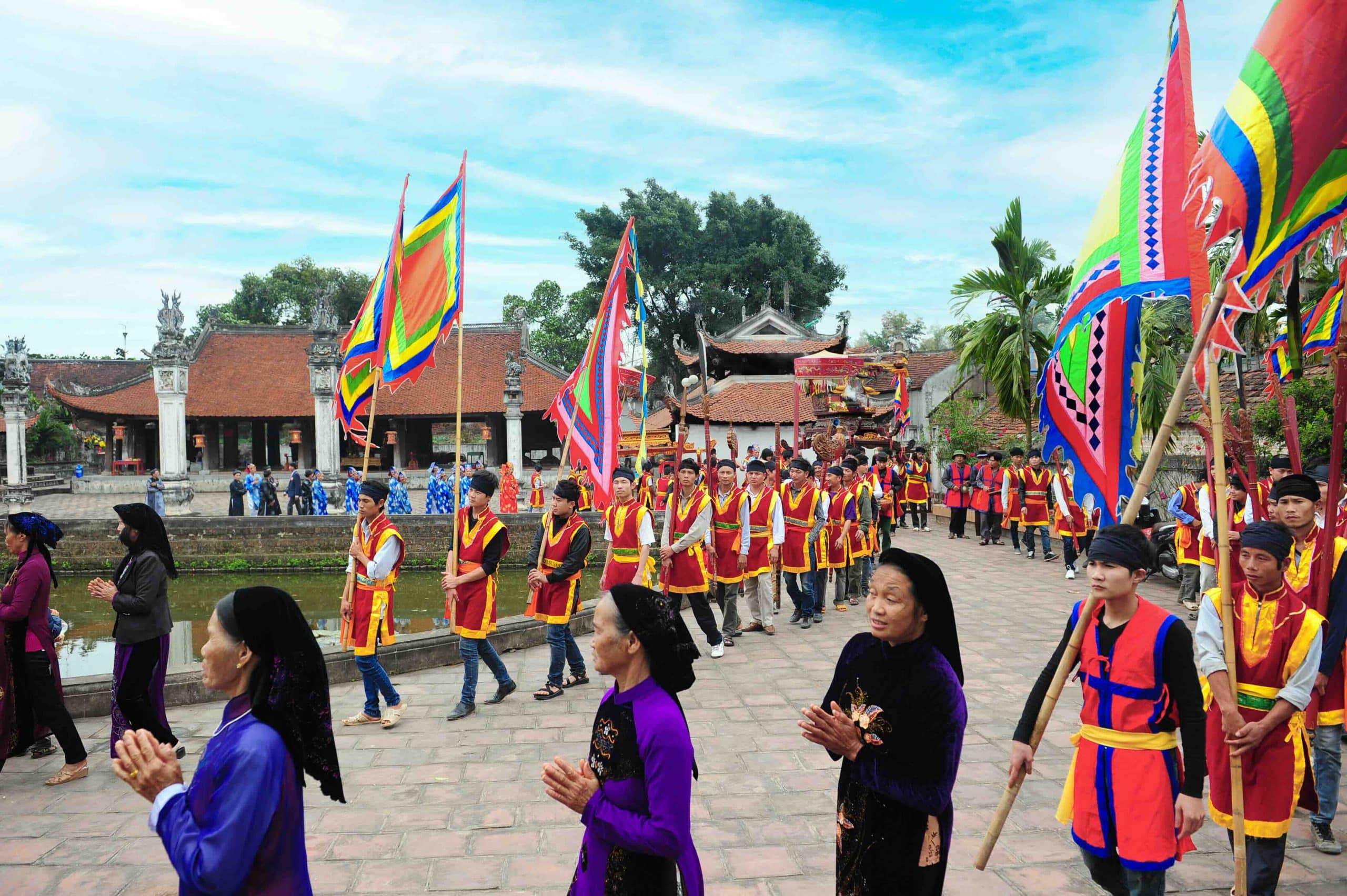
Within the village’s communal spaces also exists a system of intangible cultural heritage, more vivid in form and sustained through generations of practice and memory. In his book Tam ly nguoi An Nam (Psychologie du peuple Annamite), published in 1904, Paul Giran observed that the Vietnamese were “a remarkably unified people, grounded in strong family organization and village communities. Together, these units formed a tightly connected social structure, operating through a coherent and intelligent hierarchy”2.
Vietnamese unity first took shape through the long historical process of resisting foreign invasion. To avoid assimilation, the Vietnamese asserted and preserved their own cultural identity. As a result, within the broader “Bach Viet” world – often understood as a constellation of Viet groups who share common origins and customs tracing back to the Hung kings’ state of Van Lang, the Vietnamese are regarded as the only community that was not absorbed by expansionist powers. In this sense, Paul Giran was right to describe Vietnamese society as a unified whole, shaped by an effective hierarchy rooted in the village (xa, thon) and the family. Other scholars have similarly argued that the Vietnamese family and the Vietnamese village constitute the core units of society, what Professor Tu Chi called “the living cell of Vietnamese society.”
Within the village, huong uoc (customary rules) functioned as a form of law with real deterrent power, giving rise to the saying “phep vua thua le lang” (the king’s law yields to village rules). Villages enforced a strict social order in which “trong xi hon trong tuoc” meant that age carried greater authority than official rank. Communities imposed punishments firmly, and people genuinely feared them. In some places, those who violated village taboos faced expulsion: they were forced to leave without passing through the main gate, exiting instead through a side gate, and many never dared to return home.
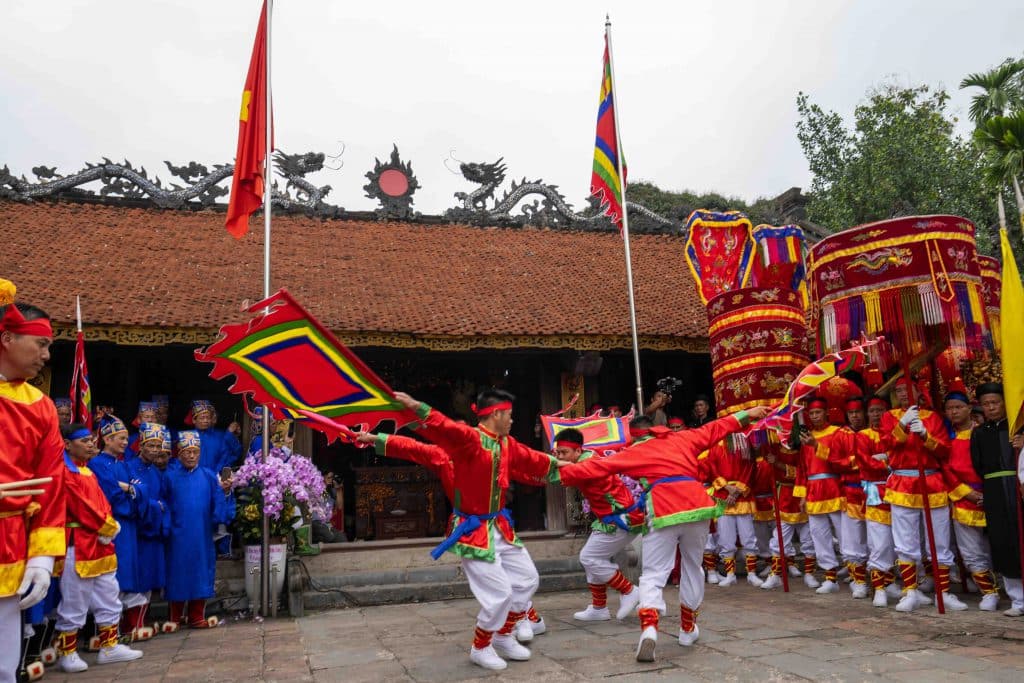
Villages also organized communal activities throughout the year according to the lunar calendar, including Tet Nguyen Dan (Lunar New Year), Tet Trung Thu (Mid-Autumn Festival), le Ha Dien (rites marking the start of fieldwork), le Thuong Dien (rites marking the end of fieldwork), and other observances. Each village maintained its own festival day as well, often linked to the birth or death dates of its Thanh Hoang.
Today, many formerly rural areas have urbanized, and Vietnamese villages have changed, at least in outward appearance. Yet their core endures: religious and cultural sites, along with annual festivals repeated year after year. The state now promotes “cultural industries,” with tourism as a key sector, and villages play an important role in this strategy. They help preserve traditional values while attracting visitors from afar. Through the village, tourists can engage with Vietnamese culture in a direct and tangible way. As Vietnam integrates more deeply with the world, villages continue to sustain their identity while also creating additional sources of local income through tourism.