Story: Bao Phuong
Photos: Photo tour Heritage – Lao 2025
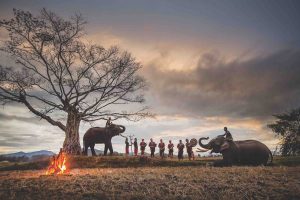
The Heritage Photo Tour delegation enjoyed a captivating journey through southern and central Laos.
The Heritage Photo Tour of Laos, held in the final days of November 2025, was a remarkable journey for every member of the delegation. The tour was part of a series of activities celebrating the 50th National Day of the Lao People’s Democratic Republic, co-organized by the Vietnamese Consulate General in Pakse, Champasak Province, and Heritage.
The delegation included nearly 20 travel bloggers and photographers from all three regions of Vietnam – the largest team ever assembled for an overseas assignment. Although Heritage organized its first photo tour of Laos in 2018, this year’s trip carried special significance, marking the first time the tour was accompanied by Vietnam’s diplomatic mission and authorities from Champasak and Khammouane provinces. Our Lao hosts’ warm and gracious reception deepened our sense of the enduring friendship between Vietnam and Laos.
Along rugged, wind-swept mountain roads
The journey began at the Bo Y border gate and covered over 1,200 kilometers of winding mountain roads. I felt both excited and anxious, having heard so much about the rutted sections and endless potholes ahead. Indeed, the jolts were enough to unsettle many passengers, and there were moments when I tried to close my eyes to fend off my motion sickness. Yet the discomfort quickly eased as our group exchanged stories about work and burst into laughter over lighthearted jokes. The warmth and camaraderie made the long road feel far less daunting.
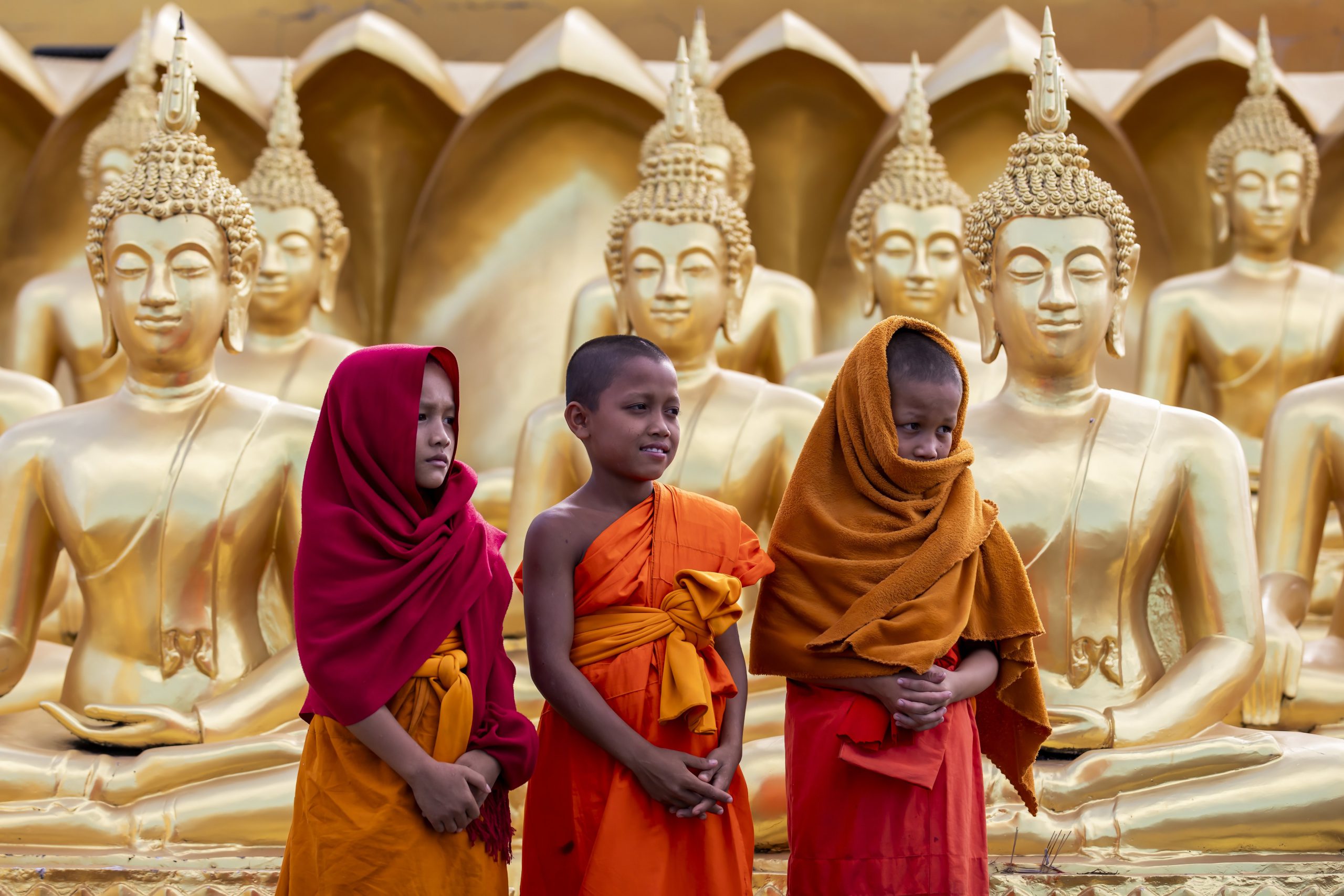
The warmth and hospitality of the Lao people immediately struck me. Everyone I met greeted me with a smile – gentle, sincere, and full of kindness. There is a unique energy in the people here: unhurried, soft-spoken, yet quietly warm. They have a special affection for Vietnamese visitors and welcomed us as if we were family returning home, just as President Ho Chi Minh once wrote.
“Vietnam and Laos, our two nations bound by a friendship deeper than the waters of the Red and Mekong Rivers.”
A land of untamed nature
On the second day, the group traveled to Paksong, a region known for its coffee and majestic waterfalls. Dawn broke gently at the Dao Huong Coffee Garden, with mist blanketing the rows of trees as locals leisurely harvested the ripe cherries. The subtle aroma of roasting coffee lingered in the air.
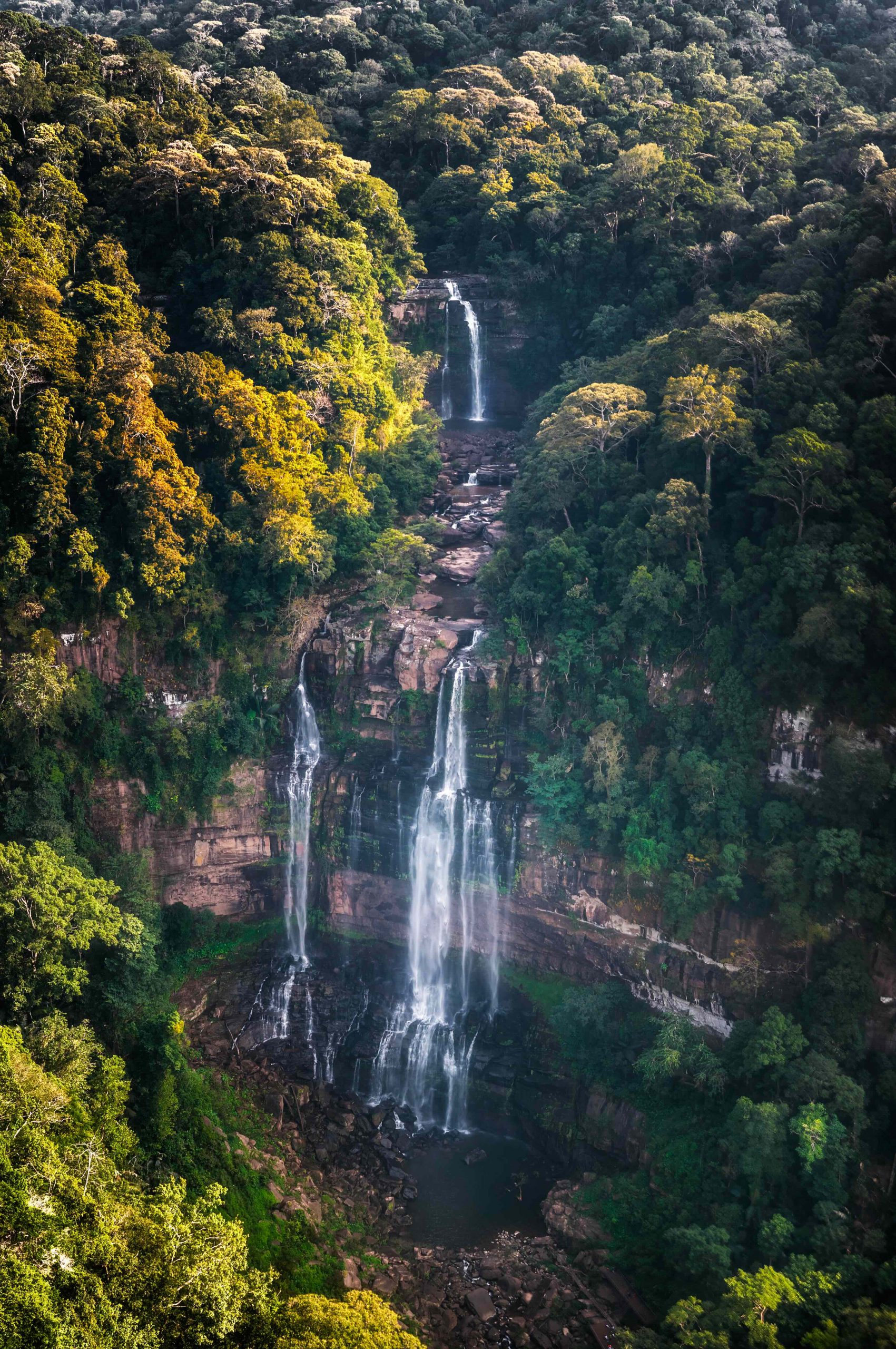
The Bolaven Plateau welcomed us with its breathtaking natural masterpieces – the twin cascades of Tad Fane plunging into a seemingly bottomless gorge, and Tad Gneuang Falls unfurling like a ribbon of white silk across a moss-covered valley
The group’s most unforgettable experience was ziplining across both sides of the waterfall and stopping mid-air for a coffee break while suspended nearly 300 meters above the ground. I enjoyed the coffee’s bold, forest-tinged flavor, along with a quiet sense of pride at having tested my limits.
A millennia-old legacy
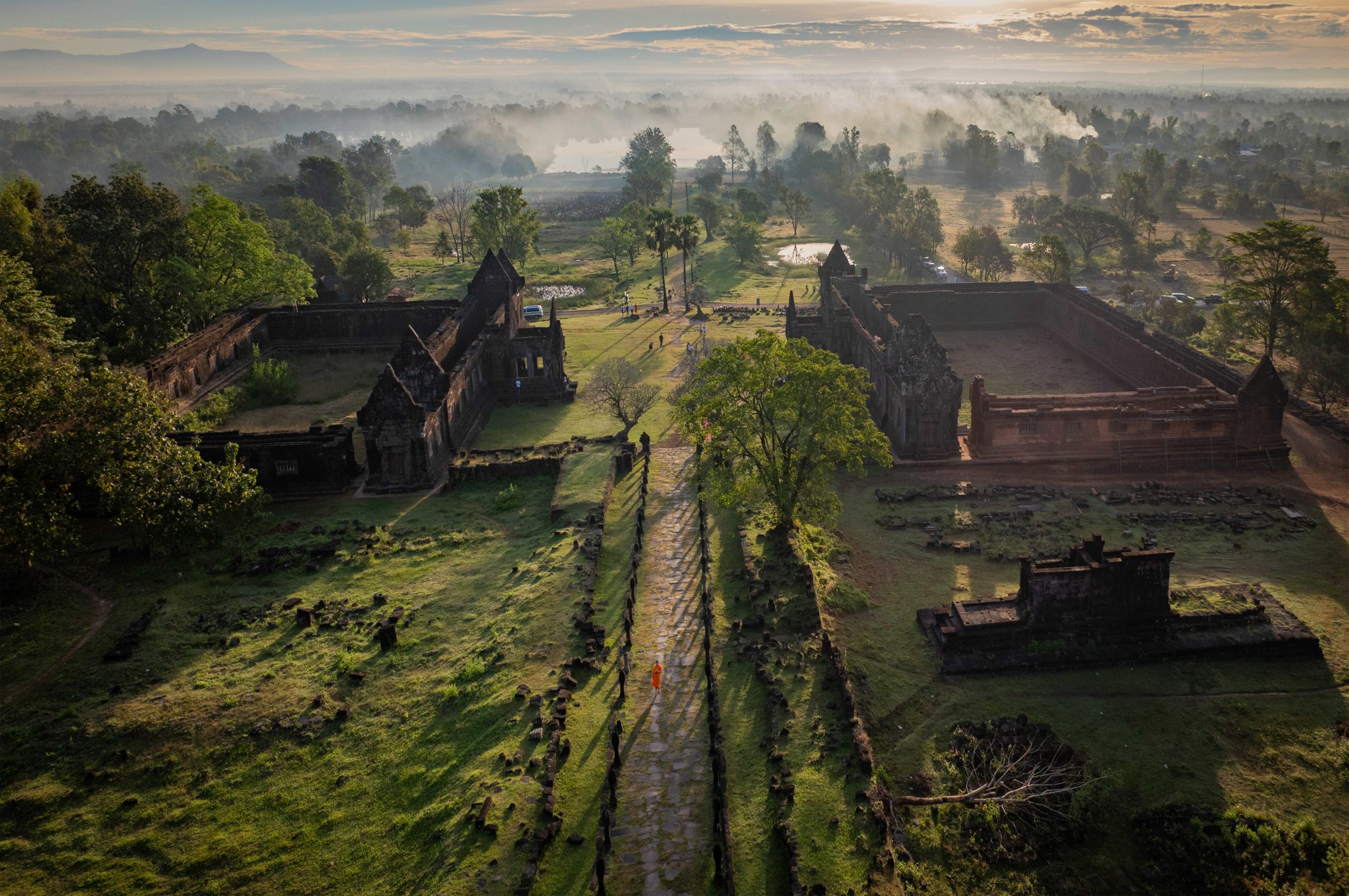
The journey’s most striking moments came in the peaceful stillness of Wat Phou, where the first light of dawn gently brushed over ancient stone slabs, and the silhouettes of monks performing the Tak Bat alms-giving ritual materialized in the morning mist. The graceful movements of traditional dancers seemed to carry the audience back through time, into a story of a once-glorious civilization. Perched on a mountainside, this temple, built in the 5th century, once served as the spiritual heart of the Chenla kingdom, the precursor to the Khmer Empire.
As we headed toward the region of 4,000 islands, our group fell silent before the untouched beauty of nature – the roaring Li Phi Waterfall and the crimson sunset settling over Don Khon and Don Det, where the Mekong stretches endlessly to the horizon.
The final stop of our journey was Hin Nam No National Park in Khammouane Province, recently recognized by UNESCO as a World Natural Heritage site. Together with Phong Nha – Ke Bang, it forms the first transboundary World Heritage site shared by Vietnam and Laos. Just as fatigue began to set in, after wading through streams, trekking deep into the forest, and carrying packs of heavy equipment, we were rewarded by the sight of the emerald Xe Bang Fai River flowing through the heart of a vast cave, and the pristine Xieng Lue Waterfall cascading through untouched rainforest.
As night fell, the group unwound and settled into some of Champasak’s finest and most comfortable hotels. There is the Champasak Grand Hotel, set along the riverbank with its airy, open atmosphere; the Champa Palace Hotel, distinguished by grand domes that evoke the elegance of a royal residence; and the romantic Arawan Riverside Hotel, offering sweeping views directly over the Mekong River. At each stop, Lao cuisine was prepared with remarkable finesse and variety, from fiery, mouth-tingling dishes to herb-infused specialties that captivated us with their signature aromas.
Pausing at the Cha Lo border gate in Quang Tri, each of us carried a lingering sense of attachment, as if the gentle breath of that peaceful land still rested on our shoulders. The warm welcome from the Consulate General of Vietnam in Pakse and our Laotian friends became a source of motivation with every step we took, every shutter we pressed. Their heartfelt hospitality swept away the fatigue of the thousands of kilometers we had traveled by road. As we parted, we all promised: we will return.