Vietnam Airlines has announced the launch of a new nonstop service between Hanoi and Amsterdam, scheduled to commence in June 2026.
Vietnam Airlines has announced the launch of a new nonstop service between Hanoi and Amsterdam, scheduled to commence in June 2026. This will be the first direct air connection between Vietnam and the Netherlands, marking a significant milestone in the National Flag Carrier’s international expansion strategy and further strengthening connectivity between Vietnam and one of Europe’s key economic and logistics hubs.
Starting June 16, 2026, Vietnam Airlines will operate three weekly round-trip flights on Tuesdays, Thursdays, and Saturdays using wide-body Airbus A350 aircraft. The schedule is designed to enhance convenience for travelers flying from Europe to Vietnam, while facilitating seamless onward connections across the airline’s domestic and Asian network. Key destinations include Ho Chi Minh City, Da Nang, Nha Trang, Phu Quoc, and other major economic and tourism hubs.
New direct Hanoi - Amster flights will be operated by Airbus A350
Amsterdam Schiphol Airport is one of Europe’s largest and most important aviation and logistics hubs, serving as a key gateway linking Europe with North America, Africa, and other global regions. At a time when airport slots remain highly constrained, Vietnam Airlines’ successful acquisition of slots at Schiphol underscores the carrier’s strong operational capabilities and international standing, highlighting the expanding global presence of Vietnam’s National Flag Carrier.
Nguyen Quang Trung, Executive Vice President of Vietnam Airlines, said: “The introduction of the nonstop Hanoi – Amsterdam service represents a key milestone in our European network development. Establishing operations at one of the world’s leading hubs not only creates new growth opportunities for Vietnam Airlines, but also contributes to deeper economic, trade, investment, and cultural ties between Vietnam, the Netherlands, and Europe as a whole.”
The Netherlands is currently Vietnam’s largest trading partner in Europe, with imports from Vietnam exceeding USD 11 billion in 2025. It is also among the leading European investors in Vietnam, with a total investment capital of approximately USD 16 billion. Additionally, a Vietnamese community of nearly 27,000 people living, studying, and working in the Netherlands contributes to steady and sustained travel demand between the two countries.
Market data indicates that two way passenger traffic between Vietnam and the Netherlands exceeded 122,000 in 2024 and continued to grow in 2025. Notably, the Hanoi Amsterdam market recorded year on year growth of more than 40 percent, underscoring strong and rising travel demand between Europe and Southeast Asia. Against this backdrop, the introduction of a nonstop service is expected to significantly reduce travel time, enhance connectivity, and improve the overall passenger experience.
Beyond passenger travel, the new route is also expected to generate substantial benefits for air cargo operations. Direct connectivity will enable faster and more reliable transportation of Vietnam’s high value exports to Europe, including electronics, textiles, agricultural products, and seafood, by shortening delivery times, improving supply chain efficiency, and strengthening the competitiveness of Vietnamese exporters in the European market.
With the addition of Amsterdam, Vietnam Airlines will operate a total of 12 nonstop routes connecting Vietnam with eight European destinations including Paris, Frankfurt, London, Munich, Milan, Copenhagen, Moscow, and Amsterdam. This expansion further reinforces the airline’s role as a trusted air bridge between Vietnam and the world, supporting enhanced connectivity, trade, and Vietnam’s continued economic integration into the global economy.[hoasen]
Discover a different side of Zhengzhou.
Story: An LamPhotos: BYD Vietnam
Discover a different side of Zhengzhou.
Zhengzhou, in Henan Province, China, is famous for landmarks including the Shaolin Temple, Kaifeng Prefecture, and historical sites linked to the early days of Chinese civilization. This is a land of former capitals, of the Yellow River, of dynasties that rose and fell, leaving behind layered sediments of history. Yet on this visit, we encountered a very different Zhengzhou - one that no longer tells its story through the past, but instead uses technology to narrate the future.
An impressive performance on iceAn all-terrain track for green vehicles
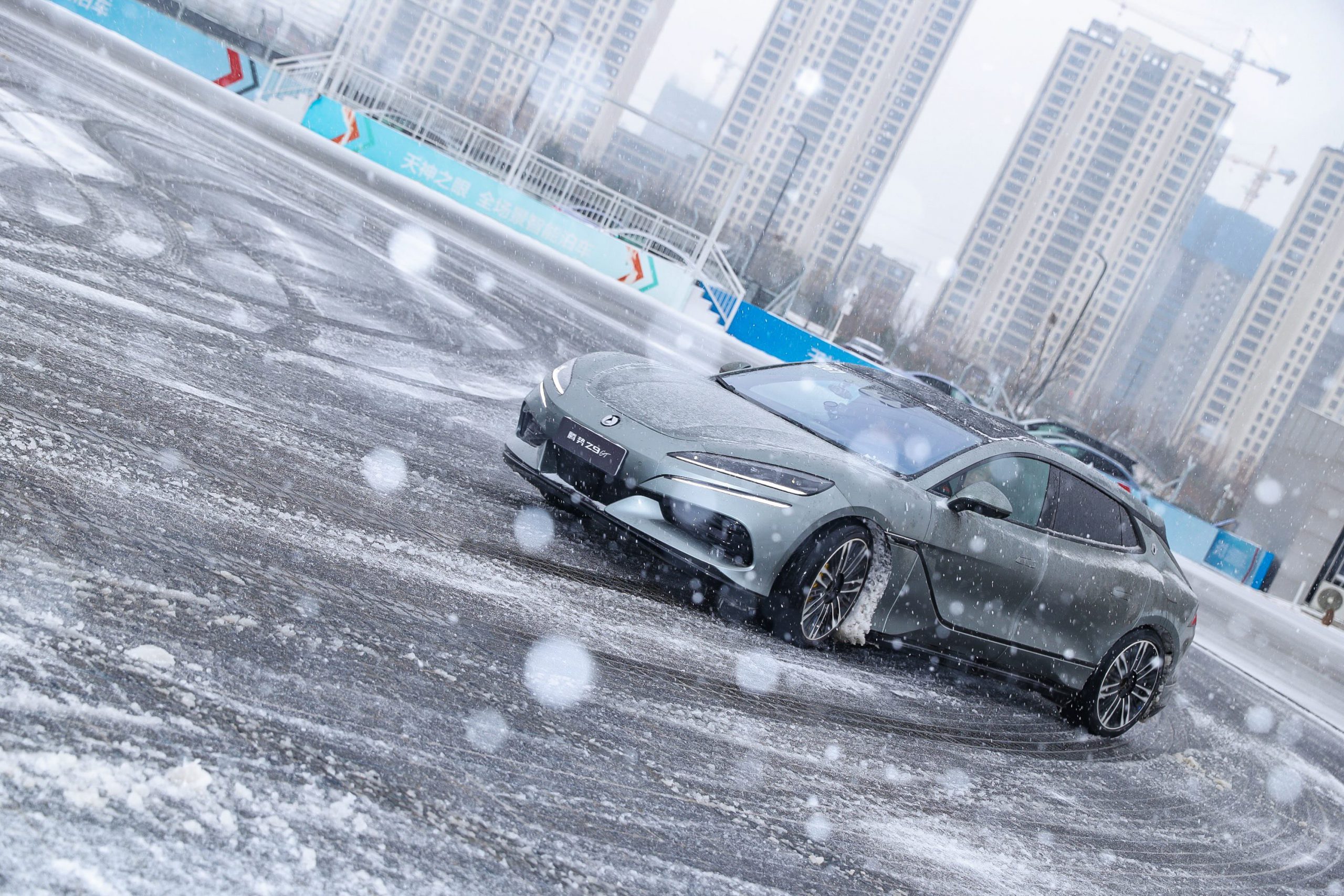
Located on the outskirts of the city, the BYD Zhengzhou all-terrain test track is dedicated exclusively to new energy vehicles. Arriving there, I was surprised - the scene bore little resemblance to a typical racetrack, with its roaring engines, screeching tires, and pungent exhaust fumes. Instead, the atmosphere was quiet - not because the site was empty, but because every movement unfolded in a controlled, orderly rhythm. Cold wind cut across my face as light snow and rain drifted through the air. Beneath a pale grey sky, the track appeared like a vast stage awaiting its performance.
Spread across eight experiential zones designed to replicate extreme real-world conditions, BYD’s new-energy vehicles - from fully electric to hybrid models - took turns demonstrating their capabilities: climbing dunes, wading through deep water tanks, accelerating hard, and maintaining control on slippery surfaces. The event opened with a striking performance on an outdoor ice rink, where electric vehicles glided across the frozen surface in figure-eight patterns, running side by side, weaving and spinning with balletic precision - without a single collision or loss of control. This was followed by the YangWang U8 SUV tackling a near-vertical indoor sand slope of almost 30 degrees, before the same vehicle drove into a water tank reaching depths of up to 1.8 meters. Watching the car advance into the water, submerge, reverse, and turn with ease - as the instructor calmly explained that it could float for up to 30 minutes - I felt as if I was witnessing cutting-edge technology mixed with a magic trick.
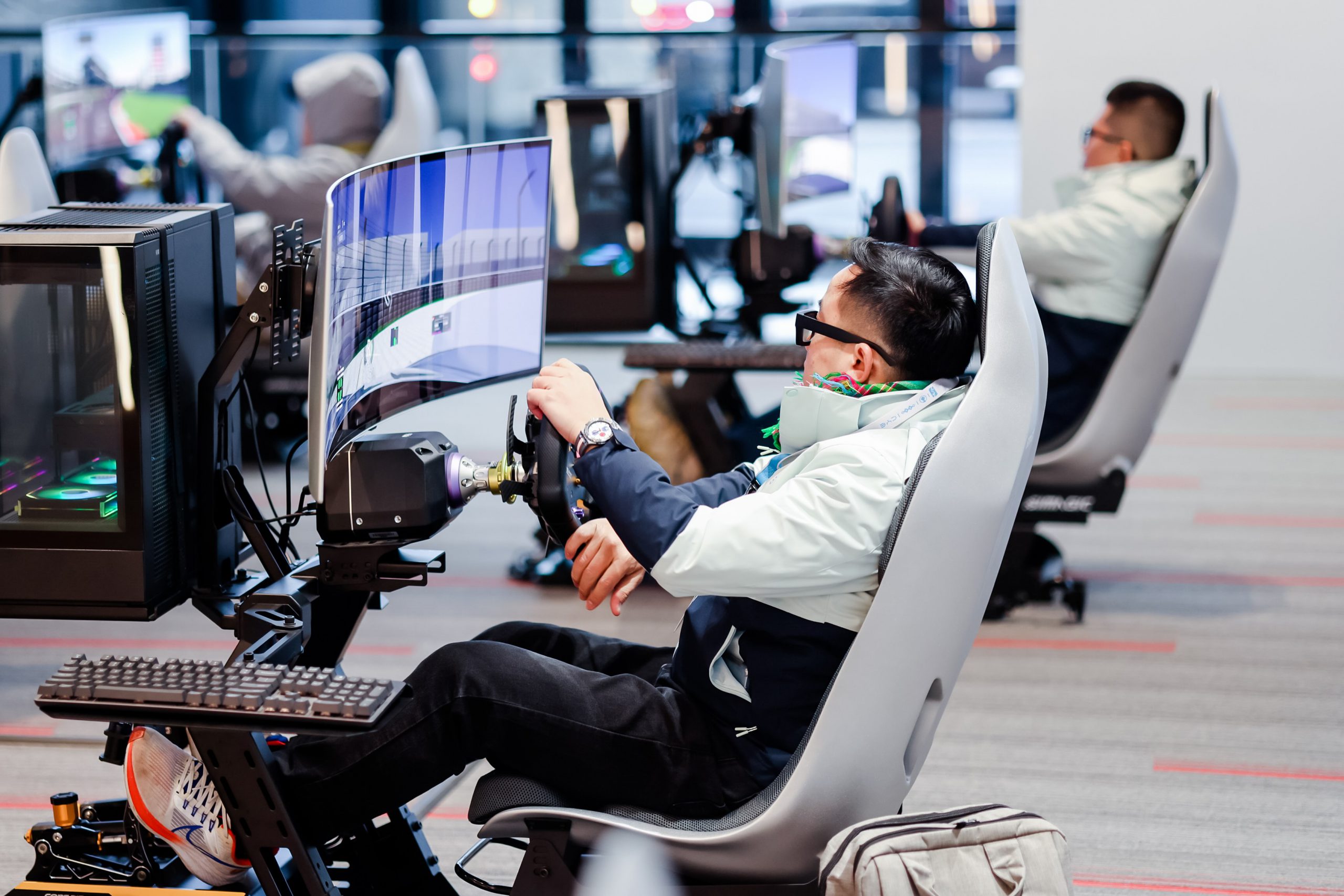
Visitors enjoy immersive experiences thanks to new technology
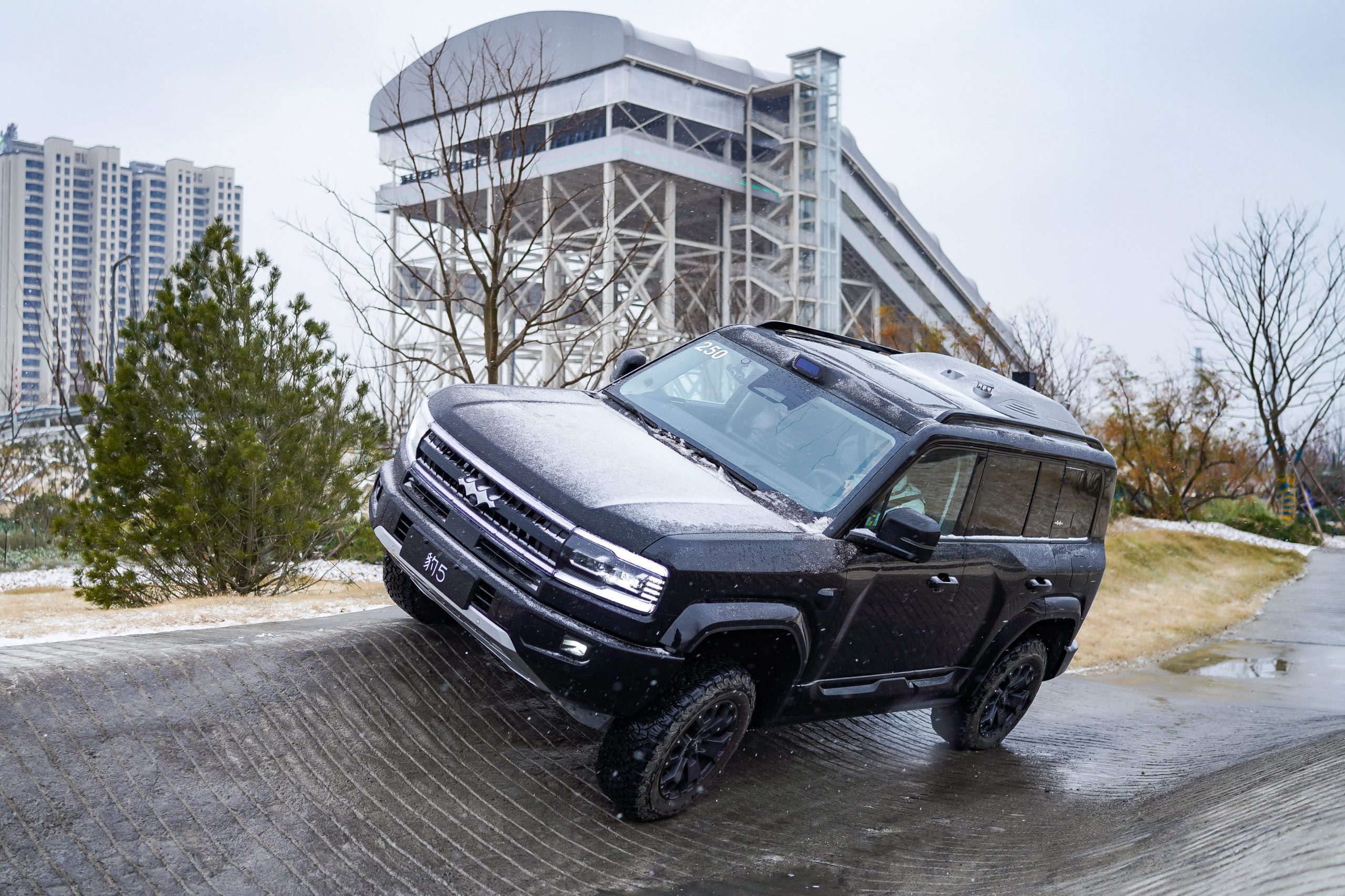
Coming to the racetrack was not just about watching. Our group took the wheel ourselves - or, at the very least, rode shotgun - to experience the thrill firsthand. The speed enthusiasts among us were eager to climb into a YangWang U9 electric supercar, pushing it around a 1.7-kilometre circuit in sleet and snow. Others chose to test off-road capabilities in a Fang Cheng Bao model, tackling obstacles, steep climbs, and tilted terrain. One assumption was quickly dispelled - that new energy vehicles are suited only to city streets.
These machines demonstrated remarkable power and capacity, handling extreme conditions, climbing and descending slopes with confidence and ease, as if it were second nature. Watching the U9 “dance” in sync with music, or the Denza Z9 GT drive and park itself autonomously, I realized that artificial intelligence has introduced a new dimension: technology does not have to feel cold or mechanical but can be expressive, even soulful.
The scent of time at BYD’s Di-Space Automotive Museum
Though at its core a museum dedicated to automotive technology, Di-Space engages visitors with surprising ease - a result of thoughtful curation and a clear narrative flow that guides audiences through history and the long journey toward green innovation.
Urban electric SUVs can tackle challenging terrain with impressive power
The story begins with the origins of the automotive industry. Our group paused before a model of a steam engine: heavy, raw, and unmistakably emblematic of the 19th century. Moving on to the Benz No. 1, everything suddenly felt more compact, refined, and deliberate.
Among the exhibits at Di-Space is an object of profound symbolic value: a handwritten letter from 1992 by scientist Qian Xuesen. Even then, he urged China to bypass the gasoline-powered era altogether and leap directly into new energy vehicles. This visionary proposal launched China on the path of becoming a global electric vehicle powerhouse.
To explain the global energy crisis, the museum presents statistics, charts, and images as a quiet yet compelling warning about the depletion of fossil fuels. The narrative then moves seamlessly into an exhibition on renewable energy sources such as wind, solar, and water. This progression allows visitors to understand the inevitable shift toward new-energy vehicles.
At the heart of the museum is the evolution of BYD’s electric vehicles. This brand rose to become the world’s leading EV manufacturer in 2025. The journey began with the launch of the Flyer in 2003, marking BYD’s official entry into the automotive industry and signaling its ambition to combine battery expertise with vehicle technology. From there, the narrative unfolds through a steady succession of models - E6, Qin, Han, Seal, Sealion 8, Denza D9, FangChengBao Bao 5, YangWang U8 - each introduced with a long-term vision, together shaping a continuous and resilient legacy.
When it came to design and aesthetics, I was struck by the clay models, material samples, and paint palettes that drew on ceramics, minerals, painting, and China’s long history. In that moment, I realized that a car is no longer merely a machine but a mobile living space, in which innovative design and small details can evoke different emotions.
I then stepped into the sound-and-scent zone. The introduction of fragrance was fascinating. With a gentle swipe, a flower on a screen bloomed open. A touch on the control panel left a soft scent lingering on my hand. Perhaps it is not speed or horsepower that truly matters. Sometimes, all it takes is a quiet car interior or a gentle fragrance that makes someone want to stay a little longer.
As I left Di-Space, Zhengzhou had emerged into sunlight after its first snowfall of the season. Workers patiently cleared sheets of ice from the museum’s courtyard so visitors would not slip. Looking up, I saw sleek modern shopping centers standing near traditional architecture. The “old” and the “new” coexisted calmly, just as they always have. As for me, the faint scent clinging to my sleeve in the cold air was a small but lasting reminder of Zhengzhou.[hoasen]
Silver and stone
album ảnh | 04/04/2023
SHARE
Đã sao chép
Nguyen Huu Thong
Along with their brocade clothing, silver jewelry has become a highlight of the H’Mong people’s bold appearance. Each piece of jewelry has its own meaning and reflects the artisan’s creative thinking and unique cultural imprints.
At the age of seventy, Mua Se Sinh, who lives in Lao Xa village, Sung La commune, Dong Van district, is the most famous silver-carving artist on the Ha Giang Stone Plateau. A sixth-generation silversmith, Mr. Sinh inherited the essence of his family’s traditional craft and has worked tirelessly to preserve it for more than 50 years.
To create a piece of high quality carved silver jewelry involves many steps, including melting the silver, and molding, shaping, carving, and polishing the final piece. Every step requires dexterity and attention to detail.
Visitors who have the chance to visit the Dong Van Stone Plateau should stop by Mr. Sinh’s workshop to learn about silver-carving or to purchase traditional H’Mong silver items delicately crafted by his skilled hands.
Chúng tôi có sử dụng cookies nhằm cải thiện trải nghiệm của bạn khi truy cập website www.vietnamairlines.com.
Vui lòng nhấn đồng ý để chấp thuận việc sử dụng cookies và không hiển thị lại thông báo này trong các lần truy cập tiếp theo.
This website uses cookies to improve your experience while you navigate through the website. Out of these cookies, the cookies that are categorized as necessary are stored on your browser as they are essential for the working of basic functionalities of the website. We also use third-party cookies that help us analyze and understand how you use this website. These cookies will be stored in your browser only with your consent. You also have the option to opt-out of these cookies. But opting out of some of these cookies may have an effect on your browsing experience.
Necessary cookies are absolutely essential for the website to function properly. This category only includes cookies that ensures basic functionalities and security features of the website. These cookies do not store any personal information.
Any cookies that may not be particularly necessary for the website to function and is used specifically to collect user personal data via analytics, ads, other embedded contents are termed as non-necessary cookies. It is mandatory to procure user consent prior to running these cookies on your website.