Story: Thanh Huong
Photos: Tonkin
Agriculture continued to post strong growth, even as 2025 was recorded as one of the worst years for natural disasters in Vietnam’s meteorological history.
2025 is widely regarded as a year marked by mounting challenges for the agricultural sector. Escalating trade tensions, coupled with increasingly stringent requirements for traceability and food safety in agricultural exports, have significantly hindered the industry’s growth. At the same time, widespread natural disasters and extreme weather events across major economies such as the United States, China, and India have caused sharp fluctuations in global commodity prices. These disruptions have driven up input costs for agricultural, forestry, and fisheries production and trade, placing additional pressure on this sector.
competitive in export markets
Natural disasters
Domestically, natural disasters have unfolded with unprecedented severity. In 2025, Vietnam experienced one of the most devastating years in meteorological history, as the East Sea recorded 21 storms and tropical depressions – the highest number observed since 1961. Storm No. 9 (RAGASA) reached Category 17, with gusts exceeding this level, making it the strongest storm ever recorded in the region. Prolonged heavy rainfall triggered widespread flooding, flash floods, and landslides, resulting in numerous deaths and missing persons. Tens of thousands of households were affected, while critical infrastructure – including transportation networks, irrigation systems, dikes, power grids, schools, and healthcare facilities – suffered severe damage.
In November 2025, Central Vietnam continued to endure heavy rainfall, flooding, and landslides, causing severe loss of life and property. Vast areas of rice fields, crops, agricultural produce, aquaculture farms, and rural infrastructure were washed away or buried.
In the Mekong Delta, localized droughts, water shortages for daily use and production, and increasing saltwater intrusion continued to threaten agricultural and aquaculture activities, as well as the livelihoods of local communities. By the end of November, total economic losses caused by natural disasters nationwide were estimated to exceed VND85 trillion.
In this context, Vietnam’s agricultural sector has continued to maintain strong growth momentum, with export turnover estimated to reach a record high of USD70 billion.
Market impressions
The United States and China remain key markets, while the European market continues to expand, reflecting a positive shift in both export destinations and product quality. By region, Asia remains the largest export market, accounting for 45.1% of total export turnover, followed by the Americas at 22.8% and Europe at 13.4%.
Among Vietnam’s key agricultural exports, coffee stands out. In November 2025, coffee export volume was estimated at 80 thousand tons, with a value of USD463.3 million. This brought the cumulative total for the first eleven months of the year to 1.4 million tons, worth USD7.88 billion – representing a year-on-year increase of 14.1% in volume and a remarkable 59.7% rise in value. Meanwhile, seafood remains a leading export category, with export turnover estimated at USD10.38 billion, up 13.2% compared to the same period last year.
In 2023, Vietnam’s agricultural export turnover stood at just USD27 billion. However, 2024 marked a historic turning point, with total exports surging to USD62.5 billion. By 2025, exports of agricultural, forestry, and fishery products are projected to approach a record-breaking milestone of USD70 billion.
Strong and sustained growth over two consecutive years demonstrates that agricultural success is neither a matter of luck nor a short-term response to temporary supply gaps. Instead, it reflects the consolidation of Vietnam’s position as one of the world’s leading exporters of agricultural commodities. The country has strengthened its credibility as a reliable supplier, ensured stable delivery timelines, and steadily improved its ability to meet increasingly stringent quality standards, as major markets such as China, Japan, and the European Union tighten import controls.
However, in reality, the agriculture and environment sectors are facing numerous profound and complex challenges, intertwined between economic development, natural resource management, and environmental protection. At the ceremony commemorating the 80th anniversary of the agriculture and environment sector (1945 – 2025), General Secretary To Lam clearly pointed out key challenges, including the rapid depletion of natural resources; environmental carrying capacities in many areas reaching their limits; the increasingly severe impacts of climate change and extreme natural disasters, causing significant losses in both human lives and property; unsustainable development with low added value; the slow growth of processing industries, supporting services, and logistics; and weak linkages among enterprises, cooperatives, and farmers.
“This is not merely an economic or technical issue; it is also a political, social, security, and ethical development challenge. It calls for strategic vision and stronger, more decisive action in the new phase,” the General Secretary emphasized.
Entering 2026, the Ministry of Agriculture and Environment will prioritize climate change adaptation, institutional reform, the standardization of raw material zones, accelerating digital transformation, and expanding markets – laying a solid foundation for a new cycle of development.
In the coming year, the Ministry will continue to implement its core, long-term priorities, with a strong focus on completing and developing infrastructure. Particular emphasis will be placed on restoring infrastructure in areas severely affected by natural disasters over the past year, as well as in major agricultural production regions across the country, to reduce logistics costs throughout the production supply chain.
“…The logistics system supporting our vast agricultural sector remains extremely fragile. The routes through which Vietnamese agricultural products reach the market still rely heavily on a limited number of road corridors, with transportation mainly carried out by container trucks, while rail and maritime transport remain very limited,” remarked Ho Xuan Hung, Chairman of the Vietnam Association of Agriculture and Rural Development. He also emphasized that “only by breaking through infrastructure and logistics barriers can we truly remove the bottlenecks holding back Vietnamese agriculture.”
Alongside infrastructure development, the application of science and technology across the production chain is also essential. In the coming period, the Ministry will intensify the implementation of its Action Plan to carry out the resolutions of the Party, the National Assembly, and the Government on accelerating the adoption of science, technology, and digital technologies in the production and processing of agricultural, forestry, and fishery products.
In reality, technology has played a crucial role in driving the growth of several agricultural exports in 2025. Coffee export value reached USD7.88 billion, with prices rising by nearly 40%; fruit and vegetable exports amounted to USD7.91 billion, up almost 20%; and cashew exports recorded a 19.5% increase in value despite only modest output growth. These figures provide clear evidence that investments in advanced processing technologies and supply chain standardization have enabled Vietnamese agricultural products to move into higher-value market segments.
Alongside infrastructure and technology development, the Ministry of Agriculture and Environment has identified 2026 as a pivotal year for restructuring the agricultural sector. This restructuring will be closely linked to the advancement of ecological agriculture, the green economy, and the circular economy, while strengthening climate change adaptation. The goal is to improve productivity, quality, added value, and overall production efficiency. Ensuring food safety throughout the entire value chain remains a core, long-term mission, while disaster preparedness and climate change response continue to be matters of vital importance.
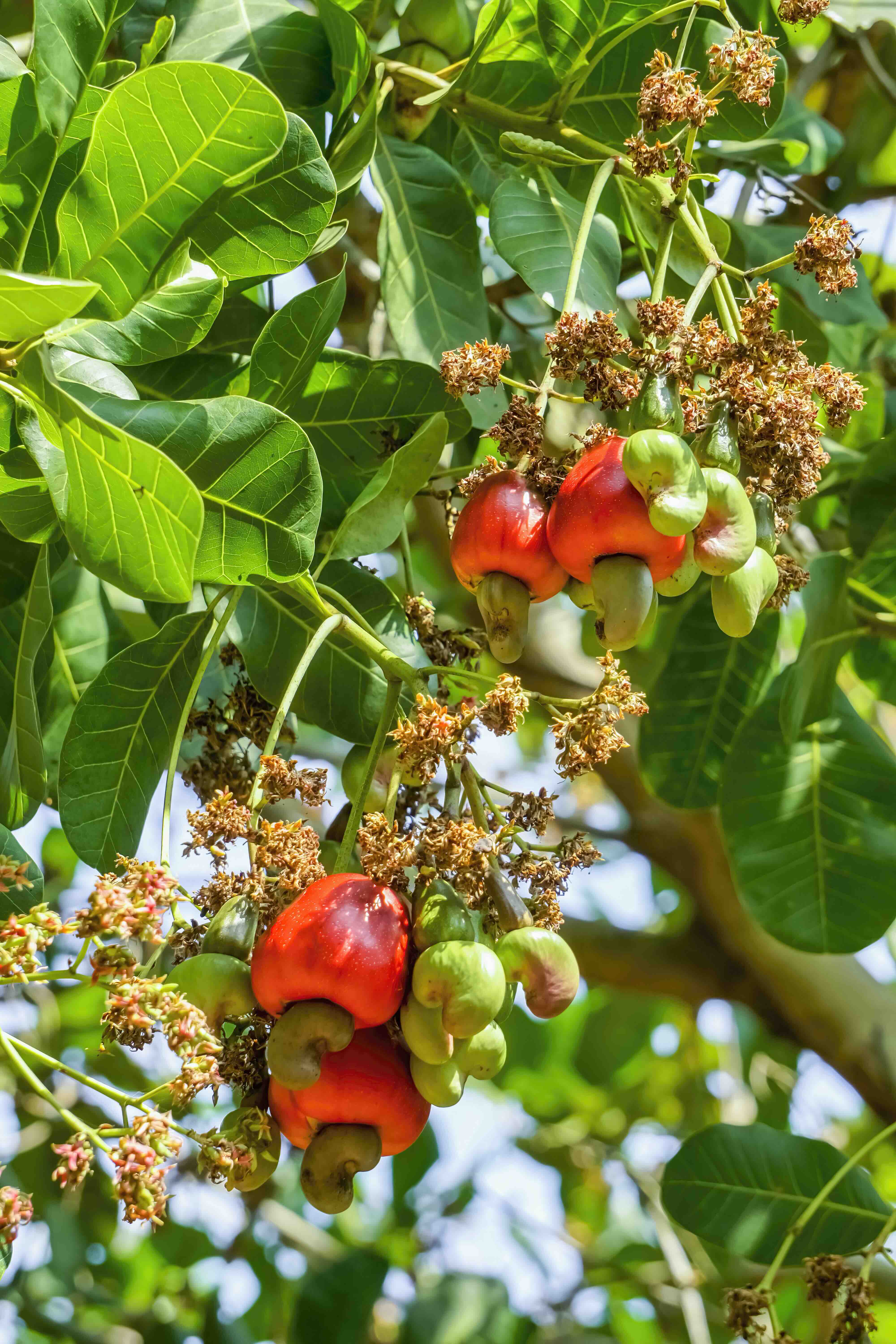
Another key strategic direction is to promote deeper processing for increased value. Sectors in which Vietnam holds strong advantages – such as rice, timber, coffee, pepper, and cashew – should be prioritized in terms of resource allocation to maintain supply credibility, particularly for orders scheduled for early 2026. Technical assistance, the development of concentrated raw material zones, and the standardization of planting area codes will be further strengthened to enhance production capacity at the household farm and cooperative levels.
At a macro level, Vietnam’s agricultural sector still holds vast growth potential – especially as science and technology, logistics, and digital transformation are increasingly integrated into agricultural production, processing, and distribution. These foundations position Vietnamese agriculture to enter 2026 with greater stability and proactiveness, ready to make a strong breakthrough on the global agricultural map.