Nguyen Trong Cung
Discover the wild beauty of Mount Putaleng in Lai Chau Province.
Rising 3,049 meters above sea level, Putaleng is Vietnam’s third-highest peak, located in Ta Leng Commune, Lai Chau Province. In the Dao language, its original name, “Pu Ta Leng,” combines Pu meaning “mountain,” and Ta Leng (Ta Leng) is the name of a H’mong village located at the foot of the mountain.
For generations, the H’mong people of Ta Leng Village have called this mountain Po La Thao. In the H’mong people’s language, “Po” means mountain, while La Thao refers to an experienced elder hunter’s name.
There are four main routes to conquer Putaleng – from Ho Thau, Ta Leng, Giang Ma, and Si Thau Chai – all within Ta Leng Commune.
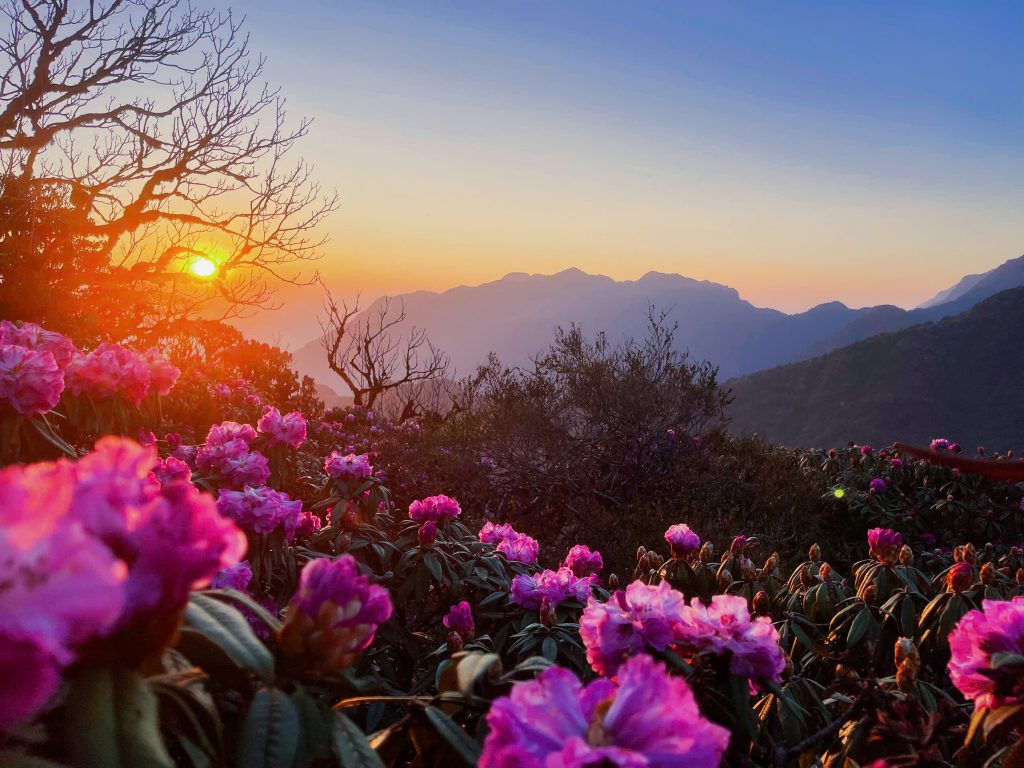
Among the available routes, the trail starting from Si Thau Chai Village is the most challenging, yet it is also the most beautiful scenery and the largest concentration of blooming rhododendrons. Thanks to its stunning, this trekking route has become a favorite choice for many travelers seeking a memorable adventure.
My journey to conquer Mount Putaleng began at My Dinh Bus Station in Hanoi. I chose an overnight sleeper bus so that I would arrive in Lai Chau early the next morning. At dawn, I got off the bus along National Road 4D, right at the turn leading to Si Thau Chai Community Tourism Village. Before the trip, I had already contacted a local porter, so as soon as I stepped off the bus, he came to pick me up by motorbike and took me up to the village.
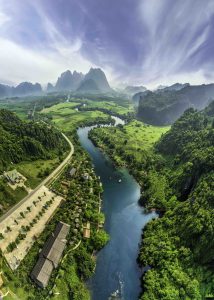
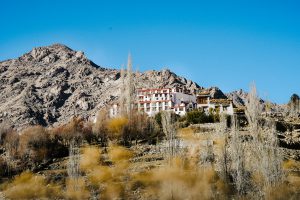
Si Thau Chai is a charming Dao ethnic village, considered one of the most beautiful in Lai Chau. Located 1,500 meters above sea level, the village has been thoughtfully planned and carefully developed for tourism. The locals have paved a stone pathway running through the village, with both sides lined with vibrant, colorful flowers that bloom throughout the year.
Passing through the village’s paths, lined with traditional Dao houses, I arrived at the homestay owned by my local porter. After resting and enjoying breakfast, along with the first conversations of our newly formed acquaintance, we began our journey to conquer the majestic Putaleng peak, following a narrow dirt trail that led us straight into the forest.
Although I had climbed many high peaks in Vietnam, I was still overwhelmed by the steepness of this route. The incline is so sharp and demanding that at certain points, looking upward feels as though your hat could fall off your head. In return, the cool, oxygen-rich air softens the hardship of the trek, making the challenging ascent feel a bit more manageable and refreshing.
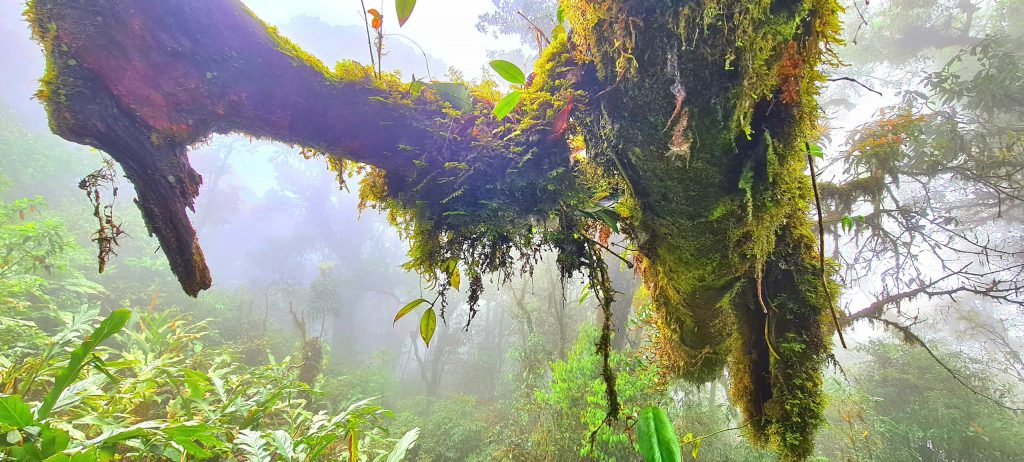
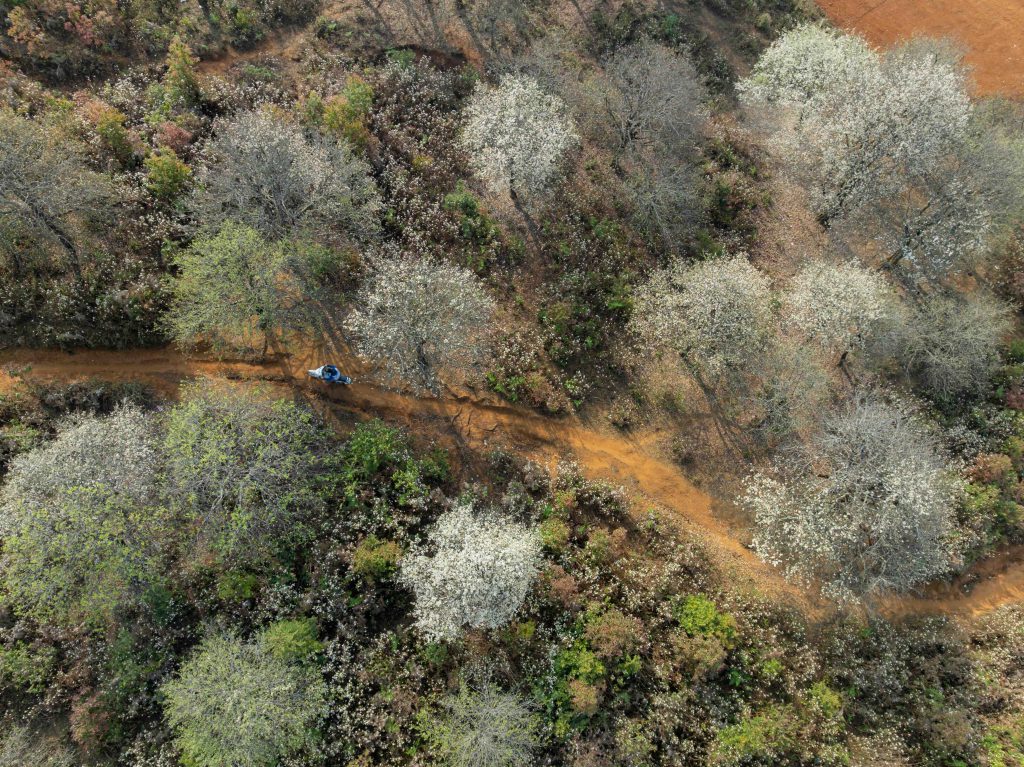
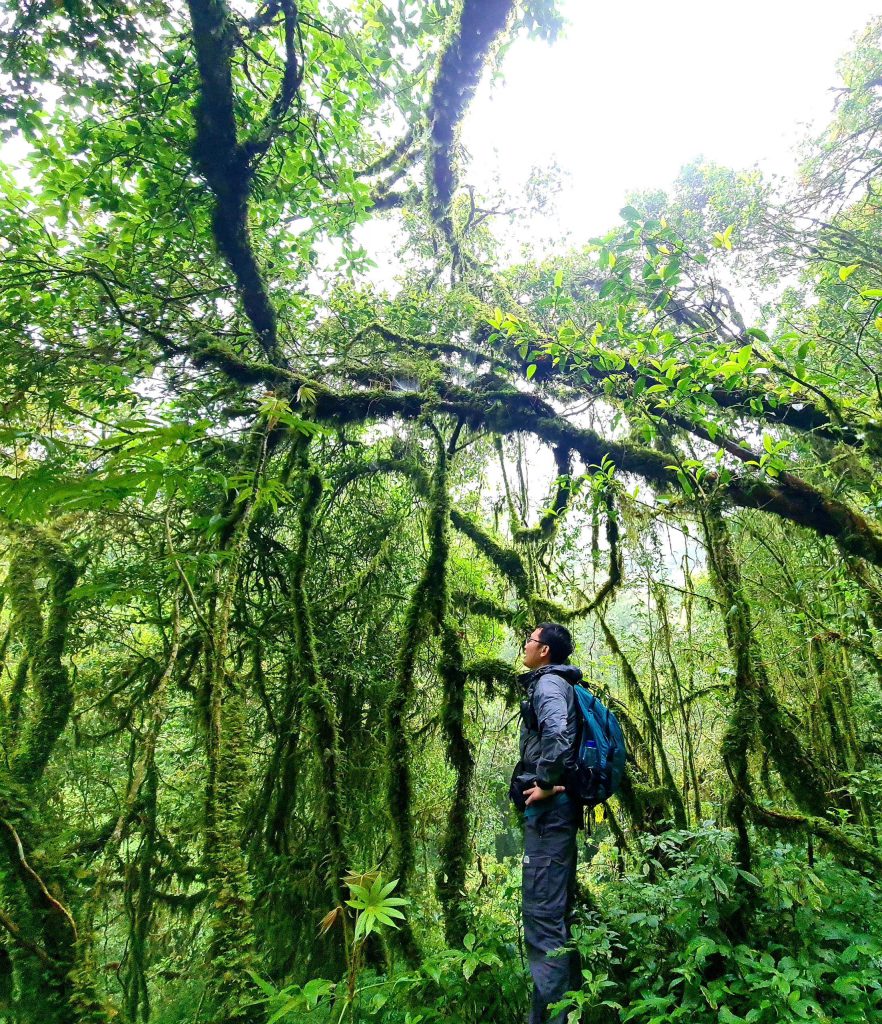
Like most mountains in Vietnam, Putaleng’s vegetation shifts dramatically with altitude, from low shrubs like myrtle and hydrangea, to bamboo groves, and higher still, ancient rhododendron, chestnut, and oak trees. The Si Thau Chai route is unique in that this lush, high-altitude forest appears unusually early in the climb. Along the trail, clusters of old rhododendron trees stand tall among snowbell flowers – a rare species also known as “white resin bells.” These delicate, downward-facing white blossoms emit a sweet fragrance that lingers in the air.
Three hours of continuous climbing brought me to a small cardamom hut nestled deep in the forest – a rest station for local farmers. Around it, vibrant rhododendrons were in full bloom. At an altitude of 2,200 meters, only pink and white varieties thrive, while those of deeper hues grow higher up. The towering old trees filled me with awe, their vast canopies spread wide yet never intertwined, leaving pockets of sunlight to nourish the plants below. It felt like nature’s quiet conversation, a perfect harmony of coexistence.
After lunch, we continued our journey under the afternoon sunlight, pushing slowly through the cardamom forest and fallen blossoms that carpeted the ground. From an open ridge, I gazed across a valley awash with crimson and violet flowers glowing against the dark green mountainside. The cool breeze rising from the depths below brought with it a surge of energy that carried me onward. By 3 p.m., I reached the Si Thau Chai Camp, exhausted from the unrelenting climb. From here, the most beautiful rhododendron forest lay only a short 15-minute walk ahead. When I finally emerged into the open, the sunset bathed the landscape in golden light. The rhododendrons – mostly bright pinks and fiery reds – were strikingly vibrant, their thick petals clustered in magnificent bursts of color. Under the soft glow of dusk, the forest seemed to glow with pride, a living masterpiece painted by nature.
After a night resting in the mountain shelter, in the next morning, we began our ascent toward the 3,049-meter summit of Putaleng. The feeling of standing atop the peak was unforgettable – light, soaring, almost unreal. We felt as if we were floating above an ocean of clouds, with an entire forest of blooming rhododendrons stretching out beneath us. At that moment, the scene resembled a masterpiece painted by nature itself in the heart of the great mountains.
After savoring every emotion and capturing check-in photos that words can hardly describe, we began our descent toward the shelter on the Ta Leng side. We continued walking through endless rhododendron forests, moving slowly under the canopy, our steps cushioned by soft moss and fallen leaves. Above us, thousands of blossoms were in full bloom—a sky filled with flowers in the truest and most breathtaking sense, sometimes so beautiful it felt surreal.
Unlike the other slope, the Ta Leng side is covered in dense, damp forest and crisscrossed by streams. Though the vegetation is lush, rhododendrons are rare. This side of the mountain is home to many species, including a unique mountain frog whose tadpoles grow to remarkable size.
My return journey was quite gentle. In my heart, as a traveler who loves the forest and the purity of nature, Putaleng in blooming season is like a graceful mountain maiden: rare to encounter, yet impossible to forget once met.
This peak of flowers, with its song of wind, has become a beautiful memory that will stay with me forever.
The rhododendron season on Mount Putaleng lasts from February to April each year. Travelers are advised to hire experienced local porters to enjoy the safest and most rewarding treks.
Website:
Hotline: 0213.3876.49